Yes, within limits. You can often pick a specific sequence of digits for a UK landline or mobile number, but the type of number, current availability and regulatory allocation rules all shape what is actually on offer. If you want to keep a number you already use, that is a separate process governed by porting rules rather than selection. The quickest next step is to search live availability or check your existing number’s porting status before you commit to anything.
TL;DR:
- Most desired numbers may be unavailable due to quarantine periods after cancellation or restrictions on high-resale value sequences.
- Specific numbers are easier to find in ranges you haven’t considered, like 01, 02, 07, or 08, depending on your priorities.
- Reserving a number for up to 30 days can help secure it while finalizing hosting, forwarding, or SIM setup.
- Porting an existing number requires a PAC or STAC code and is typically processed quickly, but delays can be escalated through Ofcom.
- Activation speed depends on whether the number is merely hosted or requires porting, potentially taking one day or several.
Table of Contents
- Types of UK numbers and why the type matters
- Why some numbers aren’t available: recycling, quarantine and allocation rules
- Practical steps to find, reserve or buy a specific number
- Porting and keeping numbers: PACs, STACs and timelines
- Costs, reservation periods and how fast a number can go live
- How our tools help you find a UK memorable number
- When a memorable number is worth paying for
- Ready to find your number? Search, reserve or buy today
- FAQ
- Sources
Types of UK numbers and why the type matters
The first thing that decides what you can choose is the category of number you are looking at. Ofcom explains that geographic numbers start with 01 or 02 and are tied to a specific area code, mobile numbers start with 07, and non-geographic ranges such as 03 and 08 are not linked to any location at all. That distinction affects both what you can pick and how the number will be perceived by callers.
A geographic number carries an area code, so choosing one usually means choosing a place first and a digit pattern second. An 0161 number signals Manchester, an 0113 signals Leeds, and so on, even though the call itself can be answered anywhere once it is forwarded or hosted. Mobile numbers work differently: a 07 number is not tied to a physical address, so the choice is really about the digit sequence and the mobile network it sits on, not geography.
Toll-free and non-geographic numbers (03 and 08 ranges) sit in a different category again. Businesses often choose these for national campaigns because the number reads as a service line rather than a local branch, and callers in the UK typically pay standard rates for 03 numbers.
Specialist sellers tend to list a mix of these types, generally including:
- Geographic 01 and 02 numbers, often grouped by area code or town
- Mobile 07 numbers, searchable by pattern, repeated digits or specific sequences
- Non-geographic 03 and 08 numbers for national or service-style use
- Alphanumeric or “vanity” style numbers that spell a word or brand on the keypad
Knowing which category you need before you start searching saves time, because a memorable sequence that exists in the 01 range will not necessarily exist in 07, and vice versa.
Why some numbers aren’t available: recycling, quarantine and allocation rules
Even once you know the type of number you want, the exact digits you had in mind might simply not be on the market yet, or ever. Three separate mechanisms explain most of the “not available” results you will see when searching.
The first is recycling and quarantine. Numbers are a finite resource, and when someone cancels a contract, the number is not reissued immediately. Industry reporting and consumer investigations, including one from Which?, have highlighted that recently cancelled numbers sit in a quarantine period before they can be reallocated, partly to avoid the new holder receiving calls and texts meant for the previous owner. This means a number that was cancelled last month is very unlikely to show up as available today, regardless of how appealing the sequence is.
The second is flagged or “golden” numbers. Sequences with repeated digits, easy patterns or short memorable strings are often subject to extra handling by providers because they carry higher fraud risk and resale value. Ofcom’s own guidance on authentication explains why providers tighten controls around SMS-based verification for sensitive transfers, and that same caution extends to how some golden numbers are transferred or ported, meaning a desired number might carry additional checks or restrictions before it can move to you.
The third is allocation rules at the regulatory level. Ofcom’s national numbering plan sets out which ranges exist, which are reserved for specific purposes, and which rules govern adoption by providers. Some ranges are simply not open for general allocation, which is why a specific prefix or pattern you have seen quoted elsewhere may not be something any seller can offer you.
Numbers are a finite public resource, and quarantine periods exist specifically to stop a new owner receiving calls, texts or security codes intended for whoever held the number before them.
Pro Tip: If a particular digit sequence matters more to you than the number type, search across 01, 02, 07 and 08 ranges rather than fixing on one category first; the same pattern is often easier to find in a range you hadn’t considered.
Practical steps to find, reserve or buy a specific number
Once you understand the constraints, the process of actually getting a number is straightforward if you follow it in order.
- Search live availability. Use a specialist provider’s searchable database rather than guessing from a general list; our own searchable database lets you search by digit sequence, area code, town or county across landline and mobile ranges in one place.
- Confirm ownership terms before paying. Ask whether the number is sold outright or rented on an ongoing basis, and check whether there is a reservation period that holds the number while you decide.
- Complete the purchase or reservation. Pay the agreed fee, then set up how the number will actually ring, whether that is call forwarding to an existing mobile, a hosted voice service, or a dedicated SIM.
- Configure routing and test it. Confirm the number rings through correctly before you print it on signage, invoices or adverts, since changes after that point cost time as well as money.
Sellers will typically ask for a short list of information before completing a sale, and having it ready speeds things up considerably:
- Proof of identity for the account holder
- A billing address and contact details
- Proof of business registration for some non-geographic or 03/08 ranges
- Details of the forwarding destination or SIM you want the number connected to
Pro Tip: If you are buying a number for a business line, decide on your forwarding or hosting setup before you search, because some number types work better with VoIP hosting than with a simple forwarded mobile line.
Porting and keeping numbers: PACs, STACs and timelines
Choosing a brand-new number is one path. Keeping the number you already have while switching provider is another, and it runs on entirely different rules.
Ofcom’s guidance on switching mobile providers confirms that customers can port their existing mobile or landline number when they change supplier, and that providers must explain the process clearly and may be liable if they delay or refuse a port without good reason. For mobiles, this usually means requesting a PAC (Porting Authorisation Code) from your current provider, either by asking directly or by texting “PAC” to 65075, which triggers the Auto-Switch text-to-switch route. For landlines, the equivalent is a STAC (Service Termination Authorisation Code).
Most porting requests are processed quickly once the code is issued, and Ofcom’s complaints guidance sets out the response standards providers must meet, including rules around prompt delivery of PAC and STAC codes. That speed is the whole point of the system: it exists so switching provider does not mean losing the number your customers already have saved.
A few points are worth keeping in mind when you request a port:
- You need to be in possession of the SIM or line the number currently sits on to receive the authentication code
- A PAC is typically valid for a set window, so request it close to when you actually plan to switch
- If a new provider reports that a port has been blocked or delayed without explanation, you can escalate through Ofcom’s complaints route
If a port stalls, the usual fix is to ask your new provider to chase it directly with the losing provider, since Ofcom places the obligation to resolve delays on the providers themselves rather than on you as the customer.
Costs, reservation periods and how fast a number can go live
Budgeting for a memorable number means thinking about three separate cost types rather than a single price tag.
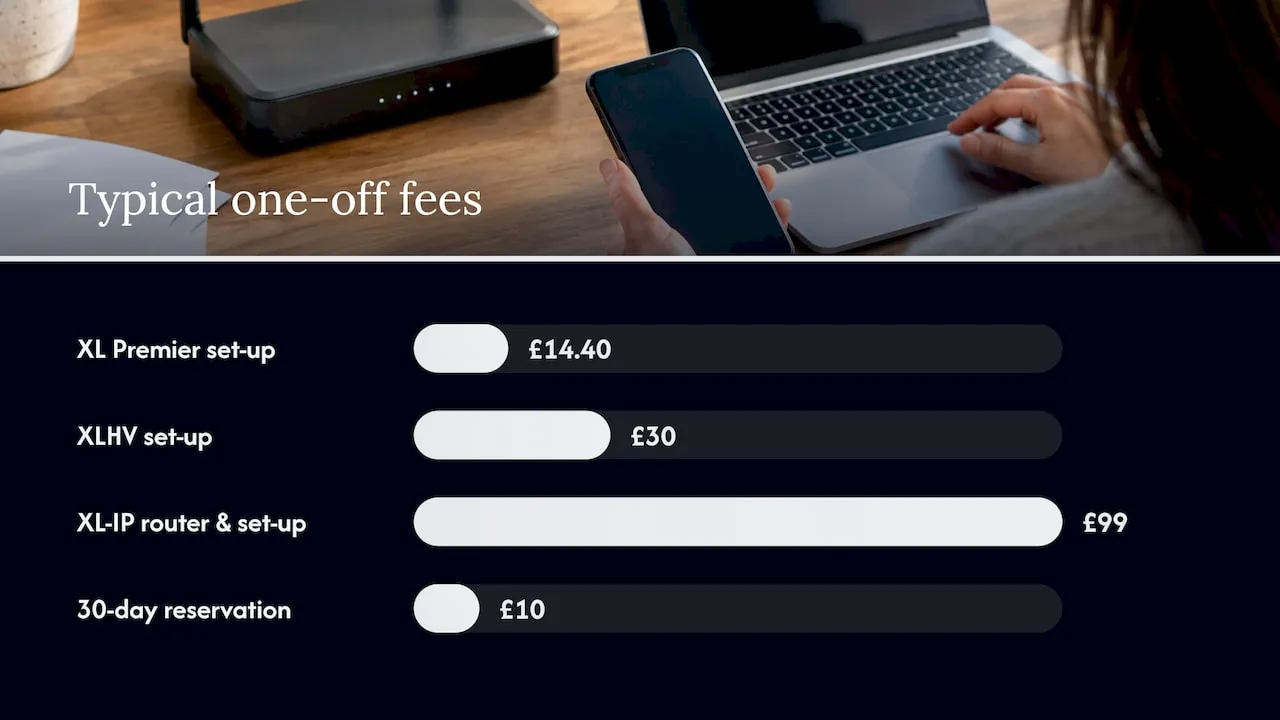
- One-off purchase or set-up fees. These cover acquiring the number itself or setting up the hosting that puts it to use, such as the XL Premier Service set-up at £14.40 one-off, the XLHV one-off service set-up charge at £30, or the XL-IP router and set-up at £99.
- Ongoing monthly charges. Hosting or rental typically continues at a monthly rate, for example £9.60 per month for XL Premier Service, £7.86 per month for XLHV, or £8 per month for XL-IP.
On top of these, factor in call minute bundles if you need them, ranging from £3.50 per month for 250 minutes up to £24 per month for 5,000 minutes to 01/02/03 numbers and top mobile numbers, plus any SIM costs if you are pairing the number with a dedicated mobile SIM rather than forwarding calls.
Activation speed depends on the setup: a number already allocated and simply being hosted or forwarded can often go live within a day or two of payment, while a port of an existing number depends on the PAC or STAC timeline described above.
How our tools help you find a UK memorable number
We work as a provider of UK memorable phone numbers, focused on 01, 02 landline ranges and 07 mobile ranges, sourced from multiple telecom operators. Our searchable database lets you look up a number by sequence, area code, town or county, which is the fastest way to check whether the pattern you have in mind actually exists before you commit to anything.
Beyond the search tool, we offer both purchase and rental routes for landline, mobile, non-geographic and alphanumeric numbers, alongside hosting and forwarding so a number can ring through to wherever your business actually operates rather than the area code printed on it. For businesses that want a number paired with a working SIM rather than just a forwarding line, we also offer SIM-based options, and for VoIP-style hosted setups our XL-IP service keeps an existing number working over a broadband router. Readers wanting more detail on how hosted routing works in practice can see a broader explanation of VoIP services and how numbers are routed through them.
When a memorable number is worth paying for
A memorable number earns its cost when callers need to remember it without writing it down: taxi firms taking a call on the move, tradespeople whose van livery is their main advert, or any business running a marketing push where the number itself is part of the message. In those cases, a repeating or patterned sequence genuinely reduces friction between seeing an advert and making the call, because local SEO and directory listings only carry someone so far if the number itself is forgettable, a point worth weighing alongside local search visibility for small UK businesses.
For a back-office line, an internal extension, or a number that customers only ever save once into a contacts app, a standard allocated number does the job just as well and saves the extra cost. The decision comes down to how often a human has to recall the number unprompted, against what you are willing to spend to make that moment easier.
— Rob
Ready to find your number? Search, reserve or buy today
Finding and securing a specific UK number does not need to be complicated once you know which range fits your business and what it will cost to keep it live. We bring landline, mobile, non-geographic and alphanumeric options together in one place, sourced from multiple operators, so you are not limited to whatever a single network happens to have spare.
If you have a pattern, area code or sequence in mind, the fastest route is to search it directly rather than guess at availability from a list:
- Reserve a number for 30 days while you finalise hosting or SIM arrangements
- Browse landline and mobile options if you want to compare ranges before deciding
- Check alphanumeric number options if you want a number that spells a word or brand
Once you have found a number worth holding, reserving it is the simplest way to stop someone else buying it while you confirm the details on your end.
FAQ
Can I choose a specific phone number?
Yes, you can often choose a specific number if it is currently available and falls within an open allocation range, subject to the type of number and provider rules. Availability depends on whether the exact sequence has already been allocated, is in quarantine after a previous cancellation, or sits in a restricted range under Ofcom’s national numbering plan.
How do I choose my own mobile number?
Search a specialist database by digit pattern, area code or sequence to see what is currently available in the 07 range, since mobile numbers are not tied to a location. Once you find one you want, reserve or buy it and set up forwarding or a SIM before putting the number into use.
Can I pick my own custom phone number?
You can pick a custom number from what is currently available, but you cannot request any sequence you like regardless of allocation status. Numbers already in use, recently cancelled numbers still in quarantine, and ranges reserved under Ofcom’s numbering rules are not open to custom requests.
Can I keep my existing number if I switch provider?
Yes, UK rules allow you to port your existing landline or mobile number when switching provider, using a PAC for mobiles or a STAC for landlines. Ofcom’s switching guidance confirms providers must support this and can be held responsible for unjustified delays.
What happens if my chosen number was recently cancelled by someone else?
A recently cancelled number is usually held back for a quarantine period before it can be reissued, so it will not appear as available straight away. This practice, noted in Which?'s investigation into number recycling, exists to stop a new holder receiving calls or messages meant for the previous owner.