
TL;DR:
- Memorable business contacts stem from specific, timely engagement, meaningful context, and deliberate organization. Prioritize quality relationships over volume by capturing context immediately and maintaining tiered, consistent outreach. Using multi-dimensional tagging and prompt, personalized follow-ups transforms contacts into lasting, valuable networks.
Memorable business contacts are defined by sustained relevance through specific, contextual, and timely engagement that goes far beyond a name saved in a phone. Most professionals accumulate hundreds of connections on LinkedIn yet struggle to recall who they met at last quarter’s conference, let alone why that person mattered. The difference between a contact list and a genuinely useful network lies in three things: context capture, consistent follow-up, and deliberate organisation. Research from Connecti5 and insights from HBS Online confirm that networking success depends on relationship quality, not volume.
1. What makes a business contact truly memorable
A memorable contact is one where both parties remember the context of their connection and find reasons to re-engage. That distinction matters enormously. A contact without context is just a name. A contact with context is the beginning of a working relationship.
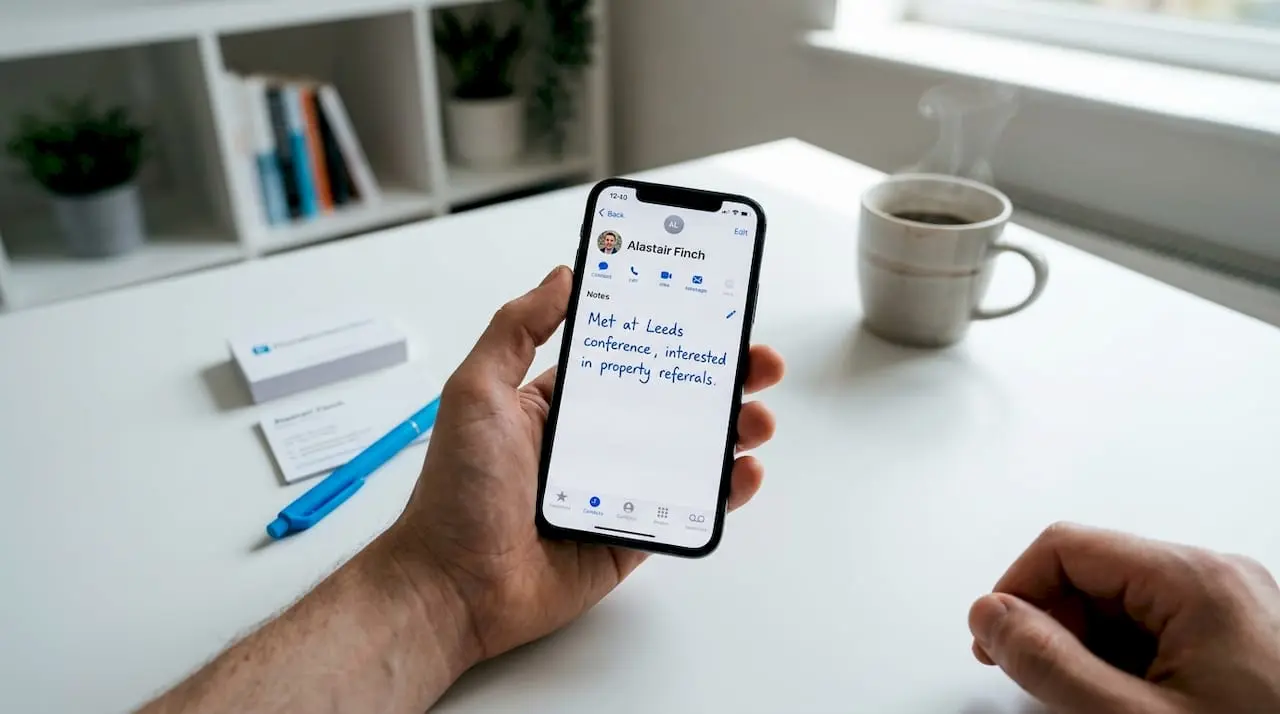
Personalised follow-up referencing prior discussions or shared projects is the single clearest marker of a memorable connection. When you message someone and reference the specific problem they mentioned at an event, you signal that you were paying attention. That signal is rare, and rarity creates memorability.
Neuroscience supports this further. Using a person’s name strategically in conversation activates brain regions linked to attention and memory, making the interaction more impactful. This is not a soft skill tip. It is a neurological mechanism you can use deliberately.
- Context layer: Note where you met, what was discussed, and what the contact cares about professionally.
- Name recall: Use their name once or twice naturally in written and verbal communication.
- Relevance: Every outreach should connect to something specific about them, not a generic check-in.
- Depth over breadth: Fewer, deeper relationships consistently outperform large, superficial contact lists.
Pro Tip: When you meet someone worth remembering, write three words about them in your phone within 60 seconds. “Leeds, fintech, scaling ops” is enough to rebuild the entire conversation later.
2. Who are key business contacts worth prioritising
Not every contact deserves equal attention, and treating them as if they do is how networks become unmanageable. Key business contacts are those who sit at the intersection of mutual value and genuine rapport. They include clients, referral partners, collaborators, mentors, and peers in adjacent industries who expand your thinking.
The importance of networking lies not in meeting as many people as possible but in identifying which relationships have compounding value. A solicitor who refers clients to your consultancy is worth ten times the effort of a casual acquaintance from a conference. Recognising this early saves enormous time.
HBS Online research shows that small, regular gestures every month or two keep contacts warm without high effort. Sending a relevant article, congratulating a promotion, or a two-line check-in achieves more than an annual catch-up call. The compounding effect of small, consistent contact is what separates a warm network from a cold one.
3. How to organise contacts for findability and engagement
Creating a memorable contact list requires more than alphabetical order. The system needs to surface the right person at the right moment, which means tagging contacts across multiple dimensions simultaneously.
Capturing context within 30 seconds of meeting someone is the single most important habit in contact organisation. Memory decays rapidly. The Ebbinghaus Forgetting Curve shows that without reinforcement, people forget roughly half of new information within an hour. A 30-second note immediately after a conversation prevents that decay from destroying the relationship before it starts.
Use 3 to 5 contextual tags per contact to make retrieval fast and meaningful:
- Industry or sector (e.g., property, SaaS, legal)
- Event or origin (e.g., Manchester Business Show 2025, LinkedIn DM)
- Geography (e.g., Leeds, London, remote)
- Relationship type (e.g., referral partner, potential client, peer)
- Status (e.g., active, dormant, follow-up pending)
This multi-dimensional tagging means you can pull up “all Leeds-based referral partners in property” in seconds when planning a trip north, rather than scrolling through 400 names.
| Tagging method | Benefit | Best used for |
|---|---|---|
| Single alphabetical list | Simple to set up | Fewer than 50 contacts |
| Industry tags | Sector-specific outreach | Targeted campaigns |
| Event-based tags | Contextual follow-up | Post-conference workflows |
| Geography tags | Travel and local networking | Regional business development |
| Relationship type tags | Prioritisation and cadence | Tiered outreach planning |
Pro Tip: Tools like Notion, Airtable, or even a well-structured Google Sheet can replicate CRM-style multi-tagging without the cost. The system matters more than the software.
4. The art of follow-up: writing messages that get remembered
The follow-up is where most professionals lose the relationship they worked to build. A generic “great to meet you” message is worse than no message at all. It signals that you did not pay attention and have nothing specific to offer.
Effective follow-up messages use a three-part structure: a specific reference to what was discussed, a value-adding line, and a low-friction next step. The recommended length is 4 to 6 sentences, written in roughly three minutes, sent the same day or the following morning. Speed matters because the contact is still warm in both your memories.
“Hi Sarah, really enjoyed our conversation about scaling ops without adding headcount at the Leeds event yesterday. I came across this piece on async team structures that maps directly onto what you described. Would love to hear how it lands if you get a chance to read it. No rush at all.”
That message takes 90 seconds to write and accomplishes three things. It proves you listened. It delivers value without asking for anything. And it opens a door without pressure.
Common mistakes to avoid in follow-up outreach:
- Sending too late: Messages sent more than 48 hours after meeting feel cold and obligatory.
- Being too vague: “Let’s connect sometime” is not a next step. It is a polite dismissal.
- Pitching immediately: Effective follow-ups focus on genuine interest, not sales. A “virtual coffee” style invitation outperforms a pitch every time.
- Ignoring name use: Addressing someone by name once in a short message increases engagement noticeably.
- Writing too much: A follow-up is not a proposal. Keep it under six sentences.
For B2B professionals, targeted outreach strategy reinforces that personalised details and precise references are what convert a new contact into a genuine business relationship.
5. Tiered relationship management: the cadence that sustains memorability
Building impactful business relationships over time requires a system, not willpower. The tiered approach divides your network into three groups based on relationship depth and strategic value, then assigns a different contact frequency to each.
Tiered outreach cadence balances sufficient contact frequency with avoiding the impression of spamming, which is the most common reason professionals abandon their networking habits entirely.
| Tier | Contact count | Outreach frequency | Message type |
|---|---|---|---|
| Tier 1 (A-list) | 20 to 30 contacts | Monthly | Short, specific, relevant note or article |
| Tier 2 (B-list) | 50 to 80 contacts | Quarterly | Milestone congratulation or event-triggered message |
| Tier 3 (C-list) | Remainder of network | Twice yearly | Brief check-in or shared resource |
Tier 1 contacts are your most valuable relationships. These are the people who refer clients, open doors, or collaborate directly. Reaching out every 4 to 6 weeks with a short, relevant message keeps you present without becoming intrusive. The key is that each message must contain something specific. A forwarded article about their industry, a note about a mutual connection’s news, or a one-line observation about something they mentioned last time.
Tier 2 contacts benefit from quarterly contact timed to trigger events. A promotion on LinkedIn, a company announcement, or an industry milestone gives you a natural reason to reach out. This feels organic rather than scheduled, even when it is both.
Tier 3 is your dormant network. Twice-yearly contact, perhaps a Christmas message or a relevant industry update, keeps the relationship alive without demanding significant time. The goal is to remain a name they recognise warmly when you do need to re-engage.
Use calendar reminders or a lightweight CRM to automate the cadence. The strategic follow-up system that works is the one you will actually maintain, so simplicity beats sophistication every time.
Key takeaways
Memorable business contacts are built through context capture, tiered outreach, and personalised follow-up. Generic contact lists without these systems produce cold networks that fail when you need them most.
| Point | Details |
|---|---|
| Context capture is critical | Record three to five details about a contact within 30 seconds of meeting them. |
| Quality beats quantity | Maintain 20 to 30 Tier 1 contacts with monthly, specific outreach rather than hundreds of cold names. |
| Follow-up structure matters | Use the three-part formula: specific reference, value line, and a low-friction next step. |
| Multi-dimensional tagging | Tag contacts by industry, event, geography, and relationship type for fast, meaningful retrieval. |
| Consistency converts contacts | Regular small gestures over months turn acquaintances into advocates and referral partners. |
Why most professionals get this completely wrong
I spent the first three years of my career treating networking like a collection exercise. Business cards in a drawer. LinkedIn connections accepted and forgotten. I had hundreds of contacts and could not tell you what half of them did or why I had connected with them in the first place.
The shift came when I started capturing context immediately after every conversation. Not a full CRM entry. Three words in my phone. That habit alone transformed my follow-up quality within a month. Suddenly I was sending messages that people actually responded to, because I was referencing something real.
The tiered system took longer to adopt, and I resisted it because it felt mechanical. What I discovered is the opposite. Knowing that I have 25 people to reach out to this month, with a specific reason for each, makes networking feel purposeful rather than awkward. The hesitation most people feel before sending a follow-up disappears when you have something genuine to say.
Name recall is the one technique I underestimated the longest. Using someone’s name once in a message is not sycophantic. It is neurologically effective, and the research from Inc.com on name recall and engagement confirms what I had been experiencing anecdotally. People respond differently when they feel seen.
My honest advice: do not wait until you need your network to start building it. The contacts who will open the most important doors for you are the ones you have been consistently, specifically, and genuinely in touch with for the past year.
— Rob
Make your business number as memorable as your contacts
Every strategy in this article depends on people remembering you. Your follow-up message, your name, your context. Your phone number is part of that equation too.
A memorable business number makes it easier for contacts to call you back, refer you to others, and recognise your number when it appears on their screen. Phonenumbers is the UK’s leading provider of memorable 01, 02, and 07 numbers, covering landlines and mobiles across every region. Numbers are no longer tied to local areas, so you can use a Leeds 0113 number from anywhere in the country. Browse the full range at the Phonenumbers store and find a number that works as hard as your network does. You can also read more about how a professional contact number supports business growth in the UK.
FAQ
What are memorable business contacts?
Memorable business contacts are professional connections maintained through specific, contextual, and consistent engagement rather than superficial acquaintance. They are defined by mutual relevance, personalised follow-up, and a shared history of meaningful interaction.
How many key contacts should I actively maintain?
Research from Connecti5 recommends actively maintaining 20 to 30 Tier 1 contacts with monthly outreach, supported by 50 to 80 Tier 2 contacts contacted quarterly. This balance sustains memorability without overwhelming your schedule.
How soon should I follow up after meeting someone?
Send your follow-up the same day or the following morning. Messages sent within 24 hours feel warm and specific. Waiting longer than 48 hours risks the conversation fading from both parties’ memories.
Why is context capture so important for networking?
Capturing context immediately after meeting someone prevents memory decay and enables authentic, specific follow-ups. Without context, outreach becomes generic and is far less likely to generate a response or deepen the relationship.
What is the best way to organise a large contact list?
Tag each contact across 3 to 5 dimensions including industry, event origin, geography, relationship type, and follow-up status. This multi-dimensional system allows you to retrieve the right contact for the right situation in seconds, rather than scrolling through an alphabetical list.