Call forwarding reroutes incoming calls from one phone number to another number or device, so calls reach you even when you cannot answer the original line. The main benefit is reachability: you stay available while away, busy or offline. It only moves the call itself and does not add voicemail, queuing or recording unless your phone system provides those features separately.
TL;DR:
- Call forwarding can incur extra charges, especially when diverting to international or premium-rate numbers, so it’s important to check your provider’s tariff.
- Caller ID may display different or misleading information when calls are forwarded, complicating caller verification and increasing scam risks.
- Forwarding does not automatically include voicemail, call recording, or queuing features, making it insufficient for businesses needing full telephony solutions.
- Setting up forwarding on mobile phones involves dialing specific codes, while landlines typically require star and hash sequences directly from the handset.
- Using memorable numbers or pairing them with hosted routing services can simplify call management across multiple devices or team members.
Table of Contents
- Types of call forwarding and what each does
- How to set up and cancel call forwarding
- When to use call forwarding: everyday use cases
- Benefits and disadvantages of call forwarding
- Caller ID behaviour, CLI accuracy and scam risks
- Costs and billing for diverted calls
- Troubleshooting common forwarding problems
- A phone-number provider’s view on forwarding
- How Phonenumbers can simplify your call routing
- Sources
- FAQ
Types of call forwarding and what each does
Forwarding comes in several forms, each suited to a different situation. Unconditional forwarding sends every incoming call straight to another number, with no ringing on the original line at all. Conditional forwarding only kicks in under specific circumstances, and most networks split this into three triggers.
- Busy: calls divert when the line is already in use.
- No answer: calls divert after a set number of rings.
- Unreachable: calls divert when the phone is off or out of signal.
Sequential forwarding rings a list of numbers one after another until someone picks up, which suits small teams sharing one incoming line. Simultaneous ringing takes the opposite approach and rings several devices at once, so whoever answers first takes the call. Time or schedule-based forwarding switches the destination automatically depending on the hour or day, useful for routing calls to an out-of-hours mobile once the office closes.
How to set up and cancel call forwarding
Most UK networks use standard codes alongside on-screen menus, so you can choose whichever method suits your phone.
- Dial 21[number]# then the call button to turn on unconditional forwarding to that number.
- Dial 61[number]# to forward calls not answered within a set time.
- Dial 67[number]# to forward calls only when the line is busy.
- Dial #21# (or the equivalent cancel code for the type you used) to switch forwarding off.
- On an iPhone, go to Settings, then Phone, then Call Forwarding, and toggle it on with the destination number.
- On most Android handsets, open the Phone app, tap the menu, then Settings, then Calls, then Call Forwarding, and pick the condition you need.
- On a landline, use the star and hash sequences above directly from the handset, since there is usually no on-screen menu.
Pro Tip: After setting forwarding, call your own number from another phone to confirm it reaches the right destination, and check the forwarding target has its own voicemail switched on, otherwise unanswered calls can bounce between voicemail boxes in a loop.
When to use call forwarding: everyday use cases
Forwarding earns its keep in a handful of common scenarios rather than as a permanent fixture.
- Travel or remote work: divert your desk number to a mobile or receptionist so clients never notice you are away.
- Office closures or outages: keep a business reachable by forwarding to a mobile or an answering service when the usual line is down.
- Temporary cover and overflow: route extra calls to a colleague during busy periods or staff absence.
- A public memorable number: forward a single published number to whichever team member or hosted system is on duty that day.
Benefits and disadvantages of call forwarding
The appeal is straightforward: forwarding improves availability, takes seconds to set up, and lets you route calls flexibly between devices or people. For a sole trader or small team, it is often the cheapest way to avoid missed calls without buying new hardware.
The drawbacks sit mostly in cost and clarity.
- Forwarded calls can incur extra charges, since the leg from your original number to the destination is often billed separately.
- Caller ID on the receiving end can look different or unfamiliar, which sometimes causes confusion over who is actually calling.
- Forwarding alone does not provide voicemail, call recording or queuing, so it is not a substitute for a full phone system.
Where a business needs several of those features together, a hosted phone system usually serves better than stacking forwarding rules on a basic line.
Caller ID behaviour, CLI accuracy and scam risks
When a call is forwarded, the Calling Line Identification (CLI) that reaches the final recipient does not always match the original caller, because the call may pass through more than one network before it lands. Technical background on call forwarding explains why CLI must be carried accurately between networks for the behaviour to be predictable, and Ofcom sets rules around how CLI is carried and labelled for this reason.
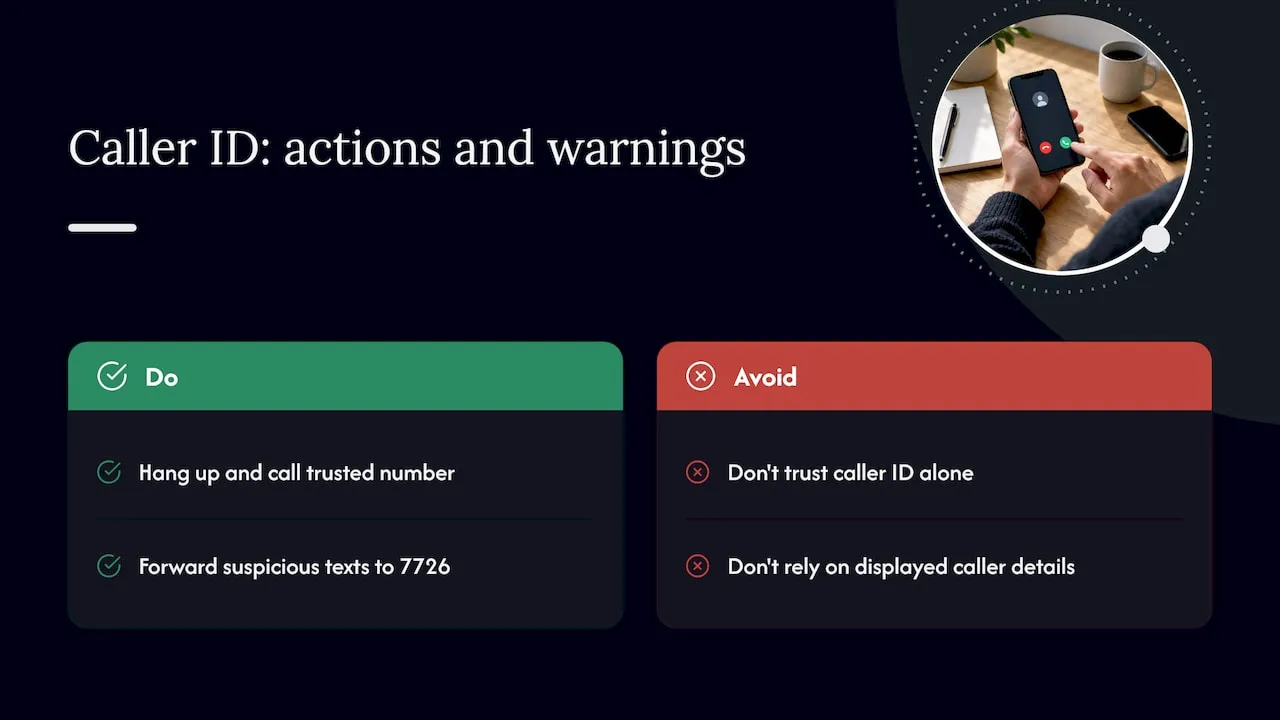
Forwarding itself is a legitimate feature, but CLI is not proof of identity. Spoofing, where someone deliberately fakes a caller ID to look trustworthy, is a different and harmful practice that exploits the same CLI systems. Guidance from Stop! Think Fraud advises hanging up on a suspicious call and ringing the organisation back on a trusted number you already have, rather than trusting whatever name or number appears on screen. Forward any suspicious text to 7726, which lets your provider investigate for free.
Costs and billing for diverted calls
Forwarded calls are often billed as an outgoing call from your original number, even though you never dialled anything, so the diversion leg can draw on your inclusive minutes or incur a separate charge depending on your provider. It is worth checking your tariff for how diverted minutes are counted, particularly if you forward to an international number or a premium-rate destination, since those routes can carry charges well above a standard call.
Troubleshooting common forwarding problems
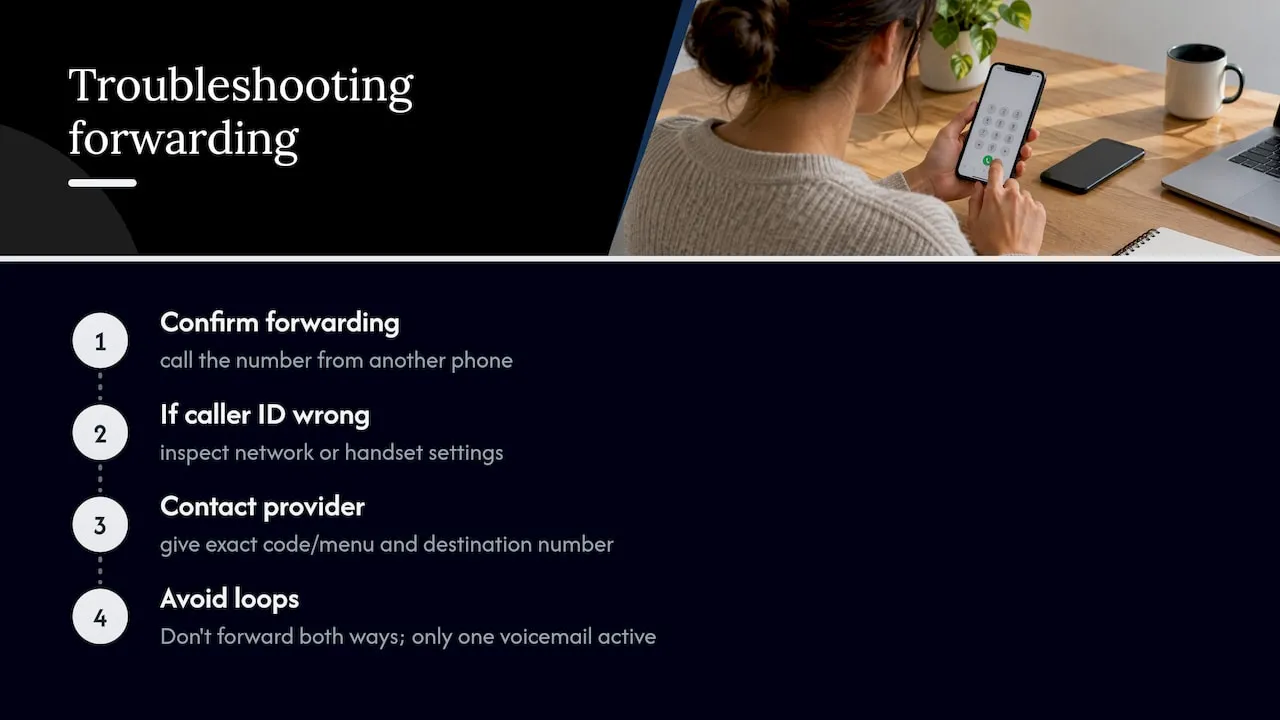
If calls are not forwarding, first confirm the feature is still active by calling the number from another phone. Unexpected or missing caller ID usually points to a network or handset setting rather than a fault with forwarding itself. If the problem persists, contact your provider with the exact code or menu setting you used, and the destination number, so they can check it on their side. To avoid loops, never forward two numbers to each other, and make sure only one destination has voicemail switched on.
A phone-number provider’s view on forwarding
As a provider of memorable UK numbers, we see forwarding used constantly to keep a single public number working across different staff, locations and devices. Pairing a memorable number with proper routing removes the guesswork of codes and toggles, because the number itself becomes the constant point of contact, however calls are ultimately answered.
— Rob
How Phonenumbers can simplify your call routing
Setting up forwarding on your own handset works well for a single person, but it gets awkward once several numbers, team members or devices need to share one public identity. Some providers sell and rent memorable UK landline, mobile and non-geographic numbers, and these can be configured to route calls anywhere rather than tied to a single handset or location.
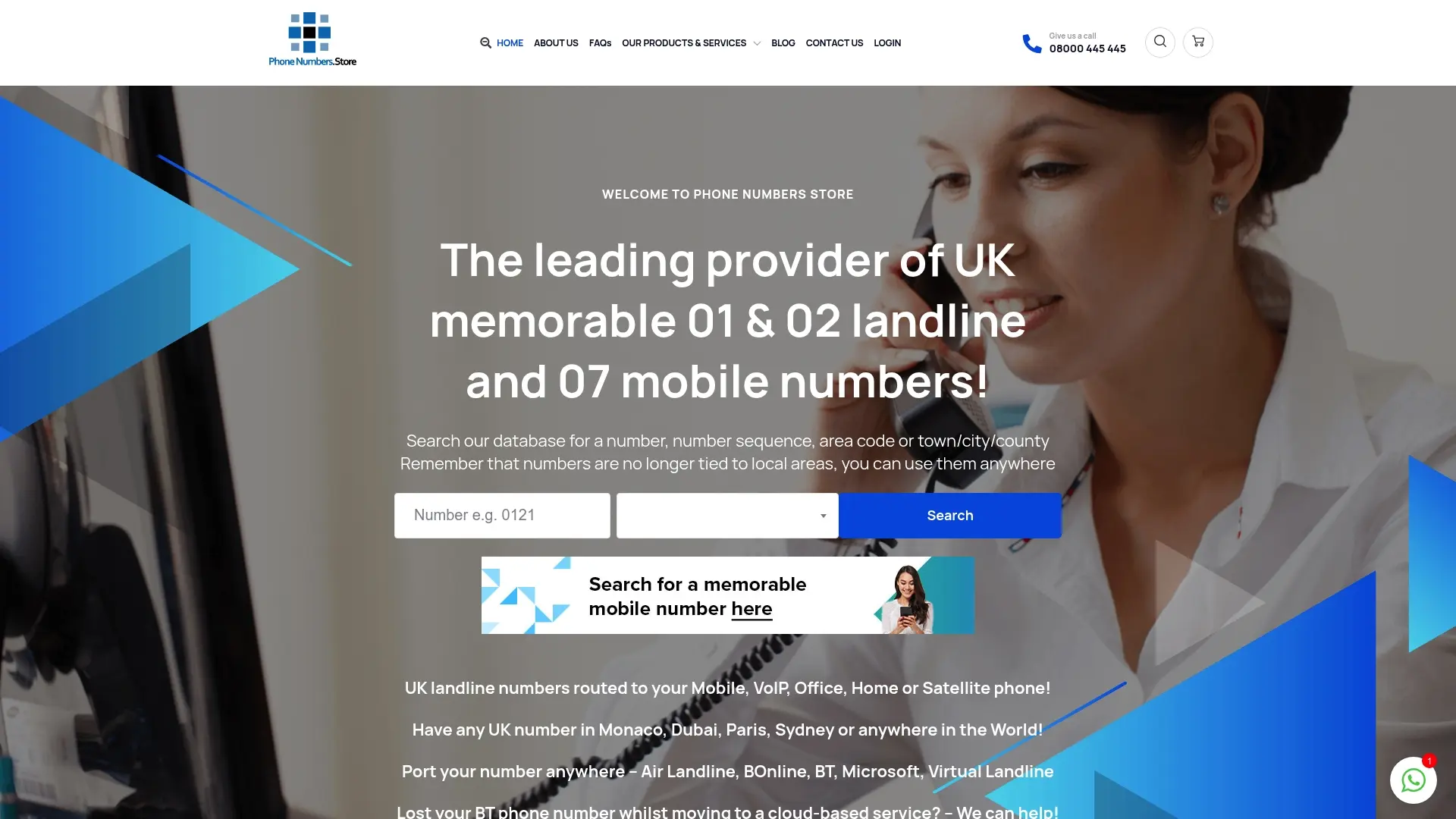
- Buy or rent a memorable number through the number search to replace ad hoc forwarding with one number your customers always recognise.
- Pair a number with hosted routing such as the XL Premier Service, which has a monthly fee plus a one-off set-up charge, to send calls straight to a mobile or team without manual codes.
- Move to a VoIP handset with the XL Hosted Voice Service (XLHV) which involves a monthly fee and a one-off set-up charge, if you want a proper desk phone behind the number.
If you already have a number you want to keep, start at Phonenumbers to see the current options for buying, renting or hosting it.
Sources
For routing ideas beyond basic forwarding, see this guide to service call routing and Call Time on missed-call handling. Report scam calls to the NCSC or follow Gov.
- How to spot phone fraud - Stop! Think Fraud
FAQ
Should I keep call forwarding on or off?
Leave it off unless you have a specific reason, such as travelling or expecting to miss calls, since forwarding can add extra charges and complicate caller ID. Switch it on only when you know where calls need to go and for how long.
What happens if you turn on call forwarding?
Incoming calls to your number are redirected to the destination number or device you set, instead of ringing on your original phone. Depending on the type you choose, this can apply to every call or only when you are busy, unreachable or do not answer.
What are the disadvantages of call forwarding?
The main drawbacks are possible extra call charges for the diverted leg, caller ID that can look unfamiliar to the person receiving the call, and the fact that forwarding alone does not provide voicemail, recording or queuing. For businesses with more complex needs, a hosted phone system usually covers those gaps better.
What happens when you call someone and it says call forwarded?
It means the number you dialled has forwarding switched on, and your call is being redirected to another number or device rather than ringing the original line directly. You may notice a short delay or a different ringtone while the network completes the redirect.