
Most British small businesses miss out on wider customer reach by sticking to local telephone numbers. For taxi services and plumbing companies, a memorable UK-wide phone number can instantly boost trust and connect your brand to thousands of potential clients across the country. With Ofcom’s regulations making national numbers accessible, you gain the flexibility to route calls efficiently and present a unified, professional image. Discover the smart strategies British entrepreneurs use to outpace the competition and attract more customers beyond their local area.
Table of Contents
- UK Wide Numbers Explained For Businesses
- Types Of UK Wide Number – 01, 02 & 07
- How UK Wide Numbers Boost Customer Reach
- Cost, Compliance, And VoIP Considerations
- Common Mistakes And Best Practice Tips
Key Takeaways
| Point | Details |
|---|---|
| Flexible Communication Options | UK businesses can select from various telephone numbers, including geographic, mobile, and non-geographic, enhancing their communication strategies without geographical limitations. |
| Professional Image and Customer Perception | Adopting UK-wide numbers can significantly improve customer trust and perception, making businesses appear more established and accessible nationally. |
| Cost-effective Innovation | VoIP solutions offer small businesses a scalable, cost-effective communication method, allowing for advanced features without significant capital investment. |
| Compliance and Strategy Awareness | Awareness of regulatory requirements is crucial; businesses should review their communication practices regularly to ensure compliance and effective growth. |
UK wide numbers explained for businesses
Telephone numbers in the United Kingdom offer businesses flexible communication options that extend far beyond traditional local constraints. The National Telephone Numbering Plan administered by Ofcom provides businesses with strategic number choices that can transform their communication approach.
Businesses can select from several number types, including geographic numbers beginning with 01 and 02, which are traditionally linked to specific areas, and mobile numbers starting with 07. The critical advantage is that modern businesses are no longer restricted by geographical limitations. Non-geographic numbers allow companies to establish a national presence regardless of their physical location, presenting a professional and expansive image to potential customers.
Ofcom’s regulations ensure that UK businesses can choose numbers that enhance their professional communication strategy. These numbers provide several key benefits: consistent national accessibility, improved customer perception, and the flexibility to route calls efficiently across multiple locations or remote teams. Small businesses, particularly in service industries like taxi services or plumbing, can appear more established and trustworthy by using a UK-wide number.
Pro tip: When selecting a UK-wide number, consider your target audience and choose a number sequence that is memorable and reflects your business brand.
Types of UK wide number – 01, 02 & 07
The United Kingdom’s telephone numbering system offers businesses multiple strategic communication options through distinct number types. Geographic telephone numbers beginning with 01 and 02 provide localised connectivity, allowing companies to establish a regional presence while maintaining national accessibility.
Understanding these number categories is crucial for small businesses seeking professional communication strategies. Geographic numbers (01 and 02) are traditionally associated with specific regions, with codes varying from two to five digits. These landline numbers enable businesses to create a sense of local authenticity, which can be particularly beneficial for service-based enterprises like plumbing or taxi services that rely on regional trust and recognition.

Mobile numbers starting with 07 represent a different communication approach, offering personal and flexible connectivity. UK phone number formats demonstrate how these mobile numbers provide professionals with greater mobility and accessibility. Unlike geographic numbers, 07 numbers are not tied to a specific location, making them ideal for businesses with remote teams, freelancers, or entrepreneurs who require constant connectivity across different regions.
Pro tip: Consider combining different number types strategically to maximise your business communication approach, potentially using a geographic number for landline contact and a mobile number for direct accessibility.
Here’s a comparison of major UK business phone number types and their strategic uses:
| Number Type | Key Characteristics | Typical Business Use |
|---|---|---|
| Geographic (01/02) | Regional association, fixed location | Building local trust, appearing community-focused |
| Mobile (07) | Location-independent, flexible | Serving mobile teams, enabling remote working |
| Non-geographic | National presence, not area-specific | Presenting a broader brand image, unifying contact point |
How UK wide numbers boost customer reach
Small businesses can significantly expand their market presence by leveraging UK telecommunications infrastructure. These wide-reaching phone numbers eliminate geographical barriers, allowing businesses to project a national image regardless of their physical location. By adopting a UK-wide number, companies can instantly appear more professional and accessible to potential customers across different regions.
Customer perception plays a crucial role in business growth. When businesses use consistent, memorable contact numbers, they create an impression of reliability and established presence. National accessibility becomes a powerful marketing tool, enabling small enterprises to compete with larger organisations by removing regional limitations. This approach is particularly effective for service-based businesses like plumbing, taxi services, and consulting, where geographic flexibility can be a significant competitive advantage.
The strategic use of UK-wide numbers goes beyond simple communication. Business customer attraction strategies demonstrate that a single, consistent contact point builds trust and simplifies customer interactions. Modern businesses can route calls efficiently, manage communication across multiple locations, and present a unified brand image. This approach not only enhances customer reach but also provides scalability for growing enterprises seeking to expand their market presence.
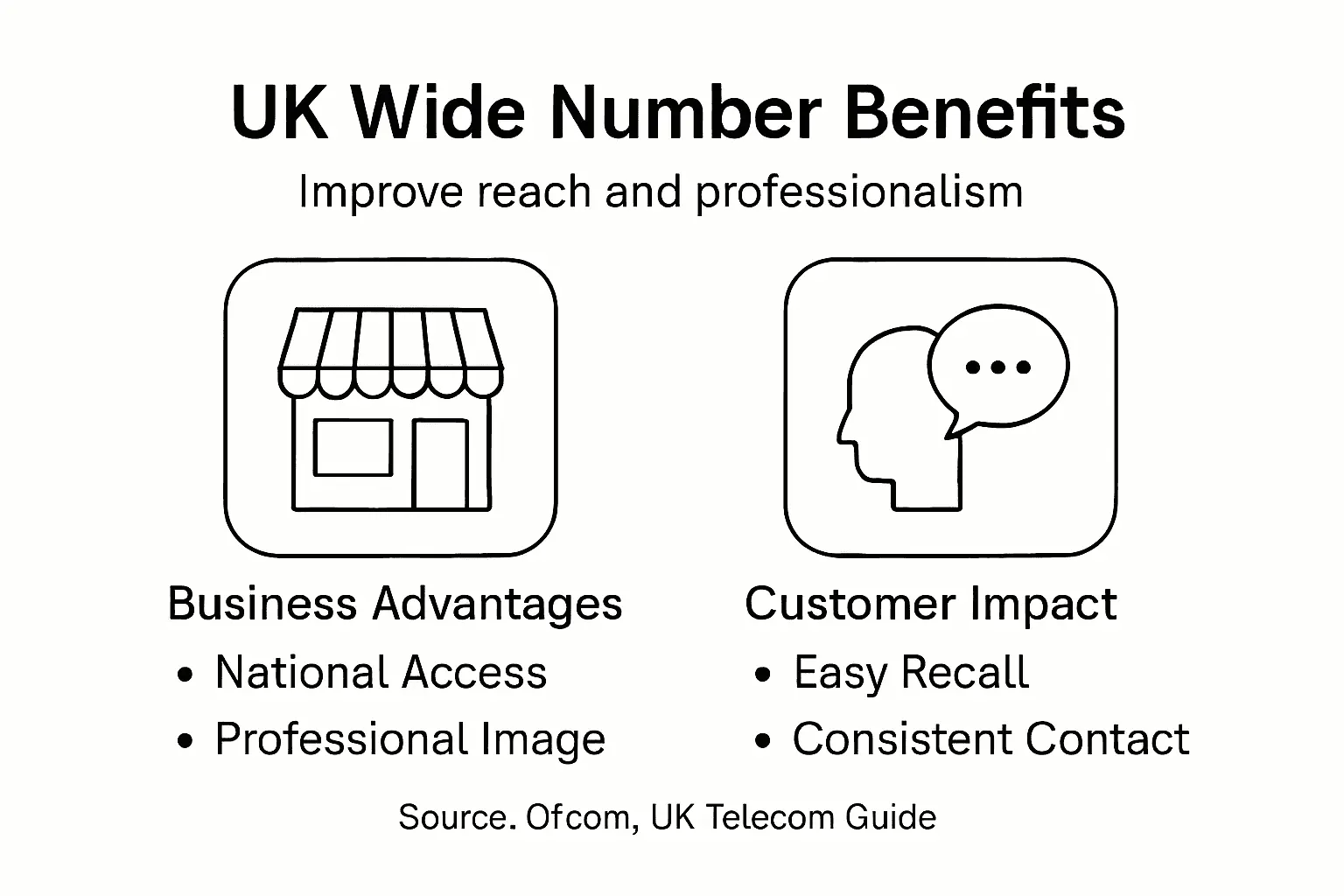
Pro tip: Choose a memorable number sequence that reflects your brand and makes it easy for customers to recall your contact information.
Cost, compliance, and VoIP considerations
Small businesses increasingly turn to VoIP communication solutions as a cost-effective alternative to traditional telephone systems. These internet-based communication platforms offer significant financial advantages, allowing companies to reduce communication expenses while maintaining professional connectivity. By leveraging Voice over Internet Protocol technologies, businesses can streamline their communication infrastructure and allocate resources more efficiently.
Compliance represents a critical consideration when implementing VoIP systems. UK businesses must navigate complex regulatory landscapes, ensuring that their communication technologies meet stringent data protection and privacy standards. This involves carefully selecting providers who demonstrate robust security protocols, protecting sensitive customer information, and maintaining transparency in communication practices. Small enterprises must balance technological innovation with legal requirements to build and maintain customer trust.
The economic benefits of VoIP extend beyond immediate cost savings. Scalable communication solutions enable businesses to adapt their phone systems as they grow, without significant infrastructure investments. Features like call routing, virtual receptionist services, and integrated messaging platforms provide small businesses with enterprise-level communication capabilities. These technologies level the playing field, allowing smaller organisations to compete effectively with larger competitors by presenting a professional and technologically advanced communication approach.
Pro tip: Conduct a comprehensive audit of your current communication expenses and potential VoIP solutions to identify precise cost-saving opportunities and compliance requirements.
Common mistakes and best practice tips
Navigating the complex landscape of UK business communications requires careful strategy and awareness of potential pitfalls. Small business mistakes often stem from hasty decision-making and inadequate planning, particularly when selecting communication technologies. Entrepreneurs must approach their number selection and telecommunication systems with a strategic mindset, avoiding common errors that could compromise their professional image and operational efficiency.
Regulatory compliance represents a critical consideration for businesses implementing new communication systems. Many small enterprises make the mistake of overlooking legal requirements, potentially exposing themselves to significant risks. This includes failing to understand data protection regulations, neglecting privacy standards, and not maintaining proper call recording and communication documentation. Businesses must carefully evaluate their communication infrastructure, ensuring it meets all relevant UK legal and telecommunications standards.
Practical best practices involve conducting thorough research and seeking expert guidance before making significant communication technology investments. Avoiding business formation mistakes requires a proactive approach, including comprehensive planning, understanding regulatory obligations, and implementing robust systems. Small businesses should prioritise scalable solutions that can grow with their organisation, maintain flexibility, and provide professional communication capabilities without unnecessary complexity.
Pro tip: Conduct a comprehensive communication audit every six months to ensure your telecommunication strategy remains aligned with your business growth and regulatory requirements.
To help avoid common pitfalls, here’s a summary of frequent UK telecom mistakes and best practice tips for small businesses:
| Pitfall | Impact | Best Practice Tip |
|---|---|---|
| Overlooking compliance | Legal risks, penalties | Regularly review regulations and standards |
| Poor number choice | Limited customer trust | Select memorable, brand-reflecting numbers |
| Neglecting scalability | Inefficient future growth | Invest in scalable VoIP and communication |
| Insufficient call routing | Missed enquiries, poor service | Implement flexible call management solutions |
Elevate Your Small Business with a UK Wide Number from PhoneNumbers.Store
Choosing the right UK wide number is a crucial step for any small business looking to build trust, enhance national accessibility and create a memorable brand identity. The challenge many business owners face is finding a number that not only reflects their professional image but also aligns with their growth strategy. At PhoneNumbers.Store, we understand these pain points and offer an extensive searchable database where you can find the perfect 01, 02 landline or 07 mobile number no longer tied to any local area.
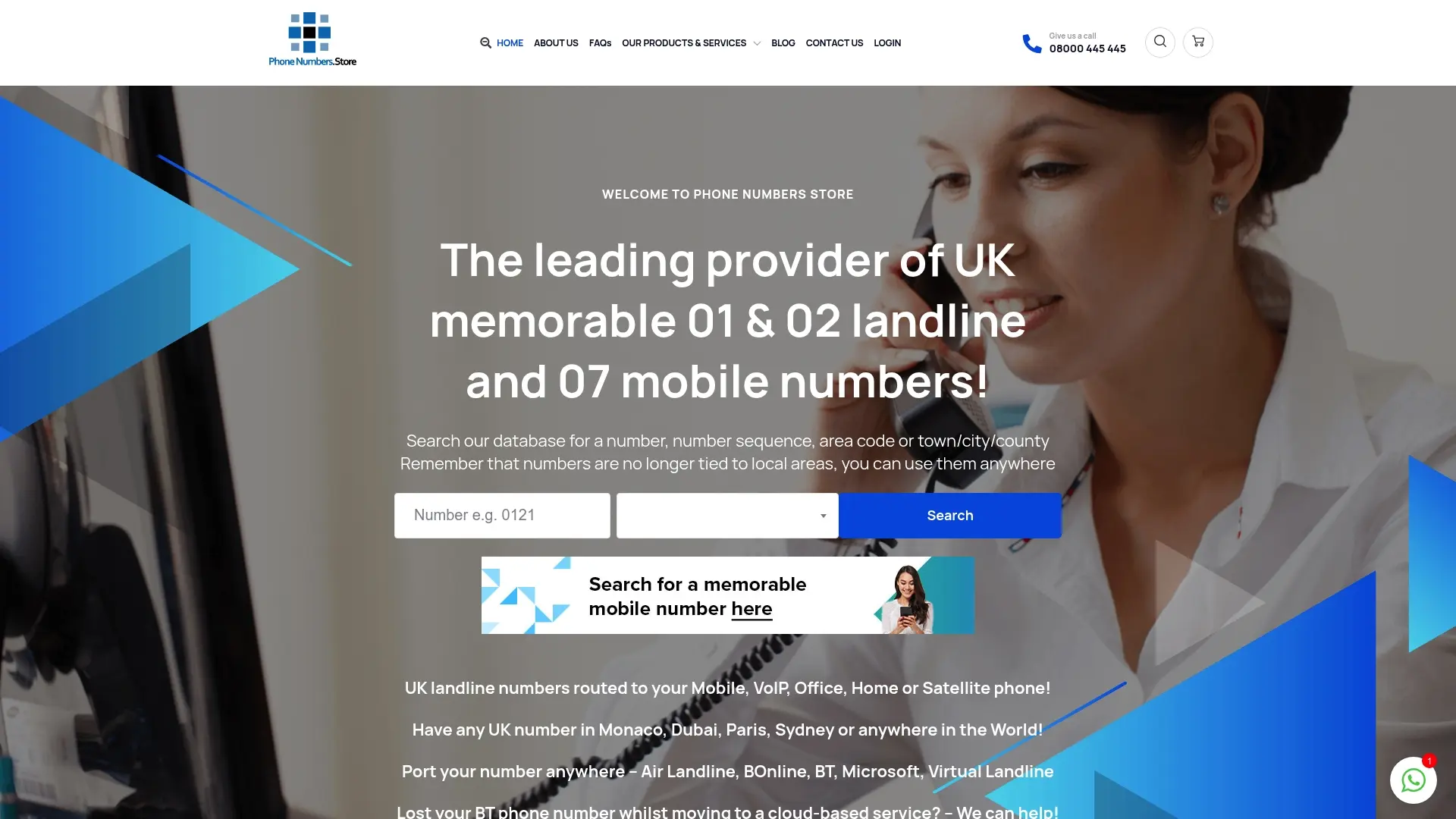
Don’t let your business communication fall behind. Take control of how customers perceive you by selecting a UK wide number that stands out and supports scalable, flexible call routing solutions discussed in the article. Visit PhoneNumbers.Store now to search by number sequence, area code or city and secure the number that best suits your brand’s ambitions. Start expanding your customer reach today by exploring our wide selection of memorable UK phone numbers at PhoneNumbers.Store.
Frequently Asked Questions
What are the key benefits of using UK wide numbers for small businesses?
UK wide numbers enhance professional image, provide national accessibility, improve customer perception, and allow for flexible call routing, making them ideal for businesses seeking to expand their market reach.
How do geographic numbers differ from mobile numbers in the UK?
Geographic numbers are linked to specific regions, giving a local presence, while mobile numbers are location-independent, offering greater flexibility for businesses with remote teams or those that require mobility.
Can using a non-geographic number help my small business?
Yes, non-geographic numbers can project a national presence, making your business appear more professional and accessible to customers, regardless of your physical location.
What should I consider when choosing a UK wide number for my business?
Consider your target audience and select a memorable number sequence that reflects your brand, ensuring consistency and ease of recall for your customers.