TL;DR:
- Over 90% of SMS messages are read within three minutes, making them highly effective for business communication. Small businesses can use SMS-enabled numbers for automated, personalized, and cost-efficient customer outreach. While alternatives like WhatsApp and RCS are emerging, SMS remains simple, reliable, and trusted for high open rates and quick responses.
Over 90% of SMS messages are read within 3 minutes of being received. That figure alone should make any small business owner sit up and take notice. Email open rates hover around 20%, social media posts vanish in crowded feeds, and phone calls often go unanswered. For UK small businesses struggling to cut through the noise and keep customers engaged, SMS-enabled numbers offer a remarkably direct and cost-effective solution. This article explains what SMS-enabled numbers are, why they work so well, how to use them practically, and how they compare to newer alternatives.
Table of Contents
- Understanding SMS-enabled numbers and how they work
- Key benefits for small businesses: engagement, efficiency, and ROI
- Practical uses: automating communication and improving customer experience
- Choosing SMS, apps, or new tech? Pros, cons, and future outlook
- Our view: what most small businesses get wrong with SMS-enabled numbers
- Secure your SMS-enabled number for business success
- Frequently asked questions
Key Takeaways
| Point | Details |
|---|---|
| Exceptional engagement rates | SMS-enabled numbers deliver message open rates over 90 percent, hugely boosting your customer outreach. |
| Cost-effective automation | Automated SMS can slash call volume, reduce appointment no-shows, and free up your staff’s time. |
| Clear choice versus alternatives | While apps are rising, SMS remains uniquely reliable, regulated, and easy to adopt for UK small businesses. |
| Transactional versus marketing use | Combining transactional and promotional SMS campaigns drives both engagement and ROI across diverse business goals. |
Understanding SMS-enabled numbers and how they work
An SMS-enabled number is a dedicated phone number that can both send and receive text messages through a business platform or software system. It is not the same as a personal mobile number or a shared shortcode used by multiple brands. Businesses require dedicated numbers because shared or personal numbers are typically blocked for application-to-person (A2P) SMS delivery by UK mobile networks.
So how does the technology actually work? When you send a message through a business SMS platform, your text travels from the platform to an SMS aggregator, which then routes it through the relevant mobile network to your customer’s handset. The whole process takes seconds. Your dedicated number acts as the sender identity, so customers see a consistent, recognisable name or number every time.
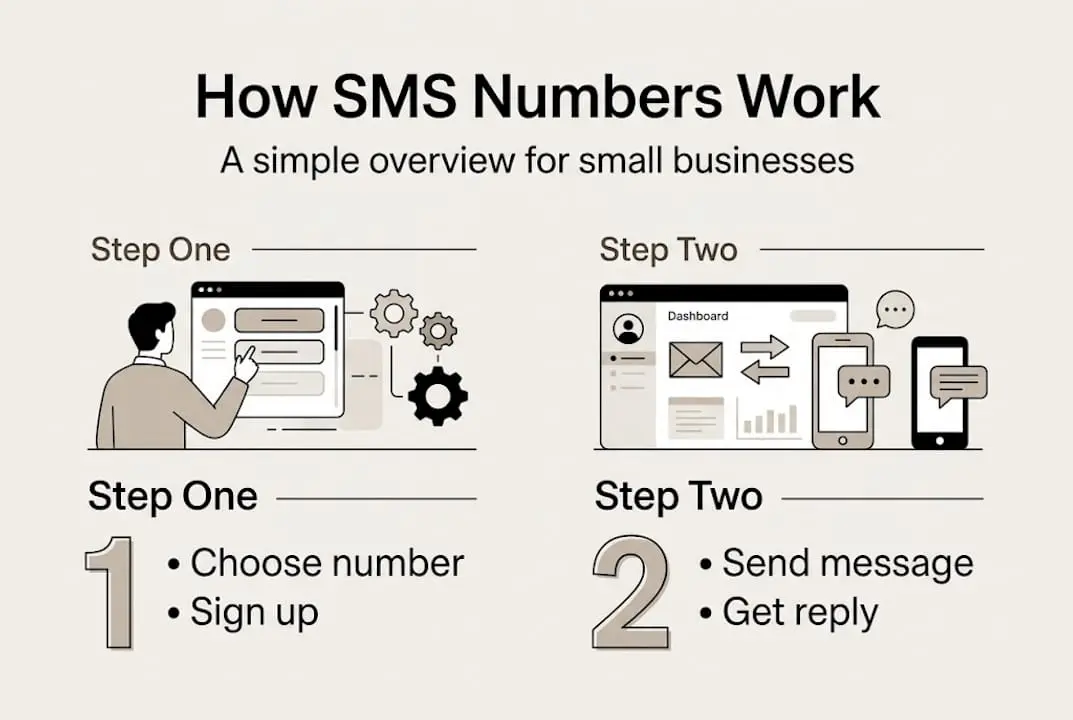
Setting one up is simpler than most business owners expect. You choose a number, sign up with an SMS service provider, and connect your number to their platform. Many providers offer APIs (application programming interfaces, which are tools that let different software systems talk to each other) that plug directly into your existing CRM (customer relationship management) software or booking system. This means messages can be triggered automatically based on customer actions, such as making a purchase or booking an appointment.
Here is a quick overview of what SMS-enabled numbers typically cost and what you get:
| Feature | Detail |
|---|---|
| Monthly number rental | £2 to £14 per month |
| Message cost | Pence per message, varies by volume |
| API integration | Available with most providers |
| Two-way messaging | Included with dedicated numbers |
| Automation support | Yes, via CRM or third-party tools |
Typical use cases for UK small and medium enterprises (SMEs) include:
- Appointment reminders for salons, clinics, and tradespeople
- Order and delivery updates for e-commerce and local retailers
- Payment reminders for service businesses and freelancers
- Promotional campaigns for cafes, restaurants, and independent shops
- Customer feedback requests after a service or purchase
If you are exploring the business cases for SMS numbers or thinking about the broader value of custom phone numbers for your brand, the underlying principle is the same: a dedicated, recognisable number builds trust and makes your communications far more effective.
Key benefits for small businesses: engagement, efficiency, and ROI
Now you know how SMS-enabled numbers work, let’s see why they are so powerful for UK small businesses. The numbers are genuinely striking. According to a 2025 industry benchmarks report, 94% of recipients responded neutrally or positively to business SMS, 87% did not opt out, and the average ROI was £29 returned for every £1 spent.
Think about what that means in practice. If you run a hair salon and spend £50 on an SMS reminder campaign, you could reasonably expect hundreds of pounds in retained bookings. If you run a plumbing business and send a payment reminder, most customers will act on it quickly rather than ignore it.
Here is how SMS compares to other common communication channels:
| Channel | Open rate | Response rate | Average cost per message |
|---|---|---|---|
| SMS | 90%+ | Up to 45% | Pence |
| ~20% | ~6% | Low but declining ROI | |
| Social media post | ~5% organic reach | Variable | Free to paid |
| Phone call | Variable | Often ignored | Staff time |
“87% of customers who received business SMS did not opt out, and the average ROI reached £29 for every £1 spent.” — TrueDialog 2025 SMS Benchmarks Report
Beyond open rates, SMS-enabled numbers reduce the burden on your team. Automated reminders mean staff spend less time chasing customers by phone. Appointment reminders alone reduce no-shows by 42.8%, which for a small business can represent thousands of pounds in recovered revenue each year.
It is also worth understanding the difference between transactional and marketing SMS. Transactional SMS covers essential communications like order confirmations, delivery updates, and appointment reminders. Marketing SMS covers promotions, offers, and campaigns. Both serve different purposes, and combining them strategically gives you a well-rounded communication approach.
For more ideas on how to get the most from your number, have a look at these mobile number business tips tailored specifically for UK businesses.
Pro Tip: Reserve SMS for high-value, time-sensitive messages. A flash sale ending tonight or a same-day appointment slot is perfect for SMS. A general newsletter is better suited to email.
Practical uses: automating communication and improving customer experience
Beyond the big picture benefits, let’s break down the practical ways you can apply SMS-enabled numbers day to day. SMS automation can cut outbound calls significantly and streamline repetitive tasks that currently eat into your team’s time.
Here is a step-by-step example of a simple SMS workflow for a small trades business:
- Customer books a job via your website or phone
- Automated confirmation SMS is sent immediately with date, time, and contact details
- Reminder SMS goes out 24 hours before the appointment
- Follow-up SMS is sent after the job asking for a review or feedback
- Payment reminder SMS is triggered if an invoice remains unpaid after 7 days
This entire sequence can run without any manual input once it is set up. A workflow automation guide can help you map out the right triggers and timing for your specific business type.
Personalisation makes a real difference too. Customers respond far better to a message that includes their name and references their specific booking than to a generic blast. Most SMS platforms let you insert these details automatically using data from your CRM.
For inspiration on how different trades use phone numbers strategically, take a look at landline use cases for taxi firms and plumbers, or explore how mobile numbers for trades can be used to build credibility and streamline operations.
Here are some of the most effective everyday automations for UK SMEs:
- Booking confirmations sent instantly after a customer schedules online
- Delivery status updates triggered by your logistics or e-commerce system
- Low stock alerts for wholesale or trade customers
- Loyalty rewards sent after a set number of purchases
- Seasonal promotions timed to key dates like bank holidays or local events
Pro Tip: Segment your customer list before sending campaigns. A message about a lunchtime deal works brilliantly for regulars near your premises but is irrelevant to customers who only order online. Segmentation lifts response rates and reduces opt-outs.
Choosing SMS, apps, or new tech? Pros, cons, and future outlook
With usage covered, it is essential to know how SMS-enabled numbers compare to the competition and what the future holds. The messaging landscape is changing. WhatsApp Business, RCS (Rich Communication Services, the next-generation SMS standard), and branded apps are all competing for the same customer attention.
60% of Brits prefer apps for simplicity, and silent notification authentication (SNA) is beginning to replace SMS for one-time passwords, signalling a gradual shift in how businesses use text messaging.
Here is a comparison to help you decide which channel suits your business:
| Channel | Reach | Cost | Interactivity | Set-up complexity |
|---|---|---|---|---|
| SMS | Universal | Low | Basic | Simple |
| WhatsApp Business | High (smartphone users) | Low to medium | Rich media | Moderate |
| RCS | Growing | Medium | Rich media | Moderate |
| Branded app | Opt-in only | High | Full | Complex |
SMS still holds clear advantages for many UK small businesses:
- No app download required from the customer
- Works on every mobile phone, including older handsets
- Regulated and trusted by UK consumers
- Fastest set-up of any messaging channel
- Lower cost than developing or maintaining an app
The drawbacks are real though. SMS messages are limited to 160 characters per segment, cannot include images natively (without MMS, multimedia messaging), and younger audiences increasingly prefer richer messaging experiences. If your customer base skews under 30 and uses smartphones exclusively, WhatsApp or RCS may complement your SMS strategy well.
For a broader view of how mobile communication is evolving for UK businesses, the rise of business mobile numbers is worth reading before you make any final decisions.
The smartest approach in 2026 is not to pick one channel and abandon the rest. It is to understand which channel suits which message type and customer segment, then build a layered strategy accordingly.
Our view: what most small businesses get wrong with SMS-enabled numbers
Having helped many small businesses find the right phone numbers for their needs, we have noticed a consistent pattern. Most businesses that invest in SMS-enabled numbers start strong, set up a few automations, and then treat the whole thing as done. They never revisit it. That is a significant missed opportunity.
SMS is not a set-and-forget tool. It is a relationship channel. The businesses that get the best results are the ones that regularly review their message timing, test different copy, and segment their audience as it grows. A reminder sent at 8am hits differently from one sent at 11am. A message that uses a customer’s first name outperforms a generic one every time.
Many SMEs also underestimate the creative potential of SMS. Flash sales, VIP early access, local event invitations, and personalised loyalty rewards are all possible within 160 characters. SMS works best when it complements your other channels rather than replacing them. Pair it with your email list and social presence, and you have a genuinely powerful communications mix. Before committing to any number, it is worth reading whether an exclusive phone number is right for you to make sure you are set up for long-term success.
Secure your SMS-enabled number for business success
If the statistics and practical examples in this article have convinced you that SMS-enabled numbers deserve a place in your business communications, the next step is straightforward. At Phone Numbers Store, we specialise in memorable UK landline and mobile numbers that help small businesses stand out and communicate with confidence.
Whether you want a recognisable 07 mobile number for SMS campaigns or a professional 01 or 02 landline number that doubles as your business identity, you can buy a phone number from our searchable database today. You can search by number sequence, area code, or town to find exactly what fits your brand. For a taste of what is available, take a look at this memorable business number as an example of the kind of standout number that makes your business instantly recognisable.
Frequently asked questions
How much do SMS-enabled numbers cost for small businesses in the UK?
Most UK business SMS-enabled numbers cost between £2 and £14 per month for the number itself, with additional charges per message depending on your volume.
Can I use my personal mobile number for business SMS campaigns?
No. Personal and shared numbers are typically blocked for application-to-person SMS delivery by UK mobile networks, so a dedicated business number is essential.
Do SMS reminders really reduce appointment no-shows?
Yes. Research shows that SMS reminders cut no-shows by 42.8%, which can recover significant revenue for appointment-based businesses over the course of a year.
What is the difference between transactional and marketing SMS?
Transactional SMS covers essential updates like order confirmations and reminders, while marketing SMS is used for promotional offers, campaigns, and loyalty incentives.
Are there better alternatives to SMS for business in 2026?
SMS remains highly reliable and cost-effective, but WhatsApp and RCS are growing in popularity, particularly for businesses whose customers prefer richer, more interactive messaging experiences.