
Did you know that over 50 percent of UK consumers judge a business by its phone number before ever making a call? The choice of business phone number shapes everything from how customers perceive your company to what they pay when they pick up the phone. With so many options and strict regulations in place, picking the right number goes far beyond simple convenience and plays a direct role in building trust, professionalism, and brand identity.
Key Takeaways
| Point | Details |
|---|---|
| Importance of Number Selection | Choosing the right business phone number can influence customer perception and accessibility significantly. |
| Types of Business Numbers | There are various business number types (e.g., geographic, non-geographic, freephone) that serve distinct strategic purposes. |
| Legal Compliance with Ofcom | Understanding telecommunications regulations and compliance is critical for maintaining a reliable business communication infrastructure. |
| Cost Transparency | Businesses must clearly communicate potential call costs to customers to avoid dissatisfaction and comply with legal requirements. |
Table of Contents
- Understanding Uk Business Phone Numbers
- Types Of Business Numbers And Uses
- Legal Requirements And Ofcom Regulations
- Number Portability And Area Code Rules
- Costs, Compliance, And Common Pitfalls
Understanding UK Business Phone Numbers
Choosing the right phone number for your business is more than just picking a set of digits. Business phone numbers in the UK are complex communication tools that impact how customers perceive and interact with your company. According to Government Call Charges Guidelines, different number prefixes carry varying call costs that can significantly influence customer accessibility.
The UK telephone numbering system offers several strategic options for businesses:
- Geographic Numbers (01 and 02): Traditional local area codes that suggest a specific regional presence
- Non-Geographic Numbers (03): National numbers that provide a professional, location-independent image
- Freephone Numbers (0800): Eliminate caller costs, encouraging customer communication
- Business Rate Numbers (084, 087): Revenue-sharing numbers that can offset operational telecommunications expenses
As Wikipedia’s research on non-geographic telephone numbers explains, these number ranges aren’t just random digits—they’re strategic communication tools. For taxi firms or plumbing businesses operating across multiple regions, choosing the right number prefix can project a national presence while managing caller perception and communication costs.
Understanding these nuances helps businesses make informed decisions.
Whether you’re a small local service or a growing national brand, your phone number speaks volumes about your professional approach before you even answer the call.
Types of Business Numbers and Uses
Business phone numbers in the United Kingdom are far more than simple communication channels—they’re strategic tools that can shape customer perception and operational efficiency. According to research on non-geographic telephone numbers, different number ranges serve specific business purposes and communicate distinct professional signals.
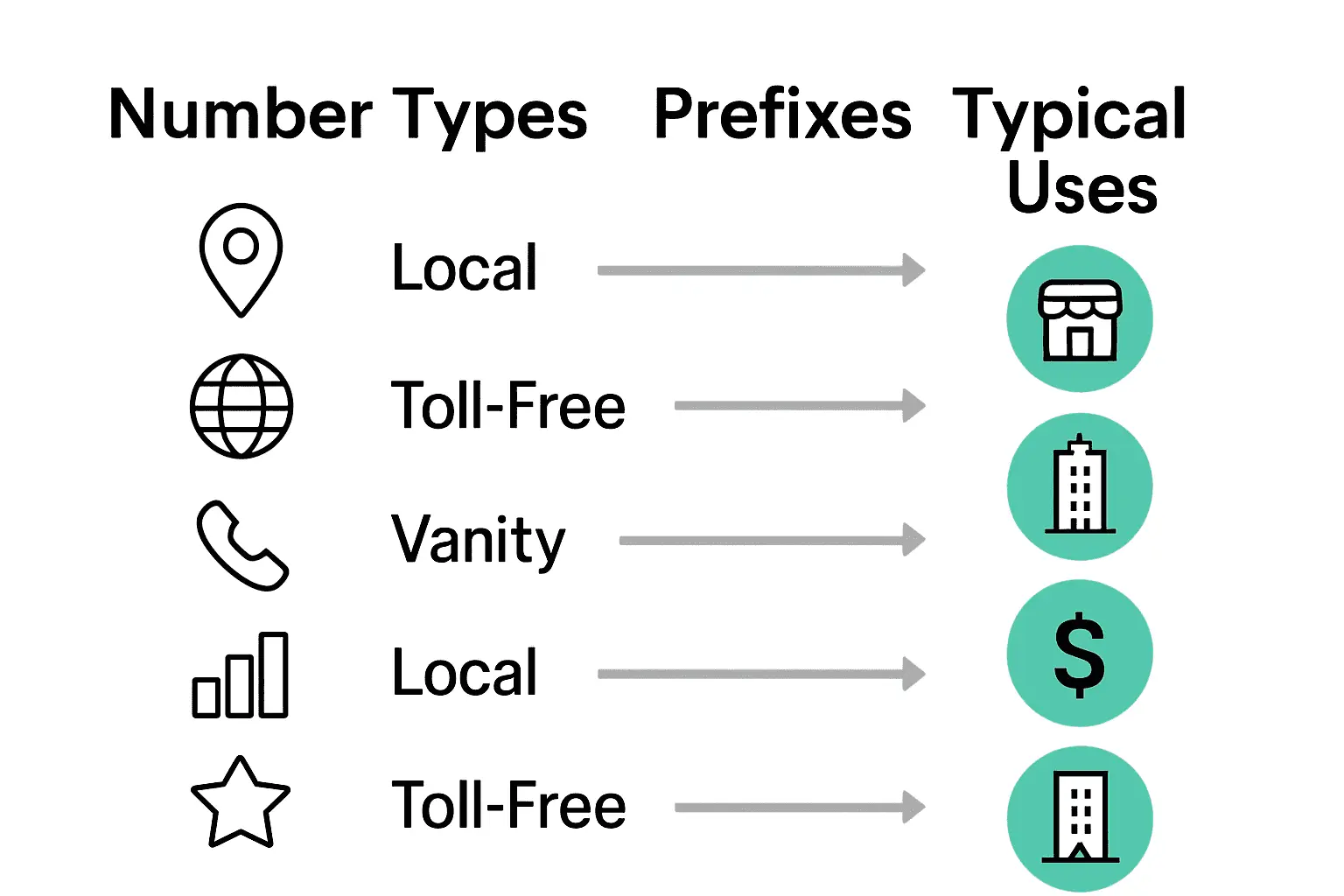
Here’s a breakdown of key business number types:
Here’s a comparison of the main types of UK business phone numbers:
| Number Type | Prefixes | Caller Cost | Typical Business Usage |
|---|---|---|---|
| Geographic | 01, 02 | Standard local rate | Local presence, regional businesses |
| Non-Geographic | 03 | Standard national rate | National image, customer service |
| Freephone | 0800, 0808 | Free for caller | Sales lines, support, marketing |
| Business Rate | 084, 087 | Access + service charge | Revenue sharing, offset costs |
| Premium Rate | 09, 118 | High, regulated | Specialised info, competitions |
- Freephone Numbers (0800/0808): Perfect for customer support and marketing campaigns, these numbers eliminate caller charges, encouraging more customer interactions
- Standard Rate Numbers (03): Ideal for national businesses wanting a professional, location-independent image without additional caller costs
- Revenue-Sharing Numbers (084/087): Strategic for businesses looking to offset communication expenses while providing a national presence
- Premium Rate Numbers (09/118): Used for specialized services where businesses generate revenue directly through call charges
As Wikipedia’s detailed analysis explains, premium-rate numbers are strictly regulated by the Phone-paid Services Authority, ensuring transparent pricing and protecting consumer interests. For taxi firms or plumbing businesses operating across multiple regions, selecting the right number type can significantly impact customer trust and communication effectiveness.
Choosing the appropriate number isn’t just about functionality—it’s about crafting your business’s first point of professional contact. Each prefix tells a story about your brand’s approach, accessibility, and commitment to customer communication.
Legal Requirements and Ofcom Regulations
Phone number regulations in the UK are not just bureaucratic paperwork—they’re critical safeguards protecting businesses and consumers alike. Ofcom’s legal framework, established under the Communications Act 2003, provides comprehensive guidelines that ensure fair, transparent, and efficient telecommunications practices for businesses across the United Kingdom.
Key regulatory aspects that businesses must understand include:
- Number Portability: Businesses can transfer phone numbers between providers without losing their established contact identity
- Compliance Enforcement: Ofcom possesses robust powers to ensure telecommunications companies adhere to standard practices
- Consumer Protection: Regulations prevent arbitrary number changes or unexpected service disruptions
- Technical Standards: Established through the Network Interoperability Consultative Committee (NICC) to maintain consistent communication infrastructure
The legal mechanisms, including General Conditions B3/C7, create a structured environment where taxi firms, plumbers, and other service-based businesses can confidently manage their telecommunications infrastructure. These regulations ensure that your business number remains a stable, reliable point of contact, regardless of changes in service providers or technological upgrades.
Ultimately, understanding Ofcom’s regulations isn’t just about legal compliance—it’s about securing your business’s communication backbone and maintaining professional reliability in an increasingly connected marketplace.
Number Portability and Area Code Rules
Number portability has revolutionized how businesses manage their telecommunications infrastructure. Ofcom’s regulatory framework under the Communications Act 2003 ensures businesses can seamlessly transfer their phone numbers between providers without disrupting their established communication channels.
The Porting Authorisation Code (PAC) system provides crucial flexibility for businesses:
- Mobile Number Transfers: Providers must issue PAC within 2 working hours
- PAC Validity: Code remains active for 30 days after issue
- Transfer Window: Number can be transferred between 1-32 days after PAC generation
- Minimal Fees: Small administrative charges are permitted during the porting process
According to Wikipedia’s detailed analysis, this system is coordinated through multiple industry bodies like the Network Interoperability Consultative Committee (NICC) and the Porting Authorisation Code Oversight and Steering Group (OTA2). For taxi firms or plumbing businesses, this means maintaining your established business number while switching providers becomes remarkably straightforward.
Traditional area codes no longer restrict businesses to specific geographic locations. Modern telecommunications regulations allow companies to choose numbers that reflect their brand identity rather than their physical location, providing unprecedented flexibility in how businesses communicate with their customers.
Costs, Compliance, and Common Pitfalls
Business telecommunications involve complex cost structures that can catch many companies off guard. Government call charge guidelines reveal that different number ranges carry varying pricing mechanisms, with business-rate numbers (084, 087) and premium-rate numbers (09, 118) potentially incurring both access and service charges that businesses must transparently communicate.
Key compliance and cost considerations include:
- Access Charges: Vary depending on caller’s phone provider
- Service Charges: Additional fees specific to the number’s purpose
- Transparency Requirements: Businesses must clearly display potential call costs
- Caller Protection: Regulations mandate clear pricing information before connection
Ofcom’s latest guidance highlights emerging challenges in telecommunications, particularly around number spoofing and fraudulent call practices. For taxi firms and plumbing businesses, this means implementing robust verification processes to maintain customer trust and prevent potential legal complications.
Navigating these regulatory landscapes requires more than just understanding costs—it demands proactive management of your communication infrastructure.
 Small oversights in number selection or pricing communication can lead to significant customer dissatisfaction and potential regulatory penalties.
Secure the Perfect Business Number and Make Your Brand Stand Out
Struggling with the complexities of UK business phone number rules and the pressure to choose the right number for your company? If you want to navigate number portability, compliance, and client perceptions with ease, you need a solution that matches what you have learned in this guide. Many businesses lose trust and customers by picking generic or confusing numbers and failing to use the flexibility that modern rules allow.
Imagine how much easier customer communication would be if you had a memorable phone number that works anywhere in the UK, without the restrictions of traditional area codes. Give your business the professional edge and reassurance clients seek—search by area, sequence, or desired number and find the perfect fit, no matter where you are based.
Take control now. Visit PhoneNumbers.Store to discover your ideal 01, 02, or 07 business number and gain the credibility you deserve. With our extensive search database you can choose a number that matches your brand, increases your reach and complies with all Ofcom guidelines. Hundreds of businesses have already made the switch—do not let your competitors get ahead. Start your search today and redefine your business communication.
Frequently Asked Questions
What are the different types of business phone numbers available?
There are several types of business phone numbers in the UK, including geographic numbers (01, 02), non-geographic numbers (03), freephone numbers (0800, 0808), business rate numbers (084, 087), and premium rate numbers (09, 118). Each type serves specific business purposes and communicates different professional images.
How can businesses ensure compliance with phone number regulations?
Businesses can ensure compliance with phone number regulations by understanding Ofcom’s guidelines, including number portability, consumer protection, and technical standards. It’s important to clearly communicate costs and ensure transparency regarding call charges to customers.
What is number portability, and how does it benefit businesses?
Number portability allows businesses to transfer their phone numbers between providers without losing their established contact identity, ensuring continuity in communication. This flexibility is crucial for organizations wanting to switch telecommunications providers while keeping their existing number.
What are the common pitfalls businesses face when choosing a phone number?
Common pitfalls include misunderstanding the cost structures associated with various number types, failing to clearly communicate call costs to customers, and not complying with regulatory guidelines. These oversights can lead to customer dissatisfaction and regulatory penalties.