Yes, you can choose your own mobile phone number, though “choose” usually means picking from what’s available rather than dictating any sequence you fancy. Networks let you browse limited inventory at sign-up, brokers sell premium sequences outright, and porting lets you keep a number you already have. Start by searching a specialist database or your provider’s own stock before assuming a memorable number is out of reach.
TL;DR:
- Memorable numbers with repeating digits or ascending/descending sequences are highly sought after, commanding higher prices and scarcity due to demand.
- Buying a specific number from a broker or marketplace can take a few days and cost from under £100 to several thousand pounds, depending on rarity.
- Network sign-up options offer immediate, free or low-cost selection but have limited inventory, especially for premium or unusual patterns.
- Renting a number allows businesses to test its impact on call volume before making a long-term purchase, providing a low-risk way to evaluate value.
- Number portability is quick and regulated, typically completing within one working day after requesting a PAC code, enabling seamless transfer between providers.
Table of Contents
- How do you choose the right type of mobile number?
- What are your options for getting a chosen number?
- How much should you expect to pay, and how long does it take?
- How does number portability actually work?
- How does Phonenumbers Store help you find and activate a number?
- What’s the fastest path from search to a working number?
- Why a memorable number is worth the effort
- Search our database or contact Phonenumbers Store now
- Sources
- FAQ
How do you choose the right type of mobile number?
Before searching anywhere, decide what “memorable” actually means for your situation. A taxi firm needs something a stressed customer can dial from memory after one glance at a van door. A sole trader building a personal brand wants something that sounds credible on a voicemail greeting. These are different problems with different solutions.
Repeating digit sequences (like ending in 7777 or 8888) are the classic golden numbers. They’re the most expensive because they’re the easiest to remember and the rarest in circulation. Ascending or descending runs (1234, 9876) work almost as well cognitively and tend to be slightly cheaper. Date-based numbers (a birth year, an anniversary, a company founding date) carry personal meaning but only work if the connection is obvious to the caller, not just to you.
For businesses, the calculus shifts towards professionalism over personality. A memorable local phone number with a recognisable area code still signals a UK presence even though numbers aren’t tied to geography anymore, which matters if your customers associate certain codes with trust. A number that’s simply short and clean, without any obvious pattern, often outperforms an expensive golden sequence for cold outreach because it just doesn’t sound fake.
What actually drives price and scarcity comes down to four factors:
- Digit repetition: more repeats, higher demand and higher cost.
- Sequence length: shorter, easier-to-say runs command a premium.
- Area code recognisability: London and Manchester prefixes often carry more perceived weight than lesser-known codes.
- Search volume for that exact pattern: numbers ending in round figures (000, 500) get searched constantly, which pushes brokers to price them higher.
Pro Tip: If you’re picking a number for a business that takes inbound calls from a specific trade, say it aloud to a colleague from across the room. If they mishear a digit, so will half your customers.
What are your options for getting a chosen number?
There are four realistic routes to a specific or memorable mobile number, and each suits a different budget and timeline.
- Network sign-up selection. Some UK mobile networks and MVNOs let you browse a small pool of available numbers when you take out a new contract or SIM. This is free or bundled into your plan, but the selection is genuinely limited and you won’t find rare golden sequences here.
- Retailer and MVNO selection tools. A step up from the network default, some retailers offer a slightly wider search at the point of sale, still bound by whatever stock the underlying network happens to be releasing that week.
- Specialist brokers and marketplaces. This is where actual choice lives. Golden-number brokers hold dedicated inventories of patterned and premium sequences and sell them for a fee that reflects rarity rather than call minutes.
- VoIP or virtual numbers. If no mobile sequence matches what you want, a virtual number gives far more flexibility in digit selection and can be forwarded to a mobile handset, making it a practical workaround rather than a compromise.
Availability is not static. Networks constantly assign and release numbers from internal pools, so a sequence that’s unavailable this week can surface next month when a previous holder cancels or churns. Checking a searchable database regularly, rather than once, meaningfully improves your odds of catching a release.
How much should you expect to pay, and how long does it take?
Cost tracks scarcity almost perfectly. A number selected free from your network’s sign-up pool costs nothing beyond your normal tariff. A retailer-assisted selection might carry a small admin fee, typically in the tens of pounds. Beyond that, you’re into broker territory, where premium golden numbers can range from under £100 for a mildly memorable sequence to several thousand pounds for highly desirable combinations with certain patterns and prefixes.
Three things push a number’s price up:
- Rarity of the pattern (four or more repeated digits, palindromes, or clean ascending runs).
- Brevity and speakability, since a number that’s easy to say aloud gets more demand than one that’s merely numerically tidy.
- Prefix recognition, where a well-known area code adds perceived value even though the number itself works anywhere in the UK.
On timing, network sign-up selection is instant. Buying through a broker or specialist retailer usually takes a few working days while the transfer or assignment paperwork is processed, and porting an existing number between providers typically completes within a short period, often around one working day once you have a PAC code. If you’re renting rather than buying, budget for an ongoing monthly hosting or call-forwarding fee on top of the headline price, since that’s what keeps the number active and routed to your handset.
How does number portability actually work?
Portability is the regulatory mechanism that lets you keep your number when you switch provider, and it’s governed directly by Ofcom rather than left to individual network goodwill. If you’ve already secured a number you like through one provider and later want to move it to a cheaper tariff or a business-grade SIM, portability is what makes that possible without losing the number itself.
To move a number, you request a Porting Authorisation Code (PAC) from your current provider. You can get one by texting 65075, calling your provider, or requesting it online through your account. Newer Auto-Switch processes are streamlining parts of this for consumers, cutting out some of the manual back-and-forth between old and new providers.
A few practical points worth knowing before you request one:
- The switch is typically completed within one working day once the receiving provider has your PAC.
- Multi-SIM contracts or bundled business accounts can complicate a straightforward port, since the PAC is tied to a specific SIM, not the whole account.
- Bulk porting requests, common when a business moves several lines at once, often need to go through a dedicated business channel rather than the standard consumer PAC process.
- Ofcom’s own numbering guidance sets out which number ranges exist under the National Telephone Numbering Plan and how providers must handle allocation, which is worth checking if your new number sits in an unusual range.
How does Phonenumbers Store help you find and activate a number?
Phonenumbers Store runs a searchable database built specifically for this problem: you can search by sequence, area code, or town and county, and because numbers aren’t tied to geography anymore, a Leeds-prefixed number works just as well for a business trading in London. The mobile number selection process covers exactly how that search, reservation, and activation sequence works end to end.
You get two commercial routes: buy outright or rent on an ongoing basis. Renting suits businesses that want to trial a number’s impact on call volume before committing capital, while buying suits anyone confident the number is a long-term brand asset. Numbers can be configured for SIM use, set up with call forwarding into an existing phone system, or hosted with transfer support handled by the Phonenumbers Store team, which matters because transferring a broker-bought number into an active SIM involves a few administrative steps that vary depending on the route you choose.
During reservation, expect a confirmation of the sequence you’ve picked, a clear timeline for activation, and support if any transfer step needs coordinating with your existing provider.
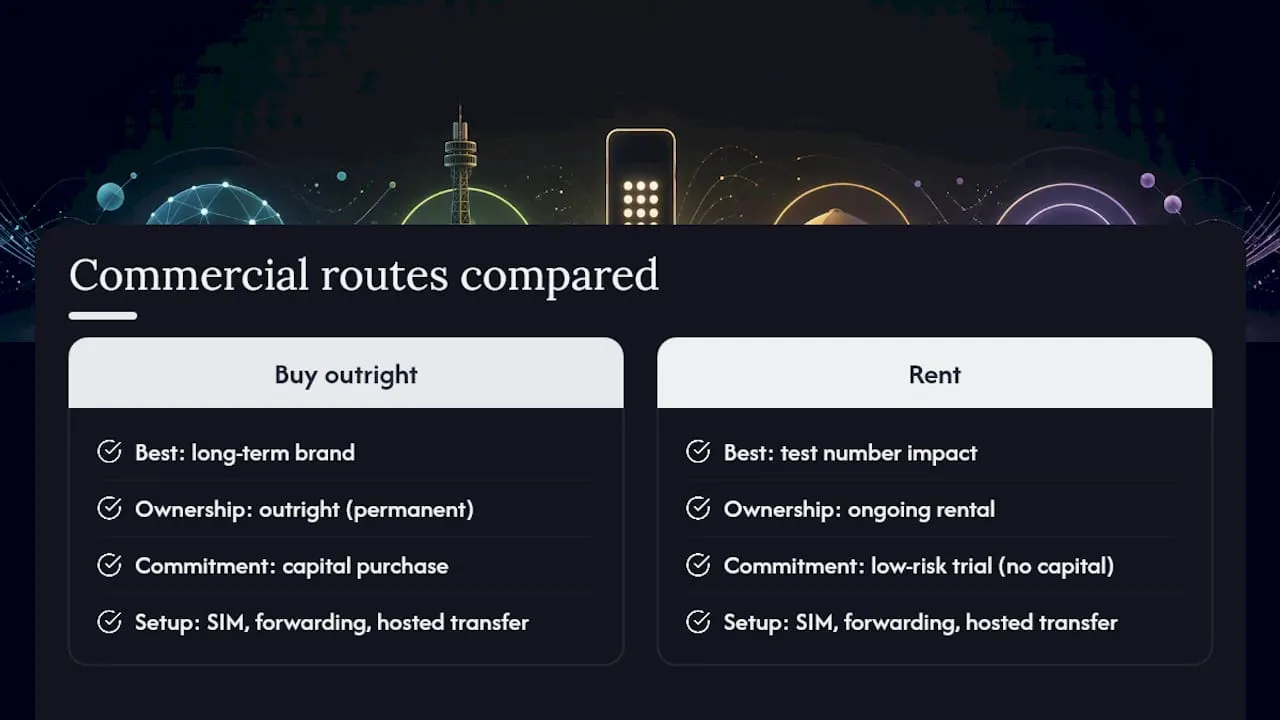
Pro Tip: If you’re not ready to commit, ask about renting first. It’s a low-risk way to test whether a memorable number actually moves your call volume before you buy it outright.
What’s the fastest path from search to a working number?
- Search availability across Phonenumbers Store’s database, your chosen network’s sign-up options, and broker listings if you want maximum choice.
- Decide your route based on budget and urgency: free network selection if you’re not fussy, broker purchase if you want a specific pattern.
- Reserve or buy, then confirm the assignment and set up your SIM or call forwarding.
- Request a PAC only if you’re porting an existing number away from a current provider.
| Step | Typical time | Typical cost |
|---|---|---|
| Network sign-up selection | Immediate | Free or included |
| Retailer/MVNO selection | Same day | Small admin fee |
| Broker purchase | A few working days | £100 to several thousand pounds |
| Number port (PAC) | Within one working day | Usually free |
Why a memorable number is worth the effort
A number people remember without writing it down is free advertising every single time someone repeats it to a friend. That’s the whole case for a small trade business spending money on a sequence rather than a logo redesign: renting a memorable number before committing to purchase lets you measure whether calls actually pick up before you spend serious money.
I’d argue most sole traders underrate this because a phone number feels like plumbing, not marketing. It isn’t. It’s the one piece of contact information a customer has to recall under pressure, usually with wet hands or a leaking pipe in front of them. Search what’s available before you assume nothing suitable exists.
— Rob
Search our database or contact Phonenumbers Store now
Phonenumbers Store gets you past the two biggest frustrations with chosen numbers: limited network inventory and brokers who bury pricing until the last step. Every number in the database shows its price and configuration options upfront, whether you want to buy outright or rent while you test call volume.
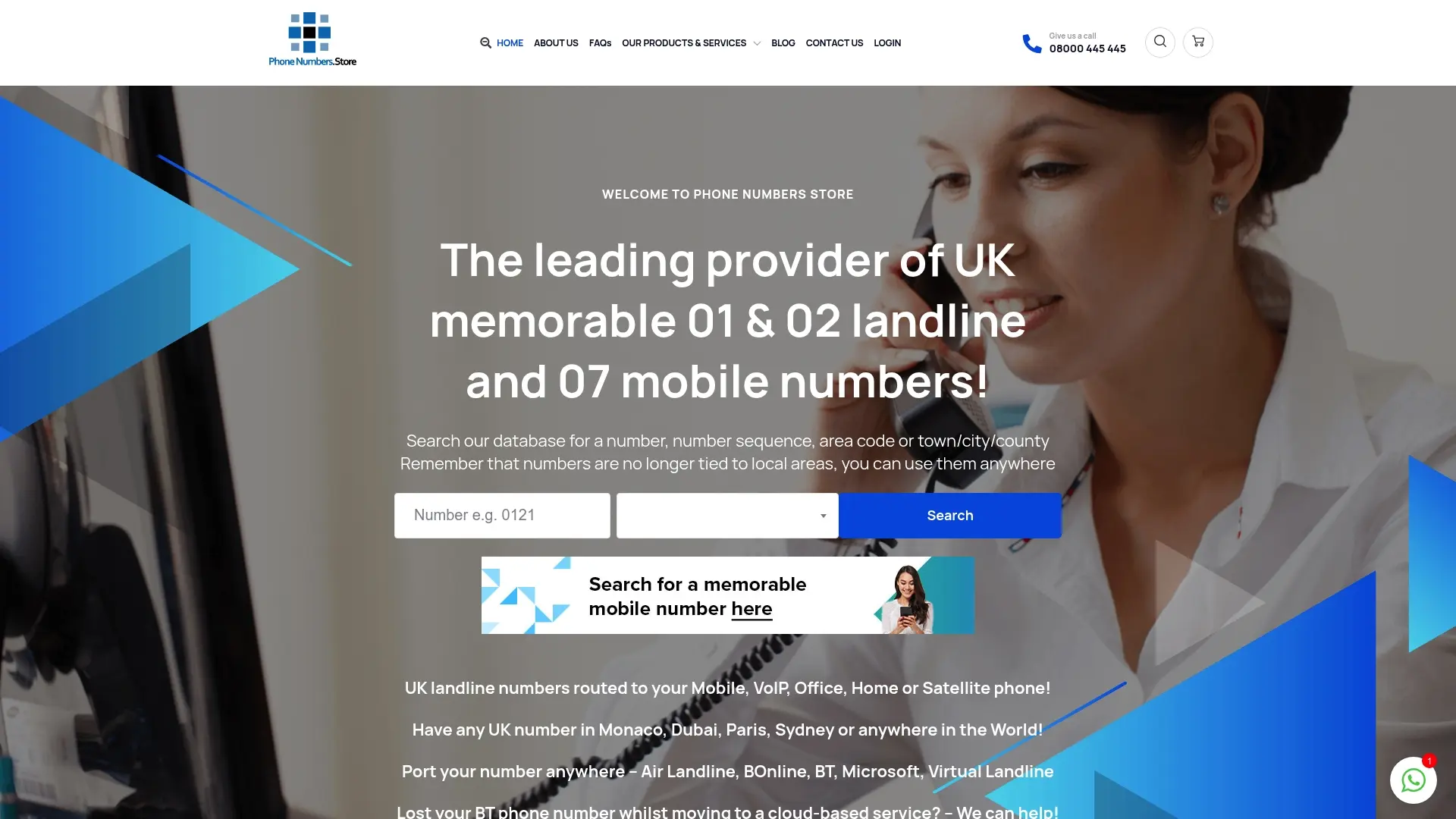
Budget-conscious buyers can start with rental, which spreads cost over time without locking in a purchase. Businesses ready to commit to a permanent brand asset can buy directly, with SIM setup or call forwarding arranged as part of activation. If you already know the pattern you want, search the database by sequence, area code, or town. If you’re not sure where to start, a sequence like 0113 255 0000 or 0115 928 8888 shows what a ready-to-activate memorable number actually looks like, price included. Search now or get in touch with the team for bespoke sourcing if the exact pattern you want isn’t listed yet.
Sources
For the regulatory detail behind porting and numbering, see Ofcom’s switching guidance and its numbering plan pages, plus the underlying Communications Act 2003 provisions on allocation.
- Telecoms numbering (Ofcom)
FAQ
Can I choose my own mobile phone number?
Yes, within limits. You can select from a network’s available pool at sign-up, buy a specific sequence from a specialist broker, or search a dedicated database like Phonenumbers Store’s for a close match.
Is there a way I can choose my own phone number if my network has no options?
Check a broker or specialist marketplace, since these typically hold far wider inventories than any single network’s sign-up pool, or consider a VoIP number for greater digit flexibility.
How do I get a mobile number of my own choice?
Search a specialist database by sequence, area code, or pattern, reserve the number, then complete either a direct purchase or a rental agreement before setting up the SIM or call forwarding.
Can I choose my own SIM number?
Yes, the SIM itself isn’t tied to a fixed number. Once you’ve selected or bought a number through a network, retailer, or broker, it gets assigned to your SIM during activation.
How long does it take to switch to a chosen number?
If you’re porting an existing number to a new provider, the switch is typically completed within one working day once you’ve supplied your PAC code.