
Struggling to get your business remembered by customers across the United Kingdom? For taxi firms, plumbers, and local companies, the choice of phone number can be a make-or-break detail. Easy-dial numbers offer a memorable contact point that stands out in a crowded marketplace, helping your brand become instantly recognisable and simplifying the customer call process. This guide uncovers what makes these numbers so effective, explains their practical benefits, and clears up common myths around easy-dial telephone numbers in the UK.
Table of Contents
- Easy-dial Numbers Defined and Debunked
- Types of Easy-Dial Numbers in the UK
- How Memorable Numbers Drive Customer Calls
- Securing and Registering Your Easy-Dial Number
- Pricing, Regulations, and Marketing Mistakes
Key Takeaways
| Point | Details |
|---|---|
| Purpose of Easy-Dial Numbers | These numbers enhance business visibility and customer recall, serving as effective communication tools. |
| Myths Debunked | Easy-dial numbers are not merely marketing gimmicks; they establish a national presence and streamline customer contacts. |
| Types of Numbers | Businesses may choose from various easy-dial options like Freephone and Business Rate numbers, each with unique pricing structures. |
| Considerations for Selection | When choosing easy-dial numbers, focus on memorability, regulatory compliance, and alignment with brand identity. |
Easy-dial Numbers Defined and Debunked
Easy-dial numbers are specialised telephone numbers designed to enhance business visibility and customer recall. Unlike traditional geographic numbers that tie businesses to specific locations, these memorable numbers provide organisations with a strategic communication tool. Ofcom’s National Telephone Numbering Plan regulates these numbers, ensuring businesses can leverage them effectively across the United Kingdom.
The core purpose of easy-dial numbers is straightforward: create a contact point that customers can remember effortlessly. These numbers typically feature:
- Repeating digit sequences
- Simple numerical patterns
- Short, catchy number combinations
- Non-geographic number ranges that aren’t location-specific
Businesses choose these numbers strategically to overcome traditional communication barriers. While standard telephone numbers might blend into the background, memorable numbers stand out. They transform a mundane contact detail into a marketing asset that customers can recall without consulting business cards or digital directories.
Debunking Common Myths
Contrary to popular belief, easy-dial numbers are not just cosmetic marketing tricks. UK telephone number regulations demonstrate these numbers serve practical communication purposes. They enable businesses to:
- Establish a national presence
- Create brand recognition
- Simplify customer contact processes
- Provide a consistent point of communication
Easy-dial numbers represent more than vanity - they’re a strategic communication tool for modern businesses.
Pro tip: When selecting an easy-dial number, prioritise simplicity and memorability over complex sequences that might confuse potential customers.
Types of Easy-Dial Numbers in the UK
The United Kingdom offers a diverse range of easy-dial numbers that businesses can strategically leverage for communication purposes. Non-geographic telephone numbers provide organisations with flexible contact options that transcend traditional geographic limitations.
Businesses have several key number types to choose from:
- Freephone Numbers (0800, 0808): Completely free for customers to call
- Business Rate Numbers (0845, 0870): Charged at standard business rates
- Local Rate Numbers: Typically charged at local call rates
- National Rate Numbers: Consistent pricing across the United Kingdom
- Mobile-Friendly Numbers: Compatible with mobile network charging
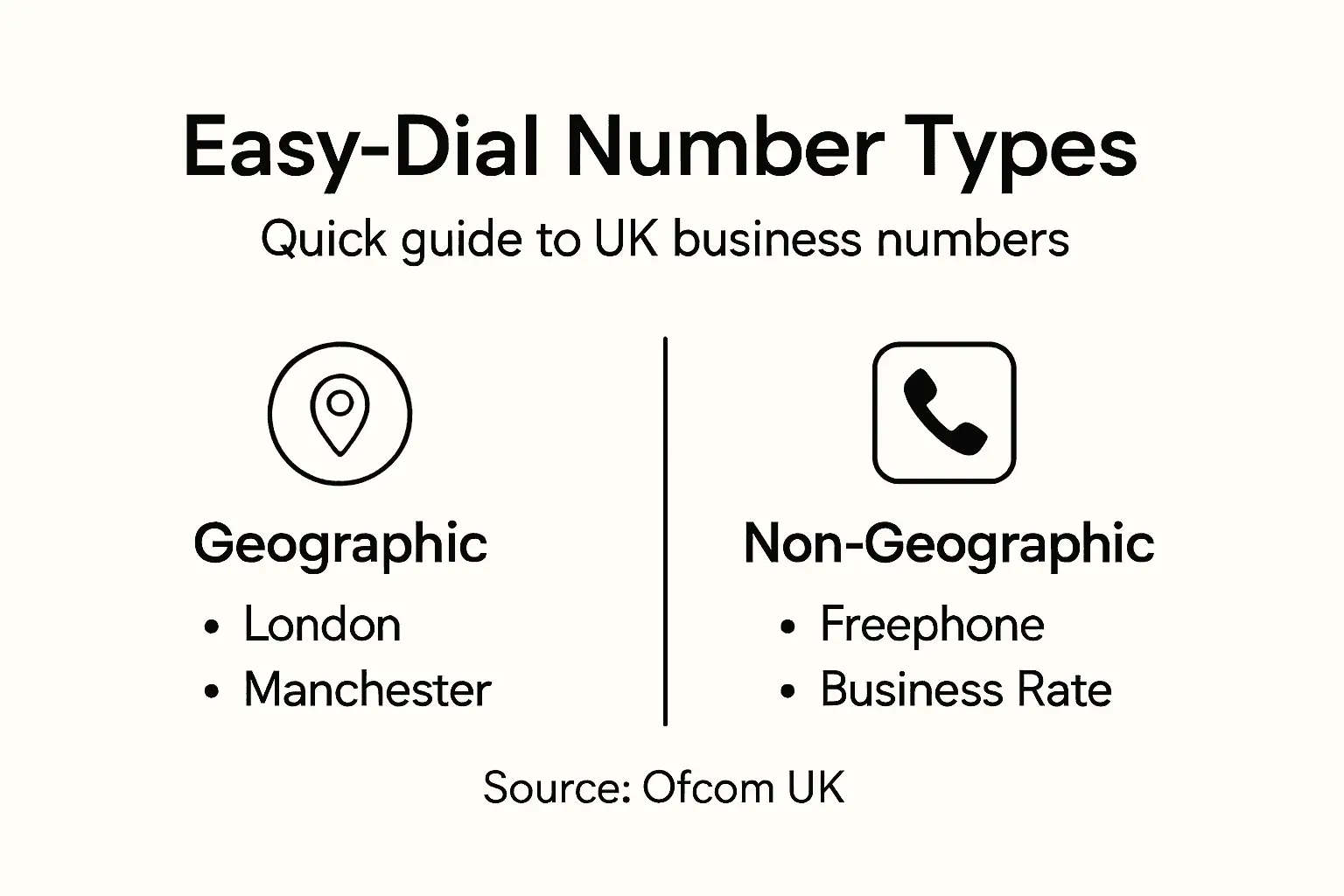
Geographic vs Non-Geographic Numbers
Ofcom’s numbering regulations distinguish between traditional geographic numbers tied to specific regions and modern non-geographic alternatives. Non-geographic numbers offer businesses unprecedented flexibility, allowing them to establish a national presence without being restricted by physical location.

These number types serve different strategic purposes:
Here’s a summary of the main differences between geographic and non-geographic numbers in the UK:
| Aspect | Geographic Numbers | Non-Geographic Numbers |
|---|---|---|
| Location Association | Tied to specific areas | Not linked to physical locations |
| Business Perception | Local presence only | Nationwide, professional image |
| Cost to Caller | Standard geographic call rates | Varies: free, local, or premium |
| Call Routing | Fixed to location | Flexible routing across locations |
| Regulation | Bound by area code rules | Governed by Ofcom non-geo plan |
- National businesses can appear locally accessible
- Start-ups can project a professional image
- Companies can centralise their communication channels
- Customer support teams can manage calls more efficiently
Non-geographic numbers represent a powerful communication strategy for modern UK businesses.
Pricing and Accessibility
Understanding the cost implications of different number types is crucial. Freephone numbers encourage customer interaction, while standard rate numbers balance accessibility with operational costs. Businesses must carefully consider their target audience and communication goals when selecting an easy-dial number.
Pro tip: Select an easy-dial number that balances customer convenience with your business’s financial considerations.
How Memorable Numbers Drive Customer Calls
UK call charges reveal a fascinating psychological phenomenon: memorable telephone numbers significantly increase customer engagement and call volumes. Businesses that strategically select easy-to-recall contact numbers can dramatically improve their communication effectiveness and customer accessibility.
The key psychological drivers behind memorable numbers include:
- Pattern Recognition: Human brains naturally gravitate towards predictable sequences
- Reduced Cognitive Load: Simple numbers require less mental effort to remember
- Emotional Connection: Unique number combinations create brand recall
- Accessibility: Numbers that are quick to dial encourage immediate action
The Science of Number Recall
Ofcom’s numbering research demonstrates that certain number characteristics dramatically improve customer call likelihood. Businesses can leverage these insights by selecting numbers with:
- Repeating digit clusters
- Symmetrical number sequences
- Culturally significant number patterns
- Easy-to-pronounce combinations
Memorable numbers transform passive marketing into active customer engagement.
Customer psychology plays a crucial role in number selection. A number that stands out becomes more than just a contact point - it becomes a brand identifier. Local businesses, national corporations, and service providers can all benefit from understanding how subtle number design influences customer behaviour.
Pro tip: Choose a memorable number that reflects your brand’s personality and target audience demographic.
Securing and Registering Your Easy-Dial Number
Ofcom’s telephone numbering regulations provide a comprehensive framework for businesses seeking to acquire and register memorable contact numbers. Navigating this process requires understanding the official allocation procedures and compliance requirements specific to UK telecommunications.
Key steps for securing an easy-dial number include:
- Verifying number availability
- Checking number eligibility criteria
- Understanding pricing structures
- Confirming registration requirements
- Completing official documentation
Registration Process
Businesses must follow a structured approach when selecting their memorable number. The process typically involves:
- Identifying desired number sequences
- Checking number availability with licensed providers
- Submitting formal registration application
- Paying associated registration fees
- Confirming number allocation
Successful number registration requires attention to regulatory details and precise documentation.
Understanding the customer phone line guidance is crucial for businesses. Different number ranges have specific rules, pricing implications, and usage restrictions that can significantly impact your communication strategy.
Number Selection Considerations
When selecting an easy-dial number, businesses should evaluate:
- Brand alignment
- Memorability
- Call routing capabilities
- Cost-effectiveness
- Customer accessibility
Pro tip: Consult with a telecommunications specialist to ensure your chosen number meets all regulatory requirements and aligns with your business communication goals.
Pricing, Regulations, and Marketing Mistakes
UK call charges reveal a complex landscape of telecommunications pricing that businesses must navigate carefully. Understanding the intricate regulations surrounding telephone number usage is critical for avoiding potential legal and financial pitfalls.
Common marketing mistakes in number selection include:
To help businesses avoid common pitfalls, here’s a table outlining frequent marketing mistakes and their consequences:
| Mistake | Consequence | Best Practice |
|---|---|---|
| Misleading price claims | Loss of customer trust, complaints | Always state full costs upfront |
| Unclear access charge communication | Customer confusion, regulatory risk | Provide transparent details |
| Inconsistent number formats | Customer dialling errors | Use standard UK formatting |
| Hidden premium charges | Customer disputes, negative reviews | Display premium rates clearly |
- Misleading pricing claims
- Unclear cost structures
- Inconsistent number representations
- Failing to disclose access charges
- Using confusing number formats
Regulatory Compliance
Ofcom’s numbering guidelines outline strict requirements for businesses using memorable telephone numbers. The key regulatory considerations encompass:
- Transparent pricing disclosure
- Clear communication of access charges
- Consistent number formatting
- Adherence to national numbering plans
- Avoiding deceptive marketing practices
Marketing materials must explicitly communicate the true cost of calling a business number.
Pricing Structure Breakdown
Different number ranges carry distinct pricing implications for customers:
- Freephone Numbers (0800, 0808): Free from landlines and mobile phones
- Local Rate Numbers: Charges similar to standard geographic calls
- National Rate Numbers: Consistent pricing across the UK
- Premium Rate Numbers: Higher charges with clear cost warnings
Pro tip: Always display full calling costs prominently in marketing materials to maintain transparency and customer trust.
Enhance Your Business Visibility with Memorable UK Phone Numbers
Struggling to make your business stand out among countless competitors The article highlights the challenge of selecting easy-dial numbers that boost customer recall and project a professional national image without being tied to geography. If you want to harness the power of memorable 01, 02 landline and 07 mobile numbers that are flexible and easy for customers to remember it is time to explore our curated selection. At PhoneNumbers.store we provide a comprehensive database where you can search by number sequences, area code or location to find the perfect number that aligns with your brand and communication goals.
Don’t let confusing or forgettable phone numbers hold your business back Act now to secure an easy-dial number that delivers national presence, customer accessibility and marketing impact. Discover how our solutions simplify the registration process and ensure compliance with UK regulations. Start your journey toward a stronger business identity today by visiting our main site and exploring the extensive database search. Your ideal easy-dial number is only a few clicks away.
Frequently Asked Questions
What are easy-dial numbers?
Easy-dial numbers are specially designed telephone numbers that enhance business visibility and customer recall. They typically feature memorable patterns, such as repeating sequences or catchy combinations, making them easier for customers to remember and call.
How do easy-dial numbers help businesses?
Easy-dial numbers create a strategic communication tool that helps businesses establish a national presence, simplify customer contact processes, and improve brand recognition. They can make a significant difference in customer engagement and accessibility.
What types of easy-dial numbers are available in the UK?
In the UK, easy-dial numbers include Freephone numbers (0800, 0808), Business Rate numbers (0845, 0870), Local Rate numbers, National Rate numbers, and Mobile-Friendly numbers. Each type offers unique pricing structures and benefits for businesses and customers.
What should businesses consider when choosing an easy-dial number?
When selecting an easy-dial number, businesses should prioritise simplicity and memorability, assess call routing capabilities, consider cost-effectiveness, and ensure that the number aligns with their brand identity. Consulting a telecommunications specialist can also be beneficial.