
TL;DR:
- Getting a business phone number for free in the UK is rare, and most options involve costs or limitations.
- A dedicated virtual number with ownership offers better security, privacy, and professionalism than shared free options.
A business phone number is a dedicated line that separates your professional calls from your personal mobile, giving clients a reliable way to reach you. Getting one for free is possible in the UK, though the reality is more nuanced than most guides admit. Truly free, permanent business numbers are rare. Most “free” options are freemium tiers, short trials, or pay-as-you-go models with per-minute charges instead of monthly fees. This guide explains exactly what is available, what each option costs in practice, and how to set one up so your business sounds professional from day one.
How to get a business phone number for free in the UK
The honest answer is that truly free long-term business numbers are rare in the UK. Most free options come with limits on call duration, features, or number of users. That said, several routes get you very close to zero ongoing cost.
The main categories available to UK small business owners:
- Pay-as-you-go virtual numbers. These carry a one-off setup fee of around £4.50 and charge per-minute divert rates of approximately 5p per minute to landlines and 8p per minute to mobiles. No monthly subscription applies.
- Freemium virtual phone services. App-based providers offer a free tier with a limited number of minutes, users, or features. These work well for very early-stage businesses but typically push you toward a paid plan within weeks.
- 0800 and 0808 freephone numbers. Since july 2015, Ofcom mandates that 0800 and 0808 numbers are free for callers from all UK mobiles and landlines. The business, however, pays 2–5p per minute for inbound calls depending on the provider and call volume.
- Trial periods. Many virtual number providers offer 7 to 30-day free trials of their full platform. These are useful for testing before committing.
The key distinction is between free for you and free for your caller. Freephone numbers make calling free for customers but cost the business per minute. Pay-as-you-go numbers cost you per call but carry no standing charge.
| Number type | Monthly fee | Who pays per call |
|---|---|---|
| Pay-as-you-go virtual | £0 | Business (5–8p/min) |
| 0800/0808 freephone | Variable | Business (2–5p/min inbound) |
| Freemium app tier | £0 (limited) | Neither, within allowance |
| Standard virtual number | £5–£15/month | Business (outbound) |
What do you need before you set one up?
Setting up a business phone number requires more than downloading an app. Three things must be in place before you start.

Know Your Customer (KYC) identity checks. UK telecoms providers are required to verify your identity before issuing a number. You will typically need a valid photo ID such as a passport or driving licence, and sometimes proof of address. No UK physical presence or company registration is required to obtain a geographic or national UK number, but you must pass these checks.
A device and software setup. Virtual numbers work through one of three methods: a mobile app (softphone), a browser-based VoIP interface, or call forwarding to your existing mobile. Most pay-as-you-go services use call forwarding, which means you need no additional hardware at all.
Credit or a payment method. Pay-as-you-go models require a prepaid credit balance. You top up in advance and the per-minute charges are deducted automatically. Low call volumes make this genuinely cost-effective, but you must monitor your balance to avoid calls dropping.
Helpful tools to have ready:
- A scanned copy of your photo ID
- A business email address (separate from personal)
- A mobile number for call forwarding
- A basic voicemail greeting recorded in advance
Pro Tip: Record your voicemail greeting before the number goes live. A professional greeting on day one signals credibility to every caller, even if you are still in setup mode.
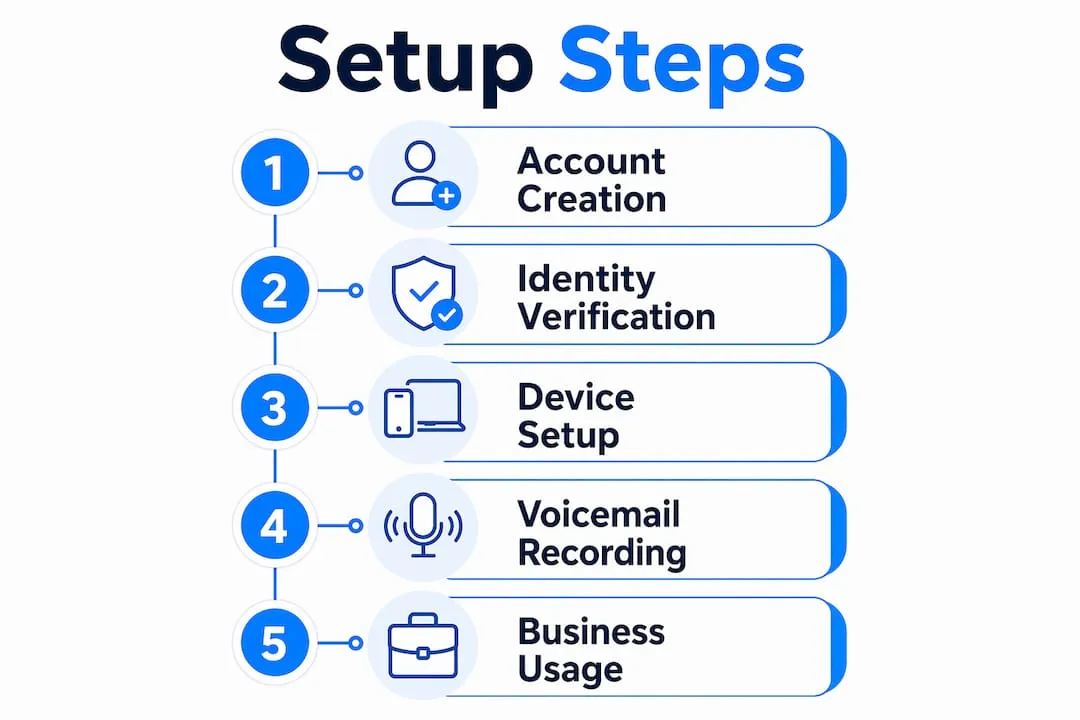
Step-by-step: setting up your free or low-cost business number
The process takes under 30 minutes for most virtual number services. Numbers can be live in under 10 minutes once identity checks are passed.
-
Choose your number prefix. Decide between a geographic number (01/02 area codes), a national number (03), or a freephone number (0800/0808). Geographic numbers signal local presence. National 03 numbers cost callers the same as standard calls and are included in most mobile plans. Freephone numbers are free for callers but cost the business per inbound minute. You can learn more about UK number basics to help you choose.
-
Select a provider and create an account. Choose a provider that offers the number type you need. Complete the registration form with your name, business email, and contact number.
-
Complete identity verification. Upload your photo ID as required. Most providers process this within minutes during business hours.
-
Choose your specific number. Some services let you search by area code, number sequence, or pattern. A memorable number is worth selecting at this stage since it costs nothing extra on most platforms.
-
Set up call routing. Enter the mobile or landline number you want calls forwarded to. This is the number that rings when a customer dials your business number.
-
Add credit if using pay-as-you-go. Load a small initial balance, typically £5–£10, to cover your first calls.
-
Record your voicemail greeting. Log in to the portal or app and record a clear, professional greeting.
-
Test the number. Call it from a personal mobile before publishing it anywhere. Confirm the routing works and the voicemail activates correctly.
| Step | Time required | Cost |
|---|---|---|
| Account creation | 5 minutes | £0 |
| Identity verification | 5–10 minutes | £0 |
| Number selection | 2 minutes | £0–£4.50 setup |
| Call routing setup | 5 minutes | £0 |
| Credit top-up | 2 minutes | £5–£10 |
Pro Tip: Use your business number in your email signature and Google Business Profile from day one. Consistency across platforms builds trust faster than any single marketing effort.
What are the risks of free business phone numbers?
Free numbers carry real risks that most guides skip over. Understanding them protects your business reputation.
Free public verification numbers reuse shared inboxes, lack exclusivity, and are frequently blocked by major platforms including WhatsApp and Google. Using one as your primary business contact is a serious operational risk. If the number gets recycled or blocked, you lose incoming calls with no warning.
The main pitfalls to watch for:
- Number recycling. Free shared numbers are reassigned regularly. A number that worked last month may belong to someone else next month.
- No exclusivity. Public free numbers are used by multiple people simultaneously. Callers may reach the wrong person or a full inbox.
- Platform blocks. Major services actively block numbers associated with shared verification pools.
- Limited features. Free tiers typically exclude call recording, IVR menus, and analytics, all of which matter as your business grows.
- Data privacy. Shared numbers mean shared call logs in some systems. Your customer data is not protected.
“Prioritising number ownership and stable control over zero cost avoids branding and operational issues that can damage a small business’s reputation. Low-cost virtual numbers with dedicated ownership offer the best compromise between affordability and professionalism.”
Security professionals consistently flag shared or temporary free numbers as a privacy risk and advocate for exclusive virtual numbers instead. A dedicated virtual number starting at around £5 per month gives you full ownership, privacy, and continuity. That is a small price for the protection it provides.
How to manage and grow with your business number
A business number only delivers value if you manage it actively. These practices keep it working for you as your business grows.
- Set a professional voicemail. Re-record your greeting every few months to keep it current. Include your business name, a brief description of when you will return calls, and an alternative contact if urgent.
- Use the number consistently. Add it to your website, social media profiles, and any printed materials. Consistent use across channels builds business image and trust.
- Monitor your credit balance. Pay-as-you-go models require active management. Set a low-balance alert if your provider supports it, or top up on a fixed schedule.
- Keep your account secure. Use a strong, unique password and enable two-factor authentication where available. Your business number is a critical asset. You can find practical guidance on securing business numbers to protect your account.
- Plan for porting. If you start on a free or low-cost platform and later move to a paid provider, number porting takes 5–10 business days in the UK. Start the process early to avoid any gap in service.
- Upgrade when call volume justifies it. Pay-as-you-go is cost-effective at low volumes. Once you are handling regular daily calls, a fixed monthly plan typically works out cheaper and gives you access to features like call queuing and reporting.
Managing your online reputation goes hand in hand with how you present your business number. A consistent, professional number across all your profiles signals that you are a serious operation.
Key takeaways
Getting a free or low-cost business phone number is achievable, but the best results come from choosing a dedicated virtual number with clear ownership rather than relying on shared or temporary free services.
| Point | Details |
|---|---|
| Truly free numbers are rare | Most free options are trials or pay-as-you-go models with per-minute charges. |
| Pay-as-you-go is the closest to free | A one-off setup fee of around £4.50 with no monthly subscription suits low call volumes. |
| Ofcom rules protect callers | 0800/0808 numbers are free for UK callers, but the business pays 2–5p per minute inbound. |
| Shared free numbers carry real risk | Recycled and shared numbers can be blocked by major platforms and damage your reputation. |
| Ownership matters more than zero cost | A dedicated virtual number from around £5 per month gives you security, privacy, and continuity. |
Rob’s take: free is rarely the whole story
The phrase “free business phone number” is technically accurate for some options, but it obscures what you are actually signing up for. I have seen small business owners spend hours chasing a truly free number, only to end up with a shared inbox that gets blocked by WhatsApp within a fortnight. The time cost alone outweighs any saving.
The pay-as-you-go model is, in my view, the most honest version of “free.” You pay nothing monthly, you own the number exclusively, and you only spend money when someone actually calls you. For a business handling fewer than 50 calls a month, the total cost is often under £3. That is genuinely close to free, and it comes with none of the risks attached to shared public numbers.
Where I think most guides get it wrong is in treating cost as the only variable. Professionalism, ownership, and stability are worth paying a small amount for. A memorable geographic number from a reputable provider, even at £5 per month, does more for your brand than a free number that looks suspicious to customers. Start with the lowest cost option that still gives you exclusive ownership. Then upgrade when your call volume makes it worthwhile.
— Rob
Phonenumbers: memorable UK business numbers worth having
A business number should work as hard as you do. Phonenumbers is the UK’s leading provider of memorable 01, 02, and 07 numbers, the kind that customers actually remember and trust.
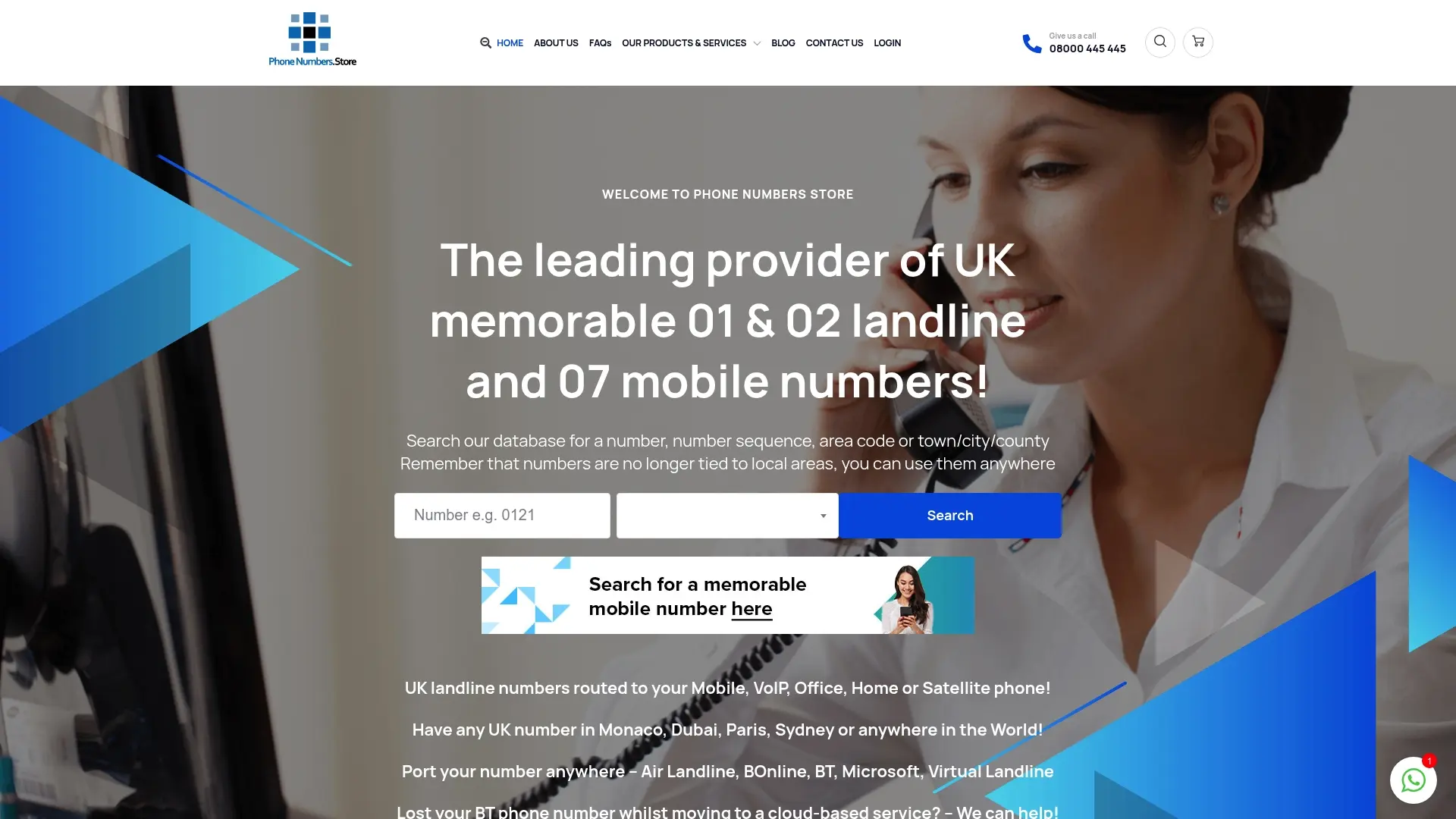
Whether you are after a memorable Leeds number or a distinctive Nottingham line, Phonenumbers lets you search by area code, number sequence, or town. Numbers are no longer tied to local areas, so you can use any number anywhere in the UK. Setup is straightforward, UK compliance is built in, and the team is on hand if you need support. Browse the full catalogue at phonenumbers.store and find a number that makes your business impossible to forget.
FAQ
What is a business phone number?
A business phone number is a dedicated line used exclusively for professional calls, separate from your personal mobile. It gives clients a consistent, credible way to contact your business.
Can I get a business phone number for free in the UK?
Permanently free business numbers with full features are rare. The closest option is a pay-as-you-go virtual number with no monthly fee, though a small setup charge and per-minute call costs apply.
What is the difference between 0800 and a virtual number?
An 0800 freephone number is free for UK callers but costs the business 2–5p per minute for inbound calls. A virtual number routes calls to your existing mobile and charges the business per minute diverted, typically 5–8p.
Do I need a UK address to get a UK business number?
No. No UK physical presence is required. You need to pass identity verification checks, but you can obtain a geographic or national UK number from anywhere.
Are free shared phone numbers safe for business use?
No. Shared free numbers are recycled regularly, lack exclusivity, and are frequently blocked by major platforms. They are not suitable as a primary business contact number.