
Most british small businesses do not realize that over 50 percent of customer trust can be lost after just one incident involving a compromised phone number. For industries like taxi and plumbing, your business number is more than just a line—it is a vital link to your customers and reputation across the United Kingdom. With risks ranging from hijacking to fraudulent redirection, learn practical steps that help protect your number, prevent unauthorized use, and keep your professional reputation intact.
Table of Contents
- Step 1: Assess Risks To Your Business Number
- Step 2: Register And Verify Your Phone Number Ownership
- Step 3: Configure Robust Call Security Settings
- Step 4: Control Access And Monitor Usage Regularly
- Step 5: Test Protections And Update Security Protocols
Quick Summary
| Key Point | Explanation |
|---|---|
| 1. Thorough Risk Assessment Needed | Identify vulnerabilities like number hijacking to maintain communication security and customer trust. |
| 2. Secure Number Registration Process | Gather necessary documents and verify ownership to protect against fraud. Accuracy is key during registration. |
| 3. Implement Robust Security Settings | Use multi-factor authentication and configured alerts to prevent unauthorized access and receive real-time updates on suspicious activities. |
| 4. Regular Access Monitoring Required | Track all interactions with your business number and conduct frequent audits to ensure all users are legitimate. |
| 5. Ongoing Testing and Updates Essential | Continuously assess your security measures and update protocols based on the latest vulnerabilities to maintain effective protection. |
Step 1: Assess risks to your business number
Protecting your business phone number starts with a comprehensive risk assessment. Understanding the potential vulnerabilities that could compromise your communication channels is crucial for maintaining professional continuity and customer trust. Small businesses in sectors like taxi services and plumbing often underestimate how quickly their reputation can be impacted by communication disruptions.
To effectively assess risks, you need a systematic approach. Begin by identifying potential threats to your business number, which might include number hijacking, fraudulent redirections, or unexpected service interruptions. A thorough cyber risk assessment can help you pinpoint vulnerabilities specific to your communication infrastructure. Look closely at how your number is registered, who has access to it, and what potential weak points exist in your current setup.
Start by documenting all current uses of your business number tracking registration details, call forwarding settings, and any third party services linked to the number. Examine your telecommunications provider’s security protocols and understand their policies on number protection. Exploring custom business number strategies can provide additional layers of security and professional presentation.
Pro tip: Create a dedicated spreadsheet tracking all number related access points and review it quarterly to ensure ongoing security and minimal risk exposure.
Here is a summary of common risks to business phone numbers and their impacts:
| Risk Type | Example Scenario | Potential Business Impact |
|---|---|---|
| Number hijacking | Fraudster ports your number | Loss of customer trust |
| Fraudulent redirection | Calls routed to rogue operators | Financial loss and reputational damage |
| Service interruption | Provider technical failure | Missed opportunities and poor service |
| Unauthorised access | Ex-employee changes settings | Data breach or privacy violation |
Step 2: Register and verify your phone number ownership
Securing your business phone number requires a methodical approach to registration and verification. In the United Kingdom, official processes protect businesses by ensuring legitimate ownership and preventing fraudulent telecommunications activities. Verifying your business identity is a critical first step in protecting your communication infrastructure.
Begin by gathering all necessary documentation for number registration. This typically includes your business registration details, company identification number, and official contact information. You will need to provide proof of business existence through documents like your Companies House registration certificate or VAT registration. Pay careful attention to the specific requirements of your telecommunications provider, as each may have slightly different verification protocols.
Carefully check all registration details for accuracy before submission. Registering your dedicated business number involves ensuring that all personal and business information matches official records precisely. Some providers might require additional verification steps such as address confirmation or director identification checks. Maintain copies of all submitted documentation and keep track of your registration reference numbers for future correspondence.
Pro tip: Create a secure digital folder containing all telecommunications registration documents, and set a calendar reminder to review and update these annually to maintain compliance.
Step 3: Configure robust call security settings
Protecting your business phone number requires implementing comprehensive security measures that shield your communication channels from potential threats. Understanding the nuanced landscape of telecommunications security is crucial for maintaining professional integrity and preventing unauthorized access or fraudulent activities.

Phone verification technologies offer sophisticated methods to validate and secure your business communication infrastructure. Begin by configuring multi factor authentication for all phone number related access points. This might include requiring secondary verification through email or mobile app confirmations when changing call settings or accessing sensitive account information. Implement strict access controls that limit who can modify number forwarding rules or make significant changes to your telecommunications setup.
Additionally, consider registering with the Telephone Preference Service to reduce unwanted marketing calls and enhance your number’s overall security profile. Review your telecommunications provider’s security settings thoroughly checking options like call blocking international redirects and suspicious number identification. Enable features that provide real time alerts for unusual account activities or potential unauthorized access attempts.
Pro tip: Create a dedicated security email address exclusively for telecommunications account management separate from your primary business email to add an extra layer of protection and monitoring.
Step 4: Control access and monitor usage regularly
Regular monitoring and strict access control are fundamental to protecting your business phone number from potential security breaches. Small businesses especially need a proactive approach to prevent unauthorized usage and maintain the integrity of their communication infrastructure.
Reporting potential fraudulent activities requires establishing a systematic review process for your telecommunications usage. Create a comprehensive access log that tracks every interaction with your business phone number. This should include detailed records of call forwarding changes user access modifications and any significant account alterations. Implement role based access controls that limit administrative privileges to only essential personnel.
Utilise technology to enhance your monitoring capabilities. Set up automated alerts for suspicious activities such as multiple failed login attempts unusual call patterns or unexpected number redirections. Verify individual identities before granting any significant access to your telecommunications systems. Consider quarterly comprehensive audits of your phone number usage reviewing access logs and ensuring that all current users are legitimate and authorized.
Pro tip: Develop a standardised monthly checklist for reviewing phone number access and usage that includes verifying current user permissions cross checking call logs and confirming no unauthorized changes have occurred.
Consider the following security features and how they strengthen number protection:
| Security Feature | Description | Business Benefit |
|---|---|---|
| Multi-factor auth | Requires two-step verification | Prevents unauthorised changes |
| Real-time alerts | Immediate notification of account changes | Early detection of security risks |
| Role-based controls | Limits who can manage settings | Reduces insider threat exposure |
| Quarterly audits | Regular review of access and logs | Ensures compliance and vigilance |
Step 5: Test protections and update security protocols
Regular testing of your business phone number security protocols is essential for identifying potential vulnerabilities and ensuring comprehensive protection against emerging telecommunications threats. Small businesses must adopt a proactive approach to maintain robust communication infrastructure defences.
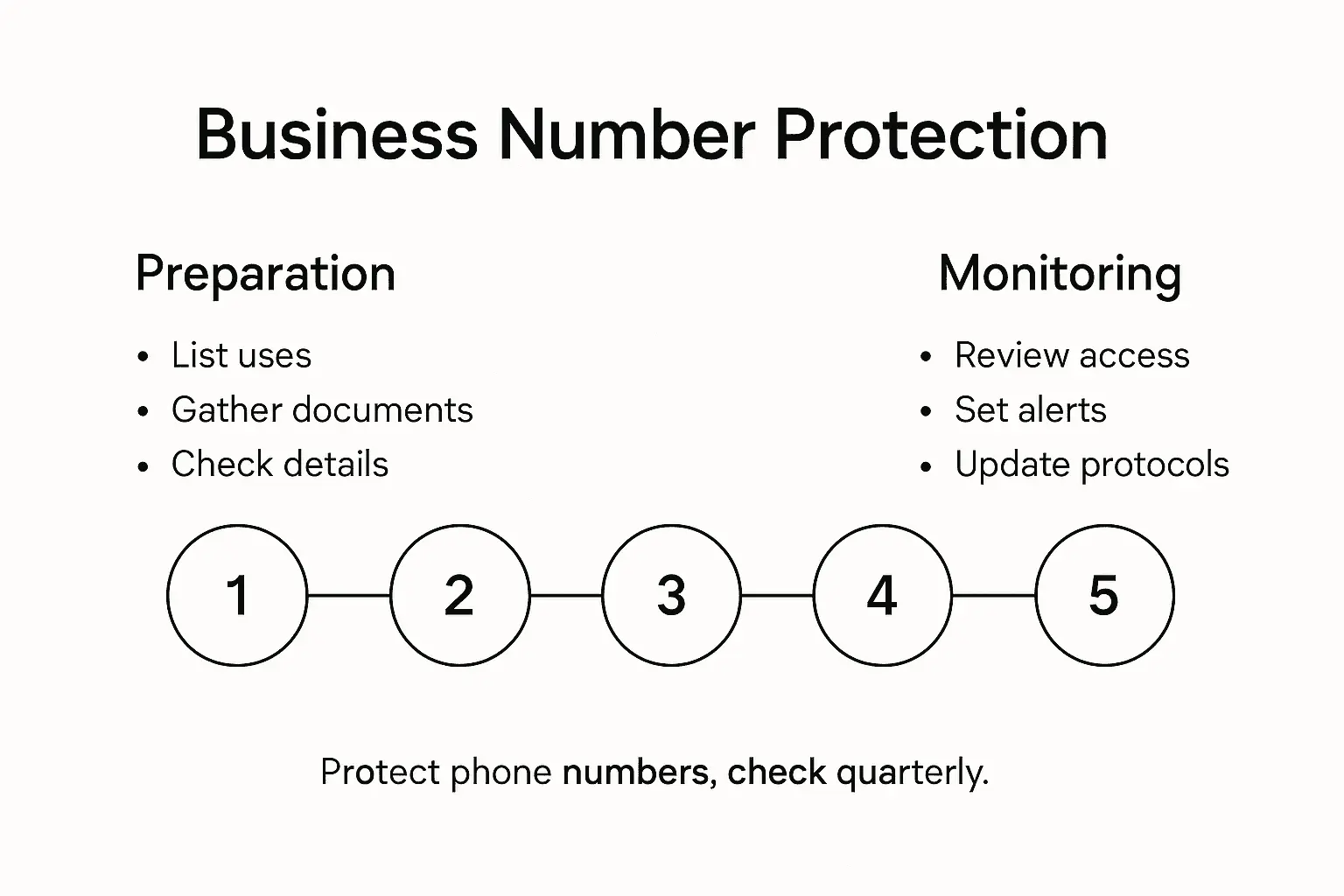
Conducting comprehensive IT risk assessments provides a systematic method for evaluating your current security measures. Develop a structured testing strategy that includes simulated security breach scenarios specifically targeting your business phone number infrastructure. This might involve conducting controlled tests to assess how your systems respond to potential unauthorized access attempts redirections or social engineering tactics. Create a detailed evaluation framework that comprehensively examines every aspect of your telecommunications security including user access controls call routing mechanisms and data protection protocols.
Cyber risk assessment tools can help you systematically identify and prioritise potential security weaknesses. Schedule regular comprehensive reviews that go beyond surface level checks. These reviews should include detailed analyses of call logs access records and system configuration settings. Pay particular attention to identifying and addressing any potential points of vulnerability that could compromise your business communication channels. Update your security protocols promptly based on the insights gained from these assessments ensuring that your defences remain current and effective against evolving telecommunications security challenges.
Pro tip: Implement a quarterly security protocol review cycle where you formally document all identified vulnerabilities test your remediation strategies and update your security measures based on the most recent threat intelligence.
Secure Your Business Communication with a Memorable UK Phone Number
The article highlights the crucial need to protect your business phone number from risks like fraud, unauthorised access, and service interruptions. For UK companies looking to build trust and maintain professional continuity, choosing the right business number is the first step. At PhoneNumbers.store, we specialise in offering memorable and secure 01 and 02 landline as well as 07 mobile numbers that can safeguard your brand presence and support robust call security protocols.
Take control of your business communications today by exploring our extensive database where you can search by number sequence, area code, or location. Because numbers in the UK are no longer tied to local areas, you have flexibility for your business no matter where you operate. Don’t wait for vulnerabilities to appear. Visit PhoneNumbers.store and secure a professional phone number designed to strengthen your security measures and reputation now.
Frequently Asked Questions
How can I assess the risks to my business phone number?
To assess the risks to your business phone number, begin by identifying potential threats like number hijacking or service interruptions. Document all uses of your phone number and review your telecommunications provider’s security protocols to pinpoint vulnerabilities within 30 days.
What steps should I take to register and verify my business phone number?
Start by gathering necessary documents such as your business registration details and proof of business existence. Ensure that all information matches official records precisely when submitting your registration to guarantee ownership.
How do I configure robust call security settings for my business number?
Configure robust call security settings by enabling multi-factor authentication for access points related to your business phone number. Additionally, set up real-time alerts for unusual account activities to protect your communication channels effectively.
What is the best way to monitor access and usage of my business phone number?
To monitor access and usage, create a detailed access log that tracks all interactions with your business phone number. Conduct regular reviews and set up automated alerts for suspicious activities to quickly address any potential breaches.
How often should I test the protections for my business phone number?
Perform testing of your phone number protections on a quarterly basis to identify vulnerabilities. Schedule structured assessments that simulate security breaches and ensure your security measures are updated based on these findings.
What should I include in my security checklist for my business phone number?
Include items like verifying user permissions, cross-checking call logs, and confirming no unauthorised changes have occurred in your security checklist. Review this checklist monthly to maintain vigilance and ensure ongoing protection.