
British businesses are discovering that the right telephone number can set them apart in a competitive market. Over 60 percent of customers say they are more likely to trust a company with a professional, non-local number. Choosing and promoting the best non-geographic number can transform how customers view your brand and help you reach clients far beyond your local area. This step-by-step guide delivers practical strategies for maximising your communication impact.
Table of Contents
- Step 1: Select The Ideal Non-Local Number For Your Business
- Step 2: Configure The Number To Route Calls To Your Location
- Step 3: Promote Your Non-Local Number In Marketing Materials
- Step 4: Test Call Functionality And Customer Experience
- Step 5: Monitor Number Use And Update Details As Needed
Quick Summary
| Key Point | Explanation |
|---|---|
| 1. Choose a suitable non-local number | Select a number type that aligns with your brand and resonates with your target audience for a professional image. |
| 2. Configure effective call routing | Set up call routing to direct incoming calls efficiently, ensuring a smooth communication experience for customers. |
| 3. Promote your number widely | Integrate your non-local number across all marketing materials to enhance brand recognition and accessibility. |
| 4. Test functionality rigorously | Conduct thorough checks on call performance to ensure clarity and proper routing, enhancing customer experience. |
| 5. Monitor usage and adapt regularly | Track call metrics and refine routing rules to adapt to business needs and improve communication efficiency. |
Step 1: Select the ideal non-local number for your business
Selecting the perfect non-geographic telephone number is a strategic decision that can elevate your business’s professional image and communication capabilities. Non-geographic numbers like 03 and 0845 offer businesses nationwide connectivity without being restricted to a specific physical location.
When choosing your non-local number, consider several key factors. First, evaluate the number range that best represents your business model. 03 numbers provide a professional national presence while appearing cost neutral to callers, as they are charged at standard landline rates. 0845 numbers can signal a more established corporate identity. Assess your target customer demographic and the perception you want to create.
Your selected number should align with your brand strategy and communication goals. Some businesses prefer numbers with memorable sequences or those that spell out related words or brand elements. Remember that these numbers can be easily mapped to existing phone lines, providing flexibility for businesses operating across multiple locations or with remote working arrangements.
Professional tip: Research different number ranges thoroughly and select one that not only looks professional but also provides practical routing flexibility for your specific business communication needs.
Here is a comparison of popular non-geographic number types and their typical business applications:
| Number Type | Key Benefit | Caller Perception | Typical Business Use |
|---|---|---|---|
| 03 Number | National coverage at landline rates | Modern and accessible | Customer support hotlines |
| 0845 Number | Established, perceived as corporate | Professional, trusted | Sales teams, main switchboards |
| 0800 Number | Free to call from UK | Customer-friendly, incentive-based | Inbound enquiries and marketing campaigns |
Step 2: Configure the number to route calls to your location
Configuring call routing is a critical step in maximising the flexibility of your non-local telephone number. Remote call forwarding allows businesses to redirect incoming calls seamlessly to any designated location, ensuring you never miss an important communication opportunity.
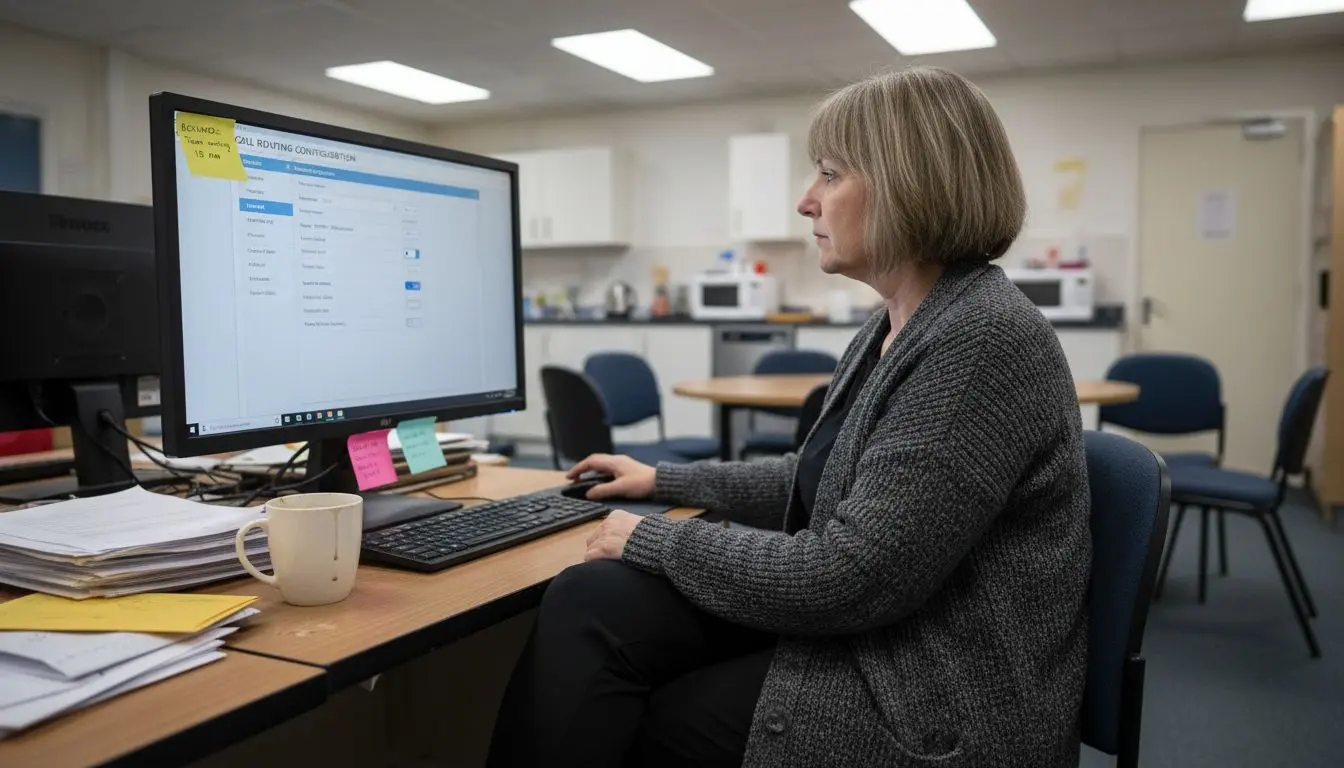
To set up effective call routing, begin by identifying your primary and secondary contact points. This might include your main office landline, mobile phones for key team members, or alternative branch locations. Most modern telephone systems support sophisticated routing configurations that can distribute calls based on time of day, caller location, or specific departmental requirements. Phone systems like 3CX offer advanced geo and non geo number provisioning, enabling businesses to create complex yet intuitive call management strategies.
Carefully map out your routing preferences. Some businesses prefer all calls to initially reach a central reception, while others might want direct routing to specific departments or individual team members. Consider implementing features such as call queuing, voicemail to email, and time based routing to enhance your communication efficiency.
Professional tip: Test your call routing configuration thoroughly with colleagues before going live, ensuring each potential call scenario works smoothly and professionally.
Step 3: Promote your non-local number in marketing materials
Promoting your non-local telephone number effectively can significantly enhance your business’s professional image and accessibility. The right phone number can communicate important brand messaging across all your marketing channels, creating a consistent and memorable brand presence.
Integrate your non-local number strategically across various marketing platforms. Include the number prominently on business cards, website headers, email signatures, social media profiles, and printed marketing collateral. Consider creating visually appealing graphics that highlight the number, making it easy for potential customers to spot and remember. Ensure the number appears consistently in the same font, colour, and style to reinforce brand recognition.
When showcasing your non-local number, provide context that demonstrates its national reach. Use language that emphasises your business’s capability to serve customers beyond a single geographic location. For instance, accompany the number with phrases like “National Customer Support” or “Serving Businesses Across the United Kingdom” to communicate your broader operational scope.
Professional tip: Create a memorable number sequence that customers can easily recall, such as using repeated digits or a pattern that reflects your business name or industry sector.
Step 4: Test call functionality and customer experience
Testing your non-local number’s call functionality is crucial for ensuring a professional and reliable communication channel. Telecoms resilience plays a vital role in maintaining service continuity and delivering a consistent customer experience that reflects your business’s commitment to quality.
Conduct comprehensive testing across multiple scenarios to verify your number’s performance. Use different devices like landlines, mobile phones, and internet calling platforms to simulate various customer calling environments. A linked numbering scheme can help facilitate seamless communication between different exchanges, so verify that customers can reach your business easily from multiple locations. Pay special attention to call routing accuracy, ensuring that calls are directed to the correct departments or team members without unnecessary delays or transfers.
Simulate real world scenarios by having team members call the number from different networks and locations. Check for call quality, connection speed, and how smoothly calls are transferred between different team members or departments. Listen carefully for audio clarity, background noise, and potential technical issues that might impact customer perception. Document any problems encountered and work with your telecommunications provider to resolve them promptly.
Professional tip: Create a structured testing checklist that covers call quality, routing accuracy, and overall user experience to ensure a comprehensive evaluation of your non-local number’s functionality.
Step 5: Monitor number use and update details as needed
Ongoing monitoring of your non-local telephone number is essential to maintain optimal communication efficiency. Number Translation Services enable organizations to manage call routing dynamically ensuring your business remains adaptable and responsive to changing communication needs.
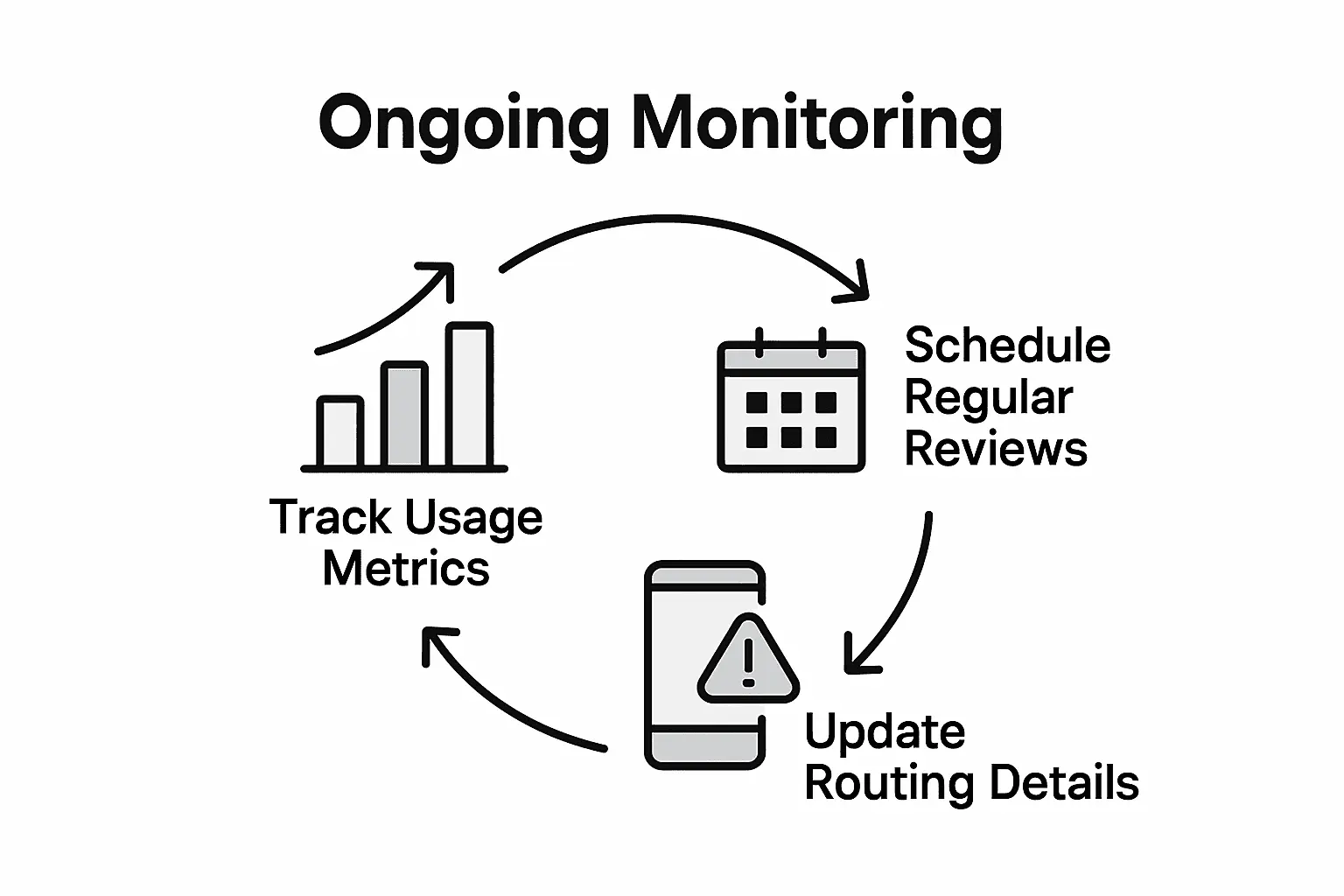
Remote call forwarding provides businesses with flexible call management strategies, making regular monitoring crucial. Review your call logs periodically to track usage patterns, identify potential bottlenecks, and understand how customers interact with your number. Pay attention to metrics such as call volume, average call duration, peak calling times, and geographic distribution of callers. These insights can help you refine your routing configurations and improve overall customer experience.
Implement a systematic approach to tracking and updating your number details. Schedule quarterly reviews of your telecommunications setup, checking that all routing rules remain accurate and efficient. Verify contact information, update team member assignments, and ensure that call forwarding rules align with your current business structure. Be prepared to make adjustments quickly if you notice any inefficiencies or changes in your operational requirements.
Professional tip: Create a digital dashboard or spreadsheet to track your non-local number performance, allowing you to quickly identify trends and make data driven decisions about your communication strategy.
For effective ongoing management, consider tracking these essential metrics for your non-local number:
| Metric | Why Track It? | Improvement Action |
|---|---|---|
| Call Volume | Identify peak activity | Adjust staffing or routing |
| Average Call Duration | Gauge engagement level | Optimise call scripts |
| Missed Call Rate | Detect potential issues | Enhance call handling flow |
| Geographic Caller Spread | Target marketing efforts | Refocus advertising spend |
Elevate Your Business Communication with Memorable UK Numbers
Choosing the right non-local number for your UK business is essential to unlock nationwide reach and convey professionalism at every customer interaction. The article highlights the challenges of selecting, configuring, and promoting non-geographic numbers while ensuring seamless call routing and outstanding customer experience. If you want to avoid missing calls and create a strong brand presence that reflects your business’s scope beyond local boundaries this is where having a custom memorable phone number makes all the difference.
Take control of your communications with our extensive selection of 01 and 02 landline numbers plus 07 mobile numbers that are no longer tied to specific locations. Offering complete flexibility and easy management, our numbers help you project a national identity while making your contact details easy to remember. From optimizing routing setups to enhancing customer recall, search our database for your perfect number today and start standing out.
Discover how to power up your business communications now. Visit Phonenumbers.Store to find memorable numbers tailored to your brand and communication goals. Make the smart choice to improve customer access and grow your presence across the United Kingdom before your competitors do.
Frequently Asked Questions
What types of non-local numbers can UK businesses use?
Non-local numbers available for UK businesses include 03, 0845, and 0800. Each type serves different purposes, so assess your communication needs before selecting one to ensure it aligns with your brand image.
How do I configure call routing for my non-local number?
To configure call routing, identify your primary and secondary contact points, such as office landlines or mobile phones. Set up your call forwarding preferences in your phone system to ensure calls reach the appropriate department or team member efficiently.
How can I promote my non-local number effectively?
Promote your non-local number by placing it prominently on business cards, your website, and social media profiles. Use consistent formatting and language to highlight its national reach, such as accompanying it with phrases like "National Customer Support,” to enhance brand recognition.
Why is it important to test my non-local number’s functionality?
Testing your non-local number’s functionality is vital to ensure reliable communication and a positive customer experience. Regularly simulate calls to check for call quality, routing accuracy, and general performance to identify any issues before customers experience them.
How often should I monitor and update my non-local number details?
You should monitor and update your non-local number details regularly, ideally on a quarterly basis. This allows you to track usage patterns, adjust call routing as necessary, and ensure all contact information remains current and efficient for customer interactions.