
Every british business faces tough decisions when balancing tradition and technology in communication. With over 20 million landlines still active across the United Kingdom, many companies find themselves stuck between legacy phone systems and the speed of modern mobile networks. This guide reveals how a landline mobile bridge offers the flexibility and professionalism needed for service-based businesses, helping you keep pace with evolving customer demands while protecting your established identity.
Table of Contents
- Defining A Landline Mobile Bridge In The UK
- Types Of Landline Mobile Bridge Solutions
- How Bridges Work For Your Business
- Integration With UK Landline And Mobile Numbers
- Legal Responsibilities And Data Compliance
- Costs, Risks, And Choosing Providers
Key Takeaways
| Point | Details |
|---|---|
| Landline Mobile Bridges Enhance Communication | This technology integrates traditional landline systems with mobile networks, benefiting service-based businesses like plumbers and taxi firms. |
| Various Solutions Cater to Business Needs | Options include SIM-enabled desk phones, virtual number routing, and broadband VoIP solutions, allowing for flexibility and customisation. |
| Legal Compliance is Crucial | Businesses must adhere to data protection regulations and network security standards to avoid penalties and maintain communication integrity. |
| Choosing the Right Provider Matters | Assess initial costs, scalability, and support services to ensure long-term operational efficiency and compliance with industry standards. |
Defining a Landline Mobile Bridge in the UK
A landline mobile bridge represents an innovative telecommunications solution that seamlessly connects traditional landline infrastructure with modern mobile communication networks. This technological advancement enables businesses, particularly taxi firms and plumbers across the United Kingdom, to merge two distinct communication platforms into a unified communication strategy.
At its core, a landline mobile bridge functions by integrating mobile network connectivity with traditional deskphone capabilities, allowing professionals to receive and make calls across different telecommunication channels. The technology works by utilising a SIM card within a deskphone, transforming how small businesses manage their communication infrastructure. BT Fusion’s historical integration model demonstrated how calls could be routed through broadband lines, creating a seamless transition between mobile and landline networks.
The practical advantages of a landline mobile bridge are significant for UK service-based businesses. Professionals can maintain a consistent business number while gaining flexibility in how they receive and manage calls. This means a plumber can be on-site with a client while still receiving landline calls, or a taxi firm can distribute incoming calls across multiple mobile devices without losing the professional appearance of a fixed business number.

Pro Tip for Communication Efficiency: Configure your landline mobile bridge to automatically route calls to the most appropriate device based on time of day, ensuring you never miss a crucial business opportunity.
Types of Landline Mobile Bridge Solutions
Landline mobile bridge solutions come in various technological configurations designed to meet the diverse communication needs of small businesses across the United Kingdom. These solutions range from basic call forwarding systems to advanced network integration platforms that transform traditional communication infrastructures.
One prominent category includes 4G network communicators, which provide sophisticated landline replacement technologies that convert analogue PSTN calls to 4G VoLTE networks. These systems are particularly valuable for businesses transitioning away from legacy telecommunications infrastructure, offering seamless connectivity and enhanced mobility.
Businesses can typically choose between several landline mobile bridge solution types:
- SIM-enabled desk phones: Devices that integrate mobile SIM technology directly into traditional landline hardware
- Virtual number routing systems: Platforms that redirect calls across multiple devices and networks
- Broadband voice over IP (VoIP) solutions: Internet-based communication systems that bridge mobile and landline networks
- Hybrid communication platforms: Advanced systems combining multiple communication channels
The key differentiator among these solutions lies in their flexibility, integration capabilities, and ability to maintain professional communication standards for service-based businesses like taxi firms and plumbers.
Pro Tip for Solution Selection: Assess your specific business communication requirements before selecting a landline mobile bridge solution, considering factors like call volume, geographical coverage, and budget constraints.
Here is a comparison of common landline mobile bridge solution types for UK businesses:
| Solution Type | Integration Complexity | Flexibility for Users | Typical Use Case |
|---|---|---|---|
| SIM-enabled desk phones | Low | High | On-the-move professionals |
| Virtual number routing | Moderate | Very high | Multi-site call management |
| Broadband VoIP solutions | Moderate | High | Remote and hybrid workforces |
| Hybrid communication platforms | High | Extremely high | Large businesses with varied needs |
How Bridges Work for Your Business
Landline mobile bridges transform traditional communication strategies by creating a sophisticated network that allows businesses to seamlessly integrate mobile and landline technologies. For taxi firms and plumbers across the United Kingdom, these solutions provide unprecedented flexibility in managing incoming and outgoing communications without disrupting existing operational workflows.
Innovative 4G communicator technologies enable businesses to maintain continuous operation by converting traditional analogue calls to modern digital networks. This technological approach ensures that businesses can transition smoothly between communication platforms, preserving their existing infrastructure while embracing more advanced communication methods.
The operational mechanism of a landline mobile bridge typically involves several key processes:
- Call routing: Automatically directing calls to the most appropriate device
- Network translation: Converting signals between mobile and landline networks
- Number preservation: Maintaining a consistent business contact number
- Multi-device connectivity: Enabling call reception across various communication endpoints
These bridges work by creating an intelligent communication ecosystem that understands and adapts to a business’s specific communication requirements. For service-based professionals, this means greater mobility, improved responsiveness, and a more professional communication infrastructure that can scale with business growth.
Pro Tip for Communication Management: Configure your landline mobile bridge with intelligent call routing rules that match your specific business hours and staff availability, maximising communication efficiency and customer satisfaction.
Integration With UK Landline and Mobile Numbers
Number integration represents a critical technological breakthrough for UK businesses seeking seamless communication solutions. The complex landscape of telecommunications requires sophisticated systems that can effortlessly connect traditional landline infrastructure with modern mobile network capabilities, particularly for service-based professionals like taxi firms and plumbers.
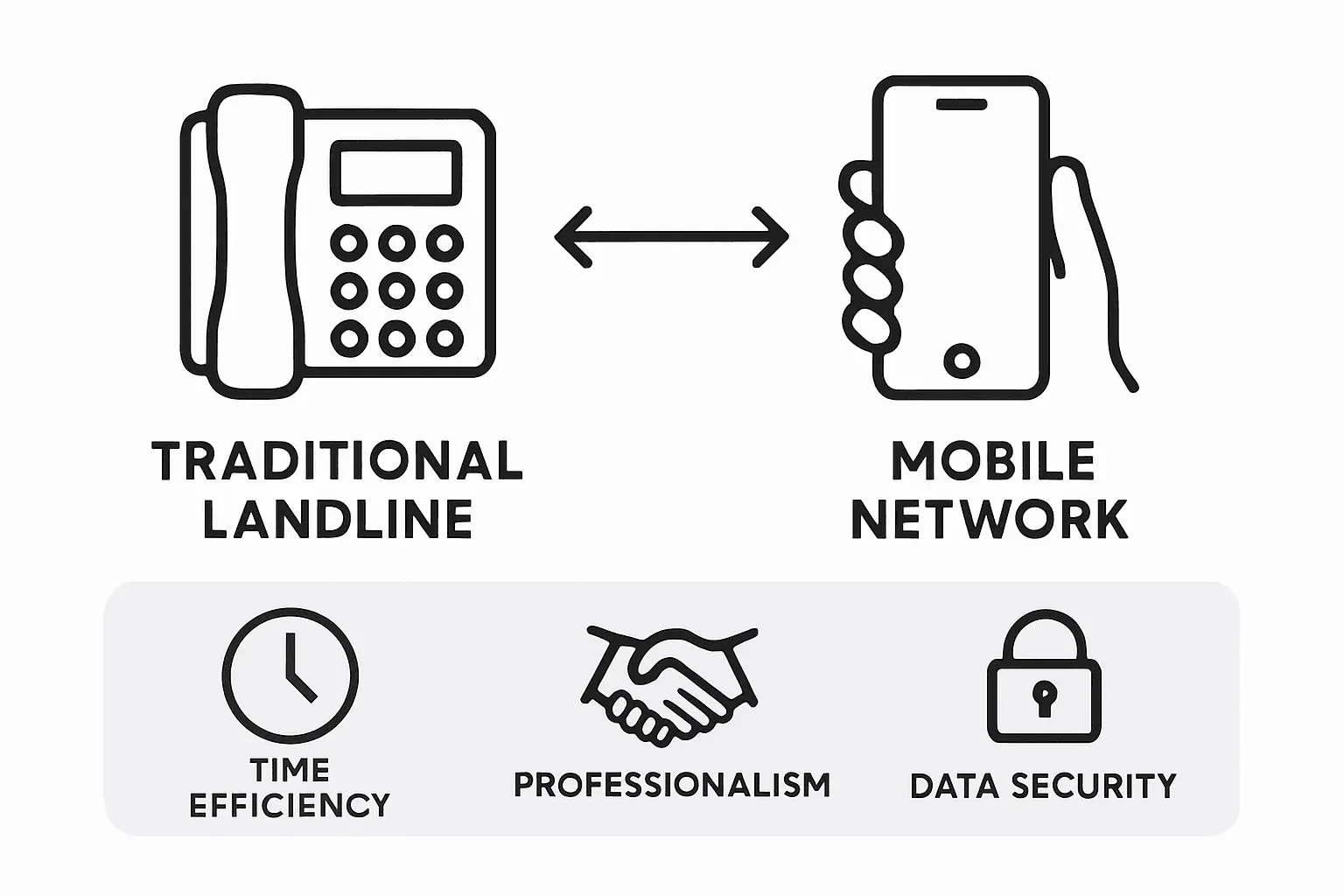
The process of integrating UK landline and mobile numbers involves multiple technical and regulatory considerations. Businesses must navigate number portability regulations, ensure consistent call quality, and maintain professional communication standards across different network technologies. This integration allows companies to preserve their established business contact details while gaining the flexibility of mobile communication platforms.
Key aspects of successful number integration include:
- Number preservation: Maintaining original business contact numbers
- Network compatibility: Ensuring smooth signal transmission between landline and mobile networks
- Call routing: Intelligently directing communications across multiple devices
- Regulatory compliance: Adhering to Ofcom telecommunications guidelines
- Number range flexibility: Utilising geographic and non-geographic number options
For service professionals, this integration means transforming communication infrastructure from a potential limitation to a strategic advantage. Taxi firms can receive calls on multiple devices, while plumbers can maintain professional contact details regardless of their physical location.
Pro Tip for Number Management: Conduct a comprehensive audit of your current communication infrastructure before implementing a landline mobile bridge, ensuring complete compatibility and minimal service disruption.
Legal Responsibilities and Data Compliance
Navigating the legal landscape of telecommunications requires UK businesses to maintain rigorous standards of data protection and regulatory compliance. For taxi firms and plumbers utilising landline mobile bridge technologies, understanding these legal obligations is not just recommended but absolutely essential to maintaining professional operational integrity.
The UK’s telecommunications infrastructure is undergoing a significant transformation, with plans to retire the public switched telephone network by 2027. This transition mandates that businesses adapt their communication systems to meet emerging digital service regulations, ensuring continuous and compliant communication channels.
Key legal considerations for businesses implementing landline mobile bridges include:
- Data protection: Adhering to UK General Data Protection Regulation (GDPR) requirements
- Emergency service accessibility: Ensuring uninterrupted emergency call capabilities during power outages
- Number portability: Maintaining consistent contact information across network transitions
- Call recording compliance: Managing customer communication records legally
- Network security: Protecting communication infrastructure from potential breaches
Businesses must proactively engage with these legal frameworks, understanding that non-compliance can result in significant financial penalties and reputational damage. The evolving telecommunications landscape demands continuous education and adaptive strategies.
Pro Tip for Legal Compliance: Consult with a telecommunications legal specialist to conduct a comprehensive audit of your communication infrastructure, ensuring full alignment with current and upcoming regulatory requirements.
Summary of key legal and regulatory responsibilities when adopting a landline mobile bridge:
| Legal Area | Main Requirement | Business Impact |
|---|---|---|
| Data protection | Meet all UK GDPR obligations | Safeguards customer and call data |
| Emergency call access | Guaranteed during outages | Ensures 999 calls are always possible |
| Number portability | Maintain number across networks | Minimises disruption to business contacts |
| Call recording compliance | Follow recording and retention laws | Avoids legal disputes |
| Network security | Secure all communications | Prevents unauthorised access and breaches |
Costs, Risks, and Choosing Providers
Selecting the right landline mobile bridge provider represents a critical strategic decision for UK businesses, particularly taxi firms and plumbers who rely heavily on consistent communication infrastructure. The financial and operational implications of this choice can significantly impact a company’s ability to maintain professional communication standards and operational efficiency.
Cost-effective solutions like 4G landline replacement communicators offer businesses a pragmatic approach to mitigating risks associated with the analogue network switch-off. These technologies provide a financially sensible pathway for transitioning between traditional and digital communication platforms without substantial upfront investment.
Key considerations when evaluating landline mobile bridge providers include:
- Initial setup costs: Comparing installation and equipment expenses
- Monthly service charges: Analysing recurring communication infrastructure fees
- Scalability options: Assessing the provider’s ability to grow with your business
- Network reliability: Evaluating call quality and connection stability
- Technical support: Examining the responsiveness and expertise of provider support teams
- Contract flexibility: Understanding terms of service and potential exit clauses
Risks in provider selection extend beyond immediate financial considerations. Businesses must carefully assess potential disruptions to communication workflows, compatibility with existing systems, and long-term technological adaptability. The right provider should offer not just a communication solution, but a strategic partnership that supports business growth and technological evolution.
Pro Tip for Provider Selection: Request comprehensive performance demonstrations and client references before committing to a landline mobile bridge provider, ensuring their solution aligns precisely with your specific business communication requirements.
Elevate Your Business Communications with Memorable UK Numbers
Connecting your landline mobile bridge to the right phone number is crucial for creating a professional image and ensuring clients can reach you effortlessly. This article highlights the challenges UK taxi firms and plumbers face when integrating mobile networks with traditional landlines, including number preservation, call routing, and maintaining a consistent business identity. At PhoneNumbers.Store, we offer a broad selection of memorable 01 and 02 landline numbers alongside 07 mobile numbers, designed to keep your business accessible and enhance your communication strategy.
Choose from our extensive database where you can search by number sequence, area code, or location to find the perfect number that suits your unique needs. By securing a memorable phone number from PhoneNumbers.Store, you make it easier for customers to contact your business across integrated landline mobile bridge systems. Don’t wait for the analog network retirement to disrupt your operations. Visit us now to explore available numbers and keep your communication seamless and professional today.
Explore our unique offerings at PhoneNumbers.Store and start transforming how UK businesses manage their calls.
Frequently Asked Questions
What is a landline mobile bridge?
A landline mobile bridge is a telecommunications solution that connects traditional landline systems with mobile networks, allowing businesses to manage calls across both platforms seamlessly.
How does a landline mobile bridge benefit small businesses?
It provides flexibility by enabling professionals to maintain a consistent business number while receiving calls on mobile devices, ensuring they never miss important communications regardless of their location.
What types of landline mobile bridge solutions are available?
Common solutions include SIM-enabled desk phones, virtual number routing systems, broadband VoIP solutions, and hybrid communication platforms, each offering varying levels of integration and flexibility.
What legal responsibilities should businesses consider when using a landline mobile bridge?
Businesses must adhere to data protection regulations, ensure emergency service access, maintain number portability, comply with call recording laws, and secure their communication networks to avoid legal issues.