
For many small business owners, choosing the right phone number can be a real headache. Balancing customer trust, local presence, and the right professional image often feels confusing without clear guidance. The United Kingdom’s telephone number system, managed by Ofcom, offers options from local geographic numbers to national and mobile choices aimed at strengthening customer reach and supporting brand visibility. This guide helps you discover which business number type suits your company’s goals and customer expectations, so you can connect confidently and look professional in every call.
Table of Contents
- Local And National Phone Numbers Explained
- Types And Features For UK Business Use
- Choosing Between Landline, Mobile And Virtual Numbers
- Legal Obligations And Compliance For Phone Numbers
- Costs, Risks And Mistakes To Avoid
Key Takeaways
| Point | Details |
|---|---|
| Understanding Number Types | UK phone numbers are categorised into Local Geographic, Mobile, and Non-Geographic types, each serving distinct purposes for businesses and individuals. |
| Impact on Business Image | Choosing the right phone number type can enhance customer perception, with local numbers indicating community ties and virtual numbers suggesting modernity. |
| Legal Compliance | Businesses must adhere to UK GDPR and other regulations when managing phone numbers, ensuring data protection and consent management. |
| Cost Awareness | Be mindful of hidden costs in telecommunications, including monthly user costs and call rates, to avoid unexpected financial burdens. |
Local and national phone numbers explained
Understanding the intricate landscape of telephone numbers in the United Kingdom requires navigating the complex yet systematic telephone numbering framework established by Ofcom. These numbers aren’t just random digits - they represent critical communication pathways for businesses and individuals across the nation.
In the UK, telephone numbers are strategically categorised into several distinct types, each serving unique purposes:
- Local Geographic Numbers: Typically starting with 01 or 02 area codes
- Mobile Numbers: Always beginning with 07
- Non-Geographic Numbers: Including 03, 08, and 09 ranges with specific service rules
For small and medium enterprises (SMEs), choosing the right number type can significantly impact customer perception and accessibility. Local numbers suggest community roots, while national numbers indicate broader operational scope. Businesses can leverage these distinctions to craft their professional communication strategy.
The structure of UK phone numbers is carefully designed to balance geographic representation with numerical availability. Telephone number administration involves precise allocation rules ensuring every region and service type has appropriate number ranges.
Pro tip: When selecting a phone number, consider your target market’s geographic preferences and the professional image you wish to project.
Types and features for UK business use
Navigating the diverse landscape of business phone numbers requires understanding the nuanced communication solutions available for modern enterprises. Each number type offers unique advantages tailored to different business communication strategies.
Business phone number options in the United Kingdom span several critical categories:
- Local Geographic Numbers: Establish regional presence and community connection
- Freephone Numbers: Provide cost-free customer contact
- Mobile Business Numbers: Enable staff mobility and flexible communication
- Virtual Business Numbers: Support remote teams with advanced call management
Modern businesses can leverage these number types to craft sophisticated communication infrastructures. Virtual numbers have become particularly valuable, allowing organisations to forward calls across multiple devices and create seamless communication pathways. These flexible solutions enable small and medium enterprises to appear professional and accessible, regardless of their actual physical location.
Advanced features transform these phone numbers from simple communication tools into strategic business assets. Sophisticated capabilities include:
- Automated call routing
- Voicemail-to-email transcription
- Advanced call analytics
- Multi-device call handling
- Interactive voice response (IVR) systems
Pro tip: Select a phone number that reflects your business’s professional image and provides the most flexible communication options for your specific operational needs.
Choosing between landline, mobile and virtual numbers
Businesses in the United Kingdom face a critical decision when selecting communication channels, with each phone number type offering distinct advantages tailored to specific operational needs. Business communication strategies have evolved significantly, presenting entrepreneurs with nuanced options for professional connectivity.
The three primary phone number categories for UK businesses include:
- Landline Numbers: Signal professionalism and traditional business stability
- Mobile Numbers: Provide flexibility and personal accessibility
- Virtual Numbers: Offer advanced routing and remote communication capabilities
Traditional landline numbers remain synonymous with established businesses, particularly those with physical office locations. Mobile numbers have gained tremendous popularity among freelancers and service-based professionals, offering immediate accessibility and personal connection. The emerging virtual number solutions represent the most adaptable option, especially for startups and remote teams seeking sophisticated communication infrastructure.

With the Public Switched Telephone Network (PSTN) scheduled for switch-off by 2027, businesses must strategically evaluate their communication platforms. Key considerations include:
Here is a concise comparison of major UK business phone number types and their strategic use:
| Number Type | Typical Use Case | Perceived Image |
|---|---|---|
| Landline | Office-based firms | Established, reliable presence |
| Mobile | Freelancers, remote staff | Accessible, personal service |
| Virtual | Remote teams, startups | Modern, flexible, scalable |
- Scalability of communication systems
- Cost-effectiveness of number types
- Integration with existing business technologies
- Projected growth and operational flexibility
- Customer perception and professional image
Pro tip: Consider your long-term business model and communication requirements when selecting a phone number type, prioritising flexibility and future-proof solutions.
Legal obligations and compliance for phone numbers
UK businesses must navigate a complex legal landscape when managing phone numbers, with comprehensive regulatory frameworks governing their use and implementation. Understanding these regulations is crucial for maintaining legal compliance and protecting both business and customer interests.
Key legal considerations for phone number usage include:
- Data Protection Requirements: Compliance with UK GDPR and Data Protection Act 2018
- Consent Management: Obtaining proper permissions for data collection and usage
- Privacy Regulations: Adhering to Privacy and Electronic Communications Regulations (PECR)
- Network Integrity: Following Ofcom’s General Conditions of Entitlement
- Emergency Service Access: Ensuring proper routing and identification
Businesses must be particularly vigilant about mobile number legal considerations, which involve complex consent and data handling requirements. Regulatory compliance extends beyond mere technical requirements, encompassing ethical data management and transparent communication practices.
Specific legal obligations for businesses include:
- Maintaining clear privacy policies
- Implementing robust data protection mechanisms
- Securing explicit consent for marketing communications
- Protecting personal data from unauthorized access
- Providing mechanisms for data subject rights
Pro tip: Consult a legal professional specialising in telecommunications to ensure your business’s phone number practices fully comply with current UK regulations.
Costs, risks and mistakes to avoid
Navigating the financial landscape of business phone numbers requires careful planning and awareness of potential unexpected expenses. Small and medium enterprises must be particularly vigilant about hidden costs and potential pitfalls associated with telecommunications infrastructure.
Key financial considerations for UK businesses include:
- Monthly User Costs: Ranging from £10-£30 per user
- Hardware Expenses: Initial investment in IP phones and communication equipment
- Installation Fees: Often overlooked setup charges
- Number Porting Charges: Potential costs for transferring existing numbers
- Call Rate Variations: Different pricing for various number prefixes
Call prefix complexities can significantly impact communication expenses. UK phone number call costs vary dramatically depending on the number type, with potential risks including:
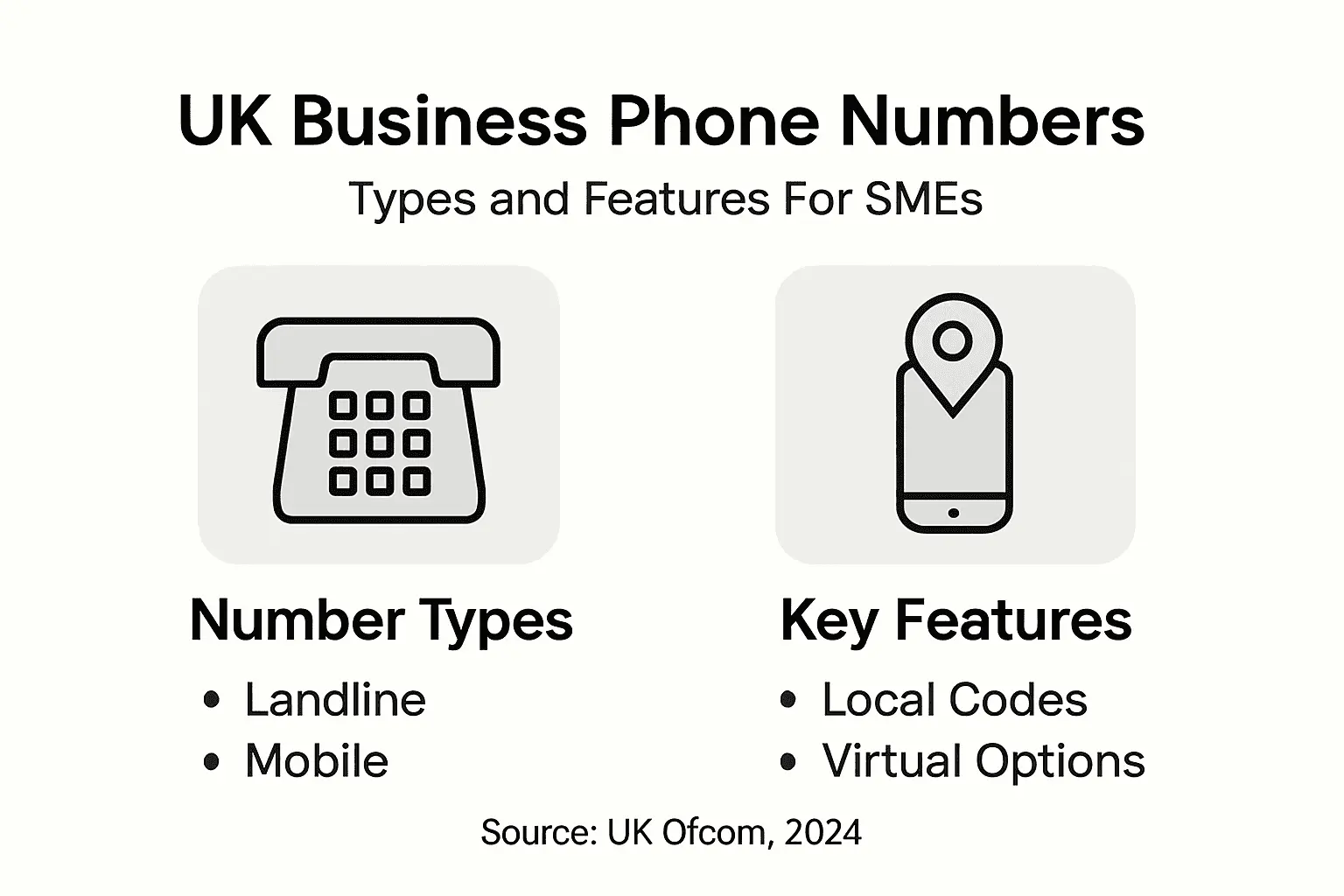
To help navigate costs, review this summary of common business phone number expenses in the UK:
| Expense Category | Typical Range | Cost Impact |
|---|---|---|
| User Subscription | £10–£30/month | Ongoing operational cost |
| Hardware Purchase | £50–£300/device | Initial capital outlay |
| Number Porting | £10–£25 per number | One-time transfer fee |
| Call Rates | 5p–£3/minute | Highly variable by number type |
- Geographic numbers costing up to 16p per minute
- Premium rate numbers potentially charging several pounds per minute
- Mobile call rates being particularly variable
- Hidden access charges for certain number ranges
- Potential for unexpected billing surprises
Pro tip: Always request a comprehensive cost breakdown from your telecommunications provider and carefully review contract terms to prevent unexpected financial complications.
Elevate Your Business Reach with the Perfect UK Phone Number
Choosing between local and national phone numbers is a crucial step for UK SMEs aiming to establish a strong professional image and widen their market presence. The challenge many face is finding a memorable, easy-to-manage number that fits their specific business goals—be it local recognition or national accessibility. Whether you want to project stability with an 01 or 02 landline number or offer flexibility with a 07 mobile number, making the right choice can boost customer trust and enhance communication.
At PhoneNumbers.Store, we understand these needs and provide a vast selection of memorable UK phone numbers, including local area codes and mobile sequences. Numbers are no longer limited by physical location, giving your SME the freedom to operate anywhere while maintaining a professional image.
Discover the power of choosing the right number today. Search our extensive database by number, sequence, area code, or location and find the perfect match to grow your business. Don’t wait to enhance your customer connection and credibility. Visit PhoneNumbers.Store to secure your ideal UK phone number now and step confidently into the future of business communication.
Frequently Asked Questions
What are the main types of phone numbers available for UK businesses?
There are three primary phone number types for UK businesses: landline numbers, mobile numbers, and virtual numbers. Landline numbers signify stability, mobile numbers offer flexibility, and virtual numbers provide advanced call management for remote teams.
How can a business choose the right phone number type?
A business should consider its target market’s preferences and its desired professional image. Local numbers can suggest community roots, while national numbers imply wider operational reach. Evaluating operational flexibility and future needs is also essential.
What are the costs associated with business phone numbers in the UK?
Costs can vary significantly but typically include monthly user fees (£10-£30), hardware expenses, installation fees, and number porting charges. Understanding call rates is crucial, as they can range widely based on the number type used.
What legal obligations should businesses be aware of regarding phone numbers?
Businesses must comply with data protection regulations, obtain proper consent for data collection, adhere to privacy regulations, and ensure appropriate routing for emergency services. It is advisable to maintain clear privacy policies and safeguard personal data.