
British small businesses often miss out on nearly 30 percent more local inquiries simply because their telephone numbers lack a familiar area code. For taxi and plumbing service owners, the right local number can mean the difference between a customer call and a missed opportunity. Understanding local number mapping gives you a direct route to greater customer trust, clearer identity, and better marketing results.
Table of Contents
- Local Number Mapping Defined And Explained
- Types Of Local Number Mapping Available
- How Local Number Mapping Works For UK Businesses
- Benefits For Local Taxi And Plumbing Firms
- Legal Requirements And Ofcom Compliance In 2026
Key Takeaways
| Point | Details |
|---|---|
| Local Number Mapping Definition | Local number mapping strategically associates telephone numbers with specific regions or businesses, enhancing customer connections. |
| Types of Numbers | Businesses can choose geographic, mobile, or non-geographic numbers to optimise communication based on their operational needs. |
| Call Routing Technology | Advanced call routing mechanisms enable businesses to project a local presence regardless of their actual location, benefiting marketing efforts. |
| Compliance Requirements | Businesses must adhere to Ofcom regulations, including accurate caller identification and responsible number allocation, to avoid penalties. |
Local number mapping defined and explained
Local number mapping is a strategic telecommunications process where telephone numbers are systematically associated with specific geographic regions, businesses, or service areas. In the United Kingdom, this system allows businesses to establish a local presence and create meaningful connections with customers through distinctive telephone numbering.
Traditionally, local number mapping involved assigning area codes that directly corresponded to specific cities or regions. Under the Ofcom National Telephone Numbering Plan, these geographic numbers provide crucial context about a business’s location and accessibility. A Manchester-based taxi service, for instance, might utilise a local 0161 area code, signalling its regional roots to potential customers.
Modern local number mapping has evolved beyond strict geographic limitations. Businesses can now acquire virtual local numbers that aren’t physically tied to a specific location, enabling smaller enterprises to project a professional, locally rooted image. This flexibility means a plumbing company in Leeds can obtain a local number even if they serve multiple surrounding districts, creating a sense of community presence and trustworthiness.
The strategic benefits of local number mapping extend beyond mere geographical representation. These numbers can enhance customer perception, improve call routing efficiency, and provide businesses with a competitive edge in localised marketing efforts.
Pro tip: When selecting a local number, choose an area code that resonates most strongly with your primary service region to maximise customer trust and recognition.
Types of local number mapping available
Local number mapping in the United Kingdom encompasses several distinct categories, each serving unique business communication needs. The primary types include geographic, mobile, and non-geographic number formats, providing businesses with flexible telecommunications strategies.
Geographic Numbers represent the traditional local number mapping approach. These numbers, beginning with 01 or 02 prefixes, are directly associated with specific regions like Manchester (0161), London (020), or Birmingham (0121). They provide an immediate signal of local presence, allowing businesses to establish regional credibility and connect with community-specific customer bases.

Mobile numbers, identifiable by their 07 prefix, offer a more flexible mapping approach. Unlike traditional geographic numbers, these mobile numbers are not tied to specific locations, enabling businesses to maintain professional communication channels regardless of physical address. This flexibility is particularly valuable for service-based businesses like taxi firms, plumbers, or mobile consultants who operate across multiple districts.
Non-geographic numbers present another sophisticated mapping strategy. Prefixed with 03, 08, or 09, these numbers serve specialised business functions. 03 numbers provide national accessibility, 08 numbers often function as freephone or corporate contact lines, and 09 numbers typically represent premium rate services. Each category offers unique advantages for businesses seeking to optimise their communication infrastructure.
Here’s a quick comparison of the main types of telephone numbers used in UK local number mapping:
| Number Type | Typical Prefix | Purpose | Key Business Advantage |
|---|---|---|---|
| Geographic | 01/02 | Regional identification | Builds local trust |
| Mobile | 07 | Personal or mobile business use | Enables flexibility |
| Non-geographic | 03/08/09 | National, freephone, premium services | Broad customer reach |
Pro tip: Select a number type that aligns precisely with your business model, target audience, and communication objectives to maximise customer engagement and professional perception.
How local number mapping works for UK businesses
Local number mapping provides UK businesses with a sophisticated telecommunication strategy that transcends traditional geographic limitations. Virtual telephony systems enable businesses to establish a local presence by routing calls seamlessly through advanced technological infrastructure, regardless of their actual physical location.
Call Routing Mechanisms form the core of local number mapping. When a customer dials a local geographic number, sophisticated cloud-based telephony platforms instantly redirect the call to the designated business contact. This might be a mobile phone, landline, or even a remote worker’s device. The process creates a seamless communication experience that maintains the appearance of a traditional local business operation.
The strategic advantages of this approach are particularly significant for small and medium enterprises. A plumbing business based in Liverpool can acquire a Manchester area code, effectively expanding its perceived service region. Similarly, a consulting firm in rural Yorkshire can utilise a London number, instantly projecting a metropolitan professional image. This flexibility allows businesses to overcome geographical constraints and target broader market segments.
Moreover, local number mapping integrates advanced analytics and call management features. Businesses can track call origins, monitor response rates, and configure intelligent routing rules. These features transform a simple phone number into a powerful marketing and customer engagement tool, providing insights that traditional communication methods cannot match.
Pro tip: Choose a local number that strategically aligns with your target market’s perception and demonstrates your business’s professional communication capabilities.
Benefits for local taxi and plumbing firms
Local number mapping offers transformative advantages for service-based businesses like taxi and plumbing firms, enabling them to build stronger local market credibility. By acquiring a geographically relevant telephone number, these businesses can instantly communicate their local roots and community connection.
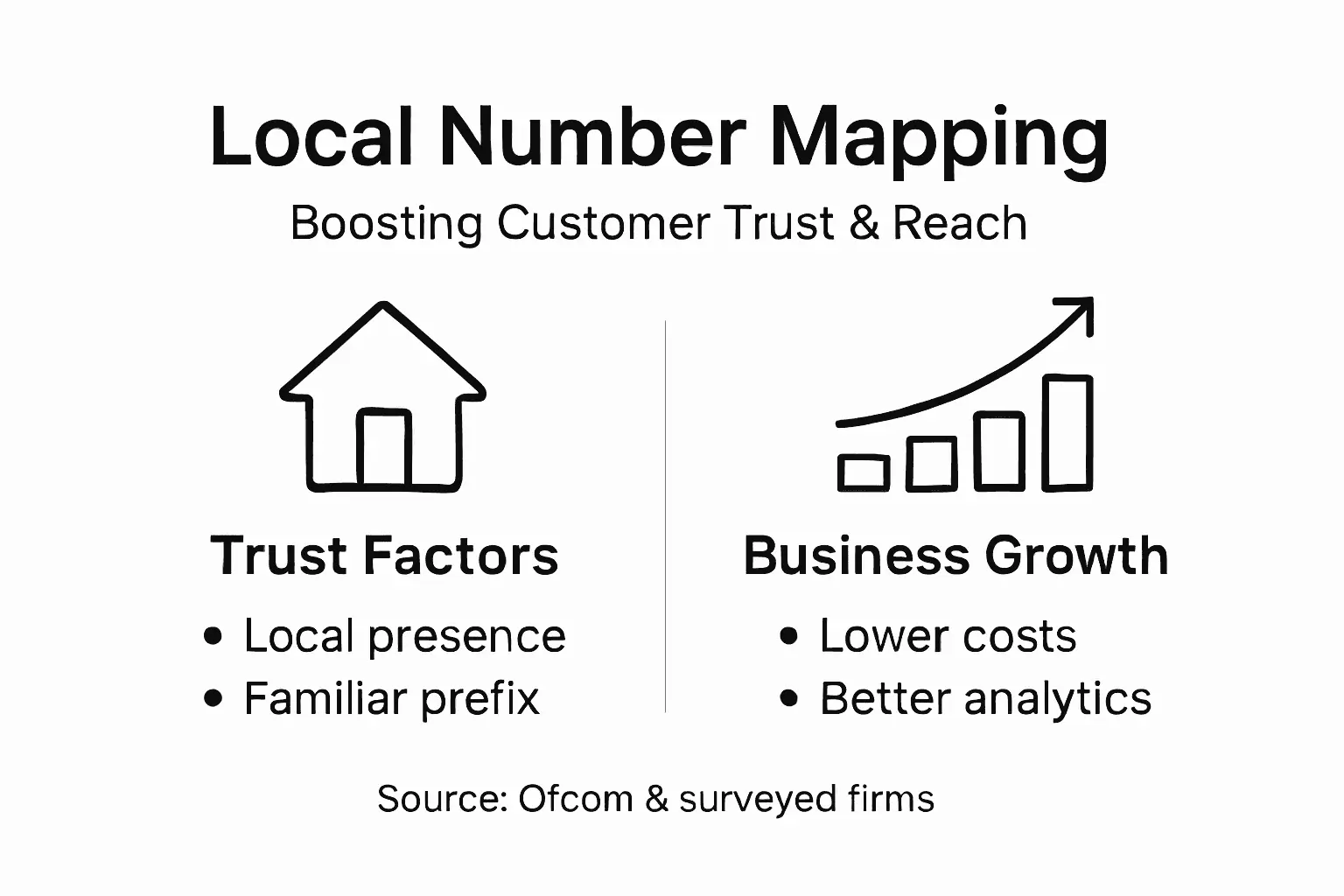
Customer Trust Mechanisms play a crucial role in this strategy. A local taxi firm in Manchester using a 0161 area code immediately signals local expertise and accessibility. Similarly, a plumbing business in Bristol sporting a 0117 number appears more trustworthy and approachable to potential customers. This subtle psychological signal increases call answer rates and reduces customer hesitation when seeking local services.
Economic benefits extend beyond perception. Local numbers are typically included in standard mobile call packages, reducing communication costs for both businesses and customers. This cost-effectiveness becomes particularly significant for small service providers operating on tight margins. A taxi company or plumbing service can maintain professional communication channels without incurring substantial telecommunications expenses, allowing them to allocate resources more strategically.
Moreover, local number mapping provides sophisticated marketing capabilities. Businesses can track call origins, analyse customer engagement patterns, and refine their local marketing strategies. A taxi firm can understand which neighbourhoods generate most inquiries, while a plumbing service can identify peak service request times, enabling data-driven business decisions that enhance operational efficiency.
Pro tip: Select a local number that precisely matches your primary service area to maximise customer recognition and trust.
Legal requirements and Ofcom compliance in 2026
Telecommunications businesses must navigate increasingly complex regulatory landscapes, with Ofcom’s legal framework governing telephone number usage becoming more stringent in 2026. The National Telephone Numbering Plan establishes comprehensive guidelines that telecommunications providers and businesses must strictly follow to maintain operational legitimacy.
Compliance Fundamentals encompass multiple critical areas. Businesses must ensure proper calling line identification (CLI), maintain transparent communication practices, and prevent potential number misuse. This includes configuring CLI systems that allow return calls, adhering to specified ringing times, and respecting designated calling hours. Violations can result in significant penalties and potential service restrictions, making proactive compliance essential.
Specific regulatory requirements address nuanced aspects of telecommunications operations. Non-geographic numbers must be used appropriately, silent or abandoned calls are strictly prohibited, and businesses must demonstrate responsible number allocation. These regulations aim to protect consumer interests, prevent telecommunications fraud, and maintain the integrity of the UK’s communication infrastructure.
Moreover, Ofcom’s evolving compliance framework requires businesses to implement sophisticated monitoring and reporting mechanisms. Companies must maintain detailed records of number usage, demonstrate ethical communication practices, and be prepared for potential regulatory audits. This approach ensures transparency and accountability in telecommunications service delivery.
The following table summarises critical Ofcom compliance actions for UK businesses in 2026:
| Compliance Area | Required Practice | Business Risk if Ignored |
|---|---|---|
| Calling Line ID (CLI) | Ensure accurate caller identification | Potential fines, service blocks |
| Number Allocation | Prevent misuse and over-allocation | Regulatory investigations |
| Call Handling | Respect ringing and call hours | Customer complaints, penalties |
| Monitoring & Reporting | Keep detailed telecommunications logs | Failed audits, loss of legitimacy |
Pro tip: Regularly review and update your telecommunications practices to ensure ongoing compliance with Ofcom’s most recent regulatory guidelines.
Elevate Your Local Presence with the Perfect UK Number
Local number mapping presents a real challenge for UK businesses aiming to build trust and boost customer engagement across regions. Whether you want a geographic 01 or 02 landline number or a versatile 07 mobile number, securing a memorable and locally resonant phone number can be the key to overcoming the limitations of physical location and enhancing your professional image. This article highlights the importance of choosing numbers that align with your business goals and target audience.
Discover a vast selection of UK telephone numbers at PhoneNumbers.Store where you can search by area code, town, or number sequence. Tap into the flexibility of virtual local numbers to strengthen customer trust and extend your reach effortlessly. Act now to secure a number that matches your service area and watch your local marketing efforts flourish. Explore your options today at PhoneNumbers.Store and learn more about how local numbers can transform your business communications by visiting our landing page here.
Frequently Asked Questions
What is local number mapping?
Local number mapping is a telecommunications process that associates telephone numbers with specific geographic areas, businesses, or service regions. This helps businesses project a local presence and connect with customers effectively.
How does local number mapping benefit small businesses?
Local number mapping allows small businesses to obtain local phone numbers that enhance customer trust and recognition. It helps them maintain professional communication channels, reduce costs, and target wider market segments without being limited by their physical location.
What types of phone numbers are used in local number mapping?
Local number mapping primarily uses three types of phone numbers: geographic numbers (starting with 01 or 02), mobile numbers (beginning with 07), and non-geographic numbers (prefixed with 03, 08, or 09). Each type serves different business communication needs and offers unique advantages.
What should businesses consider for compliance with Ofcom regulations?
Businesses should ensure accurate caller identification (CLI), properly allocate numbers, respect ringing times and call hours, and maintain detailed records of their communications. Regularly reviewing practices in line with Ofcom’s guidelines is essential to avoid penalties and maintain operational legitimacy.