
For many UK taxi firms, balancing safety and effective customer communication is an everyday challenge. When passengers and drivers connect, the risk of exposing personal contact details can put trust and privacy at stake. By adopting local number masking, firms offer a simple yet powerful way to protect both parties and create a more secure service. This approach does more than build confidence—it allows for clear call tracking and ensures your business meets the highest privacy and compliance standards.
Table of Contents
- Local Number Masking Explained For Taxis
- Types Of Number Masking And Key Distinctions
- How The Masking Process Works For Taxi Calls
- Call Tracking, Security, And Customer Trust Implications
- Legal And Compliance Considerations For Uk Firms
Key Takeaways
| Point | Details |
|---|---|
| Local Number Masking Benefits | Provides anonymity for both drivers and passengers, enhancing safety during taxi communications. |
| Types of Number Masking | Key types include one-way, two-way, permanent, and temporary masking, each serving different privacy needs. |
| Compliance is Crucial | Adhering to UK data protection regulations is essential to avoid legal risks and ensure operational legitimacy. |
| Technological Safeguards | Implementing robust number masking solutions can significantly enhance customer trust and operational security. |
Local number masking explained for taxis
Local number masking represents a critical privacy technology enabling safer communication between taxi drivers and passengers by anonymising personal contact details. This innovative communication method ensures both parties can connect seamlessly while maintaining essential personal privacy protections.
At its core, local number masking works by generating a temporary, anonymous phone number that acts as an intermediary during communication. When a passenger books a taxi, they receive a proxy number that forwards calls to the driver’s actual mobile number, preventing direct personal number exchange. Technological privacy measures like these have become increasingly important in protecting individual safety.
The key benefits of local number masking for taxi services include:
- Complete anonymity for both driver and passenger
- Prevention of unwanted direct personal contact
- Enhanced security during ride-sharing interactions
- Compliance with data protection best practices
- Ability to track and record communication without exposing personal numbers
Technically, the process involves several sophisticated steps. When a passenger initiates contact, the masking system generates a temporary virtual number. This number routes communication between parties without revealing their actual contact information. The system can also log call details, providing an additional layer of accountability and safety for both passengers and drivers.
Pro tip: When implementing local number masking, ensure your system complies with UK telecommunications regulations and data protection standards.
Types of number masking and key distinctions
Number masking represents a sophisticated communication technology with multiple implementation strategies designed to protect user privacy in business interactions. Number masking solutions vary significantly, each offering unique approaches to anonymising contact information for different operational contexts.
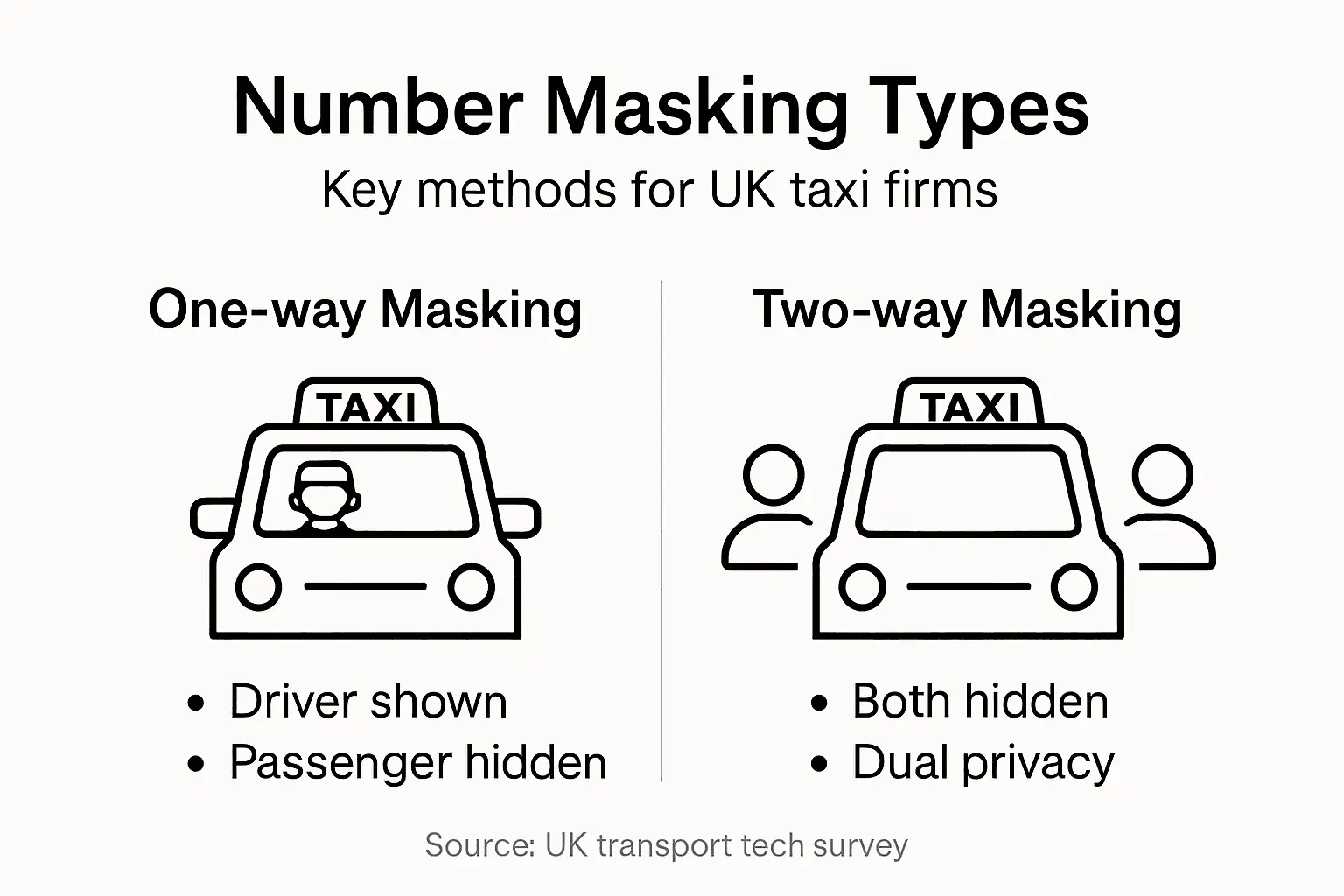
Number masking techniques primarily fall into two fundamental categories: one-way and two-way masking. One-way masking conceals only one party’s contact details, typically the passenger’s number, while two-way masking provides complete anonymity by hiding both the driver’s and passenger’s actual phone numbers during communication.
The key types of number masking include:
-
One-Way Masking
- Protects only the passenger’s personal number
- Driver’s actual contact details remain visible
- Ideal for basic privacy requirements
-
Two-Way Masking
- Completely anonymises both parties’ contact information
- Generates temporary virtual numbers for both driver and passenger
- Provides maximum privacy protection
-
Permanent Virtual Number Masking
- Assigns a consistent proxy number for repeated interactions
- Suitable for businesses with recurring customer relationships
- Maintains communication continuity
-
Temporary Virtual Number Masking
- Generates unique proxy numbers for each individual interaction
- Highest level of privacy and security
- Resets after communication concludes
The selection of an appropriate masking technique depends on specific business requirements, privacy standards, and operational complexity. Taxi firms must carefully evaluate their communication needs to implement the most suitable number masking approach.
The following table compares number masking types by use case, privacy and operational factors:
| Masking Type | Typical Use Case | Privacy Level | Impact on Communication |
|---|---|---|---|
| One-Way Masking | Basic passenger protection | Moderate | Direct driver exposure |
| Two-Way Masking | Full driver-passenger anonymity | High | Fully protected communication |
| Permanent Virtual Number | Repeat customer interactions | Consistent | Easy long-term tracking |
| Temporary Virtual Number | Single-use, high privacy rides | Maximum | Isolated per ride session |
Number masking transforms communication privacy by creating secure, anonymous interaction channels without compromising operational effectiveness.
Pro tip: Always select a number masking solution that provides robust encryption and complies with UK data protection regulations.
How the masking process works for taxi calls
Number masking transforms communication dynamics for taxi services by creating a sophisticated virtual intermediary system that protects both driver and passenger privacy. This technological solution ensures seamless communication without compromising personal contact information, representing a critical innovation in modern transportation services.
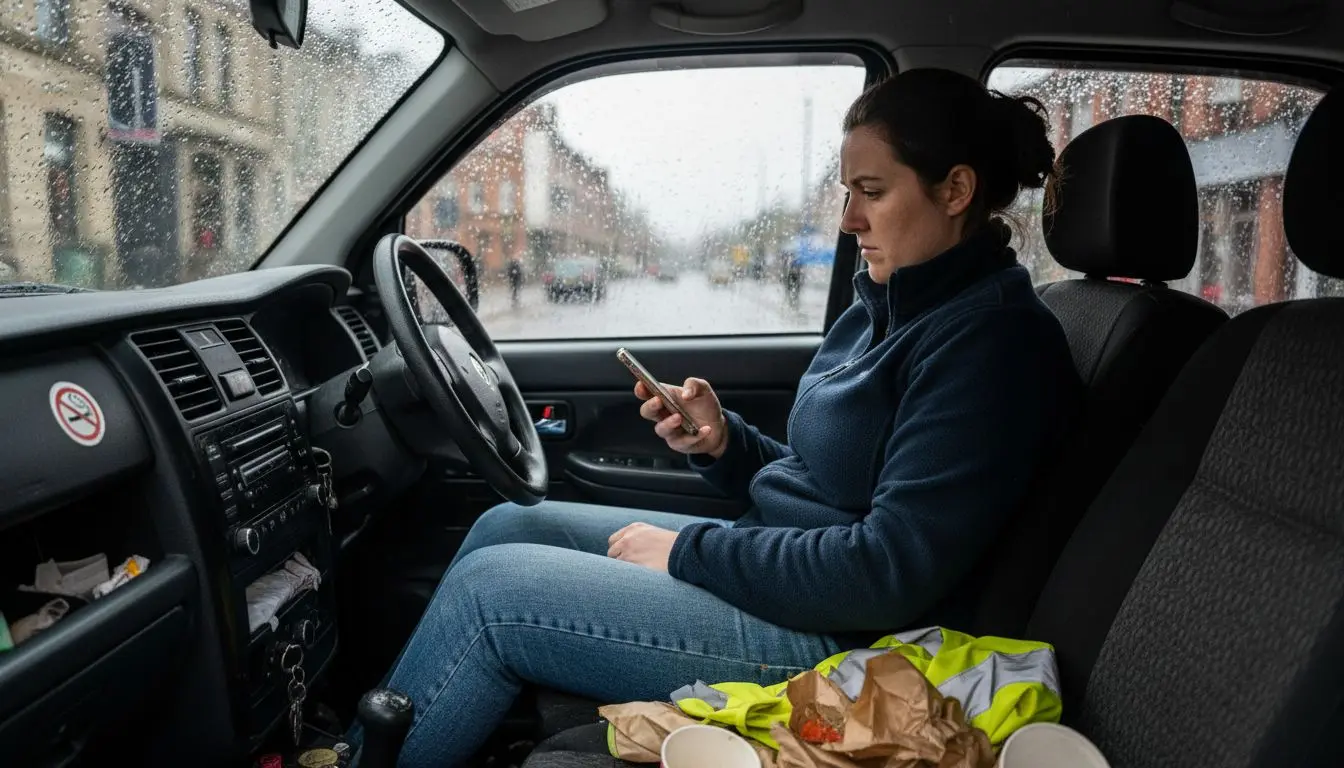
Number masking technology operates through a complex yet elegant process that dynamically generates temporary virtual phone numbers. When a passenger books a taxi, the system automatically creates a unique proxy number that connects the driver and passenger while completely concealing their actual contact details.
The technical workflow of number masking involves several critical stages:
-
Initial Connection Request
- Passenger initiates taxi booking
- System identifies communication requirements
- Virtual number generation begins
-
Virtual Number Assignment
- Unique temporary number created
- Mapped to driver and passenger accounts
- Encryption protocols activated
-
Call Routing Mechanism
- Proxy number receives incoming communication
- Seamlessly redirects to actual contact
- Maintains anonymity throughout interaction
-
Session Termination
- Virtual number automatically deactivated
- Communication records securely stored
- Personal details remain protected
The entire process occurs instantaneously, providing a robust privacy layer that protects both parties’ personal information. By implementing these advanced technological safeguards, taxi firms can build trust and demonstrate their commitment to customer privacy.
Number masking creates an invisible shield, transforming communication safety for modern transportation services.
Pro tip: Regularly update your number masking protocols to maintain the highest standards of technological security and customer protection.
Call tracking, security, and customer trust implications
Customer privacy has become a paramount concern for taxi firms, with call tracking technologies offering unprecedented opportunities to build trust while maintaining robust security protocols. Modern communication strategies demand sophisticated approaches that protect both driver and passenger interests throughout their interaction.
Customer privacy strategies play a critical role in developing transparent and secure communication channels for taxi services. By implementing advanced number masking techniques, firms can demonstrate their commitment to data protection and create a safer communication environment.
Key security and trust implications include:
-
Enhanced Personal Information Protection
- Prevents direct number exchange
- Reduces potential for stalking or harassment
- Maintains strict boundaries between driver and passenger
-
Regulatory Compliance
- Adheres to UK data protection regulations
- Minimises risk of personal data breaches
- Demonstrates professional commitment to privacy standards
-
Psychological Safety
- Increases passenger confidence
- Provides anonymous communication channel
- Reduces anxiety about personal contact information
-
Operational Transparency
- Enables secure call logging
- Facilitates performance monitoring
- Creates accountability without compromising privacy
The implementation of sophisticated call tracking mechanisms transforms traditional communication models. By creating an invisible protective layer, taxi firms can simultaneously enhance security, build customer trust, and demonstrate technological sophistication.
Effective number masking represents the intersection of technological innovation and customer protection.
Pro tip: Regularly audit and update your number masking protocols to ensure maximum security and compliance with evolving data protection standards.
Legal and compliance considerations for UK firms
UK taxi firms must navigate a complex landscape of legal and regulatory requirements when implementing number masking technologies. Data protection regulations demand rigorous approaches to maintaining customer privacy while ensuring operational transparency and safety.
Licensing authority guidelines establish critical frameworks for technological implementations in the taxi industry, emphasising the importance of comprehensive compliance strategies.
Key legal considerations for UK taxi firms include:
-
Data Protection Act 2018 Compliance
- Ensure personal data is processed lawfully
- Implement robust privacy protection mechanisms
- Maintain transparent data handling practices
-
GDPR Privacy Requirements
- Protect individual contact information
- Enable user consent for data processing
- Provide clear privacy policy documentation
-
Telecommunications Regulatory Compliance
- Adhere to Ofcom communication standards
- Maintain secure communication channels
- Prevent unauthorized data interception
-
Licensing and Operational Regulations
- Follow local authority licensing requirements
- Demonstrate fit and proper operational standards
- Maintain comprehensive record-keeping practices
Taxi firms must develop comprehensive strategies that balance technological innovation with strict legal compliance. This involves regular audits, ongoing staff training, and proactive adaptation to evolving regulatory landscapes.
Below is a summary of legal and operational priorities for UK taxi firms implementing number masking:
| Priority Area | Description | Importance for Firms |
|---|---|---|
| Data Protection Compliance | Meeting GDPR and DPA requirements | Avoids fines and legal risk |
| Telecommunications Regulation | Adhering to Ofcom standards | Ensures secure channels |
| Licensing Authorities | Following local operational rules | Legitimacy and oversight |
| Staff Training & Awareness | Regular privacy and tech training | Reduces operational errors |
Effective legal compliance transforms technological solutions from potential risks to competitive advantages.
Pro tip: Consult with a legal professional specialising in data protection to ensure your number masking implementation meets all current UK regulatory standards.
Protect Privacy and Build Trust with the Right UK Phone Numbers
Local number masking is essential for UK taxi firms aiming to safeguard passenger and driver privacy while ensuring seamless communication. The challenge lies in maintaining anonymity without compromising operational efficiency or compliance with data protection standards. By choosing memorable and localised UK phone numbers such as 01, 02 landlines or 07 mobile numbers, taxi companies can effectively implement number masking strategies that instil confidence and trust.
Key benefits include:
- Enhanced privacy protection through easy-to-manage proxy numbers
- Clear compliance with regulatory frameworks for secure communication
- Flexible number use that is not restricted by geography
Ready to elevate your taxi business with trusted communication channels and memorable UK phone numbers Choose from our extensive database anytime at PhoneNumbers.Store to find the perfect number sequence or area code that suits your privacy and branding needs. Explore how our numbers integrate smoothly with number masking solutions to help you build lasting customer trust and stay fully compliant. Start securing your communication today by visiting our landing page and discover the ideal phone numbers tailored for your UK taxi service.
Frequently Asked Questions
What is local number masking in the context of taxi services?
Local number masking is a privacy technology that allows taxi drivers and passengers to communicate without revealing their personal phone numbers. It uses temporary proxy numbers as intermediaries to enhance privacy and safety.
How does local number masking enhance security for taxi drivers and passengers?
Local number masking enhances security by preventing direct exchange of personal contact information, thus reducing risks of unwanted contact or harassment. It also enables call tracking for accountability without compromising privacy.
What are the differences between one-way and two-way number masking?
One-way masking conceals only the passenger’s number, exposing the driver’s actual contact details, whereas two-way masking hides the contact information of both parties, providing complete anonymity during communication.
What legal considerations should UK taxi firms keep in mind when implementing number masking technology?
UK taxi firms must comply with the Data Protection Act 2018, GDPR requirements, and telecommunications regulations, ensuring they maintain transparency in data handling, secure communication channels, and proper licensing compliance.