
Most British businesses discover that choosing the right telephone number type can subtly influence how customers perceive their brand. The distinction between local and non-local numbers affects trust, reach, and even caller charges. With over 90 percent of UK consumers still preferring to call a recognizable area code when seeking services, understanding these differences gives companies a real advantage. This guide breaks down what British companies need to know about local and non-local numbers, helping you make an informed choice for your business.
Table of Contents
- What Local Vs Non-Local Numbers Mean
- Geographic (01/02) Number Characteristics
- Non-Geographic Number Types And Uses
- Cost And Caller Charge Differences
- Business Impact: Image, Portability, Routing
Key Takeaways
| Point | Details |
|---|---|
| Local vs Non-Local Numbers | Local numbers enhance community presence, while non-local numbers broaden the brand’s perceived reach and image. |
| Cost Implications | Understanding caller charges is crucial; geographic numbers have standard rates, whereas freephone and premium numbers have varied costs affecting customer engagement. |
| Number Flexibility | Modern technologies allow businesses to retain numbers across locations, creating professional appearances without geographical constraints. |
| Market Perception | The choice of a number type should align with target market perceptions to build trust and enhance customer interaction. |
What local vs Non-local numbers mean
Local and non-local numbers represent two distinct approaches to telephone communication that can significantly impact how businesses connect with their customers. A local number traditionally refers to a telephone number with an area code specific to a particular geographic region in the United Kingdom, such as 020 for London or 0161 for Manchester. These numbers historically signalled a business’s physical proximity to potential clients.
In contrast, non-local numbers are telephone numbers that are not tied to a specific geographical location. These numbers can be used anywhere in the country, regardless of the physical business address. Modern telecommunications technology has made it possible for businesses to choose number ranges that are not restricted by traditional geographic boundaries. For instance, a plumbing business based in Birmingham could now use a London area code without actually operating from the capital.
The distinction between local and non-local numbers has become increasingly blurred in recent years. With telephone number flexibility becoming more prevalent, businesses now have greater freedom in selecting number ranges that best suit their branding and customer perception strategies. Some businesses opt for local numbers to create a sense of community presence, while others choose non-local numbers to appear larger or more nationally focused.
Pro tip for Small Businesses: Research your target market’s perception of local versus non-local numbers before making a final selection, as customer trust can be influenced by the type of number you choose.
Here’s a concise comparison of local and non-local UK business numbers:
| Aspect | Local Number (e.g., 020) | Non-local Number (e.g., 03, 080) |
|---|---|---|
| Geographical Link | Tied to specific region | No regional tie |
| Caller Perception | Often seen as community-based | National or commercial appearance |
| Flexibility | Traditionally less portable | Highly portable, suitable for cloud use |
| Typical Business Use | Attract local customers | Expand reach, enhance brand image |
Geographic (01/02) number characteristics
Geographic numbers represent a specific category of telephone numbers in the United Kingdom that are intrinsically linked to particular physical locations. These distinctive numbers with 01 and 02 prefixes are designed to provide clear routing information for telecommunications networks, enabling precise call destination targeting based on regional infrastructure.
In the United Kingdom, geographic numbers always comprise nine or ten digits following the initial ‘0’ trunk code. Each area code within this system corresponds to a specific city or region, creating a structured approach to telephone communication. For example, 020 represents London, 0161 identifies Manchester, and 0113 is associated with Leeds. This geographical coding allows businesses and individuals to immediately recognise the approximate origin of an incoming call based on its number prefix.

Modern telecommunications technology has transformed how these geographic numbers function. While traditionally tied to physical landline exchanges, contemporary systems allow businesses significant flexibility. A plumbing company in Birmingham could now acquire a London area code (020) without maintaining a physical London office, effectively expanding their perceived operational reach. Telephone numbers in the United Kingdom have evolved to provide businesses with strategic communication options that transcend traditional geographic limitations.
Pro Tip for Number Selection: Always consider your target market’s regional perceptions when selecting a geographic number, as the area code can subtly influence customer trust and perceived business locality.
Non-geographic number types and uses
Non-geographic numbers represent a flexible telecommunications solution that transcends traditional location-based telephone numbering systems. Exploring different types of special phone numbers reveals several distinctive categories that businesses can strategically leverage for communication purposes.
The primary non-geographic number types include national rate numbers (starting with 03), premium rate numbers (beginning with 09), and freephone numbers (commencing with 080). Each category serves unique business communication needs. National rate numbers offer a professional appearance without geographic constraints, allowing companies to present a unified national presence. Premium rate numbers generate revenue through caller charges, while freephone numbers provide a cost-free contact method for customers, potentially increasing engagement and accessibility.
Modern businesses increasingly utilise these non-geographic numbers to create flexible communication strategies. A small taxi firm in Manchester could adopt a national rate number to appear more extensive and professionally established, while a plumbing service might choose a freephone number to encourage customer inquiries. Choosing the right telephone number requires careful consideration of marketing objectives, target audience preferences, and overall brand positioning.
Pro Tip for Number Selection: Analyse your target market’s communication preferences and budget constraints before selecting a non-geographic number type, ensuring the number aligns with your business’s professional image and customer service goals.
Cost and caller charge differences
Caller charges represent a critical consideration for businesses when selecting telephone numbers, with different number ranges carrying distinct cost implications for both businesses and customers. International business calls often introduce complex pricing structures that can significantly impact communication strategies.
Various number types incur different charging mechanisms. Geographic numbers (01 and 02 prefixes) typically mirror standard landline rates, offering predictable costs for callers. National rate numbers (03 prefix) provide a balanced approach, with calls charged at standard network rates. Premium rate numbers (09 prefix) generate revenue through higher caller charges, while freephone numbers (080 prefix) eliminate direct costs for customers, instead charging the receiving business.
For quick reference, here are the main UK number prefixes and their typical usage:
| Number Prefix | Typical Use | Cost to Caller |
|---|---|---|
| 01/02 | Geographic/landline | Standard local rate |
| 03 | National rate/non-local | Standard rate |
| 080 | Freephone | Free to caller |
| 09 | Premium rate services | Higher than standard |
For small businesses like taxi firms or plumbing services, understanding these cost dynamics is crucial. A national rate number might appear more professional while maintaining reasonable caller expenses, whereas a freephone number could encourage more customer interactions by removing call barriers. The choice depends on marketing strategy, target audience budget sensitivity, and the business’s financial capacity to absorb potential call charges.
Pro Tip for Cost Management: Regularly review your number’s calling costs and customer feedback to ensure your chosen number type aligns with both your budget constraints and customer communication preferences.
Business impact: image, portability, routing
Number selection represents a strategic decision that extends far beyond simple communication logistics. Non-geographic numbers offer businesses a powerful tool for creating a national presence without being constrained by physical location, enabling companies to project a more expansive and professional image.
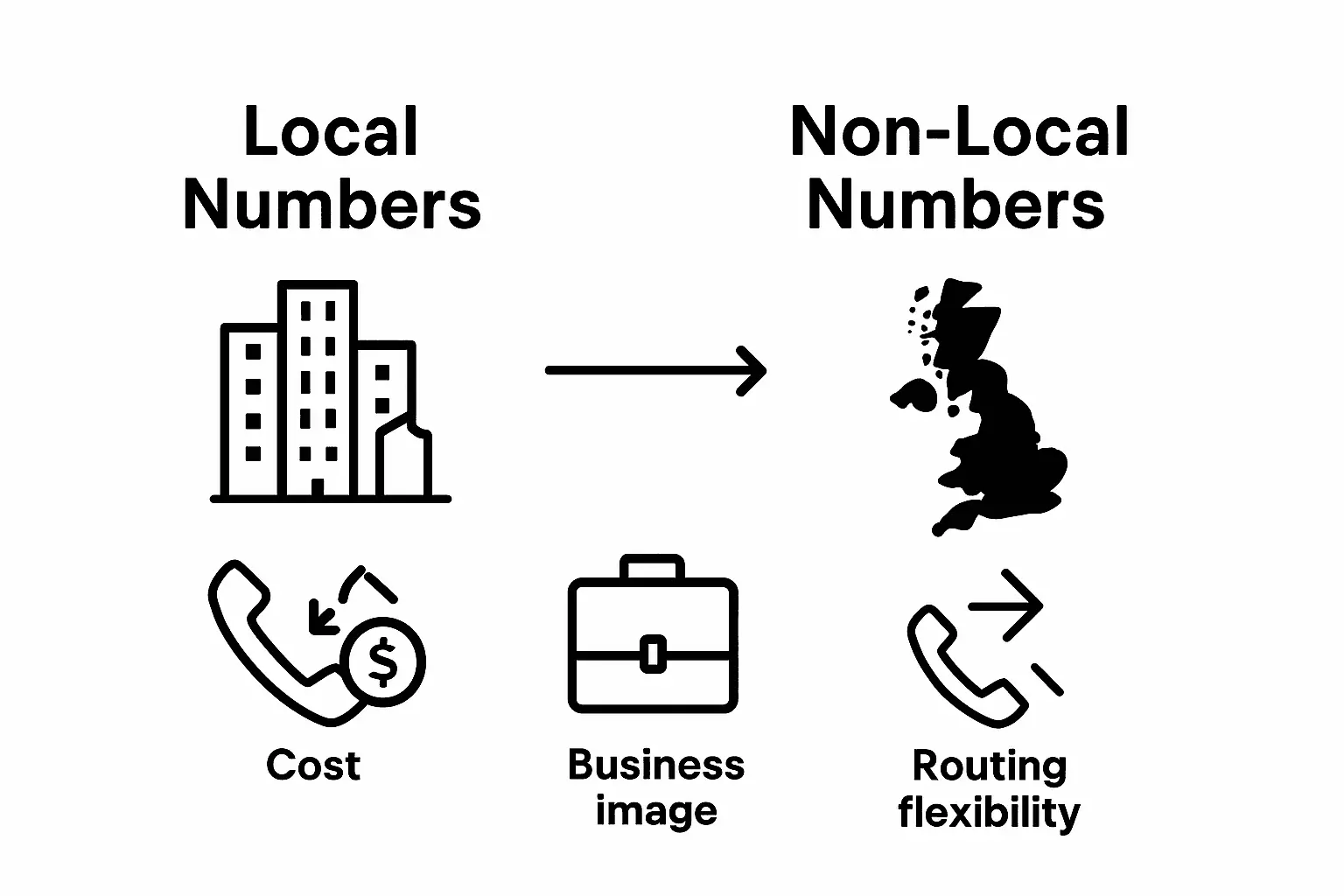
The portability of modern telephone numbers provides remarkable flexibility for businesses. Local phone numbers can be managed through cloud-based platforms, allowing taxi firms, plumbers, and other service-based businesses to maintain consistent contact points even during relocation or expansion. This technological advancement means a business can retain its established contact information while seamlessly redirecting calls across different physical locations or even mobile devices.
Call routing mechanisms have become increasingly sophisticated, enabling businesses to implement complex communication strategies. A plumbing service in Manchester could utilise a London area code to appear more metropolitan, while simultaneously routing calls to their actual operational base. This approach allows smaller businesses to create the perception of a larger, more established organisation, potentially increasing customer confidence and expanding their perceived market reach.
Pro Tip for Strategic Numbering: Conduct a comprehensive analysis of your target market’s perception and communication preferences before selecting a number, ensuring your chosen digits align with your brand’s professional positioning and customer engagement goals.
Choose the Perfect UK Number to Boost Your Business Presence
Understanding the difference between local and non-local numbers is vital for UK businesses aiming to connect effectively with customers. The article highlights the challenge of balancing customer trust, call costs, and geographic perception when selecting a number that truly represents your brand’s image and reach. Whether you want the community feel of a local 01 or 02 landline number or the national appeal of a flexible non-geographic number, your choice can influence how your business is perceived.
At PhoneNumbers.Store, we offer an extensive database of memorable UK phone numbers including 01 & 02 landline and 07 mobile options. Remember that numbers are no longer tied to local areas meaning you can operate anywhere while projecting the image you want.
Take control of your business communications today. Explore our easy-to-use search tools to find the ideal number sequence, area code or town specific number that fits your strategy. Don’t let traditional boundaries hold back your growth. Visit PhoneNumbers.Store now and secure a number that elevates your professional image and resonates with your customers. Discover how telephone number flexibility empowers your business to stand out and grow.
Frequently Asked Questions
What is the difference between local and non-local numbers for businesses?
Local numbers are tied to specific geographic areas, whereas non-local numbers are not associated with a particular location, allowing businesses to project a broader reach.
How do local and non-local numbers affect customer perception?
Local numbers often convey a sense of community and trust, while non-local numbers can help businesses appear larger and more nationally focused.
What types of non-geographic numbers are available for businesses?
Non-geographic numbers include national rate numbers (03), premium rate numbers (09), and freephone numbers (080), each serving different business communication needs.
How can I choose the right type of number for my business?
Consider your target audience’s preferences, cost implications for callers, and your branding strategy. Each number type has distinct advantages depending on your business goals.