
Over 90 percent of British businesses rely on keeping the same phone number as they switch providers. For many, losing a familiar number could mean losing customers and damaging credibility overnight. Understanding number portability has become a vital skill for anyone managing communications in the United Kingdom. This guide sheds light on the rules, rights, and hidden challenges every British company should know before porting a phone number.
Table of Contents
- What Is Number Portability in the UK?
- Types of Numbers You Can Port
- How the Number Porting Process Works
- Legal Rights and Provider Obligations
- Costs, Risks, and Common Mistakes
Key Takeaways
| Point | Details |
|---|---|
| Number Portability Benefits | Businesses can retain their existing phone numbers when switching providers, minimising disruption and maintaining customer trust. |
| Types of Numbers Eligible for Porting | Both landline and mobile numbers, as well as non-geographic and virtual numbers, can be ported, ensuring continuity in communication. |
| Porting Process Steps | A Letter of Authority is required to initiate the porting, with the actual transfer usually completed within one working day. |
| Legal Protections for Businesses | UK regulations guarantee businesses the right to port numbers without unreasonable delays or interference from providers. |
What Is Number Portability in the UK?
Number portability represents a critical telecommunications service that allows businesses and consumers to transfer their existing phone number between different service providers without disruption. At its core, this regulatory mechanism ensures that your telephone number remains your own, regardless of which telecommunications company you choose to work with.
In the United Kingdom, number portability is regulated by Ofcom to promote fair competition and consumer choice. The process enables businesses, including taxi firms and plumbing services, to switch providers while maintaining their established contact details. This means a small business can change telecommunications providers without the potentially costly and confusing process of updating marketing materials, business cards, and customer communications.
The technical process involves several critical steps. When a business decides to port their number, the new provider coordinates with the existing provider to transfer the number seamlessly. This transfer typically occurs within one working day, minimising potential interruptions to business communications. As the digital telecommunications landscape continues evolving, number portability becomes increasingly important for businesses seeking flexibility and cost-effectiveness in their communication infrastructure.
Key benefits of number portability for UK businesses include:
- Maintaining consistent contact information
- Avoiding expenses related to new number printing and marketing
- Preserving customer recognition and trust
- Enabling smoother transitions between service providers
- Reducing potential communication disruptions
Types of Numbers You Can Port
Understanding the range of phone numbers that can be ported is crucial for businesses seeking seamless telecommunications transitions. Number portability in the UK covers multiple number types, ensuring businesses maintain their established communication channels when switching providers.
Landline Numbers represent one of the primary number categories eligible for porting. These traditional geographic numbers (starting with 01 and 02 area codes) can be transferred between providers, allowing businesses to retain their long-standing contact details. Whether you’re a taxi firm in Manchester or a plumbing service in London, you can move your existing landline number without disruption.
Mobile numbers provide another significant portability option. Business mobile numbers beginning with 07 can be effortlessly transferred between mobile network operators. This flexibility enables companies to switch providers based on better pricing, service quality, or additional features without losing their recognised contact information. As telecommunications infrastructure continues evolving, the ability to port mobile numbers becomes increasingly important.
Key number types that can be ported include:
- Geographic landline numbers (01 and 02 area codes)
- Mobile numbers (07 prefixes)
- Non-geographic numbers (03, 08, and 09 ranges)
- Virtual phone numbers
- Business phone numbers
Businesses should note that while most number types are portable, specific conditions and technical requirements may apply. Consulting with your chosen telecommunications provider will help ensure a smooth porting process tailored to your specific number type and business needs.
How the Number Porting Process Works
The number porting process is a carefully orchestrated procedure designed to minimise business disruption during telecommunications provider transitions. Transferring your landline number to VoIP involves several critical steps that ensure a smooth migration of your communication infrastructure.

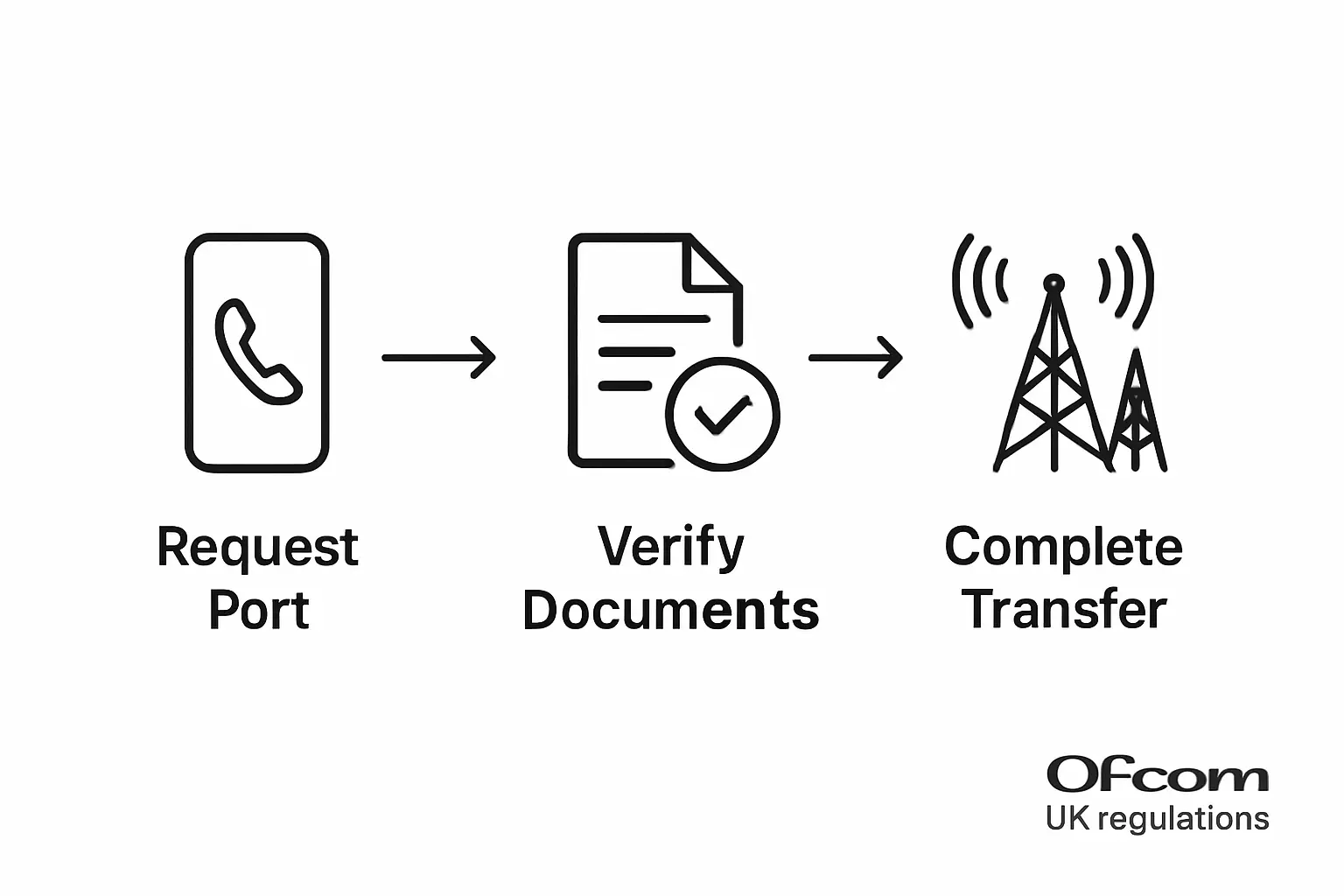
Initially, businesses must obtain a Letter of Authority from their prospective new telecommunications provider. This document serves as a formal request to transfer the existing phone number. The new provider then initiates contact with the current provider, managing the technical coordination required to migrate the number while maintaining service continuity. Precise documentation matching the current provider’s records is essential to prevent potential delays or complications.
The actual porting process typically occurs within one working day, though some complex business configurations might require additional time. During this transition, businesses can expect minimal interruption to their communication systems. As telecommunications infrastructure continues evolving, understanding these technical nuances becomes increasingly important for maintaining seamless business operations.
Key steps in the number porting process include:
- Contact new telecommunications provider
- Request and complete Letter of Authority
- Verify current account and number details
- Authorise transfer with existing provider
- Schedule porting date
- Test new communication setup
Businesses should prepare by gathering critical documentation, ensuring account details are current, and communicating potential brief service interruptions to their team and key clients during the porting process.
Legal Rights and Provider Obligations
UK telecommunications regulations provide robust protections for businesses seeking to port their phone numbers. Number portability regulations establish clear legal frameworks that guarantee subscribers’ rights to transfer their existing contact details between service providers without unnecessary barriers.
The legal mandate requires telecommunications providers to facilitate number porting within specific timeframes and under standardised conditions. This regulatory approach ensures that businesses can switch providers without facing undue technical or administrative obstacles. Providers are legally obligated to complete the porting process efficiently, typically within one working day, while maintaining service continuity and protecting the subscriber’s fundamental communication rights.
Businesses should understand their key protections under these regulations. Telecommunications providers cannot unreasonably refuse a number porting request, nor can they impose excessive charges or create unnecessary administrative hurdles. As telecommunications infrastructure continues evolving, these legal safeguards become increasingly critical in maintaining fair market competition and consumer choice.
Key legal rights for businesses during number porting include:
- Right to port numbers without provider interference
- Protection against unreasonable transfer delays
- Guaranteed maintenance of existing contact information
- Legal recourse if providers fail to comply with regulations
- Transparent communication about porting processes
While the legal framework provides strong protections, businesses are advised to document all communications, maintain accurate account information, and understand their specific contractual obligations when initiating a number port.
Costs, Risks, and Common Mistakes
Navigating the number porting process requires careful attention to potential financial and operational risks. Transferring your landline number to VoIP involves understanding the nuanced landscape of potential expenses and pitfalls that businesses must carefully manage.
One of the most significant risks stems from documentation errors. Businesses frequently encounter challenges when submitting incomplete or incorrect Letters of Authority, which can trigger substantial delays or even complete porting rejections. Precise matching of account details is crucial - misaligned postcodes or account information can result in additional charges from providers, potentially turning a straightforward transition into an expensive administrative nightmare.
The financial implications of number porting extend beyond simple transfer fees. As telecommunications infrastructure continues evolving, businesses must budget for potential transition costs and account for brief service interruptions. Some providers may impose charges for failed porting attempts, underscoring the importance of meticulous preparation and accuracy.
Common mistakes businesses should avoid include:
- Submitting incomplete Letters of Authority
- Failing to verify account information beforehand
- Neglecting to document communication with providers
- Assuming automatic transfer without active management
- Overlooking contractual obligations with existing providers
To mitigate risks, businesses should maintain comprehensive records, double-check all documentation, and allocate sufficient time for the porting process. Proactive communication and thorough verification can help prevent costly delays and unexpected expenses during number migration.
Secure Your Business Identity with Memorable UK Numbers Today
Switching providers while keeping your phone number is a vital step for any UK business wanting to maintain customer trust and avoid costly disruptions. This article highlights the challenges of managing number portability, such as the need for accurate documentation and the risks of delays or unexpected fees. At the heart of your successful number port lies choosing the right provider offering a seamless, stress-free transition.
Explore our extensive database of memorable 01 and 02 landline numbers and 07 mobile numbers to find the perfect contact identity that matches your business goals. Don’t let complicated porting processes or unclear obligations hold you back. Visit https://phonenumbers.store now to secure your ideal telephone number and take control of your business’s communications with confidence.
Frequently Asked Questions
What is number portability?
Number portability allows consumers and businesses to transfer their existing phone numbers between different telecommunications providers without losing their contact details. This process is regulated to ensure fair competition and consumer choice.
How long does the number porting process take?
Typically, the number porting process can be completed within one working day. However, complex configurations might require additional time. Businesses should prepare for minimal interruptions during this transition.
What types of phone numbers can be ported in the UK?
In the UK, various types of numbers can be ported, including geographic landline numbers (01 and 02), mobile numbers (07), non-geographic numbers (03, 08, and 09), virtual phone numbers, and business phone numbers.
What are the common pitfalls to avoid during number porting?
Common mistakes to avoid include submitting incomplete Letters of Authority, failing to verify account details, neglecting to document communication with providers, and assuming the transfer process will occur automatically without active management.