
Clients calling at odd hours or mixing business calls with personal ones can quickly turn a busy day into a source of stress for many taxi and plumbing professionals across United Kingdom cities. Separation between work and personal life matters, and having a personal business number helps set clear boundaries while ensuring every customer gets through without confusion. Discover how adopting a dedicated number enhances reliability, presents a professional image, and keeps communication organised for growing businesses.
Table of Contents
- Personal Business Numbers Explained For Smes
- Types Of Personal Business Numbers Available
- How Personal Business Numbers Operate
- Legal Requirements And Ofcom Regulations
- Costs, Benefits, And Common Pitfalls
Key Takeaways
| Point | Details |
|---|---|
| Importance of Personal Business Numbers | Personal business numbers enhance credibility and separate professional from personal communications for SMEs. |
| Types of Available Numbers | Various number types, such as Freephone and VoIP, cater to different business needs and improve customer accessibility. |
| Regulatory Compliance | SMEs must adhere to Ofcom regulations to avoid legal issues related to number usage and consumer protection. |
| Cost Benefits and Risks | Personal business numbers offer cost advantages but present data protection risks that require careful management. |
Personal Business Numbers Explained for SMEs
In the dynamic landscape of UK entrepreneurship, personal business numbers have emerged as a critical communication tool for small and medium-sized enterprises. Nearly 5.5 million SMEs represent the backbone of British commerce, with these businesses requiring professional communication strategies that distinguish them in a competitive marketplace.
A personal business number serves multiple strategic purposes beyond simple contact information. It provides a dedicated communication channel that separates professional and personal interactions, enhancing credibility and maintaining boundaries for taxi drivers, plumbers, electricians, and other mobile service professionals. By utilising a separate business number, entrepreneurs can manage customer communications more effectively, route calls professionally, and present a more polished professional image.
The technical advantages of personal business numbers extend well beyond basic communication. These numbers can be configured to include call forwarding, voicemail services, and automated routing systems that help small businesses appear more established and organised. Mobile business number trends demonstrate that modern entrepreneurs are increasingly recognising the value of having a dedicated professional contact point that travels with them, regardless of location or work setting.
Pro tip: When selecting a personal business number, choose a memorable sequence that reflects your business personality and makes it easy for customers to recall and contact you quickly.
Types of Personal Business Numbers Available
Business communication in the United Kingdom encompasses a diverse range of phone number options tailored to different professional needs. UK business phone numbers represent a sophisticated ecosystem that includes several critical categories designed to support modern entrepreneurial communication strategies. These number types range from traditional landline formats to cutting-edge virtual communication solutions.
The primary categories of personal business numbers include freephone numbers (starting with 0800), which offer customers free calling options, local geographic numbers that provide a regional presence, and national non-geographic numbers (beginning with 03) that enable businesses to establish a professional nationwide contact point. Mobile virtual numbers have also gained significant traction, particularly for service-based professionals like taxi drivers, plumbers, and consultants who require flexible communication channels that aren’t tied to a specific physical location.

Moreover, emerging technologies are transforming business communication infrastructure. Voice over Internet Protocol (VoIP) numbers are becoming increasingly prevalent, offering advanced features such as call routing, voicemail-to-email transcription, and seamless integration with digital communication platforms. Custom business number options allow entrepreneurs to select memorable number sequences that enhance brand recognition and make customer recall more straightforward.
Pro tip: When selecting a business number, prioritise memorability and professionalism, ensuring the number reflects your brand’s identity and makes it easy for customers to reach you.
Here’s a summary of the main types of personal business numbers and their typical applications:
| Number Type | Example Prefix | Typical Usage | Key Advantage |
|---|---|---|---|
| Freephone Number | 0800 | Customer service hotlines | No call charges for clients |
| Geographic Number | 020, 0161 | Local businesses | Establishes local presence |
| National Number | 03 | UK-wide companies | Unified national image |
| Mobile Virtual | 07 | Mobile service professionals | Flexibility, location-free |
| VoIP Number | Varies | Modern digital firms | Advanced features, multi-device support |
How Personal Business Numbers Operate
Personal business numbers function within a sophisticated telecommunications ecosystem, carefully regulated to support professional communication channels. Business population registries track these numbers as critical identifiers for enterprises ranging from sole traders to medium-sized businesses, enabling seamless contact and administrative tracking.
The operational mechanics of personal business numbers involve multiple technical components. These numbers can be configured to provide advanced call management features such as automated routing, voicemail transcription, and call forwarding. Businesses can select numbers with specific area codes or memorable sequences that enhance brand recognition, even if the physical business location differs from the number’s geographical origin. This flexibility allows service professionals like plumbers, electricians, and consultants to maintain a consistent professional communication channel regardless of their working location.
Telecommunications infrastructure in the United Kingdom supports these numbers through complex routing systems managed by Ofcom and telecommunication providers. UK business communication frameworks ensure that personal business numbers integrate smoothly with both traditional telephone networks and modern digital communication platforms. This integration allows businesses to receive calls across multiple devices, track communication metrics, and maintain professional connectivity.
Pro tip: Choose a personal business number that aligns with your brand identity and ensures easy memorability for your target customers.
Legal Requirements and Ofcom Regulations
Telecommunications in the United Kingdom operate under a comprehensive regulatory framework designed to protect consumers and maintain market integrity. Communications Act regulations establish strict guidelines governing the allocation and usage of personal business numbers, ensuring transparency and fairness across the telecommunications landscape.
Ofcom, as the primary regulatory body, imposes specific requirements for businesses using personal phone numbers. These regulations cover critical aspects such as number allocation, tariff transparency, and consumer protection. Small to medium enterprises must adhere to guidelines that prevent number misuse, mandate clear pricing information, and ensure that business communication channels remain ethical and accountable. This includes restrictions on nuisance calling, requirements for caller identification, and maintaining the integrity of the national numbering system.
The legal framework surrounding personal business numbers is complex and multifaceted. Telephone number legislation provides a robust mechanism for protecting both businesses and consumers. Businesses must obtain proper licensing, comply with number assignment conditions, and ensure that their telecommunication practices meet national standards. This includes maintaining accurate registration details, respecting consumer privacy, and following strict guidelines about number portability and usage.
Pro tip: Consult with a telecommunications legal expert to ensure your personal business number fully complies with current Ofcom regulations and avoids potential legal complications.
Costs, Benefits, and Common Pitfalls
Personal business numbers represent a strategic investment for small and medium enterprises, with financial implications extending beyond simple communication expenses. Mobile phone expense regulations highlight the complex landscape of financial considerations that businesses must navigate when implementing these communication tools, including potential tax reporting and National Insurance obligations.
The benefits of personal business numbers are multifaceted. Businesses gain enhanced professional credibility, improved customer communication channels, and the ability to separate personal and professional interactions. Cost advantages include flexible pricing models, potential tax deductions for business communication expenses, and the opportunity to create memorable contact points that strengthen brand recognition. Some providers offer scalable packages that allow businesses to adjust their telecommunications infrastructure as they grow.
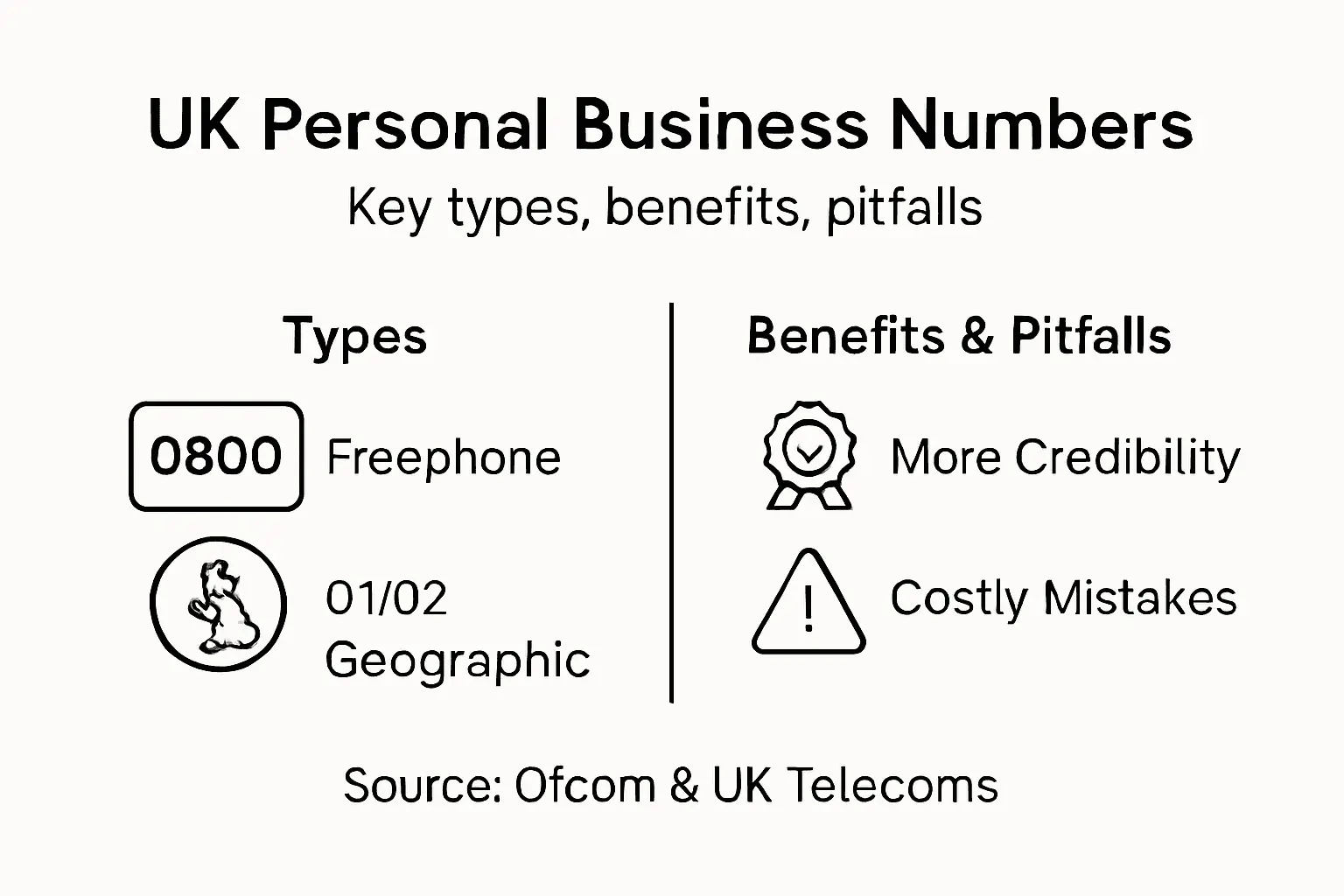
However, significant legal and operational pitfalls exist that can undermine a business’s communication strategy. Data privacy legal considerations reveal critical risks surrounding customer data management. Common mistakes include inadequate consent mechanisms, poor data protection practices, and failure to comply with Privacy and Electronic Communications Regulations (PECR). These oversights can result in substantial financial penalties and potential reputational damage for small businesses.
Pro tip: Conduct a comprehensive audit of your communication practices, ensuring full compliance with data protection regulations and maintaining clear consent protocols for customer contact information.
This table compares common benefits and pitfalls linked to personal business numbers for SMEs:
| Aspect | Benefit Example | Common Pitfall | Prevention Tip |
|---|---|---|---|
| Professional Image | Distinct business identity | Using personal mobile for business | Assign separate business phone number |
| Customer Access | Easier recall for customers | Difficult to remember sequences | Choose memorable number patterns |
| Compliance | Meets Ofcom requirements | Failing legal checks | Consult legal advisor for compliance |
| Data Protection | Secure customer information | Poor data consent procedures | Regularly review privacy protocols |
Elevate Your Business Communication with Personal Business Numbers
Every SME in the United Kingdom faces the challenge of standing out through clear and professional customer contact. The article highlights the essential need for memorable personal business numbers that enhance credibility, improve customer access, and maintain compliance with Ofcom regulations. If you are striving to separate your personal and business communications or want a flexible number that travels with you, a tailored and memorable business number is critical for your brand identity and customer recall.
Unlock the power of dedicated UK phone numbers by exploring our comprehensive database. Whether you want an 01 or 02 landline or a flexible 07 mobile number, remember numbers are no longer tied to local areas and can be used anywhere to build your professional presence.
Take control of your customer contact today with UK memorable phone numbers. Find the perfect number that fits your business personality and ensures easy recall by your clients. Don’t let legal pitfalls or poor brand impression stand in your way. Visit https://phonenumbers.store now and secure a business number designed to grow with your SME’s success. Start searching for your personalised business number and experience a new level of professional communication.
Frequently Asked Questions
What are personal business numbers and how do they benefit SMEs?
Personal business numbers are dedicated contact numbers for small and medium enterprises that separate professional and personal communications. This enhances credibility, allows for effective call management, and helps establish a professional image in the market.
What types of personal business numbers are available for entrepreneurs?
Entrepreneurs can choose from various types of personal business numbers, including freephone numbers (0800), geographic numbers, national numbers (03), mobile virtual numbers (07), and Voice over Internet Protocol (VoIP) numbers, each tailored to different business needs and advantages.
How do personal business numbers enhance customer communication?
These numbers improve customer communication by providing a professional and consistent contact point. Features such as call forwarding, voicemail services, and automated routing systems help businesses manage customer interactions more efficiently.
Are there legal requirements for using personal business numbers?
Yes, businesses must adhere to regulations set by Ofcom, including obtaining a proper license, maintaining accurate registration details, and ensuring compliance with consumer protection laws. It’s crucial to follow these guidelines to avoid legal complications and maintain ethical communication practices.
Recommended
- 16 Reasons You Need a Custom Business Phone Number
- 16 Reasons You Need a Custom Business Phone Number
- How Customer Support Centers Can Use Virtual Numbers
- How Customer Support Centers Can Use Virtual Numbers
- Swiss Business Number Explained: Key Steps and Impact
- Personalised Marketing: Transforming eCommerce Success
- Mobile Phone Hacking Investigation for Private and Business Clients