
Many British taxi firms overlook how a simple, memorable phone number can set them apart in a crowded market. In fact, a unique contact number can improve brand recognition by up to 57%, making every call from a customer an opportunity to stand out. With mobile teams and ever-changing shifts, personal numbering services help taxi businesses unify their communications and deliver the reliable service urban riders expect.
Table of Contents
- Defining Personal Numbering Services In The UK
- Types Of Numbers And Routing Options Explained
- Core Features And How Personal Numbers Function
- Legal Compliance And Ofcom Regulations
- Costs, Risks, And Common Pitfalls For Taxi Firms
Key Takeaways
| Point | Details |
|---|---|
| Personal Numbering Services Enhance Flexibility | These services allow individuals and businesses to maintain a single contact number that can route calls to multiple devices, improving communication efficiency. |
| Regulatory Compliance is Essential | Taxi firms must adhere to Ofcom regulations to ensure consumer protection and fair practices in their telecommunications strategies. |
| Routing Options Improve Customer Interaction | Advanced routing configurations, such as simultaneous ringing and time-based routing, help ensure no customer inquiries are missed. |
| Cost Transparency is Crucial | Clear communication of call charges associated with personal numbering services is vital to maintain customer trust and avoid potential deterrents. |
Defining Personal Numbering Services in the UK
Personal numbering services represent a flexible telecommunications solution designed to provide individuals and businesses with consistent contact capabilities across multiple phone devices. These services, typically utilising the 070 prefix, enable users to maintain a single telephone number that can be routed to different phone endpoints, regardless of location or device type.
In the United Kingdom, personal numbering falls under Ofcom’s regulatory framework, which ensures efficient allocation and consumer protection of telephone number resources. Introduced in 1995, these virtual telephone numbers allow seamless call redirection, giving taxi firms and other businesses a powerful tool for maintaining professional communication channels. The underlying technology enables calls to be flexibly forwarded to landlines, mobile phones, or international numbers without changing the original contact point.
The core functionality of personal numbering services provides significant advantages for mobile businesses like taxi firms. Drivers can receive calls through multiple devices while presenting a consistent, memorable contact number to customers. This approach supports professional image management and simplifies customer communication strategies. By maintaining a single, portable number, businesses can enhance their brand recognition and accessibility without being tied to specific physical locations.
Pro tip: When selecting a personal numbering service for your taxi firm, prioritise providers offering transparent routing options and competitive call forwarding rates to maximise communication efficiency.
Types of Numbers and Routing Options Explained
Personal numbering services in the UK offer an array of sophisticated routing options designed to provide maximum flexibility for businesses like taxi firms. National telephone numbering plans define multiple number types, including geographic numbers (01 and 02), non-geographic numbers, and specialised personal numbering ranges that enable complex call management strategies.
The 070 prefix represents a unique category of personal or ‘follow me’ numbers that allow unprecedented call routing capabilities. These numbers can be diverted to multiple destination points, including mobile phones, landlines, and even international numbers. Taxi firms can leverage these routing options to ensure calls always reach the most appropriate team member, regardless of their current location or active device.
Routing configurations for personal numbers are remarkably versatile. Businesses can implement strategies such as simultaneous ringing across multiple devices, time-based conditional routing, and sequential call forwarding. For instance, an incoming call could first ring a driver’s mobile, then automatically transfer to the central office if unanswered, ensuring no customer inquiry goes unattended. This dynamic approach transforms communication management, providing professional responsiveness that can significantly enhance customer satisfaction and operational efficiency.
The following comparison outlines core routing options available for personal numbering services and their benefits for taxi firms:
| Routing Option | How It Works | Key Benefit for Taxi Firms |
|---|---|---|
| Simultaneous ringing | Calls ring on multiple devices at once | Ensures fastest response by any available driver |
| Sequential forwarding | Calls pass in order between chosen devices | Reduces missed calls when busy |
| Time-based routing | Directs calls based on preset time schedules | Matches calls to drivers’ shift patterns |
| Geographic redirection | Routes calls to devices in different locations | Maintains service when staff are mobile |
Pro tip: When configuring your personal numbering service, test multiple routing scenarios to identify the most effective call management strategy for your taxi firm’s specific operational needs.
Core Features and How Personal Numbers Function
Personal numbering services provide a sophisticated communication solution that transforms how businesses manage their telephone connectivity. Personal number technologies enable seamless call redirection across multiple devices and locations, allowing taxi firms to maintain a consistent professional contact point regardless of operational complexity.
The fundamental mechanism of personal numbers involves advanced routing technologies that give users unprecedented control over incoming communications. These numbers can be configured to ring simultaneously on multiple devices, sequentially forward calls between different phone lines, or apply time-based routing rules. For taxi firms, this means calls can automatically route to available drivers, dispatch centres, or management teams based on predefined operational parameters, ensuring no customer inquiry goes unaddressed.

Unique features of personal numbering services extend beyond basic call forwarding. Users can manage complex routing configurations centrally, protecting their personal contact details while maintaining professional accessibility. The system allows for granular control, such as setting different routing rules for daytime and nighttime hours, managing overflow scenarios, and implementing sophisticated call handling strategies that adapt to the dynamic nature of taxi business operations.
Pro tip: Configure your personal number routing with multiple backup destinations to guarantee maximum availability and minimise missed communication opportunities.
Legal Compliance and Ofcom Regulations
Telephone number regulation in the United Kingdom represents a complex framework designed to protect consumers and ensure fair telecommunications practices. Ofcom governs personal numbering services under the Communications Act 2003, establishing rigorous standards for number allocation, usage, and consumer protection that directly impact how taxi firms manage their communication strategies.
The National Telephone Numbering Plan imposes specific requirements on personal number providers, mandating transparency in call tariffs and implementing safeguards against potential misuse. These regulations include strict protocols for routing, caller identification, and revenue sharing, particularly for 070 personal numbering ranges. Taxi firms must navigate these legal requirements carefully, ensuring their communication systems comply with Ofcom’s technical standards and consumer protection guidelines.
Key regulatory provisions focus on preventing fraudulent activities and maintaining market integrity. Ofcom has implemented call cost caps, restricted revenue sharing mechanisms, and established comprehensive monitoring systems to protect consumers. For taxi businesses, this means adopting personal numbering services requires a thorough understanding of legal obligations, including maintaining accurate record-keeping, ensuring transparent pricing, and adhering to technical routing specifications that guarantee reliable and ethical communication practices.
Pro tip: Regularly review Ofcom’s current regulations to ensure your personal numbering service remains fully compliant with the latest legal requirements.
Costs, Risks, and Common Pitfalls for Taxi Firms
Personal numbering services present a complex landscape of potential benefits and challenges for taxi firms seeking to enhance their communication strategies. Personal numbering risks include higher call costs and potential customer perception issues that can significantly impact business performance and customer trust.
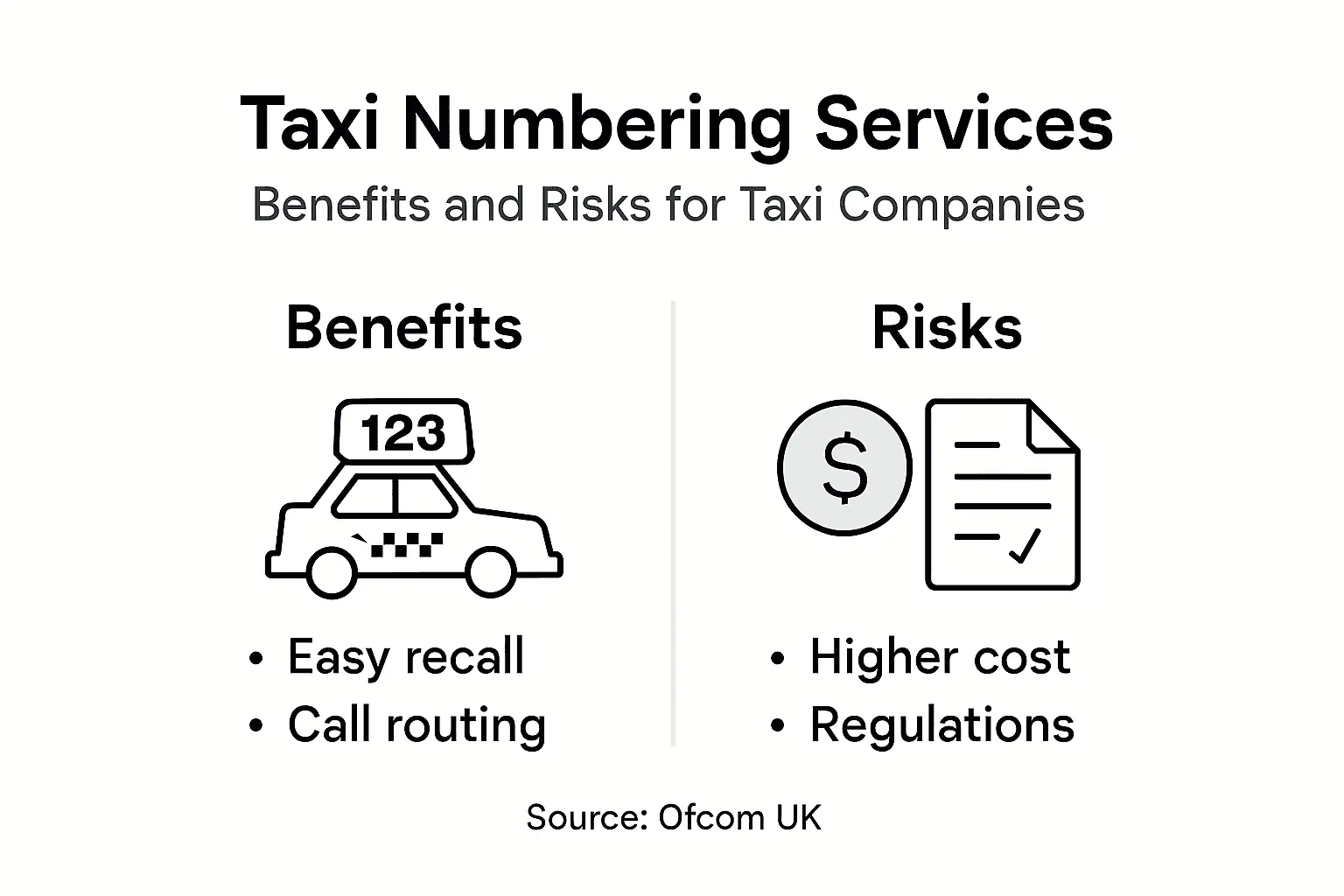
The financial implications of 070 personal numbers are particularly nuanced. While these numbers offer flexibility in call routing, they historically carry higher retail costs compared to standard mobile or geographic numbers. Taxi firms must carefully evaluate the trade-off between communication flexibility and potential customer deterrence caused by perceived expensive calling rates. Transparency becomes crucial - businesses need to clearly communicate call costs and routing mechanisms to maintain customer confidence and prevent misunderstandings.
Operational risks extend beyond simple cost considerations. Taxi firms must navigate complex regulatory requirements, manage sophisticated call routing configurations, and maintain rigorous compliance with Ofcom’s guidelines. Common pitfalls include inadequate number management, unclear tariff communication, and inefficient routing strategies that can lead to missed customer interactions or potential regulatory penalties. Successful implementation requires a strategic approach that balances technological flexibility with clear, customer-friendly communication practices.
Here is a summary of main risks and mitigation strategies related to personal numbering for taxi firms:
| Risk Type | Description | Practical Solution |
|---|---|---|
| High call costs | Customers may face expensive charges | Clearly communicate expected call rates |
| Regulatory non-compliance | Failure to meet Ofcom’s guidelines | Schedule regular compliance reviews |
| Missed calls | Inefficient routing or configuration errors | Test and audit call flow regularly |
| Customer confusion | Customers uncertain how billing works | Publish transparent usage information |
Pro tip: Conduct periodic audits of your personal numbering service to ensure cost-effectiveness, compliance, and optimal call routing performance.
Elevate Your Taxi Firm’s Brand with Memorable Numbers
Taxi firms often face the challenge of maintaining a consistent and professional contact point while navigating complex call routing and regulatory requirements. The article highlights key pain points such as managing flexible call forwarding, avoiding costly 070 number perception issues, and ensuring compliance with Ofcom’s rules. These challenges can hurt customer trust and brand recall if not handled effectively.
At PhoneNumbers.store, we specialise in providing memorable UK phone numbers including 01 and 02 landlines plus 07 mobile numbers that are no longer tied to local areas. By securing a memorable number from our extensive database you can boost brand recognition and simplify customer communications without the hidden risks of expensive personal numbering ranges. With our solutions, you gain control over your business identity and enhance accessibility for your clients.
Discover the difference a memorable phone number can make today
Ready to transform your taxi firm’s communication strategy and improve customer recall? Browse our exclusive selection or search by area, sequence, or town now at PhoneNumbers.store. Take the first step towards streamlined calls and stronger brand presence by visiting our main landing page or explore how UK landline and mobile numbers can empower your business starting today.
Frequently Asked Questions
What are personal numbering services and how do they work?
Personal numbering services are flexible telecommunications solutions that allow individuals and businesses to maintain a single telephone number that can be routed to multiple devices. This enables seamless call redirection, ensuring that calls reach the right recipient regardless of their location or device.
What advantages do personal numbering services offer to taxi firms?
Personal numbering services provide taxi firms with a consistent contact number, enhancing brand recall and customer accessibility. They also allow for advanced call routing features, ensuring that calls are directed to available drivers or dispatch centres, thus reducing missed calls and improving customer satisfaction.
How can taxi firms manage call routing effectively with personal numbering services?
Taxi firms can implement various routing configurations, such as simultaneous ringing, sequential forwarding, and time-based routing. These features ensure that calls are efficiently handled, maximizing responsiveness and customer service.
What regulatory considerations should taxi firms be aware of when using personal numbering services?
Taxi firms must comply with regulations established by Ofcom, including transparency in call tariffs and adherence to routing and consumer protection guidelines. Regular reviews of compliance with these regulations are essential to avoid penalties and maintain customer trust.