
Most British customers expect businesses to answer their calls within just three rings, making reliable phone communication vital for taxi firms and plumbing services. Without a dedicated business phone line, missed calls can mean missed jobs and frustrated clients. Setting up the right phone system gives your British company a professional edge, helps you stay organised, and ensures you are easy to reach when customers need you most.
Table of Contents
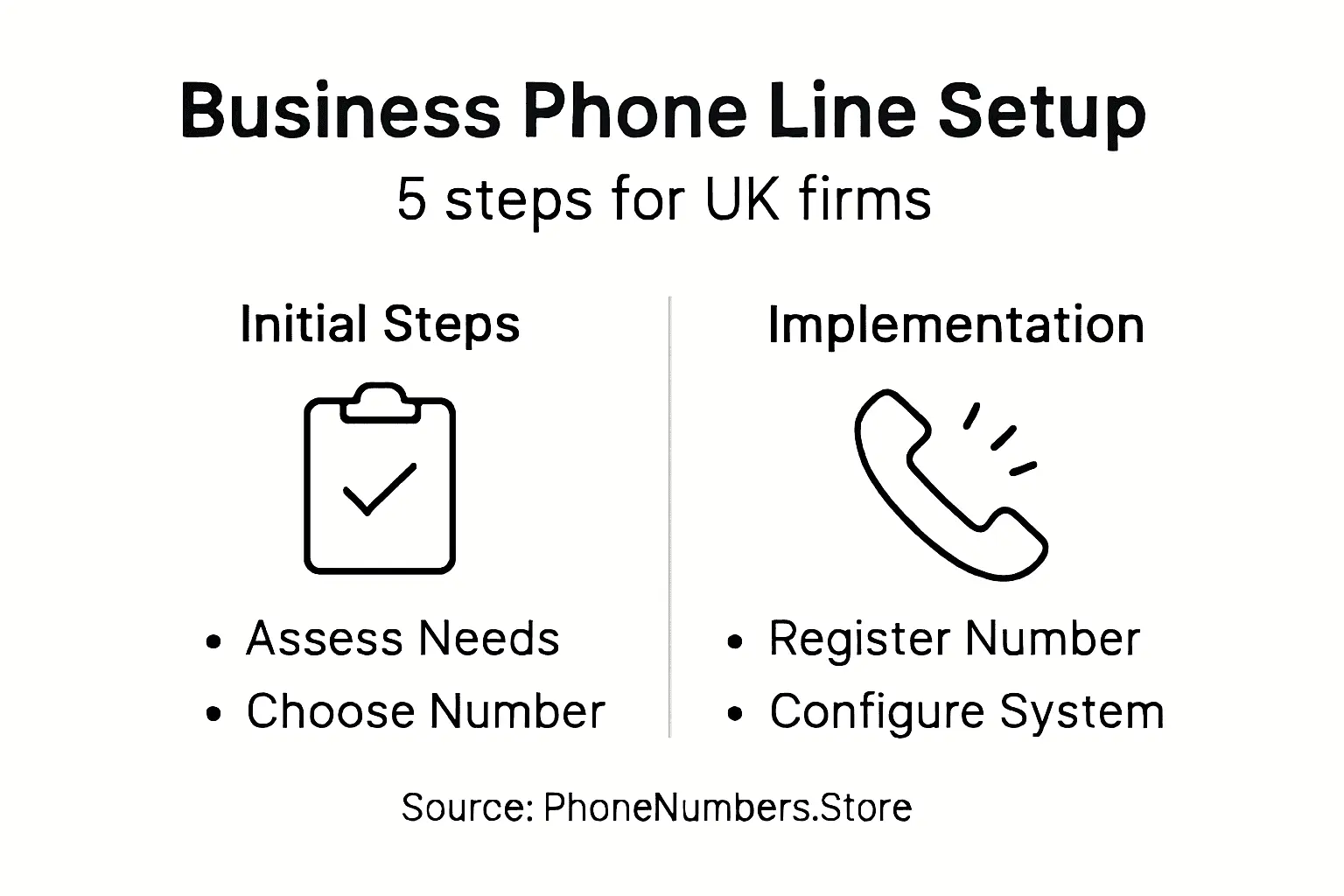
- Step 1: Identify Your Business Needs And Phone Usage
- Step 2: Search For And Select The Ideal Memorable Number
- Step 3: Purchase And Register Your Chosen Business Number
- Step 4: Configure Your Phone System For Business Use
- Step 5: Test And Verify Your New Business Phone Line
Quick Summary
| Key Takeaway | Explanation |
|---|---|
| 1. Assess Business Communication Needs | Identify call volume, features required, and scalability for growth to select the perfect phone system. |
| 2. Choose a Memorable Number | Opt for easy-to-recall numbers that align with your brand for better customer engagement. |
| 3. Register with a Reputable Provider | Ensure proper documentation and selection of services when registering your business phone number. |
| 4. Configure for Optimal Use | Set up system features and security settings to maximise communication efficiency and protection. |
| 5. Conduct Comprehensive Testing | Verify system functionality and call quality through various tests and team feedback for seamless operations. |
Step 1: Identify your business needs and phone usage
Pinpointing the right phone system starts with understanding your specific business communication requirements. Whether you run a local plumbing service or a regional taxi firm, your telephone infrastructure needs to match your operational demands. Small business communication strategies help entrepreneurs select telecommunications solutions that enhance customer engagement and operational efficiency.
Begin by analysing your current call volume and communication patterns. How many calls do you typically receive daily? Do you need multiple phone lines for different team members? Consider factors like peak call times, average call duration, and whether you require features such as call forwarding, voicemail, or conference calling. Some businesses might need local numbers that signal community presence, while others benefit from national lines that suggest broader reach.
Your phone system should also scale with your business growth. Start by mapping out your immediate communication needs while leaving flexibility for future expansion. This strategic approach ensures you invest in a phone solution that supports your current operations and accommodates potential business development.
Top tip: Create a detailed communication audit listing your exact telephony requirements before selecting a business phone line to avoid costly mistakes.
Here is a summary of common business phone system features and their impact:
| Feature | Description | Business Impact |
|---|---|---|
| Call Forwarding | Redirects calls to other lines | Ensures calls are never missed |
| Voicemail | Records messages for missed calls | Improves responsiveness |
| Conference Calling | Enables group conversations | Enhances team collaboration |
| Auto Attendant | Automated call routing | Provides professional experience |
| Local/National Numbers | Geographic or wide coverage numbers | Builds trust or expands reach |
Step 2: Search for and select the ideal memorable number
Choosing a memorable phone number can transform your business communication strategy. When customers can easily recall your contact details, you increase the likelihood of them reaching out. Memorable telephone numbers offer a strategic advantage by creating instant brand recognition and improving customer recall.
Start your search by considering numbers that reflect your business identity or are simple to remember. Look for sequences that are easy to dial such as repeated digits or patterns that stick in people’s minds. For instance, a plumbing business might choose a number with repeated digits like 0800 111 222, while a taxi firm could select a number with a rhythmic sequence that customers can quickly memorise.

Take time to explore different number options that align with your brand personality. Some businesses prefer local area codes to signal community roots, while others opt for national numbers that suggest broader service coverage. Consider how your chosen number will appear on marketing materials, vehicle signage, and business cards to ensure maximum impact.
This table compares local and national business phone numbers to help you choose the best fit:
| Number Type | Typical Use Case | Customer Perception | Branding Potential |
|---|---|---|---|
| Local Number | Community-based businesses | Local, accessible, familiar | Enhances local presence |
| National Line | Regional or national service | Broader, professional scope | Expands brand visibility |
Top tip: Test potential memorable numbers with colleagues and potential customers to gauge their immediate recall and emotional resonance.
Step 3: Purchase and register your chosen business number
Registering your business phone number involves several crucial steps to ensure legal compliance and operational effectiveness. Business registration processes require careful attention to detail, particularly when establishing your official telecommunications infrastructure for your UK enterprise.
Begin by selecting a reputable telecommunications provider that specialises in business phone numbers. You will need to provide essential documentation including your business registration details, proof of identity, and business address. Most providers offer straightforward online registration processes where you can verify your chosen number and complete the purchase. Some may require additional verification to confirm your business status and ensure the number meets regulatory requirements.
Pay close attention to the specific terms of your number registration. Some providers offer additional services like call forwarding, voicemail, and virtual phone systems that can enhance your business communication. Verify the contract length, monthly costs, and any potential setup fees before finalising your purchase. Ensure that the registered number can be easily transferred if you change telecommunications providers in the future.
Top tip: Always request a written confirmation of your number registration and keep digital and physical copies for your business records.
Step 4: Configure your phone system for business use
Configuring your business phone system requires strategic planning and technical understanding. VoIP system setup involves carefully assessing your network infrastructure and selecting appropriate communication technologies that align with your operational needs.
Start by evaluating your internet bandwidth and ensuring it can support high quality voice communications. You will need compatible hardware such as IP phones, network adapters, and robust routers designed for business telecommunications. Configure your system with essential features like call routing, voicemail, auto attendant, and integration capabilities with existing business software such as customer relationship management platforms. Pay special attention to setting up Quality of Service rules to prioritise voice traffic and maintain clear call quality.
Implement robust security protocols to protect your business communications. This includes enabling encryption, setting up secure access controls, and configuring firewall settings specific to your phone system. Consider establishing multiple call paths and backup communication channels to ensure business continuity in case of primary system interruptions.
Top tip: Conduct comprehensive staff training on your new phone system to maximise its functionality and ensure smooth operational integration.
Step 5: Test and verify your new business phone line
Testing your newly configured business phone system is critical to ensure seamless communication and professional service delivery. VoIP system verification involves comprehensive checks to validate call quality, reliability, and operational functionality across different scenarios.
Begin with a thorough call quality assessment by making test calls during various times of the day, simulating different network loads. Check voice clarity, connection stability, and latency across multiple devices and locations. Verify essential features like call forwarding, voicemail, and auto attendant are working correctly. Importantly, confirm emergency service routing works precisely, ensuring 999 calls can be made effectively in critical situations.
Engage your entire team in the testing process to gather diverse perspectives on system performance. Ask staff to test different communication scenarios they might encounter daily, such as conference calls, external client communications, and internal team interactions. Document any issues or inconsistencies and work with your telecommunications provider to resolve them promptly. Pay special attention to backup communication channels and failover mechanisms to guarantee business continuity during potential network interruptions.
Top tip: Create a structured testing checklist with specific scenarios to ensure no critical functionality is overlooked during system verification.
Secure Your Ideal UK Business Phone Number Today
Setting up the perfect business phone line can be challenging when you need to match your unique communication needs with a memorable number that boosts customer recall. Whether you require a local 01 or 02 landline, or a versatile 07 mobile number, finding the right sequence that reflects your brand identity while providing scalability is vital. The concerns of ensuring easy number registration and configuring your system with features like call forwarding or voicemail can slow down progress, but they should not hold your business back.
Take control of your business communications by exploring our extensive database at PhoneNumbers.Store. Here you can search by number sequence, area code, or location to find a memorable UK phone number that is not tied to a local area yet delivers national or community presence wherever you operate. Act now to secure a number that supports your professional image and customer engagement strategy. Start your seamless registration and setup journey with us and make your business easily reachable with confidence.
Frequently Asked Questions
How do I identify my business communication needs when setting up a phone line?
To identify your business communication needs, analyse your current call volume, peak times, and required features like call forwarding or voicemail. Create a detailed audit of your needs to avoid costly mistakes when selecting your business phone line.
What factors should I consider when choosing a memorable phone number for my business?
When selecting a memorable phone number, consider numbers that reflect your business identity and are easy to recall, such as those with repeated digits or simple patterns. Test your top choices with colleagues or potential customers to ensure they are easy to remember.
What steps are involved in registering a business phone number?
Registering a business phone number involves selecting a telecommunications provider, providing necessary documentation, and verifying your chosen number online. Ensure you understand the terms related to your registration, including any additional services and potential fees, before finalising your purchase.
How can I configure my phone system effectively for business use?
To configure your phone system effectively, evaluate your internet bandwidth and ensure it supports high-quality calls. Set up essential features like call routing and voicemail, and implement robust security protocols to protect your communications and ensure seamless operation.
What should I do to test my new business phone line?
To test your new business phone line, conduct a thorough call quality assessment by making test calls during different times of the day and checking essential features. Document any issues and work with your provider to resolve them, ensuring your team is prepared for various communication scenarios.
Recommended
- Tackling the Costs and Complexities of International Business Calls
- Tackling the Costs and Complexities of International Business Calls
- Cost-Effective Ways to Expand Your Business with Virtual Numbers
- 16 Reasons You Need a Custom Business Phone Number
- Business Setup in Dubai | New Company Formation in Dubai