
Answering calls for wheelchair-accessible vehicles is not just about good service, it is now a legal obligation for every UK taxi firm. As local councils and Transport for London roll out dedicated telephone lines for disabled passengers, having a clear and memorable contact point has become a mark of both compliance and customer focus. Understanding special access numbers can position your business as more accessible, trustworthy, and legally aligned with the latest British transport standards.
Table of Contents
- Special Access Numbers Defined For UK Taxis
- Types Of Special Access Numbers Explained
- How Special Access Numbers Operate
- Business Benefits For Taxi Firms
- Legal, Cost, And Compliance Considerations
Key Takeaways
| Point | Details |
|---|---|
| Special Access Numbers Enhance Accessibility | Dedicated telephone numbers cater to diverse mobility needs, ensuring equal transportation opportunities for all passengers. |
| Legal Compliance is Essential | Taxi firms must adhere to the Equality Act 2010 and local regulations, risking penalties for non-compliance. |
| Strategic Marketing Advantage | Implementing special access numbers can improve brand recognition and customer trust, fostering loyalty among passengers. |
| Investment in Staff Training | Comprehensive training for operators enhances service quality, ensuring they effectively meet accessibility requirements. |
Special Access Numbers Defined for UK Taxis
Special access numbers for UK taxi services represent more than just telephone contact points - they are strategic communication channels designed to enhance accessibility, brand recognition, and customer service. These dedicated telephone numbers serve as crucial touchpoints for passengers, especially those with specific mobility requirements.
Under the Taxis and Private Hire Vehicles legislation, taxi companies must provide inclusive communication channels that accommodate all passengers. This legal framework mandates that special access numbers are not merely administrative tools, but essential service delivery mechanisms ensuring equal transportation opportunities.
Key characteristics of special access numbers for UK taxi firms include:
- Direct connection to wheelchair-accessible vehicles
- Dedicated support lines for disabled passengers
- Simplified booking processes for passengers with additional needs
- Clear, memorable number sequences that reinforce brand identity
- Prioritised routing for passengers requiring extra assistance
Local councils play a significant role in regulating these specialised communication channels. They often coordinate and approve special access numbers to ensure they meet both operational and accessibility standards. By implementing these strategic telephone resources, taxi firms demonstrate commitment to inclusive transportation solutions.
Pro tip: Select a memorable number sequence that reflects your taxi firm’s commitment to accessibility and customer service.
Types of Special Access Numbers Explained
Special access numbers for taxi services in the UK represent a sophisticated system of communication channels designed to meet diverse passenger needs. Transport accessibility services offer multiple specialised telephone numbers that cater to different mobility requirements and travel support schemes.
These specialised numbers can be categorised into several distinct types, each serving a unique purpose within the transportation ecosystem:
- Wheelchair Accessible Vehicle (WAV) Booking Numbers
- Subsidised Transport Contact Lines
- Community Transport Support Channels
- Elderly and Disabled Passenger Assistance Numbers
- Door-to-Door Service Hotlines
Transport for London (TfL) provides an excellent example of how these specialised access numbers function. Their system includes dedicated contact numbers for services like Taxicard (providing subsidised taxi travel), Dial-a-Ride (offering door-to-door transport), and various community transport options. Each number connects passengers to specific support networks tailored to their individual mobility requirements.

Local authorities play a crucial role in managing and coordinating these special access numbers. They ensure that taxi firms provide inclusive communication channels that meet legal accessibility standards, allowing passengers with diverse needs to navigate transportation services effectively.
The following table summarises the main types of special access numbers offered by UK taxi services and their unique purposes:
| Number Type | Main Purpose | Common Users |
|---|---|---|
| Wheelchair Accessible Vehicle Booking | Booking taxis with wheelchair access | Wheelchair users |
| Subsidised Transport Contact Line | Access to discounted taxi fares | Benefit recipients |
| Community Transport Support Channel | Support for local community transport schemes | Rural and community members |
| Elderly/Disabled Passenger Assistance | Booking assistance for mobility-impaired users | Elderly and disabled persons |
| Door-to-Door Service Hotline | Arranging individualised transport support | Users needing direct travel |
Pro tip: When designing special access numbers, prioritise memorability and clarity to enhance customer recognition and ease of use.
How Special Access Numbers Operate
Special access numbers for taxi services function as sophisticated communication channels designed to streamline transportation support for passengers with diverse mobility requirements. Licensing requirements for accessible transport ensure these dedicated telephone lines provide comprehensive support beyond standard booking mechanisms.
The operational framework for these special access numbers involves several critical components:
- Priority Routing Mechanisms
- Disability Awareness Training for Operators
- Specialised Booking Protocols
- Compliance with Equality Act Standards
- Real-Time Vehicle Accessibility Verification
Transport authorities like Transport for London play a pivotal role in managing these specialised communication systems. Their integrated approach ensures that each special access number connects passengers directly to trained operators who understand specific mobility needs and can efficiently coordinate appropriate transportation solutions.
These numbers are not merely contact points but comprehensive support channels. They connect passengers with vehicles equipped to handle specific accessibility requirements, whether that involves wheelchair access, assistance for elderly passengers, or specialised transport support for individuals with diverse mobility challenges.
Pro tip: Invest in staff training that goes beyond technical booking skills to ensure genuine understanding of passenger accessibility needs.
Business Benefits for Taxi Firms
Taxi companies can leverage special access numbers as a strategic branding tool that extends far beyond simple communication channels. Best practice licensing guidance demonstrates that these dedicated telephone lines can significantly enhance a firm’s market positioning and customer perception.
The key business benefits of implementing special access numbers include:
- Enhanced Customer Trust
- Improved Service Accessibility
- Legal Compliance Protection
- Competitive Market Differentiation
- Targeted Marketing Opportunities
- Increased Customer Loyalty
By prioritising inclusive communication strategies, taxi firms can transform these specialised numbers into powerful branding assets. These dedicated lines signal a commitment to comprehensive service that goes beyond standard transportation offerings, particularly for passengers with diverse mobility requirements.
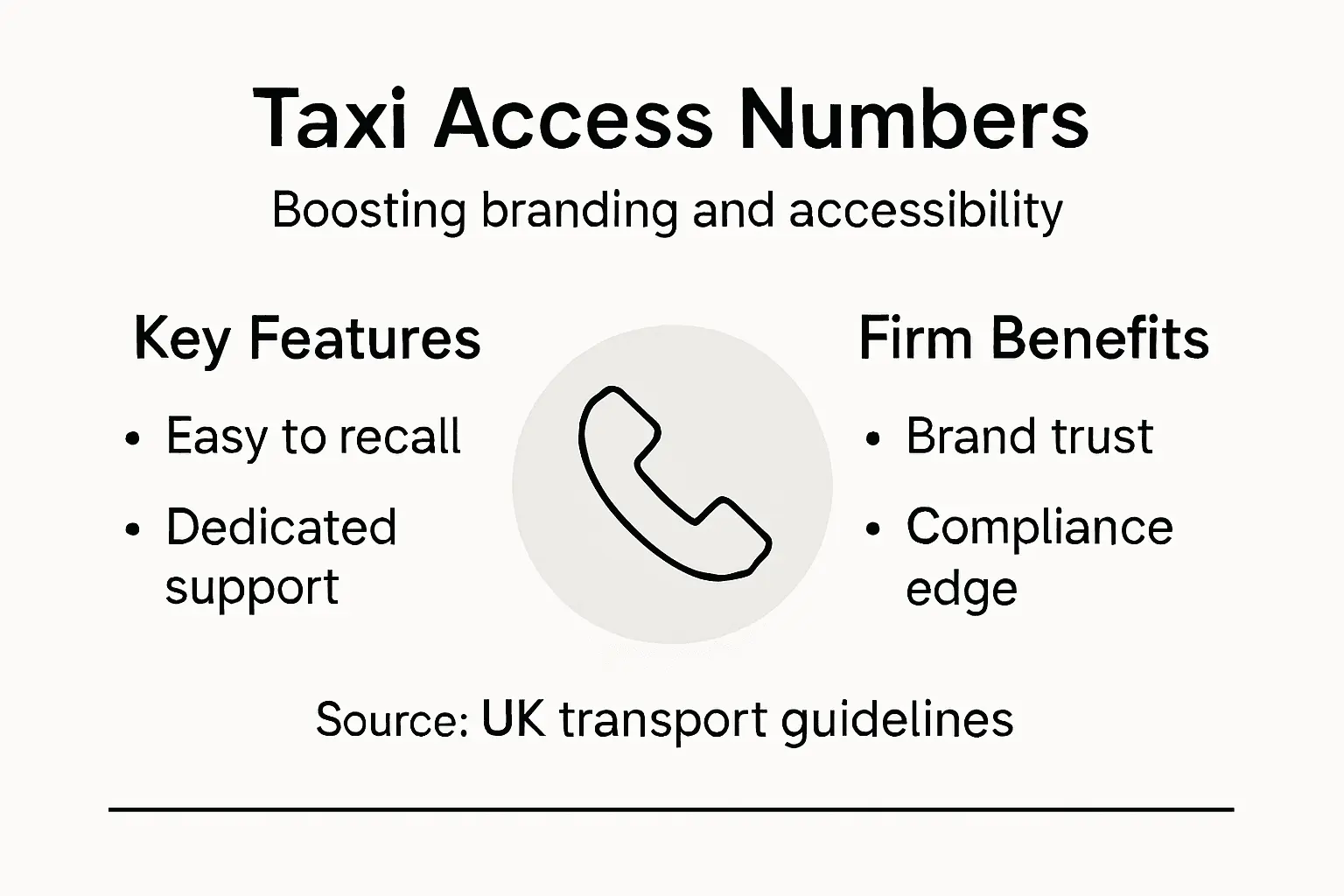
This comparison shows the impact of special access numbers on both passenger experience and taxi firm operations:
| Impact Area | Benefit for Passengers | Benefit for Taxi Firms |
|---|---|---|
| Accessibility | Easier to book accessible transport | Enhanced reputation for inclusivity |
| Service Speed | Faster response for mobility needs | Greater operational efficiency |
| Brand Recognition | Clearer, memorable contact point | Stronger market positioning |
| Compliance | Assurance of legal rights | Reduced risk of penalties |
Moreover, such strategic communication channels create tangible commercial advantages. Firms that demonstrate genuine understanding of passenger needs through accessible contact methods often experience improved community relationships, higher customer retention rates, and a more positive regulatory standing.
Pro tip: Design your special access number with memorability and ease of communication in mind, ensuring it reflects your firm’s commitment to inclusive service.
Legal, Cost, and Compliance Considerations
Taxi firms must navigate a complex landscape of legal obligations and financial considerations when implementing special access numbers. Licensing best practice guidance emphasises the critical importance of understanding both regulatory requirements and associated operational costs.
Key legal and financial considerations include:
- Mandatory Equality Act 2010 Compliance
- Vehicle Accessibility Adaptation Costs
- Driver Training Expenses
- Special Access Number Administration
- Potential Non-Compliance Penalties
- Ongoing Monitoring and Reporting Requirements
The financial implications extend beyond initial implementation. Taxi firms must carefully balance the costs of accessibility modifications with the potential long-term benefits of enhanced service reputation and regulatory compliance. This involves strategic investment in infrastructure, technology, and staff training to meet stringent legal standards.
Non-compliance carries significant risks, including substantial financial penalties, potential loss of operating licences, and irreparable damage to the firm’s professional reputation. Local licensing authorities maintain rigorous monitoring processes to ensure taxi operators meet their legal obligations, making proactive compliance a critical business strategy.
Pro tip: Consult with local licensing authorities and accessibility experts to develop a comprehensive compliance strategy that minimises financial risks.
Elevate Your Taxi Firm’s Brand with Memorable Special Access Numbers
The article highlights the challenge taxi firms face in creating inclusive, accessible, and instantly recognisable communication channels for passengers with diverse mobility needs. Special access numbers must be clear, easy to remember, and reflect your firm’s commitment to accessibility and excellent customer service. Failing to deliver these can affect customer trust and reduce your firm’s competitive edge.
At PhoneNumbers.store, we understand how crucial it is to have a strategic phone number that supports your brand’s accessibility goals. With our extensive UK database of 01 and 02 landline and 07 mobile numbers, you can find the perfect special access number that is memorable and aligns perfectly with your inclusive service mission. This solution will help you meet legal compliance under the Equality Act 2010 while creating a powerful customer touchpoint.
Why wait to make your taxi firm stand out with a number that customers can easily recall and trust? Discover your ideal special access number today and demonstrate genuine commitment to accessible transport. Act now to secure a number that strengthens your brand, improves customer loyalty, and boosts your market positioning through inclusive communication.
Frequently Asked Questions
What are special access numbers in taxi services?
Special access numbers are dedicated telephone lines established by taxi firms to enhance communication for passengers with specific mobility requirements, ensuring easier access to wheelchairaccessible vehicles and support services.
How can special access numbers benefit my taxi firm?
Implementing special access numbers can enhance customer trust, improve service accessibility, ensure legal compliance, and create competitive differentiation, ultimately boosting customer loyalty and operational efficiency.
What types of special access numbers are typically offered by taxi services?
Common types include Wheelchair Accessible Vehicle booking numbers, subsidised transport contact lines, community transport support channels, elderly and disabled passenger assistance numbers, and door-to-door service hotlines.
What legal considerations should taxi firms be aware of regarding special access numbers?
Taxi firms must comply with the Equality Act 2010, consider costs associated with vehicle accessibility and driver training, and ensure ongoing monitoring and reporting to remain compliant with local licensing authority regulations.