
Every taxi firm owner across England knows how valuable a well-known landline number is for staying connected to loyal customers. When you need to switch telecom providers or modernise your phone system, protecting that recognition becomes the top concern. With the right steps, you can achieve a smooth switch and keep your memorable business number active, ensuring your clients continue to reach you without confusion. In this guide, you’ll discover how to maintain customer recognition and seamless service continuity during every stage of the porting process.
Table of Contents
- Localized Step Word 1: Prepare Your Current Number For Porting
- Step 2: Select Your New Provider And Submit Porting Request
- Step 3: Coordinate With Both Providers For Transition
- Step 4: Verify Successful Porting And Maintain Service
Quick Summary
| Essential Insight | Detailed Explanation |
|---|---|
| 1. Choose an experienced provider | Select a telecom provider that specializes in number porting to ensure a smooth transition with minimal complications. |
| 2. Actively coordinate with both providers | Maintain communication with both your current and new providers to verify important milestones and manage the transition effectively. |
| 3. Test your number after porting | Conduct thorough tests on inbound and outbound calls immediately after the cutover to ensure all functionalities work as intended. |
| 4. Monitor performance post-porting | Establish a routine to monitor call quality and features during the first week after porting to identify and resolve any potential issues. |
| 5. Update customer-facing materials | Ensure that your website, advertising, and bookings reflect your new contact information to maintain customer accessibility and service continuity. |
[Localized Step Word] 1: Prepare your current number for porting
[Your conversational how-to section in flowing paragraphs]
Step 2: Select your new provider and submit porting request
Now that your current number is ready, you’ll choose a new telecom provider and initiate the formal porting process. This step involves selecting a provider experienced with number porting and submitting the necessary documentation to transfer your memorable landline to their network.
Start by researching providers who specialise in handling number ports for taxi firms. You want a provider that understands the urgency of maintaining your service without disruption. When evaluating candidates, ask specifically about their porting experience and typical timeframes.
Once you’ve selected your new provider, they become your “Gaining Communications Provider” in the process. Your new provider will prepare and submit the porting request (formally called a Number Port Order) to your current provider on your behalf. This request triggers verification and scheduling with your losing provider.
Choosing a provider experienced with porting ensures fewer complications and quicker transitions, especially with the PSTN switch-off deadline approaching in the UK.
Your new provider has two options for submitting the porting request, depending on volume:
- Email submission for low-volume ports (typically 1-5 numbers)
- Electronic File Transfer for higher volumes (5+ numbers)
The submission requires correctly completed order forms and detailed contact information. Understanding porting timelines is crucial, as processing usually takes 4 to 13 working days depending on your number type and the complexity of your installation.
Your new provider will handle all communication with your current provider. You simply need to provide authorisation and confirm any final details they request. Once submitted, the porting request enters a verification phase where both providers confirm eligibility and scheduling.
Pro tip: Ask your new provider for a dedicated contact person who will track your porting request from submission through completion. Having a single point of contact accelerates problem-solving if any issues arise during the transfer.
Step 3: Coordinate with both providers for transition
Your porting request is now in motion, but success depends on active coordination between your old and new providers. This step ensures call routing remains intact throughout the transition and minimises downtime for your taxi firm.
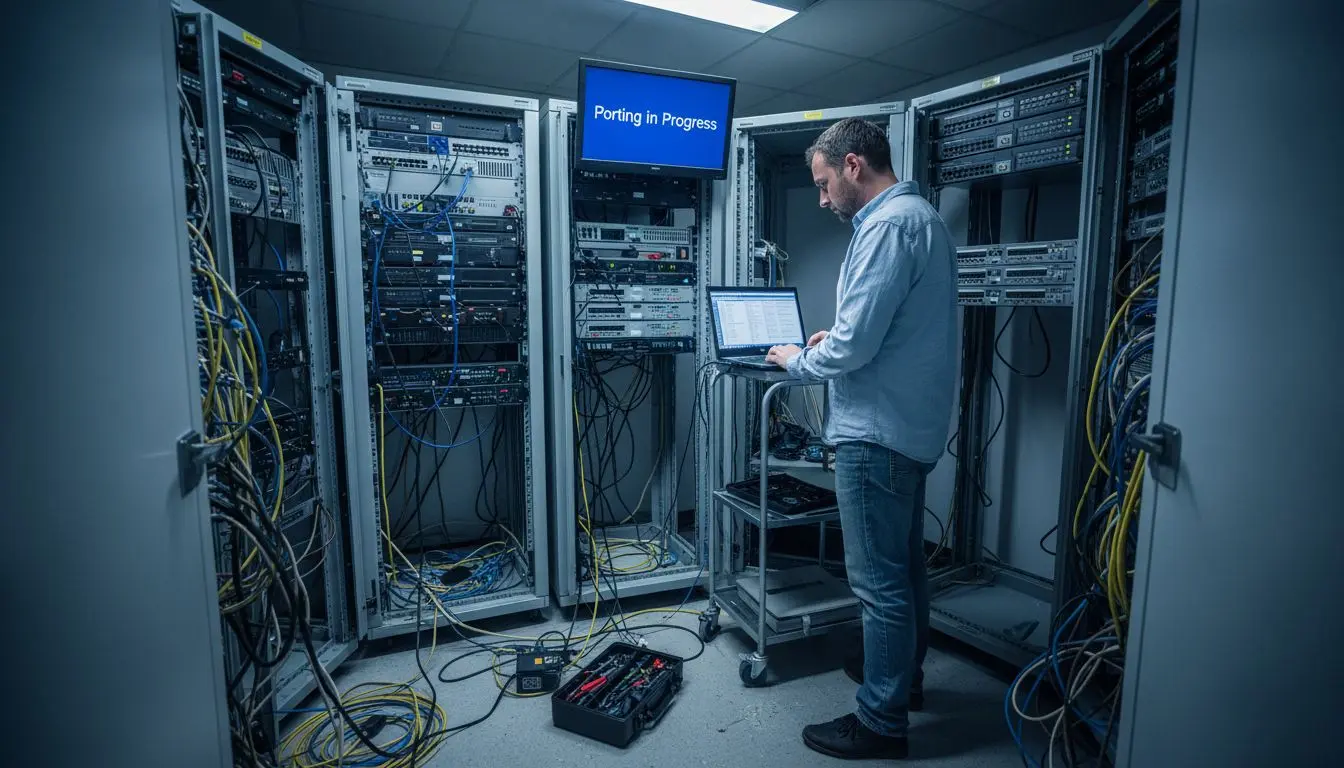
Your new provider (the gaining provider) acts as the primary coordinator. They liaise with your current provider to schedule the porting date and confirm all technical arrangements. You’ll receive updates from your new provider about key milestones and the expected cutover time.
Stay in regular contact with both providers during this phase. Your new provider will confirm porting acceptance and coordinate the exact cutover time when your number transfers to their network. This communication is essential to prevent service gaps.
Here is a summary of roles for both providers during the porting process:
| Task | Losing Provider (Current) | Gaining Provider (New) |
|---|---|---|
| Submits porting request | Does not initiate | Initiates and submits order |
| Schedules cutover date | Confirms and agrees | Proposes, coordinates date |
| Handles verification | Confirms eligibility | Tracks request, updates client |
| Ensures technical setup | Maintains current routing | Configures new routing |
| Provides support | Responds if issues arise | Leads support, first contact |
Active coordination between providers minimises downtime and ensures any issues are resolved promptly for a seamless service transfer.
Both providers establish technical agreements including routing arrangements and interconnection points. These behind-the-scenes arrangements ensure calls route correctly to your new provider once the port completes. Your new provider manages restoration support if technical issues arise during cutover.
Key coordination touchpoints include:
- Confirming the exact cutover date and time
- Verifying call routing arrangements are in place
- Establishing escalation contacts at both providers
- Planning for immediate support if issues emerge
- Confirming backup procedures if cutover fails
During the cutover window, calls to your number may briefly experience interruptions as the switch occurs. Most transitions complete within minutes to a few hours. Your new provider should notify you when the transfer is complete and your number is fully operational on their network.
After cutover, test your number immediately. Make internal and external test calls to confirm proper routing and call quality. Report any issues to your new provider’s support team straightaway.
Pro tip: Request a direct contact number at both providers for cutover day and keep it with your key staff. Having immediate access to support during the transition window prevents confusion and accelerates problem resolution if anything goes wrong.
Step 4: Verify successful porting and maintain service
Your number has transferred to the new provider. Now you need to confirm everything is working correctly and establish ongoing monitoring to keep your service reliable.
Start with comprehensive testing immediately after cutover completes. Make several test calls both inbound and outbound to confirm call routing functions properly. Test from different handsets and from external numbers to ensure calls reach your taxi firm without issues.
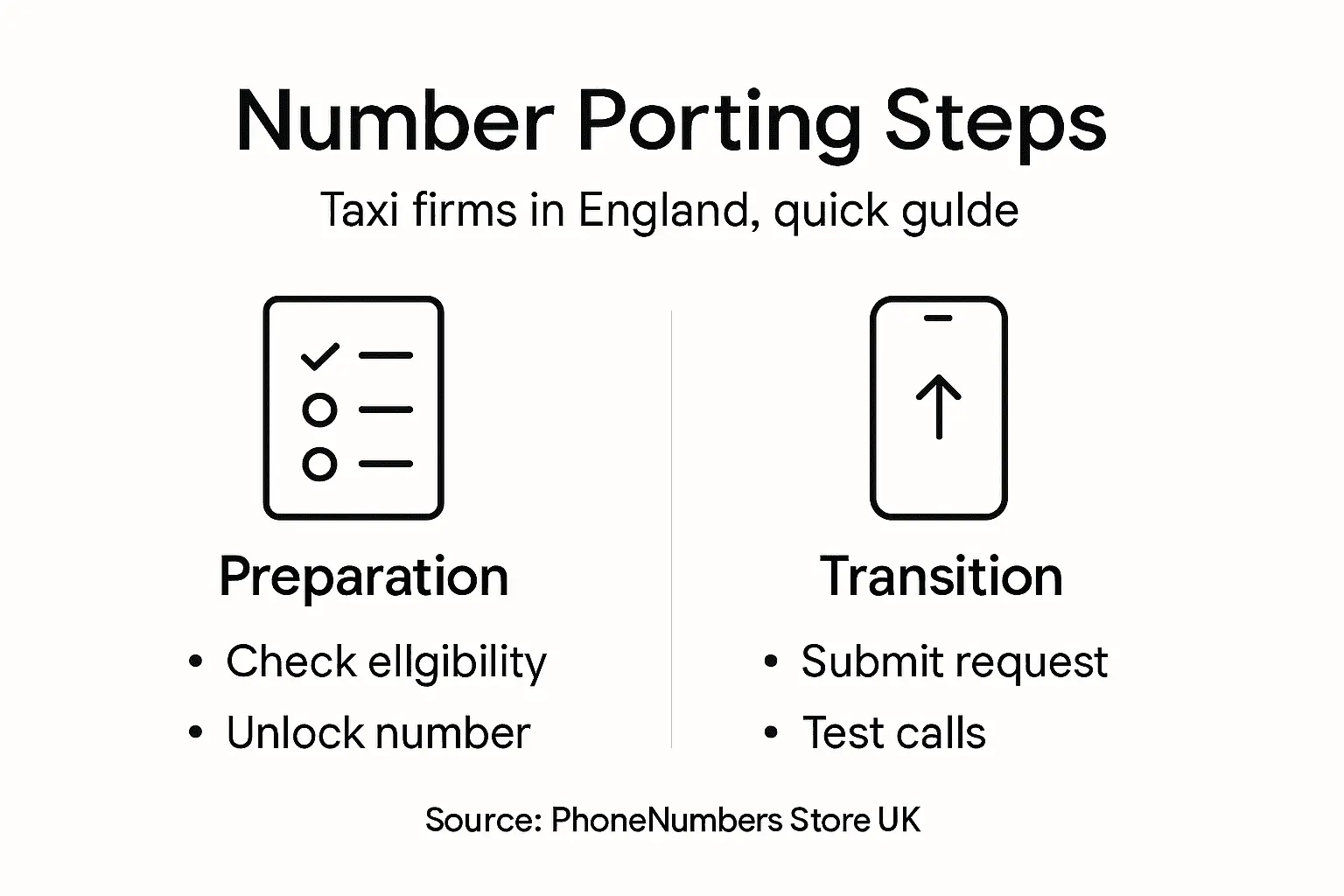
Check that voicemail, call forwarding, and any other features integrated with your number work as expected. These services often depend on correct routing configuration, so testing them thoroughly prevents customer complaints later.
Your new provider handles technical compliance and integration into their IP-based system. However, you should monitor performance during the first week after porting. Verifying successful porting involves testing inbound and outbound functionality and confirming all numbers route correctly to your new network.
Keep detailed records of your testing results and any issues encountered during the first week. This documentation helps your provider troubleshoot if problems emerge.
Establish a monitoring routine for your ported number:
- Check call quality weekly for the first month
- Monitor for any dropped or misdirected calls
- Test voicemail and automated features regularly
- Keep your new provider’s support contact readily available
- Document any faults or anomalies immediately
Your new provider should have fault reporting procedures in place. If you notice any issues with call routing, quality, or feature functionality, report them straightaway. Most providers offer 24/7 support for critical issues affecting business numbers.
Ongoing maintenance also includes updating your number across all customer-facing materials. Confirm your website, advertising, booking systems, and customer databases reflect your current provider and any new contact information they provide.
As the UK transitions away from PSTN networks, ensure your ported number integrates fully into your provider’s modern IP-based infrastructure. This transition protects your service continuity as legacy systems sunset.
Below is a quick reference to common post-porting issues and who to contact:
| Issue Type | Typical Cause | Contact First |
|---|---|---|
| Dropped calls | Routing configuration error | New provider’s support team |
| Feature malfunction | Incorrect integration | New provider (technical team) |
| Delayed porting | Scheduling or documentation issue | New provider contact |
| Poor call quality | Infrastructure adjustment needed | New provider’s support line |
| Missed numbers | Database not updated | Check customer-facing systems or provider |
Pro tip: Schedule a brief team meeting with your taxi drivers and office staff on cutover day to confirm the number is working and remind them to test calls they receive. Staff awareness prevents confusion if there are minor teething issues during the first hours after porting.
Seamlessly Port Your Taxi Firm’s Number with Confidence
Number porting can be complex and stressful especially for taxi firms that rely on uninterrupted customer calls. From coordinating gaining and losing providers to managing cutover dates and technical routing your goal is to avoid downtime and ensure every call gets through. This process demands expert handling of Number Port Orders and clear communication with all parties to prevent missed bookings and lost revenue.
At PhoneNumbers Store we understand these challenges. As the leading provider of UK memorable phone numbers including 01 & 02 landline and 07 mobile numbers you can search our extensive database by area code or location and select the perfect number for your taxi business. Because numbers are no longer tied to local areas you can use them anywhere enhancing your brand recognition and customer recall.
Take control of your number porting journey today by exploring memorable options at PhoneNumbers Store. Prepare your taxi firm for a smooth transition and back up your porting steps with a number that stands out. Visit our landing page now and find the ideal number to futureproof your business communications.
Frequently Asked Questions
What steps should I take to prepare my number for porting?
Start by ensuring your current number is ready for porting, including checking its eligibility and unlocking it with your current provider. Gather any necessary documentation to facilitate the transfer process.
How do I choose a new provider for number porting?
Research telecom providers specialising in number porting for taxi firms, looking for those with experience in quick transitions. Contact them to discuss their porting experience and typical timeframes for processing.
What happens after I submit the porting request?
Once you submit the porting request, both your current and new providers will verify the request and schedule a cutover date. Maintain regular communication with both providers to ensure the transfer goes smoothly and on schedule.
How can I ensure minimal downtime during the transition?
To minimise downtime, actively coordinate with both your old and new providers to confirm the cutover date and ensure technical arrangements are in place. Set up a clear escalation plan for any issues that may arise during the cutover.
What should I do immediately after the cutover?
Immediately after the cutover, conduct thorough testing by making inbound and outbound calls to ensure everything is functioning correctly. Report any issues to your new provider’s support team without delay.
How do I monitor my number after porting?
Establish routine monitoring for at least the first month by checking call quality and functionality of features like voicemail. Document any issues and contact your new provider for assistance if needed.