
Choosing the right phone tariff can be a daily headache for many UK taxi firm owners. With dispatchers juggling calls and drivers relying on mobile connectivity, every minute and pound matters. The government’s own licensing guidance prioritises both accessible and affordable telephone booking systems, making cost-effective communication solutions essential for operational success. This article uncovers practical tariff options and reveals how strategic choices can save money while improving dispatch efficiency and customer satisfaction.
Table of Contents
- UK Phone Tariffs Defined for Taxi Firms
- Common Tariff Types: Mobile and Landline
- How Tariffs Are Set and Regulated
- Recent VAT Changes and Legal Obligations 2026
- Comparing Tariffs: Controlling Your Costs
- Optimising Tariffs for Taxi Business Success
Key Takeaways
| Point | Details |
|---|---|
| Understanding Tariffs | Taxi firms must evaluate various phone tariffs tailored to their operational needs to improve efficiency and customer communication. |
| Cost Control Strategies | Implement strategies such as volume-based negotiations and contract reviews to manage and reduce overall telecommunication expenses. |
| Regulatory Compliance | Stay informed about regulatory changes, such as upcoming VAT updates in 2026, to ensure adherence and avoid penalties. |
| Technology Integration | Leverage technology for real-time pricing and improved dispatch systems to enhance operational effectiveness and customer satisfaction. |
UK Phone Tariffs Defined for Taxi Firms
Phone tariffs for taxi firms represent a complex landscape of communication costs that directly impact operational efficiency and customer service. These tariffs involve multiple pricing structures designed to support the unique communication needs of transportation businesses across the United Kingdom.
Taxi firms typically encounter several core tariff categories when managing their telephone communications:
- Standard Business Line Tariffs: Monthly packages with fixed call rates
- Mobile Network Business Plans: Flexible pricing for on-the-go communications
- Virtual Number Tariffs: Cost-effective solutions for managing dispatcher communications
- Geographic Number Packages: Local number configurations with regional pricing
The UK government’s licensing guidance emphasises that telephone booking systems must remain accessible and affordable while maintaining operational compliance. This means taxi firms need tariff structures that balance cost management with service quality.
Transport for London provides specific insights into how electronic booking methods integrate with overall fare structures. Their guidelines indicate that phone-based booking services can include incremental charges, reflecting the technological infrastructure required to support modern taxi dispatch systems.
Key Tariff Considerations for Taxi Firms:
- Calculate total communication costs, not just per-minute rates
- Consider bundled minutes versus pay-as-you-go options
- Evaluate inclusive features like voicemail and call forwarding
- Assess roaming charges for multi-city taxi operations
Modern taxi firms must strategically select phone tariffs that provide flexibility, cost-effectiveness, and reliable connectivity. The right communication infrastructure can significantly enhance despatch efficiency and customer satisfaction.
Here is a comparison of key business impacts associated with different UK taxi phone tariff types:
| Tariff Type | Operational Benefit | Typical Cost Impact | Suitability for Taxi Firms |
|---|---|---|---|
| Standard Business Line | Predictable monthly billing | Moderate, fixed expense | Central dispatch centres |
| Mobile Network Business Plan | On-the-go driver communication | Variable, scalable cost | Fleet operating across multiple areas |
| Virtual Number Tariff | Enhanced call management flexibility | Low, pay-as-needed | Firms with remote dispatchers |
| Geographic Number Package | Local business presence, regional appeal | Discounted local rates | Local or regional taxi operators |
Pro tip: Compare at least three different business phone tariffs before committing, ensuring you understand all potential additional charges and contract terms.
Common Tariff Types: Mobile and Landline
Taxi firms in the United Kingdom navigate a complex landscape of communication tariffs, balancing mobile and landline options to ensure efficient and cost-effective dispatch operations. Understanding the nuanced differences between these tariff types is crucial for maintaining competitive communication strategies.
Local council fee structures demonstrate that pricing models are carefully designed to support operational viability while remaining affordable for passengers. These tariffs typically encompass multiple communication channels, reflecting the evolving technological landscape of transportation services.
Mobile Tariff Characteristics:
- Flexible call packages with varying minute allocations
- Data inclusion for digital dispatch systems
- Potential roaming capabilities for multi-region operations
- Contract and pay-as-you-go options
Landline Tariff Considerations:
- Fixed monthly rates with predictable billing
- Lower per-minute costs for extended conversations
- More stable connection for dispatch centre communications
- Often bundled with additional business communication features
The integration of mobile and landline tariffs allows taxi firms to create comprehensive communication strategies that adapt to different operational requirements. Some businesses opt for hybrid approaches, leveraging the strengths of both mobile and landline technologies to maximise efficiency and cost-effectiveness.
Modern taxi communication systems require sophisticated tariff selections that balance technological flexibility with financial prudence.
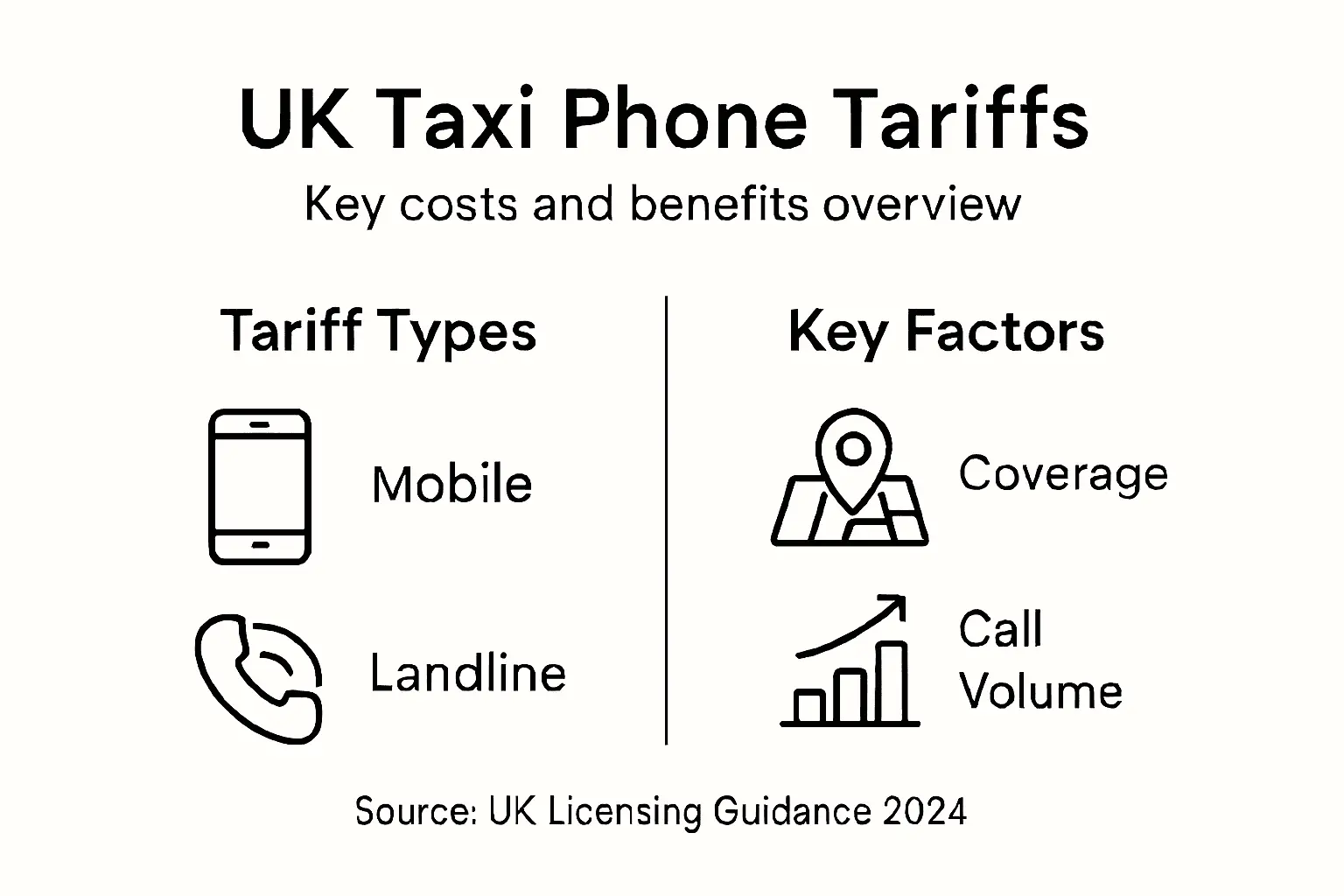
Key factors influencing tariff selection include geographical coverage, call volume, dispatch frequency, and the specific technological infrastructure of the taxi firm. Smaller local operators might prioritise different communication solutions compared to larger regional or national taxi services.

Pro tip: Conduct a comprehensive audit of your current communication expenses and compare at least three different tariff packages before making a final selection.
How Tariffs Are Set and Regulated
Taxi tariff regulation in the United Kingdom represents a sophisticated system of checks and balances designed to protect both passengers and taxi service providers. Local licensing authorities play a critical role in establishing frameworks that ensure fair pricing and operational transparency.
The regulatory process involves several key mechanisms for maintaining equitable tariff structures:
- Annual fare reviews by local transport authorities
- Maximum tariff limit implementations
- Consideration of operational cost indexes
- Compliance with road safety and licensing requirements
- Protection of driver and passenger economic interests
Transport for London demonstrates a comprehensive approach to tariff management, conducting detailed annual reviews that balance multiple economic considerations. These reviews examine factors such as fuel costs, vehicle maintenance expenses, driver earnings, and overall market conditions to determine appropriate pricing mechanisms.
Regulatory Oversight Principles:
- Transparent fare-setting processes
- Regular economic impact assessments
- Protection against excessive pricing
- Mechanisms for public consultation
Effective tariff regulation requires a delicate balance between economic sustainability for taxi operators and affordability for passengers.
Private hire vehicle operators maintain more flexibility in commercial pricing, though they remain subject to strict licensing regulations that ensure passenger safety and service quality. Local authorities maintain ultimate oversight, with the power to intervene if pricing structures become exploitative or fail to meet established standards.
Pro tip: Engage with local licensing authorities and participate in public consultations to understand and potentially influence tariff-setting processes in your region.
Recent VAT Changes and Legal Obligations 2026
The United Kingdom’s taxi industry faces significant legal and financial transformations in 2026, with updated Department for Transport regulations reshaping VAT compliance and operational standards for taxi firms across the nation.
Key VAT and Legal Changes for 2026 include:
- Revised VAT registration thresholds for taxi businesses
- Enhanced digital tax reporting requirements
- Stricter documentation standards for financial transactions
- Updated compliance mechanisms for small and medium taxi operators
- New electronic invoicing and record-keeping protocols
Compliance Impact Areas:
- Mandatory digital tax submissions
- More rigorous financial transparency
- Increased penalties for non-compliance
- Simplified reporting frameworks
Taxi firms must proactively adapt to these regulatory shifts, understanding that the new frameworks are designed to streamline tax administration while reducing administrative burdens. The changes reflect a broader governmental approach to modernising business taxation across transportation sectors.
Successful adaptation to 2026 VAT regulations requires comprehensive understanding and strategic financial planning.
Small and independent taxi operators will need to invest in updated accounting systems and potentially seek professional financial advice to ensure full compliance. The regulations aim to create a more transparent and efficient tax environment while supporting sustainable business practices.
Pro tip: Consult with a specialist tax advisor familiar with transportation sector regulations to fully understand the 2026 VAT changes and their specific implications for your taxi business.
Comparing Tariffs: Controlling Your Costs
Navigating the complex landscape of telecommunication tariffs requires strategic analysis and proactive cost management for taxi firms. Local authority fee-setting procedures provide essential insights into optimising communication expenses while maintaining operational efficiency.
Key Comparative Tariff Dimensions:
- Per-minute call rates
- Monthly package inclusions
- Data allowance for dispatch systems
- Roaming and multi-region coverage
- Contract flexibility and termination costs
Taxi businesses must conduct comprehensive comparisons across multiple communication providers, examining not just headline prices but the total cost of ownership. This involves understanding nuanced pricing structures that extend beyond simple per-minute rates.
Cost Control Strategies:
- Negotiate volume-based discounts
- Select packages matching actual usage patterns
- Consider hybrid mobile-landline solutions
- Review contracts quarterly
- Utilise detailed call analytics
Effective tariff management requires continuous monitoring and willingness to switch providers when significant savings emerge.
Small and medium-sized taxi firms can particularly benefit from granular tariff comparisons, as even modest monthly savings can substantially impact annual operational budgets. The goal is not just reducing costs but optimising communication infrastructure for maximum business efficiency.
The following table summarises cost control strategies and their purpose in taxi business tariff management:
| Strategy | Purpose | Example Benefit |
|---|---|---|
| Volume-based Negotiation | Reduce average per-call expenditure | Lower rates for high call volumes |
| Usage Pattern Matching | Minimise unused minutes or data | Avoid paying for excess capacity |
| Contract Review Schedule | Identify better offers periodically | Timely switching saves money |
| Hybrid Tariff Use | Optimise for flexibility and value | Best rates for different scenarios |
Pro tip: Create a detailed spreadsheet tracking actual communication usage and comparing it against current tariff packages to identify potential savings opportunities.
Optimising Tariffs for Taxi Business Success
Successful taxi businesses require sophisticated approaches to tariff management that balance operational efficiency with financial sustainability. Government best practice guidance emphasises the critical importance of strategic pricing and continuous market adaptation.
Strategic Tariff Optimization Dimensions:
- Demand-responsive pricing models
- Journey length cost calculations
- Peak and off-peak rate structures
- Booking method price differentiation
- Technology-enabled dynamic pricing
Taxi firms must develop nuanced pricing strategies that consider multiple variables beyond simple per-mile rates. This involves sophisticated analysis of operational costs, market dynamics, and customer expectations to create competitive yet profitable tariff structures.
Key Performance Optimization Strategies:
- Implement real-time pricing algorithms
- Conduct regular market competitive analyses
- Develop flexible fare adjustment mechanisms
- Invest in technology-driven dispatch systems
- Create transparent pricing communication
Effective tariff optimization transcends mere cost reduction and represents a holistic approach to business sustainability.
Small and medium-sized taxi businesses can particularly benefit from data-driven tariff management, leveraging technological tools to analyse usage patterns, customer preferences, and operational efficiency. The goal is creating a dynamic pricing ecosystem that responds rapidly to market changes.
Pro tip: Develop a quarterly pricing review process that systematically evaluates tariff performance against key operational and financial metrics.
Unlock Cost Savings and Professional Appeal with the Right Phone Number
Managing UK phone tariffs for taxis means balancing operational costs with customer accessibility. The right phone number can transform your business by enhancing brand recognition and supporting strategic tariff optimisation. Whether you need memorable 01 and 02 landline numbers or flexible 07 mobile numbers, having a number that fits your operational model and customer expectations can reduce communication complexities discussed in the article.
Start improving your taxi firm’s communication strategy today by exploring our extensive database where you can search for numbers by sequence, area code, or location. Remember that numbers are no longer tied to physical areas, so you can select a number that best suits your brand and service region. Visit Phone Numbers Store now and take control of your taxi business communication costs with confidence. Find your ideal number and position your business for success before your competitors do.
Discover options that align with your tariff management and compliance needs at Phone Numbers Store. Don’t wait to upgrade your phone infrastructure for a smarter, more cost-effective taxi operation. Start browsing memorable UK numbers today at Phone Numbers Store.
Frequently Asked Questions
What are the main types of phone tariffs for taxi firms?
Taxi firms typically encounter several core tariff categories, including standard business line tariffs, mobile network business plans, virtual number tariffs, and geographic number packages. Each type supports specific operational needs and communication strategies.
How can taxi firms calculate their total communication costs effectively?
Taxi firms should consider total communication costs, including not just per-minute rates but also bundled minutes, additional features like voicemail, call forwarding, and potential roaming charges, to have a comprehensive understanding of their expenses.
What factors should be considered when choosing between mobile and landline tariffs?
When choosing between mobile and landline tariffs, taxi firms should evaluate factors such as call volume, dispatch frequency, geographical coverage, and specific operational needs, as a combination of both may lead to optimal communication efficiency.
How do recent VAT changes affect taxi firms in the UK?
The updated VAT regulations set to take effect in 2026 will introduce revised registration thresholds, enhanced digital reporting requirements, and stricter documentation standards, requiring taxi firms to adapt their financial practices to ensure compliance.