Virtual landlines are changing the way British businesses handle calls, letting you take customer enquiries from anywhere with an internet connection. Now here is something that might make you pause. One report found UK small businesses using virtual landlines can save up to 60 percent on communication costs compared to traditional phone systems. That is not just a clever shortcut for saving money though. It is changing the whole idea of what a professional business presence really means.
Table of Contents
- What Is A Virtual Landline And How Does It Differ From Traditional Lines?
- Why Virtual Landlines Matter For Taxi Firms And Plumbers In The UK
- How Virtual Landlines Function: Key Concepts And Technologies Involved
- Practical Applications Of Virtual Landlines In The Transportation And Plumbing Industries
- Future Trends In Virtual Landline Technology For Businesses
Quick Summary
| Takeaway | Explanation |
|---|---|
| Virtual landlines use internet technology | They operate independently from physical lines, offering flexibility in communication practices. |
| Cost-effective for small businesses | Virtual landlines significantly reduce communication costs compared to traditional systems, enhancing operational efficiency. |
| Professional image through local area codes | Businesses can acquire local codes, boosting customer trust and perceptions of credibility without physical presence. |
| Advanced call management features | These systems provide tools like call forwarding and voicemail-to-email, improving customer service capabilities. |
| Future trends include AI integration | Anticipated developments in AI will enhance customer interactions and call management in virtual systems. |
What is a Virtual Landline and How Does it Differ from Traditional Lines?
A virtual landline transforms how businesses communicate by providing a phone number that operates independently of physical telephone infrastructure. Unlike traditional landlines connected to specific geographic locations, virtual landlines leverage internet technology to route calls through cloud-based systems.
Understanding Virtual Landline Technology
At its core, a virtual landline is a telephone number that exists exclusively in digital space. Ofcom research indicates that these numbers function through Voice over Internet Protocol (VoIP) technology, which converts voice signals into digital data transmitted via internet connections.
Key characteristics of virtual landlines include:
- No requirement for physical telephone lines
- Ability to route calls to multiple devices simultaneously
- Flexibility to manage calls from smartphones, computers, or tablets
- Lower operational costs compared to traditional telephone systems
Comparing Virtual and Traditional Landline Systems
Telecommunications industry analysis reveals significant differences between virtual and traditional landline systems. Traditional landlines rely on copper wire infrastructure, limiting mobility and scalability.
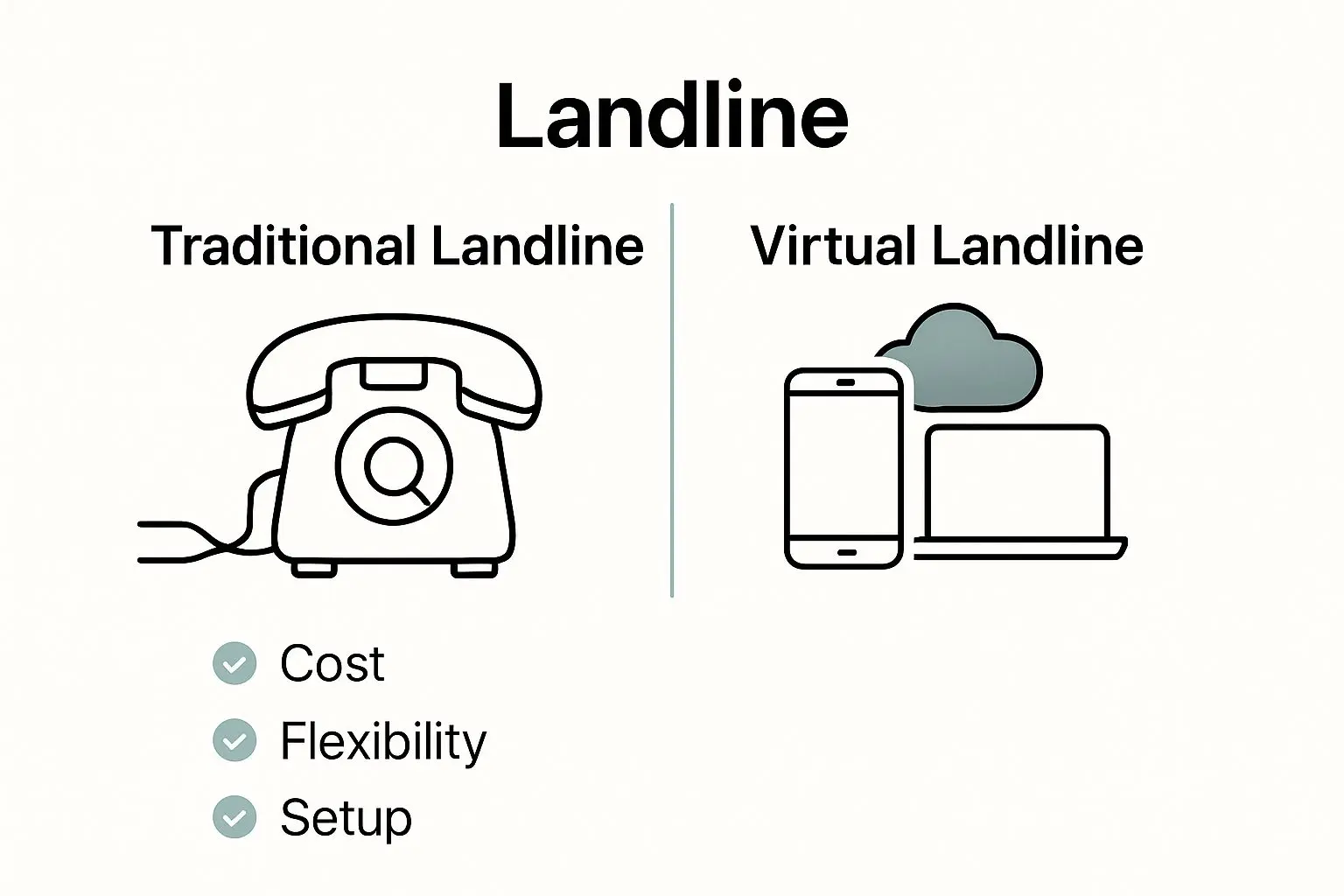 Virtual landlines, by contrast, offer unprecedented flexibility for modern businesses.
Businesses can acquire virtual landline numbers with specific area codes without geographical constraints.
This means a plumbing company in Manchester could obtain a London area code, creating a perception of broader operational presence without physically relocating.
The technological shift represents more than just communication convenience. Virtual landlines enable businesses to establish professional communication channels that are adaptable, cost-effective, and aligned with contemporary digital working environments. By decoupling telephone numbers from physical locations, these systems provide unprecedented communication versatility for small and medium enterprises seeking to expand their professional image and operational reach.
Below is a table comparing key features and characteristics of virtual landlines versus traditional landline systems, helping clarify their core differences for business use:
| Feature | Virtual Landline | Traditional Landline |
|---|---|---|
| Physical infrastructure required | No, entirely digital | Yes, needs physical copper wiring |
| Location dependence | None, use from anywhere with internet | Fixed to a specific geographic line |
| Scalability and setup | Highly scalable, easy online setup | Limited scalability, complex setup |
| Mobility | Use on smartphones, tablets, computers | Limited to wired location |
| Call management tools | Advanced (forwarding, voicemail-to-email, etc.) | Basic (calls, voicemail) |
| Area code flexibility | Choose almost any UK area code | Restricted by physical location |
| Cost | Lower setup and operational costs | Higher setup and maintenance costs |
Why Virtual Landlines Matter for Taxi Firms and Plumbers in the UK
For service-based businesses like taxi firms and plumbing companies, professional communication represents the critical foundation of customer trust and operational success. Virtual landlines offer these businesses transformative communication capabilities that extend far beyond traditional telephone systems.
Professional Image and Customer Perception
Small Business Survey research indicates that customers perceive businesses with local or recognisable area codes as more credible and established. For taxi firms and plumbers, having a consistent professional telephone number creates an immediate impression of reliability.
Key benefits for service businesses include:
- Presenting a unified, professional contact point
- Maintaining privacy by separating business and personal numbers
- Establishing local presence without physical office requirements
- Creating scalable communication infrastructure
Cost-Effective Communication Solutions
UK Telecommunications Report reveals that small businesses can significantly reduce communication expenses by adopting virtual landline technologies. Traditional phone lines involve substantial setup and maintenance costs, whereas virtual systems offer more economical alternatives.
A plumbing business, for instance, can manage client calls across multiple devices without investing in expensive hardware. Taxi firms can route customer inquiries efficiently, ensuring no missed opportunities during peak booking times.
Moreover, virtual landlines provide sophisticated call management features previously accessible only to large corporations. These include call forwarding, voicemail-to-email transcription, and automated response systems. Such tools enable small service businesses to deliver professional customer experiences comparable to much larger enterprises, effectively levelling the competitive landscape.
How Virtual Landlines Function: Key Concepts and Technologies Involved
The intricate mechanics behind virtual landlines represent a sophisticated intersection of telecommunications technology and internet infrastructure. Unlike traditional telephone systems, virtual landlines leverage digital networks to transmit voice communications with remarkable efficiency and flexibility.
Voice over Internet Protocol (VoIP) Technology
Internet Telephony Service Providers Association explains that VoIP technology converts analogue voice signals into digital data packets transmitted seamlessly across internet networks. This transformation allows businesses to communicate without relying on conventional copper wire telephony infrastructure.
Critical technological components of virtual landline systems include:
This table summarises the critical technological components that underpin virtual landline systems, giving a concise overview of how digital communication is enabled:
| Component | Description |
|---|---|
| Digital signal processing | Converts analogue voice to digital packets for internet transmission |
| Packet switching networks | Directs data efficiently across internet infrastructure |
| Cloud-based call routing | Routes calls to designated devices using remote servers |
| Real-time audio compression | Reduces bandwidth needs while maintaining voice quality |
| Encryption and security | Protects sensitive call data and ensures secure communications |
- Digital signal processing
- Packet switching networks
- Cloud-based call routing
- Real-time audio compression
- Encryption and security protocols
Network Infrastructure and Call Routing
Telecommunications Standards Organisation reveals that virtual landlines operate through complex network routing mechanisms. When a call is initiated, the system immediately identifies the virtual number, locates the associated user profile, and dynamically routes the communication to designated devices.
This sophisticated routing allows unprecedented flexibility. A single virtual landline can simultaneously ring multiple devices phones, tablets, or computer softphones ensuring businesses never miss critical customer interactions. The underlying technology enables seamless call forwarding, voicemail transcription, and advanced call management features that traditional telephone systems cannot replicate.
The technological architecture of virtual landlines represents a quantum leap in communication infrastructure. By decoupling telephone numbers from physical locations and transforming voice into data, these systems provide businesses with communication tools that are adaptive, scalable, and fundamentally aligned with modern digital working environments.
Practical Applications of Virtual Landlines in the Transportation and Plumbing Industries
Virtual landlines represent transformative communication technologies specifically tailored to meet the dynamic operational needs of service-based industries like transportation and plumbing. These digital communication solutions provide unprecedented flexibility and professional management capabilities.
Enhanced Customer Communication Strategies
Federation of Small Businesses research indicates that service industries dramatically improve customer interactions through sophisticated communication technologies. For taxi firms and plumbing businesses, virtual landlines enable comprehensive call management strategies that traditional phone systems cannot deliver.
Key communication advantages include:
- Simultaneous call routing across multiple devices
- Advanced call screening capabilities
- Professional automated greeting systems
- Geographical number flexibility
- Cost-effective international call handling
Operational Efficiency and Scalability
Telecommunications Industry Association highlights that virtual landlines provide service businesses with remarkable operational scaling capabilities. Taxi companies can manage peak booking periods by distributing incoming calls across driver networks, while plumbing firms can ensure emergency contact channels remain consistently accessible.
The technological infrastructure allows businesses to create comprehensive communication ecosystems. A plumbing company can configure their virtual landline to automatically route emergency calls to on-call technicians, while simultaneously logging call details for subsequent customer service follow-ups. Similarly, taxi firms can implement intelligent call distribution mechanisms that prioritise urgent transportation requests and manage driver availability in real-time.
These advanced communication strategies transform how service-based businesses interact with customers, providing professional, responsive, and technologically sophisticated engagement mechanisms that were previously accessible only to large corporate enterprises.
Future Trends in Virtual Landline Technology for Businesses
The landscape of communication technology continues to evolve rapidly, with virtual landline systems positioned at the forefront of transformative business communication strategies. As digital infrastructure becomes increasingly sophisticated, businesses can anticipate groundbreaking developments that will reshape how they manage customer interactions.
Artificial Intelligence and Intelligent Call Management
Gartner Technology Research predicts significant advancements in artificial intelligence integration within virtual landline systems. These emerging technologies will enable unprecedented levels of automated customer interaction and intelligent call routing.
Key anticipated technological developments include:
- Machine learning powered call screening
- Predictive customer service analytics
- Real-time language translation capabilities
- Automated sentiment analysis during conversations
- Advanced voice recognition technologies
Integrated Communication Ecosystems
International Telecommunications Union highlights the emerging trend of seamless communication integration. Future virtual landline technologies will transcend traditional telephone functionalities, becoming comprehensive communication platforms that integrate multiple communication channels.
Businesses can expect virtual landline systems to evolve into sophisticated platforms that synchronise voice calls with messaging applications, customer relationship management systems, and broader digital communication infrastructures. This integration will enable more nuanced, context-aware communication strategies that provide businesses with deeper insights into customer interactions and preferences.
The technological trajectory suggests virtual landlines will transform from mere communication tools into intelligent, adaptive business intelligence platforms that offer strategic communication capabilities previously unimaginable in traditional telephony systems.
Unlock Seamless Virtual Landline Setup with Memorable Numbers
Setting up a virtual landline can feel overwhelming when you need to find the ideal number that matches your business image and gives you true UK-wide flexibility. The article has shown just how vital it is to choose the right number for building customer trust and presenting a professional image. Whether you are a taxi service, a plumber, or any service-based business, you want your virtual landline setup to help you stand out and never miss a call—especially now that phone numbers can travel with you, no matter your location.
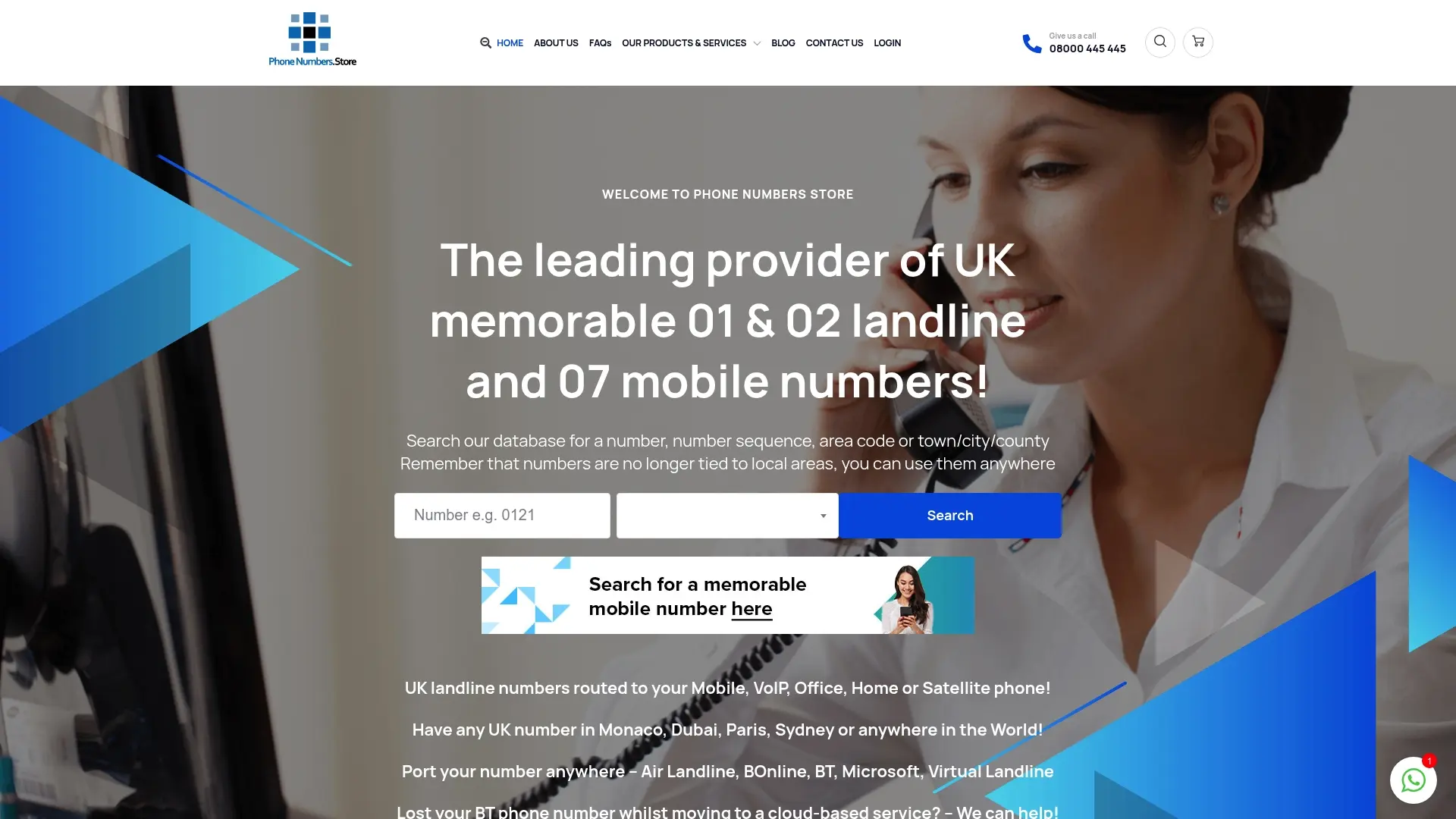
Take the final step towards a hassle-free setup. Visit phonenumbers.store to search for the perfect 01, 02 landline or 07 mobile number. You can browse by sequence, area code, or even UK cities and counties. Secure your memorable virtual landline today and ensure your business is always accessible wherever you operate. Do not wait—your next customer could be calling soon. Find your ideal business number now and elevate your professional presence immediately.
Frequently Asked Questions
What is a virtual landline?
A virtual landline is a telephone number that exists digitally, allowing businesses to make and receive calls over the internet without the need for physical telephone infrastructure.
How does a virtual landline differ from a traditional landline?
Unlike traditional landlines that rely on copper wire infrastructure and have geographic limitations, virtual landlines use VoIP technology to provide more flexibility and scalability for businesses.
What are the benefits of using a virtual landline for my business?
Virtual landlines offer lower operational costs, professional communication capabilities, and enhanced call management features, enabling businesses to improve customer interactions and maintain a professional image.
How can I set up a virtual landline for my business?
Setting up a virtual landline typically involves selecting a service provider, choosing a telephone number (with or without local area codes), and configuring your call management settings, which can often be done online without any physical installations.