
Landline numbers might sound like a relic from another era, but their role in business is far from outdated. Surprising as it may seem, around 35 percent of Brits say they would not trust a business that only uses a mobile number. This flips conventional thinking on its head because it is not advanced tech or flashy apps that create the deepest trust for service firms like taxi companies or plumbers. It is the steady ring of a traditional landline that often seals the deal.
Table of Contents
- What Is A Landline Number And Its Functions?
- Why Landline Numbers Matter For Local Businesses
- How Landline Numbers Enhance Customer Trust And Communication
- Key Advantages Of Using Landline Numbers In Service Industries
- Real-World Examples Of Landline Number Success
Quick Summary
| Takeaway | Explanation |
|---|---|
| Landline numbers enhance professional credibility | Businesses using landline numbers are viewed as more trustworthy and stable by customers. |
| Local presence boosts customer trust | Geographic landline numbers signal local commitment, increasing customer confidence. |
| Cost-effective communication solutions available | Landline numbers often offer lower call charges and predictable costs for businesses and customers. |
| Structured communication improves efficiency | Advanced telecommunication features allow businesses to handle calls systematically, enhancing customer service. |
| Reliability fosters long-term customer relationships | Consistent contact points from landlines build customer loyalty and trust in service businesses. |
What is a Landline Number and Its Functions?
A landline number represents a traditional telephone connection established through physical copper wire infrastructure, connecting businesses and homes through a fixed telecommunications network. Unlike mobile phone numbers, landline numbers remain stationary and are typically associated with a specific geographical location or business address.
The Core Components of Landline Technology
Landline numbers function through a complex telecommunications infrastructure involving several critical components. These include copper telephone lines, exchanges, switchboards, and routing equipment that enable voice communication between different locations. For taxi firms and plumbers, landline numbers provide a stable and professional communication channel that customers can reliably contact.
The technical foundation of landline numbers involves signal transmission through electrical circuits, converting voice sounds into electrical signals that travel across interconnected networks. This technology ensures clear, consistent communication with minimal interference compared to mobile networks.
Professional Credibility and Customer Trust
For service-based businesses like taxi firms and plumbing services, landline number benefits extend far beyond mere communication. These numbers signal professional stability and local presence. According to BBC Technology Reporting, businesses using landline numbers are perceived as more established and trustworthy by customers.
Key advantages of landline numbers include:
- Consistent call quality and reliability
- Professional business image
- Geographic recognition within local communities
- Potential integration with advanced telecommunication systems
Businesses can leverage landline numbers to create a sense of permanence and reliability, which is particularly crucial in service industries where customer confidence directly impacts business success. By maintaining a fixed communication line, taxi firms and plumbers demonstrate commitment to accessibility and professional standards.
The following table summarises the core features of landline numbers versus mobile numbers for service-based businesses, highlighting differences in credibility, cost, communication structure, and local presence.
| Feature/Benefit | Landline Numbers | Mobile Numbers |
|---|---|---|
| Professional Credibility | High – associated with established, stable businesses | Lower – can seem less permanent or trustworthy |
| Customer Trust | Builds confidence, signals local presence | May lack local recognition or trust |
| Cost for Customers | Often included in standard call packages, low or predictable | May incur higher or variable call charges |
| Communication Features | Supports call forwarding, structured handling | Generally limited to personal device functions |
| Local Presence | Signifies fixed, community-based operation | Can appear transient or mobile-only |
| Reliability | Consistent call quality, minimal interference | Dependent on mobile signal and device |
| Suitable for Business Scaling | Yes, integrates with business systems | Challenging to manage for team growth |
Why Landline Numbers Matter for Local Businesses
Local businesses operate in a competitive environment where communication reliability and professional perception play crucial roles in attracting and retaining customers. Landline numbers provide a foundational communication infrastructure that supports business credibility and customer engagement across various service sectors.
Building Professional Business Reputation
For small service businesses like taxi firms and plumbing services, a dedicated landline number communicates established presence and local commitment. Unlike mobile numbers that might suggest temporary or transient operations, geographic landline numbers signal stability and deep-rooted community connections. Customers often perceive businesses with local landline numbers as more trustworthy and professionally managed.
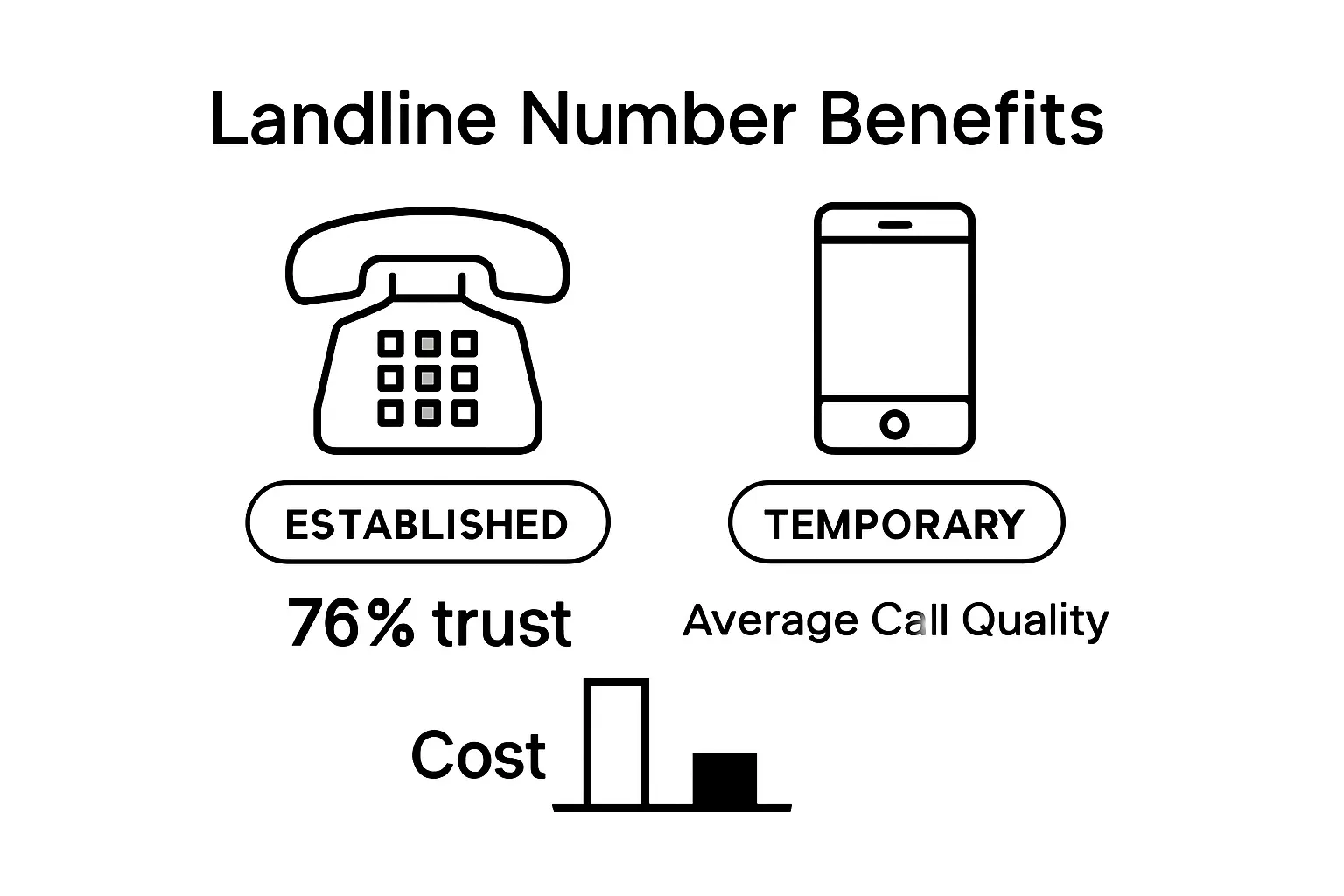
The strategic use of landline numbers helps businesses create a consistent professional identity. A local area code immediately informs potential customers about the business’s geographical proximity, which can be particularly important for service-based industries where local reputation matters significantly.
Cost-Effective Communication Solutions
Landline numbers offer economic advantages that extend beyond mere communication. According to UK Government Call Charges Guidelines, geographic numbers provide cost-effective calling options for customers. Most landline numbers are included in standard call packages, making them more affordable compared to premium or mobile rate numbers.
Key financial benefits include:
- Lower call charges for customers
- Potential inclusion in telephone service packages
- Predictable communication infrastructure costs
- Reduced mobile network dependency
Enhanced Customer Accessibility and Trust
Customer accessibility remains a critical factor for local businesses. Landline numbers provide a consistent contact point that customers can rely on, regardless of individual staff mobile phone changes or personal device limitations. This reliability builds long-term customer trust and demonstrates a commitment to professional communication standards.
By maintaining a stable landline number, businesses create a permanent communication channel that transcends individual employee transitions. This approach ensures continuous customer support and reinforces the business’s reputation as a dependable local service provider.
This table presents key components of modern landline technology and explains their role in supporting reliable and professional business communication for local service providers.
| Component | Explanation |
|---|---|
| Copper Telephone Lines | Physical cables connecting premises, ensuring stable, high-quality audio communication |
| Telephone Exchanges/Switchboards | Equipment that routes calls between different numbers and manages communication flows |
| Routing Equipment | Directs calls efficiently across the network to the intended recipient |
| Digital Integration Systems | Enhances landline reliability, allowing features like call recording and CRM linkage |
| Voicemail and Call Forwarding | Enables structured call management and ensures no customer enquiry is missed |
How Landline Numbers Enhance Customer Trust and Communication
Customer communication represents the lifeblood of service-based businesses, with landline numbers serving as a critical trust-building mechanism. These communication channels offer more than simple connectivity they symbolize reliability and professional commitment in an increasingly digital marketplace.
Psychological Foundations of Communication Trust
Customers inherently seek businesses that demonstrate stability and accessibility. Landline numbers provide a psychological anchor, signaling that a business has a permanent physical presence. Unlike mobile numbers that might suggest temporary or mobile operations, geographic landline numbers communicate roots within a specific community, generating immediate customer confidence.
The consistent availability of a landline number suggests a business is established, responsible, and prepared to maintain long-term customer relationships. This perception is particularly crucial for service industries like taxi firms and plumbing services, where trust directly influences customer decision-making.
Professional Communication Infrastructure
A dedicated landline number creates a structured communication framework that enhances professional interactions. These numbers allow businesses to implement advanced telecommunication features such as call forwarding, voicemail, and multi-line management. According to UK Government Service Guidelines, professional communication channels are fundamental to building customer confidence.
Key communication advantages include:
- Consistent call routing and management
- Professional call handling protocols
- Clear audio quality and reliability
- Potential integration with customer relationship management systems
Transparency and Accessibility Signals
Landline numbers communicate transparency by providing customers with a traceable, permanent contact point. They demonstrate a business’s commitment to being accessible and accountable. For local service providers, this means customers can reliably reach support, make bookings, or resolve queries through a stable communication channel.
By maintaining a landline number, businesses signal their investment in customer service infrastructure. This approach transforms communication from a transactional interaction into a relationship-building opportunity, ultimately fostering long-term customer loyalty and trust.
Key Advantages of Using Landline Numbers in Service Industries
Service industries such as taxi firms and plumbing businesses operate in a competitive landscape where communication quality can significantly differentiate their brand. Landline numbers provide a strategic communication tool that offers multiple advantages beyond simple contact mechanisms.
Professional Operational Capabilities
Landline numbers enable service businesses to establish sophisticated communication infrastructures that enhance operational efficiency. These numbers support advanced telecommunication features like call forwarding, automated routing, and integrated voicemail systems. By implementing such technologies, businesses can manage customer interactions more professionally and systematically.
The ability to create structured communication workflows allows service providers to handle multiple customer inquiries simultaneously, reduce waiting times, and maintain consistent service quality. This approach transforms communication from a potential bottleneck into a streamlined, customer-centric process.
Reliability and Technological Integration
Modern landline technologies offer unprecedented reliability and integration potential. According to UK Government Digital Transition Guidelines, the ongoing digital transformation of telecommunications infrastructure ensures enhanced call quality and advanced communication capabilities.
Key technological advantages include:
- Seamless integration with customer management systems
- Enhanced call recording and quality monitoring
- Robust security features
- Reduced communication infrastructure maintenance costs
Local Business Credibility and Market Positioning
Geographic landline numbers serve as powerful marketing tools that communicate local presence and community commitment. For service industries, these numbers instantly signal that the business is established, trustworthy, and deeply rooted in the local market. Potential customers are more likely to engage with businesses that demonstrate a stable, permanent local identity.
By maintaining a dedicated landline number, service businesses create a sense of reliability that transcends digital communication trends. This approach not only attracts customers but also builds long-term brand reputation and customer loyalty in an increasingly competitive service marketplace.
Real-World Examples of Landline Number Success
Service industries demonstrate remarkable communication transformation through strategic landline number implementation. These practical examples illustrate how businesses leverage geographic numbers to enhance professional credibility, customer trust, and operational effectiveness.
Local Taxi Firm Communication Strategies
Small local taxi firms have consistently proven that landline numbers create substantial competitive advantages. By maintaining a geographic telephone number, these businesses signal permanent community presence and reliability. A typical scenario involves a local taxi company using an area-specific landline that immediately communicates its geographical roots, making it more appealing to local customers seeking trustworthy transportation services.
The landline number becomes more than a contact point it represents a brand identity. Customers perceive businesses with established local numbers as more dependable, which directly influences their selection process when choosing transportation services. This psychological connection transforms a simple communication channel into a powerful marketing tool.
Plumbing Service Professional Positioning
Plumbing businesses particularly benefit from landline numbers by establishing professional legitimacy. These service providers use geographic numbers to demonstrate stability and commitment to local communities. A dedicated landline allows plumbers to create structured communication systems that manage customer inquiries, emergency calls, and service bookings with exceptional professionalism.
Key success indicators include:
- Increased customer perception of reliability
- Enhanced call management capabilities
- Improved emergency response coordination
- Stronger local market positioning
Consumer Trust and Business Perception
According to Zen Internet Consumer Research, approximately 35% of British consumers would not trust a business operating exclusively through mobile numbers. This statistic underscores the critical role landline numbers play in establishing business credibility.
By maintaining a stable landline number, service businesses communicate their commitment to professional standards. The number becomes a symbol of reliability, suggesting the business has invested in permanent infrastructure and is prepared to provide consistent, dependable services to its local community.

Instantly Build Trust and Stand Out With a Memorable Landline Number
Are you a taxi firm or plumbing business struggling to show customers you are local, reliable and professional? If clients hesitate to call because your number seems impersonal or hard to remember, you are not alone. The article highlighted how a clear and consistent landline line creates stronger reputations, loyal clients and makes your service appear more established. But finding a number that is both memorable and perfectly suited to your area can feel impossible on your own.
Find Your Perfect Local Number Today
Do not let uncertain customers skip past your business. Act now and explore our huge database of unique and easy-to-remember UK landline numbers. You can search by number sequence, area code or even your town or county. Numbers are no longer tied to a location which means you can access any local area code and project trust wherever you work. Give your business the advantage clients are looking for by choosing your new professional number at https://phonenumbers.store today.
Frequently Asked Questions
What are the main benefits of using a landline number for my taxi firm or plumbing business?
Landline numbers enhance professional credibility, provide consistent call quality, ensure customer accessibility, and signal a stable local presence, which is vital for service-based industries.
How can a landline number improve customer trust in my business?
Landline numbers create a perception of stability and permanence, which fosters customer confidence. Customers are more likely to trust businesses that have a dedicated landline over those that only use mobile numbers.
Are there cost advantages to using a landline number?
Yes, landline numbers often come with lower call charges for customers and may be included in standard telephone service packages, making communication more cost-effective than mobile numbers.
How do landline numbers support better communication management?
Landline numbers offer advanced telecommunication features like call forwarding, voicemail, and multi-line management, allowing businesses to streamline customer interactions and ensure professional communications.