
Every small business owner knows the frustration of missing calls from potential customers simply because they worry about extra charges. For companies like taxi firms and plumbers across the United Kingdom, using a freephone number means your customers can get in touch without worrying about cost from any landline or mobile, as these start with 0800 or 0808 and are completely free for the caller. Discover how adopting this simple approach can improve customer trust and make your business more accessible to people nationwide.
Table of Contents
- Defining Freephone Numbers In The UK
- Types Of Freephone Numbers Explained
- How Freephone Numbers Work For Callers
- Key Benefits For Small Businesses
- Costs And Regulatory Framework For Owners
Key Takeaways
| Point | Details |
|---|---|
| Freephone Numbers Remove Call Costs | Freephone numbers are completely free to call from both landlines and mobile phones, enhancing customer accessibility. |
| Enhance Customer Trust and Engagement | Businesses using freephone numbers signal their commitment to customer service, fostering trust and engagement. |
| Strategic Tool for Small Businesses | Adopting freephone numbers helps small businesses appear more professional and customer-focused, levelling the playing field with larger organisations. |
| Regulatory Compliance is Essential | Owners must navigate a complex regulatory landscape, ensuring adherence to Ofcom’s guidelines to maintain compliance and optimise costs. |
Defining Freephone Numbers in the UK
A freephone number in the United Kingdom is a special type of telephone number designed to eliminate call charges for customers reaching out to businesses, charities, and public services. These numbers, which typically begin with 0800 or 0808, enable organisations to provide free communication channels that encourage customer interaction without financial barriers.
The key characteristics of freephone numbers include:
- Completely free to call from both landline and mobile phones
- Always starting with the prefixes 0800 or 0808
- Paid for by the receiving organisation, not the caller
- Accessible nationwide without geographic restrictions
Unlike standard geographic telephone numbers, freephone numbers create a perception of accessibility and customer care. When a business uses a freephone number, it signals that they value customer communication and are willing to absorb the call costs. This approach can significantly enhance customer trust and engagement, particularly for small businesses seeking to appear professional and customer-focused.
Freephone numbers transform communication by removing financial barriers between businesses and their potential customers.
From a technical perspective, these numbers follow specific GOV.UK design guidelines to ensure clarity and accessibility. Businesses must register these numbers through approved telecommunications providers, who manage the routing and billing processes.
Pro tip: When selecting a freephone number, choose a memorable sequence that reflects your brand and makes it easy for customers to recall and dial.
Types of Freephone Numbers Explained
In the United Kingdom, freephone numbers are part of a broader landscape of telecommunications numbering, each with distinct characteristics and cost implications. These specialised number ranges serve different purposes and provide unique communication solutions for businesses and organisations.
The primary types of freephone and special-rate numbers include:
- 0800 and 0808 Numbers: Completely free for callers from landlines and mobile phones
- 03 Numbers: Charged at standard geographic rates, included in most call packages
- 084 and 087 Numbers: Business rate numbers with additional access charges
- 09 Numbers: Premium rate numbers with higher connection costs
Freephone numbers, specifically the 0800 and 0808 ranges, represent the most customer-friendly option. These numbers signal to customers that an organisation is committed to removing financial barriers to communication. Unlike other number types, freephone numbers absorb the entire call cost, making them particularly attractive for customer service lines, helpdesks, and support services.

Here is a comparison of the main telephone number types for UK businesses:
| Number Type | Typical Prefixes | Cost to Caller | Main Business Use |
|---|---|---|---|
| Freephone | 0800, 0808 | Free from all phones | Customer service, helplines |
| Standard Rate | 03xx | Standard rate, inclusive | Nationwide business contact |
| Business Rate | 084, 087 | Access charge applies | Marketing, revenue-sharing lines |
| Premium Rate | 09xx | High, premium charges | Competitions, information lines |
Freephone numbers provide a transparent and accessible communication channel that prioritises customer convenience.
The technical infrastructure behind these numbers is complex. UK call charge regulations ensure that telecommunications providers manage these number ranges consistently, allowing businesses to offer predictable and cost-effective communication channels across different phone networks.
Pro tip: When selecting a freephone number for your business, consider choosing a memorable sequence that aligns with your brand and makes it easy for customers to recall.
How Freephone Numbers Work for Callers
Calling a freephone number is a straightforward process designed to provide maximum convenience for customers. UK telecommunications regulations ensure that these numbers are genuinely free to call, eliminating any financial barriers to communication.
When a customer dials a freephone number, several key processes occur:
- The call is routed through the telecommunications network without charge to the caller
- No cost appears on the caller’s phone bill
- The receiving business absorbs the entire call connection expense
- Calls are free from both mobile phones and landlines
- The number typically begins with 0800 or 0808 prefixes
The technical mechanics behind freephone numbers are surprisingly complex. Telecommunications providers have developed sophisticated routing systems that allow businesses to receive calls without the caller incurring any direct expenses. This approach transforms communication, making it easier for customers to reach out to organisations without worrying about call charges.
Freephone numbers create a direct, barrier-free communication channel between businesses and their customers.
UK calling regulations implemented in July 2015 standardised how these numbers function, ensuring transparency and consistency across different phone networks. This means customers can confidently dial freephone numbers, knowing they will not be charged regardless of their phone type or service provider.
Pro tip: Always confirm the freephone status before calling, as some older mobile contracts might have different charging structures.
Key Benefits for Small Businesses
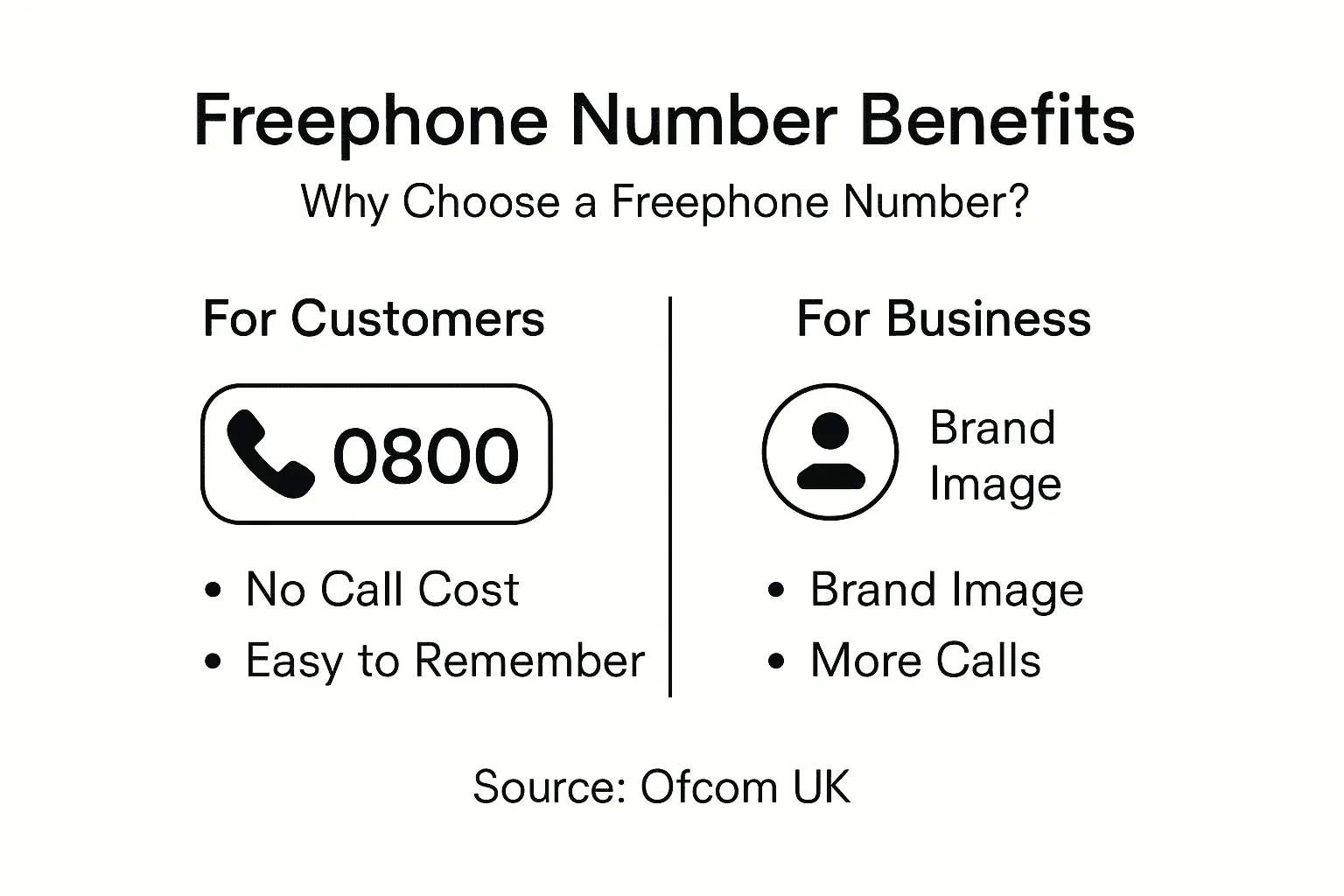
Small businesses can leverage freephone numbers as a powerful communication strategy that transforms customer interactions. Business communication guidelines highlight the significant advantages these numbers provide for organisations seeking to enhance their professional image and customer accessibility.
The key benefits for small businesses include:
- Removing financial barriers to customer communication
- Creating a professional, nationwide presence
- Increasing customer trust and engagement
- Providing a cost-free contact method
- Appearing more established and customer-focused
- Supporting vulnerable consumers who might be cost-conscious
By adopting a freephone number, small businesses signal a commitment to customer service that goes beyond traditional communication approaches. These numbers effectively level the playing field, allowing smaller organisations to present themselves with the same level of accessibility as larger corporations. The psychological impact is substantial - customers perceive businesses with freephone numbers as more customer-friendly and approachable.
The following table highlights how freephone numbers can impact small businesses:
| Benefit | Customer Impact | Business Impact |
|---|---|---|
| Removes call costs | Easier access to help | More inbound enquiries |
| National, non-geographic reach | Feels more inclusive | Stronger, more reputable image |
| Supports vulnerable consumers | No cost worries when calling | Broader appeal in competitive markets |
Freephone numbers transform small business communication from a potential cost barrier to an open, welcoming channel.
Ofcom’s business advice emphasises that these numbers are more than just a communication tool - they’re a strategic investment in customer relationships. They enable businesses to demonstrate transparency, build trust, and create a more inclusive communication environment.
Pro tip: Choose a memorable freephone number sequence that reflects your brand personality and makes it easy for customers to recall and dial.
Costs and Regulatory Framework for Owners
Freephone number ownership involves navigating a complex regulatory landscape designed to protect both businesses and consumers. Ofcom’s telecommunications regulations establish a comprehensive framework that governs how these numbers operate and are managed.
The key cost and regulatory considerations for freephone number owners include:
- Wholesale charges for call termination
- Compliance with Ofcom’s number allocation guidelines
- Maintaining consumer protection standards
- Transparent pricing for call routing
- Regular review of telecommunications infrastructure
- Adherence to fair communication practices
Unlike traditional telephone services, freephone numbers require businesses to absorb the entire communication cost. This means organisations must carefully calculate the potential expenses associated with enabling free customer contact. The financial model is essentially reversed - instead of generating revenue from calls, businesses invest in removing communication barriers.
Freephone number ownership represents a strategic commitment to customer accessibility over direct telecommunication revenue.
Regulatory frameworks continually evolve to balance fair competition, consumer protection, and sustainable telecommunications infrastructure. Businesses must stay informed about these changes to maintain compliance and optimize their communication strategies.
Pro tip: Consult with a telecommunications specialist to understand the full financial implications of freephone number ownership before implementation.
Empower Your Business with the Right Phone Number
If you found the article “What Is a Freephone Number and Why Use One” insightful, you already know how crucial it is to remove communication barriers and create trust with your customers. The challenge many businesses face is choosing a phone number that reflects professionalism, is easy to recall, and fits your specific needs. Whether you want a memorable freephone or a local-sounding number without being tied to a geographic area, having the right phone number can transform customer engagement and boost your brand’s credibility.
Discover a vast selection of UK memorable phone numbers from 01 and 02 landline to 07 mobile numbers tailored for you at PhoneNumbers.store. Search by number sequence, area code, or location to find the perfect contact point that aligns with your business goals. Don’t let confusing or costly phone numbers hold your business back. Visit https://phonenumbers.store now to secure a number that opens doors and invites customers to call without hesitation.
Frequently Asked Questions
What is a freephone number?
A freephone number is a special type of telephone number that allows customers to call businesses or organisations without incurring any charges. These numbers typically start with the prefixes 0800 or 0808 and are completely free to call from landlines and mobile phones.
How do freephone numbers benefit small businesses?
Freephone numbers help small businesses enhance their professional image, remove financial barriers for customers, increase trust and engagement, and provide a cost-free contact method, making them appear more established and customer-focused.
Are there any costs associated with using a freephone number for businesses?
Yes, businesses that use freephone numbers absorb the entire cost of calls, meaning they need to consider wholesale charges for call termination and other regulatory compliance fees. This requires careful financial planning to maintain sustainability.
How do freephone numbers work for callers?
When a caller dials a freephone number, the call is routed through telecommunications networks without charge to the caller. The receiving organisation pays for the entire call, ensuring that customers can connect without worrying about charges.