
Over 85 million mobile phone numbers are active in the UK, shaping how businesses and customers connect every day. The prefix of a number does more than identify a phone line—it determines accessibility, regional presence, and ease of switching between networks. Reliable communication is vital for professions like taxi drivers and plumbers. A closer look at UK mobile and landline numbers will reveal why picking the right type matters for staying connected and credible.
Key Takeaways
| Point | Details |
|---|---|
| Mobile Numbers Begin with 07 | In the UK, mobile numbers are identifiable by their 07 prefix, allowing portability across providers. |
| Dialling Formats | For domestic calls, dial the full number starting with 0, while international calls use +44 followed by the number. |
| Number Portability Rules | The PAC system simplifies switching providers, allowing users to retain their numbers in a consumer-friendly manner. |
| Choosing the Right Number Type | Businesses should strategically select number types that match their communication needs to enhance professionalism and accessibility. |
Table of Contents
- Defining Mobile Dial Numbers In The UK
- Types Of Mobile And Landline Numbers Explained
- How Mobile Dial Numbers Work In Practice
- Legal Framework And Number Portability Rules
- Common Applications For Taxi Firms And Plumbers
- Choosing, Registering, And Using Your Number
Defining Mobile Dial Numbers in the UK
In the United Kingdom, mobile dial numbers are more than just a sequence of digits - they represent a sophisticated communication system managed by national telecommunications regulations. According to Ofcom, mobile numbers are systematically structured within the National Telephone Numbering Plan, using specific prefixes that distinguish them from other telephone number types.
Mobile numbers in the UK are consistently recognised by their distinctive 07 prefix, which covers ranges from 071xx to 079xx. This standardised approach ensures that mobile numbers are portable between different service providers, meaning you can switch networks while keeping your original number. As research from Wise indicates, these numbers follow a specific international dialling protocol:
- Within the UK: Dial the full number starting with 0
- From outside the UK: Use +44 7 and drop the leading zero
Understanding these numbering conventions is crucial for businesses like taxi firms and plumbers who rely on consistent, professional communication. The +44 country code signals that the number originates in the United Kingdom, providing an immediate geographical context for international contacts. Whether you’re a local service provider or an international business, mastering these mobile dial number nuances ensures smooth, reliable communication across different regions and telecommunications networks.
Types of Mobile and Landline Numbers Explained
The United Kingdom’s telephone numbering system is a complex network of distinctive number ranges, each serving a unique purpose for communication. Geographic landline numbers, which begin with 01 or 02, are traditionally linked to specific regional areas, allowing businesses and individuals to establish a local presence. According to research from Wikipedia, these numbers provide a direct connection to a particular geographical location.
Mobile numbers, always starting with the 07 prefix, represent a more flexible communication option. As detailed by Ringflow, these 11-digit numbers are not tied to a specific region and offer complete portability across different mobile network providers. Beyond mobile and geographic numbers, the UK also utilises several non-geographic number ranges:
- 03 numbers: Standard rate service numbers
- 080x numbers: Freephone services
- 084x/087x numbers: Service numbers with variable rates
- 09xx numbers: Premium-rate service lines
For professionals like taxi firms and plumbers, understanding these number types is crucial. Whether you’re establishing a local presence with a geographic landline or seeking broader reach with a mobile number, each number type offers unique advantages for business communication and customer accessibility.
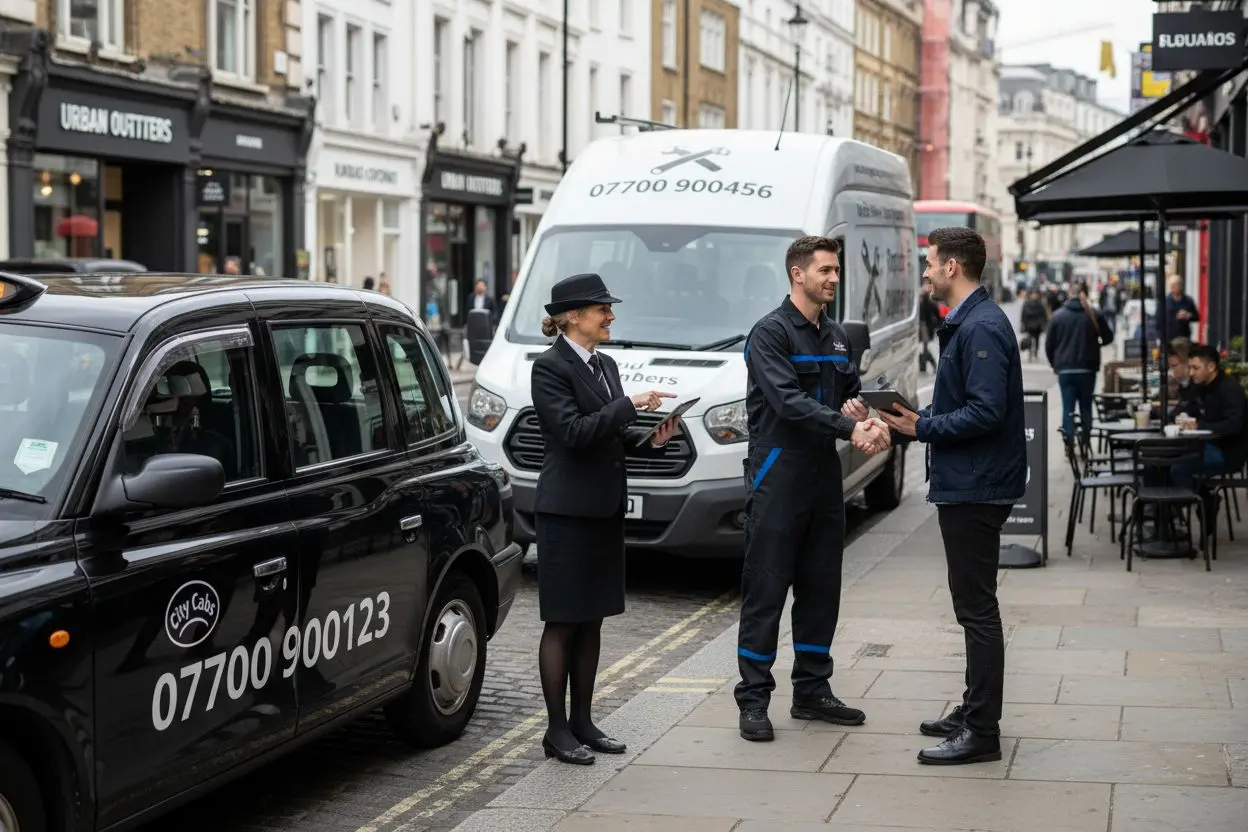
Here’s a comparison of the key UK telephone number types relevant for businesses:
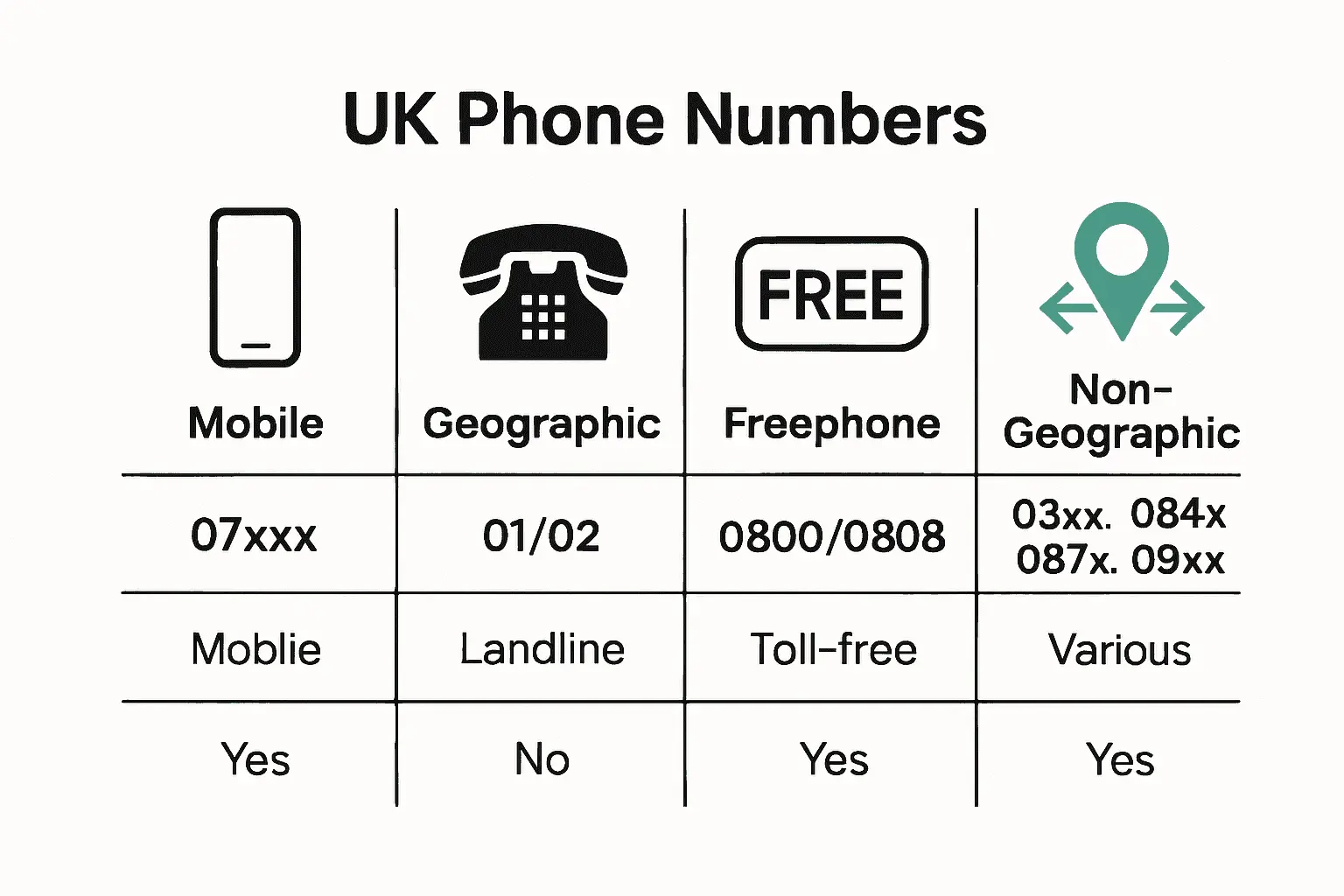
| Number Type | Prefix/Format | Main Use | Geographic Ties |
|---|---|---|---|
| Mobile | 07xxx… | Personal communication | Non-geographic |
| Geographic Landline | 01, 02 | Local business/personal | Region-based |
| Non-geographic | 03xx, 084x 087x, 09xx |
National services Premium/Service lines |
None |
| Freephone | 0800, 0808 | Customer enquiries | None |
How Mobile Dial Numbers Work in Practice
Mobile dial numbers in the UK operate with remarkable flexibility, designed to support seamless communication across different networks and locations. According to Wikipedia, these numbers are fundamentally non-geographic, meaning they aren’t restricted to a specific region or physical area. This portability allows professionals like taxi firms and plumbers to maintain a consistent contact number regardless of network changes or geographical movements.
The practical mechanics of dialling these numbers differ slightly depending on your location. As research from Wise explains, the dialling process varies between domestic and international calls:
- Domestic UK calls: Dial 07xxx… (full mobile number with leading zero)
- International calls: Dial +44 7xxx… (replace leading zero with +44)
This system ensures that whether you’re a local tradesperson in Manchester or a business operating nationwide, your mobile number remains consistent and recognisable. The non-geographic nature means a plumber can move between cities while keeping the same contact number, providing continuity for customers and eliminating the need for repeated number updates. Moreover, the standardised format simplifies communication, making it easy for clients to reach you regardless of your current location or network provider.
Legal Framework and Number Portability Rules
The United Kingdom’s telecommunications regulations provide robust protections for consumers through comprehensive number portability rules. According to Ofcom, the Communications Act 2003 establishes clear guidelines that enable customers to switch mobile providers while retaining their existing phone number, a critical mechanism for promoting market competition and consumer choice.
The process of changing mobile networks has been significantly simplified. As detailed by Wikipedia, subscribers can now obtain a Porting Authorisation Code (PAC) with remarkable efficiency:
- Providers must issue a PAC within two working hours of request
- The PAC remains valid for 30 days
- Customers can request a PAC by sending a text message with “PAC” to 65075
These regulations are particularly beneficial for small businesses like taxi firms and plumbers, who rely on consistent communication channels. By ensuring that professionals can change network providers without disrupting their contact details, the legal framework protects both business continuity and customer relationships. The streamlined porting process reflects a modern, consumer-friendly approach to telecommunications regulation, prioritizing flexibility and ease of service for mobile number users across the United Kingdom.
Common Applications for Taxi Firms and Plumbers
Mobile dial numbers provide crucial communication flexibility for service-based businesses like taxi firms and plumbers, enabling them to establish professional and accessible contact channels. According to research from Wikipedia, non-geographic numbers offer strategic advantages by providing a single national point of contact without being tied to a specific physical location.
As detailed by Ringflow, businesses in these sectors can leverage different number types to enhance their professional image and customer accessibility:
- 03xx numbers: Standard rate with inclusive minutes
- 0800 numbers: Freephone services attracting more customer calls
- 07 mobile numbers: Personal and direct communication
- Non-geographic numbers: Routing calls to different locations
For a taxi firm operating across multiple cities or a plumber serving various regions, these number options provide remarkable communication versatility. A mobile number allows direct client contact, while non-geographic numbers can create the impression of a larger, more established business. This approach enables professionals to appear accessible and credible, regardless of their actual business size or geographical coverage, ultimately supporting more effective customer engagement and business growth.
Choosing, Registering, and Using Your Number
Number selection is a critical decision for businesses, requiring careful consideration of communication needs and professional image. According to Ofcom, businesses have multiple number types available within the National Numbering Plan, each offering unique advantages for different operational requirements.
The process of obtaining and managing a telephone number involves several strategic steps. As detailed by Wikipedia, switching providers has become remarkably straightforward:
- Request a Porting Authorisation Code (PAC) within two hours
- PAC remains valid for 30 days
- New provider must complete number transfer within 1-32 days
- Simple text message request option available since July 2019
For taxi firms and plumbers, selecting the right number type can significantly impact customer perception and operational flexibility. Whether choosing a mobile 07 number for personal communication, a non-geographic 03 number for professional credibility, or an 0800 freephone number to encourage customer calls, each option presents unique benefits. The key is matching your number type to your business communication strategy, ensuring you appear professional, accessible, and trustworthy to potential clients across different regions and service areas.
Searching for a Memorable and Flexible Mobile Number?
Are you a business or professional who wants greater flexibility and a stronger image when it comes to your contact details? As the article explains, UK mobile dial numbers, especially those with a 07 prefix, let you keep your number when switching providers and make your services accessible to clients anywhere in the UK. However, finding a truly memorable or local-sounding number can be tough. It is even more challenging when you need numbers that stand out for taxi firms, plumbers, or small businesses trying to look more credible and trustworthy.
Discover the difference with Phone Numbers Store. Search our extensive online database for unique 01, 02, or 07 numbers that suit your brand. Select sequences or area codes that meet your business goals and customer expectations. There is no need to worry about being tied to a geographic location — enjoy total freedom and keep your number wherever your business takes you. Act now by exploring our memorable phone number listings and secure a professional edge that sets you apart. Start your search today, and give your business the number it deserves.
Frequently Asked Questions
What are mobile dial numbers?
Mobile dial numbers are telephone numbers that begin with the prefix 07, primarily used for mobile communication. They are designed to be portable and non-geographic, allowing users to switch service providers without changing their number.
How do I dial a mobile number from outside the country?
To dial a mobile number from outside the country, use the international dialling format by replacing the leading zero with +44, followed by the mobile number (e.g., +44 7xxx…).
What are the different types of phone numbers in the UK?
In the UK, the main types of phone numbers include mobile numbers (07xxx…), geographic landline numbers (01, 02), non-geographic numbers (03xx, 0800), and premium-rate numbers (09xx). Each serves different purposes for communication.
How can businesses benefit from using mobile dial numbers?
Businesses can benefit from mobile dial numbers by maintaining a consistent contact point that is portable across networks. This allows for seamless communication with clients, regardless of location or changes in service providers.