
TL;DR:
- Number redirection automatically reroutes incoming calls to a designated destination, ensuring reachability across devices and locations. Different modes activate under various conditions, such as always forwarding, when busy, or when unreachable, supported by UK star codes. Costs vary, especially for landline-to-mobile forwarding, and users must monitor for potential charges or scams involving premium numbers.
Number redirection is defined as the automatic rerouting of incoming calls from one phone number to a designated destination, such as a mobile or VoIP line. In UK telecom, this feature is also called call forwarding or call diverting, and the terms are interchangeable in practice. The core purpose is simple: calls reach you regardless of where you are or what device you are using. For businesses, this means no missed customer enquiries. For individuals, it means staying reachable without being tied to a single handset. Ofcom regulates how UK providers implement these services, and the GSM standard underpins the star codes that activate them on most UK networks.
What is number redirection and how does it work?
Number redirection works by instructing your phone network to intercept an incoming call before it rings your handset and send it elsewhere instead. The network does this at the exchange level, so the caller experiences no difference. They dial your number, and the call arrives at whichever destination you have set.
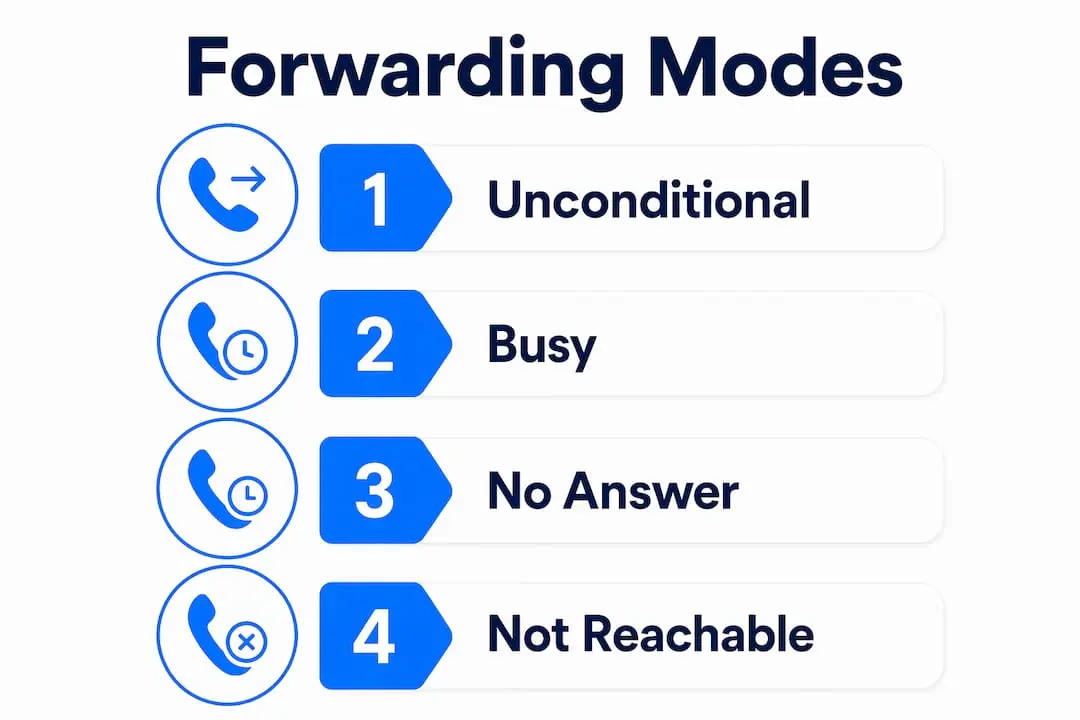
Four primary redirection modes cover almost every scenario a user will encounter. Each mode triggers under different conditions, which is what makes the system genuinely flexible rather than a blunt on/off switch.
The four modes are:
- Unconditional (All Calls): Every incoming call is forwarded immediately, regardless of whether your phone is on, off, or busy. Activated with the star code 21.
- When Busy: Calls are only forwarded if your line is engaged. Activated with 67.
- No Answer: Calls forward after your phone rings for 15–21 seconds without being answered. Activated with 61.
- Not Reachable / Unavailable: Calls forward when your device is switched off or has no signal. Activated with 62.
Unconditional forwarding suits permanent rerouting, such as when a business relocates its office and wants all calls to reach the new number instantly. Conditional modes are more practical for day-to-day use because they keep your primary line active and only redirect when something prevents you from answering. A small business owner, for example, might set “No Answer” forwarding to a receptionist service so that no call goes to voicemail during working hours.
Pro Tip: Combine “When Busy” and “No Answer” forwarding simultaneously. Most UK networks allow both to be active at once, giving you a two-layer safety net without committing to unconditional redirection.
How do you activate and cancel number redirection in the UK?
Activating call forwarding on a UK landline or mobile follows a consistent pattern across most major networks. The GSM standard defines these codes, which is why they work on BT, EE, O2, Vodafone, and Three without modification.
To set up unconditional forwarding on a UK landline or mobile:
- Open the dialler on your phone.
- Dial 21 followed by the full destination number, including the area code.
- Press # to confirm, then press the call button.
- Listen for a three-beep tone or a recorded confirmation message. That signal confirms the divert is active.
To cancel unconditional forwarding, dial #21# and press call. The same pattern applies to other modes: prefix with 61 or 67 to activate, and #61# or #67# to cancel.
To check which forwards are currently active, dial *#21# for unconditional, *#61# for no answer, and *#67# for busy. Your phone will display the destination number if a divert is set.
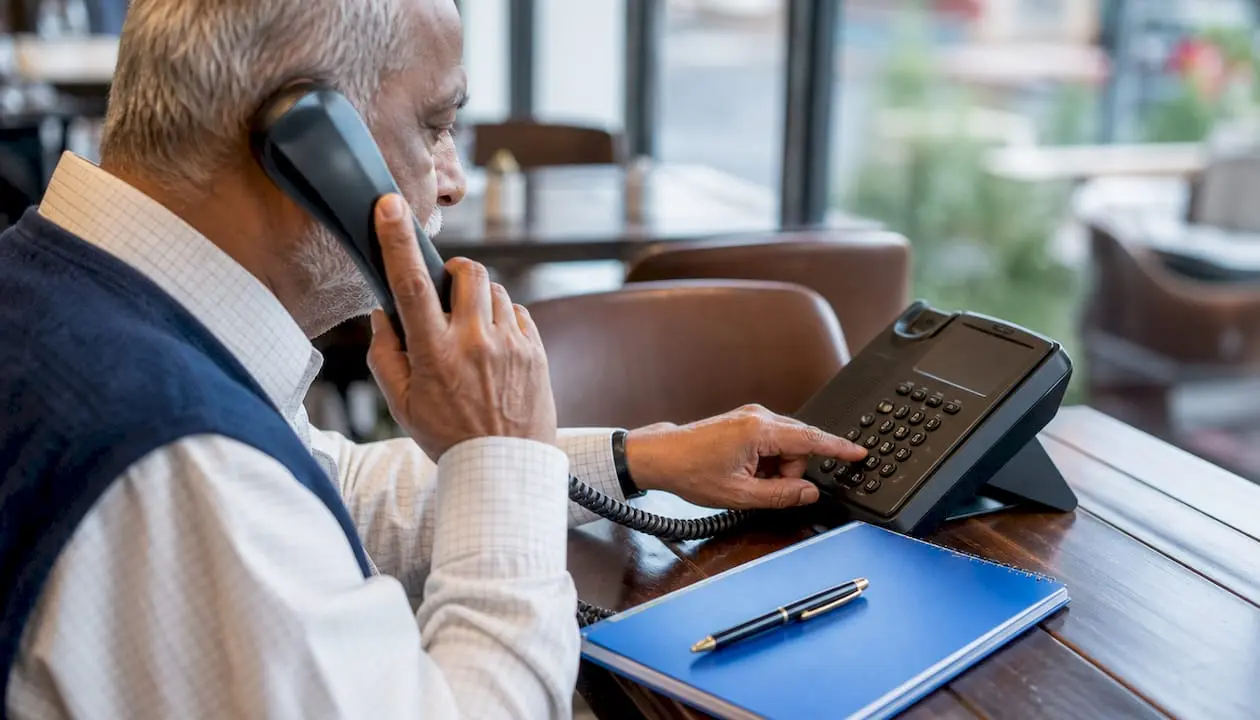
Some providers, including Virgin Media and certain VoIP systems, require you to manage redirection through an online portal rather than star codes. If you dial a star code and receive an error tone, check your provider’s account dashboard before assuming the feature is unavailable. Silent failures, where the code accepts without actually activating the forward, are the most common source of confusion.
Pro Tip: After activating any forward, call your own number from a different phone to confirm the divert is working. Never assume the confirmation tone is enough.
You can also manage call forwarding through your phone’s built-in settings menu. On Android, go to Phone > Settings > Calls > Call Forwarding. On iPhone, go to Settings > Phone > Call Forwarding. These menus communicate directly with your network and produce the same result as star codes.
What costs and risks come with number redirection?
Call forwarding is not always free, and the charges can catch users off guard. Forwarding calls from a landline to a mobile generally incurs per-minute charges, because the network treats the forwarded leg as a separate outbound call. If you leave unconditional forwarding active permanently without a call bundle that covers it, the costs accumulate quickly.
Key cost and risk factors to be aware of:
- Landline to mobile charges: The forwarding leg is billed at your provider’s standard landline-to-mobile rate unless your bundle includes it.
- 070 personal numbers: Numbers beginning with 070 are personal numbering services that can cost callers up to 50p per minute. They are distinct from standard mobile ranges (071–079) and are frequently used in scams.
- Premium rate abuse: Redirection is sometimes misused to forward callers to premium rate numbers without disclosure.
- Conditional vs. unconditional cost: Conditional forwarding, which only activates when you are busy or unreachable, generates far fewer forwarded minutes than unconditional forwarding and is therefore cheaper to run.
- VoIP forwarding: Many VoIP providers include forwarding in their monthly fee, making them a cost-effective option for businesses with high call volumes.
Ofcom warns consumers to be vigilant about transparency in pricing when calls are redirected. If a service forwards your call to a premium rate number without clearly disclosing the cost, you have grounds to complain about premium rate services directly to Ofcom. Always check the destination number before accepting a forwarded call from an unfamiliar service.
The 070 number range deserves particular attention. Many callers assume a 070 number is a standard mobile and dial it without checking. The cost difference is significant, and the range has a documented history of misuse. If you receive a callback request to a 070 number from an unknown source, treat it with caution.
How can businesses and individuals use number redirection effectively?
Number redirection becomes a genuine communication tool when it is set up with a clear plan rather than activated once and forgotten. The most effective users treat it as a dynamic setting that changes with their working patterns.
Practical use cases for businesses
Businesses benefit most from redirection in three scenarios. First, during office relocations, unconditional forwarding keeps the published number active while the physical line is being transferred. Second, for remote and hybrid teams, forwarding routes calls to whichever team member is available rather than leaving them to ring an empty desk. Third, for out-of-hours coverage, a “No Answer” forward to a call answering service means customers always reach a person rather than voicemail.
Failing to set a “not reachable” forward risks losing calls entirely during internet or hardware outages. For any business that relies on inbound calls, this is a continuity gap that costs real revenue. VoIP providers highlight this mode specifically because cloud-based phone systems are vulnerable to connectivity issues that a traditional landline would survive.
Best practices for managing redirection as a business:
- Review active forwards monthly and remove any that are no longer needed.
- Document which forwards are active and who is responsible for managing them.
- Use a call forwarding checklist to audit your setup before holidays or staff changes.
- Set conditional forwards rather than unconditional ones wherever possible to reduce costs.
- Test every forward after activation by calling your own number from an external line.
Practical use cases for individuals
For personal use, the most common application is forwarding a home landline to a mobile when you are away for an extended period. A “No Answer” forward to your mobile means you keep the landline number published without needing to be at home to answer it. Individuals who transfer their landline to VoIP gain the added benefit of managing all forwards through an app rather than dialling star codes each time.
Pro Tip: If you run a small business from home, set up a dedicated business number with Phonenumbers and forward it to your mobile. You keep your personal number private while projecting a professional image to customers.
Businesses that invest in a memorable number, such as a recognisable 01 or 02 landline, gain an additional advantage. The number becomes a brand asset that stays constant even as the underlying routing changes. Phonenumbers specialises in exactly this: providing UK 01, 02, and 07 numbers that you can route anywhere, without being tied to a specific location or exchange.
For businesses thinking about automating call handling, number redirection is the foundation layer. Automated systems, IVR menus, and AI call handlers all depend on a stable, routable number as their entry point.
Key takeaways
Number redirection is the most direct way to maintain call continuity across locations, devices, and working patterns without changing your published number.
| Point | Details |
|---|---|
| Four forwarding modes | Unconditional, busy, no answer, and not reachable each serve a distinct scenario. |
| UK star codes | Use 21 for unconditional, 61 for no answer, and 67 for busy line forwarding. |
| Cost awareness | Forwarding landline calls to mobiles incurs per-minute charges unless your bundle covers it. |
| 070 number risk | Numbers starting 070 can cost callers up to 50p per minute and are linked to scam activity. |
| Business continuity | Setting a “not reachable” forward prevents call loss during outages and is a non-negotiable for any business. |
My honest view on where number redirection goes wrong
I have watched businesses set up call forwarding once and never revisit it. Six months later, calls are still routing to a mobile number belonging to a former employee. That is not a hypothetical. It is the single most common redirection failure I see, and it is entirely avoidable with a monthly five-minute audit.
The other pattern that concerns me is the assumption that star codes work universally. They do not. If you are on a hosted VoIP system or a provider like Virgin Media, the portal is your control panel, not the dialler. Users who do not know this dial the code, hear nothing unusual, and believe the forward is active. It is not.
What I find genuinely exciting in 2026 is the convergence of number redirection with AI call handling. The redirection layer stays the same. What changes is what happens at the destination. A memorable 01 or 02 number from Phonenumbers, forwarded to an AI-assisted answering system, gives a sole trader the call handling capability of a mid-sized firm. The technology is accessible, and the cost is far lower than most people expect.
My advice is this: treat your phone number as a permanent asset and your routing as a flexible setting. The number is your brand. The forwarding is just logistics.
— Rob
Phonenumbers: memorable numbers with flexible call routing
A memorable phone number is worth nothing if calls do not reach you reliably. Phonenumbers provides UK 01, 02, and 07 numbers that you can route to any destination, whether that is a mobile, a VoIP system, or a call centre, without being tied to a specific location.
Browse the Phonenumbers database to find a number by sequence, area code, or town. Options like 0115 928 8888 and 0113 273 2222 are available to buy or rent, giving you a professional, recognisable number that works with any forwarding setup you choose. Your number stays constant. Your routing adapts to your business.
FAQ
What is the difference between number redirection and call forwarding?
Number redirection and call forwarding are the same feature described by different names. In UK telecom, the terms are used interchangeably alongside “call divert.”
Is number redirection free in the UK?
Activating number redirection is generally free, but forwarding calls from a landline to a mobile incurs per-minute charges unless your bundle covers it. VoIP providers often include forwarding at no extra cost.
How do I check if call forwarding is active on my phone?
Dial *#21# to check unconditional forwarding, *#61# for no answer, and *#67# for busy line. Your phone will display the destination number if a divert is currently set.
What are 070 numbers and why are they risky?
Numbers starting with 070 are personal numbering services that can cost callers up to 50p per minute. They are distinct from standard mobile ranges and are frequently associated with scam activity.
Can I use number redirection with a VoIP system?
Yes. VoIP systems support all standard forwarding modes and typically allow management through an online portal rather than star codes. This makes it straightforward to update routing without touching a physical handset.