TL;DR:
- Mobile numbers enable instant emergency response and richer communication methods for plumbers.
- They build customer trust through direct contact, personalization, and quick responsiveness.
- Mobile numbers outperform landlines in flexibility, customer perception, and response times for UK plumbing businesses.
There is a particular kind of panic that sets in when water is pouring through your kitchen ceiling and the plumber’s number rings out to an answering machine. It is one of the most common frustrations UK homeowners face, and it happens more than it should. Mobile numbers have changed that dynamic entirely. Today, a direct dial to a plumber’s mobile means faster triage, quicker quotes, and a genuine human at the other end when it matters most. This article explains exactly why reliable plumbers choose mobile contact, and what it means for you as a customer or a plumbing business owner.
Table of Contents
- Core reasons plumbers use mobile numbers
- How mobile numbers boost reliability and trust
- Mobile numbers vs traditional landlines: a comparison
- Special considerations: when mobiles aren’t enough
- A fresh perspective on plumber contact: what really matters in 2026
- Get the right business number for your plumbing service
- Frequently asked questions
Key Takeaways
| Point | Details |
|---|---|
| Speed matters | Plumbers with mobiles respond faster and win more emergency jobs. |
| Mobile equals trust | A direct mobile number feels approachable and gives customers confidence. |
| Versatility wins | Mobiles allow calls, texts, and even video for swift quotes and updates. |
| Landlines still have a role | Listing both a mobile and landline is smart for offices or larger teams. |
Core reasons plumbers use mobile numbers
With the stakes clear, let’s break down why mobile numbers have become essential for plumbers across the UK.
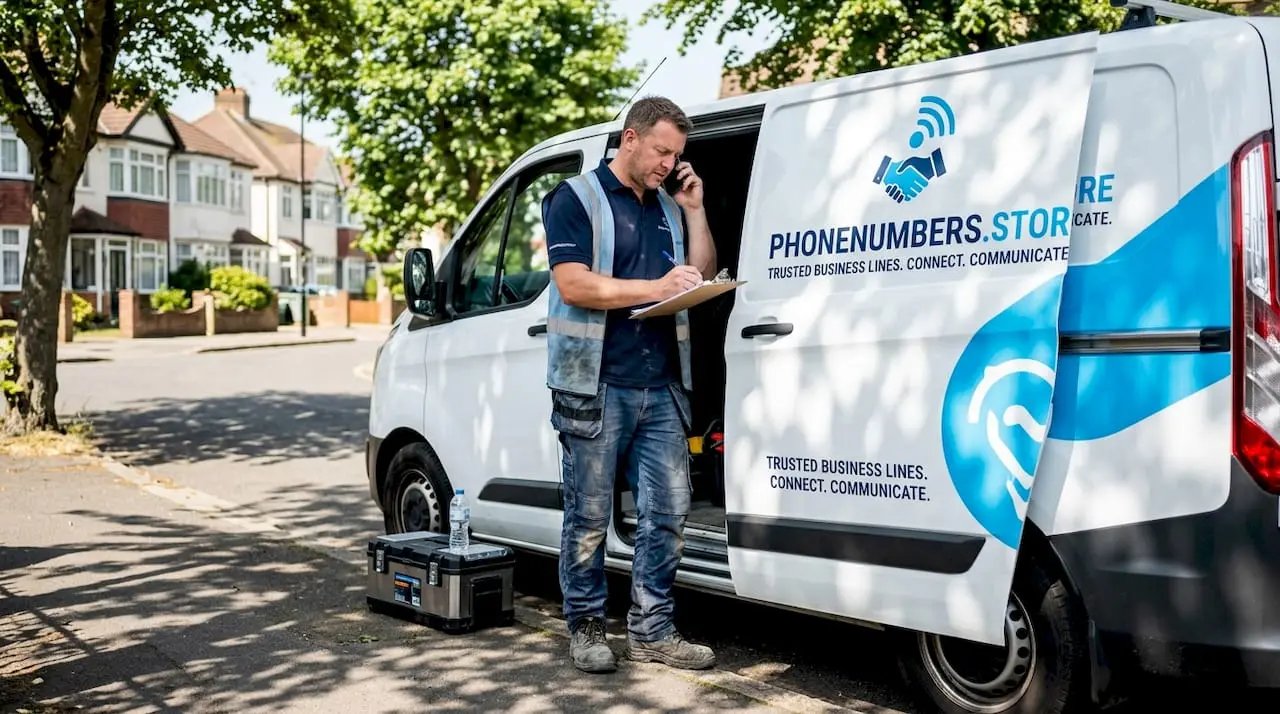
The most immediate reason is emergency response. When a boiler fails on a freezing January evening or a pipe bursts in a commercial kitchen, customers need answers within minutes, not hours. A mobile number means the plumber can receive a call, text, or WhatsApp message wherever they are, whether on a job in Nottingham or driving back from Leeds. There is no waiting for a landline to redirect, no voicemail box that gets checked once a day, and no receptionist taking a message.
Mobile numbers also support a far richer range of communication methods. Plumbers can now conduct WhatsApp video surveys for quick triage, video consultations, and follow-ups, which dramatically improves quoting accuracy and saves both parties a wasted visit. A customer in Bristol can film their faulty boiler flue, send the clip directly, and receive a rough estimate before the plumber even leaves their current job. That kind of efficiency was simply not possible with a traditional office line.
Businesses that have found consistent success with mobile numbers report that customers feel genuinely reassured by direct contact. It removes the impersonal layer of call routing and puts a real name and number in a customer’s hand.
Here are the key advantages at a glance:
- Instant contact without call queues or redirects
- Text and WhatsApp for photo/video sharing of jobs
- Out-of-hours availability for genuine emergencies
- Faster quoting through visual pre-assessment
- Greater job conversion from enquiry to confirmed booking
Pro Tip: Look for plumbers who advertise WhatsApp alongside their mobile number. This signals a willingness to triage your issue quickly and often means a same-day response, even for non-urgent jobs.
Selecting memorable phone numbers makes a significant difference too. A number that is easy to recall from a fridge magnet or a van signage will always outperform one buried in an online directory. For plumbing businesses, a number people can remember in a crisis is a direct revenue driver.
How mobile numbers boost reliability and trust
Building on the convenience factor, here’s why mobile numbers are crucial for trust and reliability, and why speed of contact has become a competitive advantage in the plumbing trade.
The plumbing market in the UK is highly fragmented, with thousands of sole traders and small firms competing for the same jobs. The plumber who answers first tends to win. First-response wins 78% of jobs according to data on response rates in local trades, which is a staggering figure when you think about it. If three plumbers are listed on a comparison site and you ring them all simultaneously, the first to pick up gets the booking almost four times out of five.
“The first plumber to respond wins 78% of jobs. Speed of answer is not just good service, it is a primary sales driver.”
Mobile numbers make that speed of response possible. A plumber on a job can glance at a text notification, reply in thirty seconds, and confirm availability while their colleague finishes the current installation. A landline sitting in an empty office cannot do any of that.
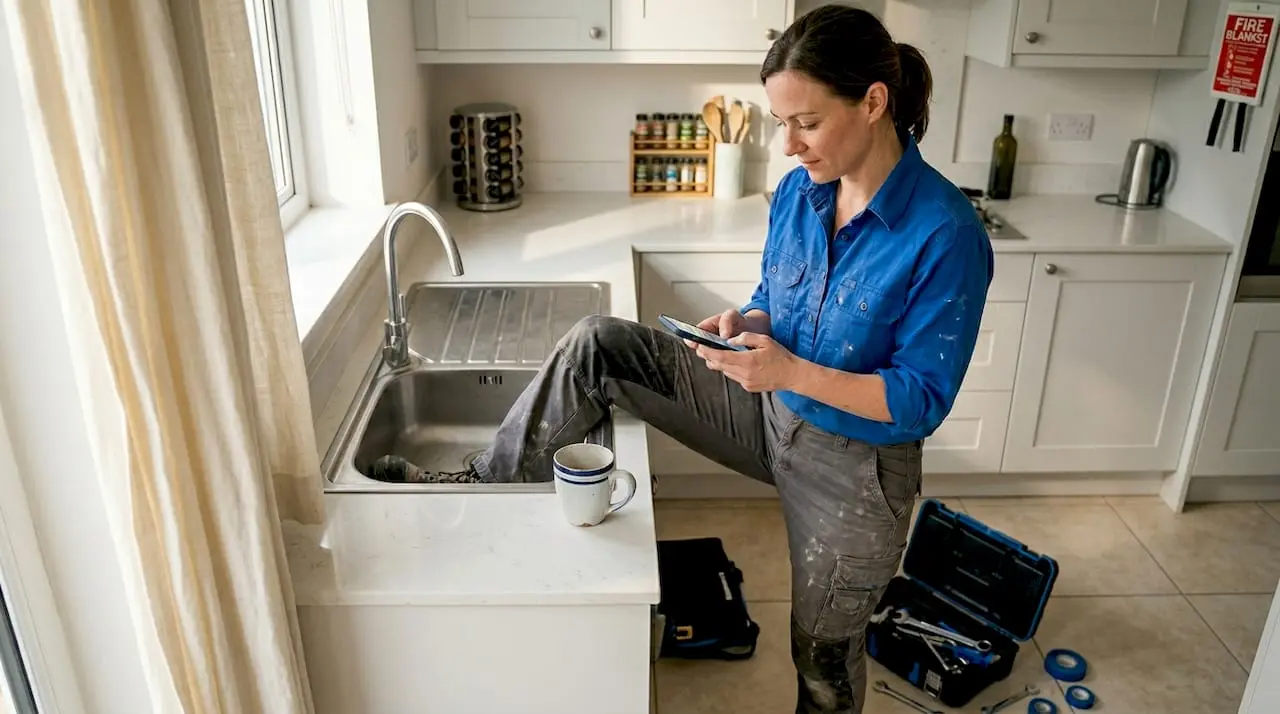
There is also a strong mobile numbers trust argument to consider. Customers associate mobile numbers with a real, accessible person. When a plumber lists a direct mobile, it signals that they are the owner or the lead engineer, not a faceless call centre. That personal connection matters enormously in a trade built on entry to someone’s home.
Mobile-optimised websites with click-to-call buttons are now considered essential for plumbing businesses, given that the vast majority of emergency searches happen on smartphones. A potential customer searching for “emergency plumber Manchester” at eleven at night will tap the first click-to-call number they find. If that number goes directly to a plumber’s mobile, the chance of converting that search into a booking is extremely high.
The trust signals extend beyond just picking up the phone. Regular, personal communication through the same mobile number builds familiarity. Customers who’ve had a reliable plumber for years often store that mobile directly. No business card needed, no trip to the search engine. That kind of embedded trust is extraordinarily valuable for repeat and referral business.
Key reasons mobile contact builds reliability:
- Direct line to a named individual, not a call queue
- Out-of-hours availability signals genuine commitment to service
- Click-to-call on mobile websites converts searches to bookings instantly
- Personal familiarity built over repeated contact via the same number
- Faster confirmation times, which reduces customer anxiety during emergencies
Mobile numbers vs traditional landlines: a comparison
For those comparing options, here is a clear breakdown between mobile numbers and traditional business landlines to help you understand which serves the modern plumbing business best.
| Feature | Mobile number | Traditional landline |
|---|---|---|
| Availability out of hours | Yes, wherever you are | Only if staffed or diverted |
| WhatsApp and text messaging | Yes | No |
| Photo/video communication | Yes | No |
| Click-to-call on mobile sites | Yes | Possible, less natural |
| Cost to set up | Low | Higher (line rental, hardware) |
| Flexibility for sole traders | Excellent | Limited |
| Scalability for larger teams | Moderate | Better with virtual systems |
| Customer perception | Personal and direct | Professional but distant |
| Portability (use anywhere in UK) | Yes | Traditionally area-specific |
The table tells a clear story. For the typical UK plumbing sole trader or small firm, a mobile number wins on almost every practical measure. The role of landlines in plumbing is not entirely gone, but it has narrowed considerably. Larger firms running an office with a reception function may still benefit from a landline presence, particularly for reassuring commercial clients or housing associations who prefer a fixed number in their supplier database.
The rise of mobile numbers in UK trades has been consistent and accelerating. What used to be a preference is now an expectation. Most homeowners, particularly those under fifty, will reach for WhatsApp or a direct text before they consider leaving a voicemail on a landline.
It is also worth noting that mobiles suit flexibility for independents, while virtual phone systems scale far more effectively for growing teams. This means the decision is not a permanent one. A sole trader can start with a single memorable mobile number and layer in virtual routing or additional lines as the business expands.
Scenarios where mobile numbers clearly outperform landlines:
- Emergency callouts where the customer needs an immediate answer
- Out-of-hours jobs such as weekend boiler breakdowns
- Remote quoting using video calls or WhatsApp photo surveys
- Sole traders who are the business, not just an employee of it
- New business enquiries arriving via Google or comparison websites at unpredictable times
Special considerations: when mobiles aren’t enough
However, even mobiles have limits, so let’s look at situations where something more is needed to keep your plumbing business running smoothly.
A single mobile number works brilliantly when things go well. But what happens when you are underground fixing a drain and your signal drops, or you are taking a rare day off? Missed calls during peak periods can cost jobs, and a customer who rings twice with no answer will often move on within minutes.
Here are practical steps to stay responsive as your firm grows:
- Set up a backup number that diverts to a trusted colleague or partner if your primary mobile is unavailable or out of signal.
- Use a virtual phone system such as a cloud-based platform that can route calls to multiple team members in sequence or simultaneously.
- List both a mobile and a landline on your website and Google Business Profile so customers feel they have options and see you as established.
- Enable voicemail-to-email so that any missed calls generate an instant notification and you can call back within minutes.
- Keep all business listings updated including Google, Checkatrade, TrustATrader, your website, and any printed materials, so customers always reach the right number.
This phone number checklist is a practical framework for ensuring nothing slips through. It is surprisingly easy for a plumber who changed their mobile two years ago to still have the old number listed on a third-party directory, leading to missed enquiries from customers who assume the business has closed.
Managing phone number visibility consistently across platforms is one of the highest-return, lowest-effort improvements a plumbing business can make. A few hours spent auditing your listings can translate into dozens of additional calls per month.
Pro Tip: Set a reminder every six months to search your own business name on Google and check that the number displayed is current and consistent. Inconsistent numbers confuse both customers and search engine algorithms.
Virtual systems also allow a plumbing business to present a single memorable number to the public while routing calls to whoever is available. This is particularly useful for firms with two or three engineers, where you want customers to dial one clear, consistent number regardless of who picks up. It projects a more polished image without the cost and inflexibility of a traditional phone system.
A fresh perspective on plumber contact: what really matters in 2026
After detailing all the practicalities, here is a broader view worth considering. The shift from landline to mobile is not simply a technology story. It is a human one.
When customers search for a plumber in a crisis, they are not just looking for a qualified engineer. They are looking for reassurance. They want someone who picks up, who sounds in control, who says “I can be there by two.” A mobile number is the mechanism for that moment, but the trust underneath it is what actually wins and keeps customers.
The old model, where a plumbing firm had an office number answered by a part-time receptionist who wrote your name in a diary, felt professional on the surface. But it introduced distance. The customer never quite knew who they were dealing with or whether the message would reach the right person. Today’s customers are less tolerant of that uncertainty. They have been trained by apps and next-day delivery to expect direct, rapid, personalised responses.
The rise of mobile numbers in business reflects something deeper than convenience. It reflects a demand for human accountability. When a plumber gives you their direct mobile, they are implicitly saying: this is me, I am responsible, you can reach me. That is a fundamentally different message from handing over a shared office extension.
The future will not reverse this trend. Smart plumbing businesses are already combining personal mobiles with intelligent routing technology, creating hybrid models where customers always feel they are reaching a person, not a system. The best operators are those who use technology to amplify human connection rather than replace it. A memorable mobile number, answered quickly and backed by strong communication habits, will always outperform a complex system that feels impersonal.
The uncomfortable truth is that many plumbers lose jobs not because of their skills, pricing, or availability, but because their contact strategy is fragmented and forgettable. Getting the number right is the first and often most impactful step.
Get the right business number for your plumbing service
For plumbing businesses wanting to upgrade their contact strategy, your phone number is far more than a way to receive calls. It is the first impression, the bookmark in a customer’s memory, and the fastest route from emergency to booking.
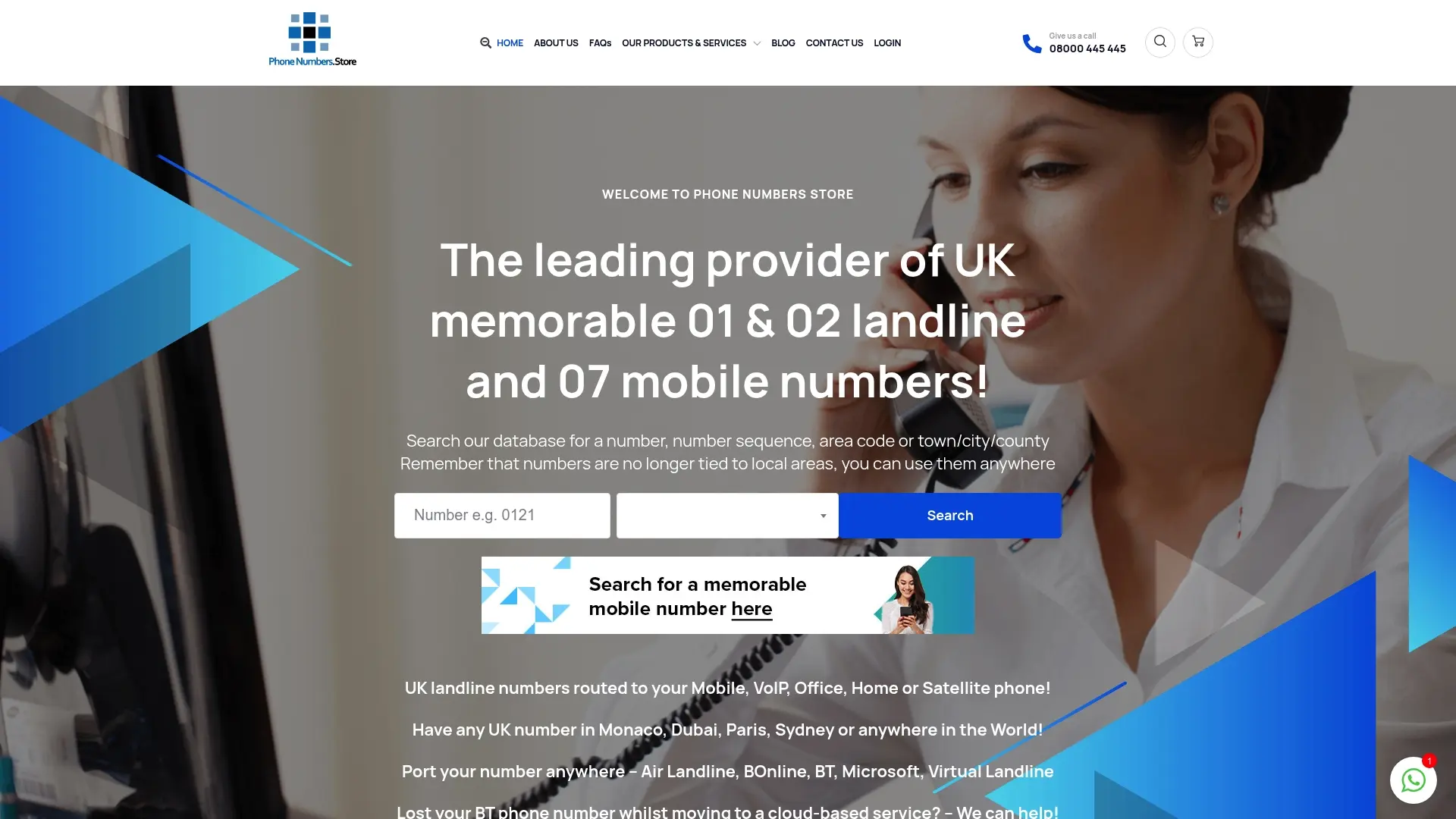
At phonenumbers.store, we specialise in memorable UK phone numbers, including 07 mobile numbers and 01/02 landlines, that are designed to stick in customers’ minds. Numbers like 0113 255 0000 or 0115 928 8888 are the kind that appear on a van and get called directly from memory, without a Google search. Crucially, numbers are no longer tied to a local area, so you can use any number anywhere in the UK. Setup is fast, and the long-term advantage in brand recognition and customer recall is considerable for any plumbing business looking to stand out.
Frequently asked questions
Can a plumber’s mobile number be trusted as much as a local landline?
Yes. Mobile numbers improve direct contact and are standard practice for reputable, established plumbers. Most customers now actively prefer them, and emergency searches on phones make a direct mobile the most practical and trusted option.
Do mobile numbers help plumbers respond more quickly?
Absolutely. Direct mobile contact enables faster triage, quicker quoting, and far fewer delays during emergencies. WhatsApp communication for triage and video surveys removes unnecessary site visits and speeds up the entire process.
When should a plumbing business also list a landline?
Listing both a mobile and a landline is sensible for firms with an office presence or larger teams. For sole traders vs growing firms, mobiles work best for independents while virtual systems make sense as you scale.
Do most UK customers expect to see a mobile number for a plumber?
Yes. Mobile numbers are now the standard expectation. Given that first-response wins 78% of jobs, customers are actively choosing the plumber who is most immediately reachable, which almost always means a direct mobile.