
Every UK taxi firm knows how important that first phone call is when a customer wants a quick ride or needs reassurance. Choosing a flexible business number is now about more than just picking digits—it is a chance to shape your reputation in Manchester, London, or nationwide. With strategic branding through memorable, portable numbers that break free from strict geographic ties, you can reach more customers, appear both local and national, and make your firm easier to remember.
Table of Contents
- What Flexible Business Numbers Mean Today
- Landline Versus Mobile Numbers: Key Differences
- Benefits for Local and National Branding
- Legal and Regulatory Factors for Number Use
- Common Pitfalls in Choosing Business Numbers
Key Takeaways
| Point | Details |
|---|---|
| Flexible Business Numbers Enhance Branding | UK taxi firms can use memorable numbers across multiple locations, improving brand consistency and reach. |
| Strategic Number Selection is Crucial | Prioritising memorability over geographic specificity boosts customer recall and enhances marketing efforts. |
| Balance Between Landline and Mobile | Employing both landline and mobile numbers provides stability and flexibility, catering to diverse customer preferences. |
| Regulatory Compliance is Essential | Adhering to Ofcom regulations and maintaining transparency builds customer trust and avoids legal issues. |
What Flexible Business Numbers Mean Today
Flexible business numbers represent a shift in how taxi firms approach communication strategy. Rather than being locked into geographic constraints, your number becomes a tool for strategic branding and market expansion. Flexible phone numbering allows UK taxi firms to select memorable and versatile numbers that work across multiple locations and channels.
Traditionally, a London taxi firm needed a 020 number to appear local. Today, that rule no longer applies. Your business can use any available number format regardless of where you operate, opening doors to national reach whilst maintaining a professional appearance in specific regions.
This flexibility delivers tangible advantages:
- Geographic freedom: Operate across multiple cities without needing separate lines for each location
- Brand consistency: Use the same memorable number across all marketing channels and locations
- Professional image: Memorable numbers project stability and established reputation
- Cost efficiency: Consolidate multiple phone lines into a single, strategic number
- Call routing flexibility: Direct calls to drivers, dispatch centres, or booking staff seamlessly
Your phone number is often a customer’s first contact point—make it count with a number that reflects your brand’s professionalism and reach.
The shift matters because modern customers don’t assume numbers tie to locations anymore. A firm in Manchester can use a London number, and customers won’t question it. This eliminates the pressure to maintain separate lines across different regions, reducing overhead whilst expanding perceived reach.
What changes for your operation? You gain control over how customers perceive your business geographically. A memorable number becomes marketing collateral on every taxi, advert, and booking confirmation. It becomes easier to remember, easier to dial, and easier to market.
Pro tip: When selecting a flexible business number, prioritise memorability over geographic specificity—customers remember catchy sequences far more readily than random digits, and modern numbering means they won’t assume your location from your number anyway.
Landline Versus Mobile Numbers: Key Differences
Choosing between a landline and mobile number fundamentally shapes how customers perceive and reach your taxi firm. Both offer distinct advantages, and the right choice depends on your operational structure and growth plans.
Traditional landlines anchor your business to a physical address. This creates perception of stability and establishes a permanent base. However, landline numbers usually tie a business to a physical location, which may limit branding and operational reach for firms operating across multiple areas.
Mobile numbers enhance accessibility and brand presence by enabling communication on the go. They suit the dynamic nature of taxi services perfectly, allowing dispatch teams to receive calls anywhere, anytime. Mobile numbers project a modern, responsive image.
Here’s how they compare:
- Landlines: Fixed location perception, professional establishment signal, traditional customer expectation
- Mobile numbers: Geographic freedom, modern flexibility, operational responsiveness, device portability
- Cost: Landlines typically require fixed infrastructure; mobiles offer simpler setup
- Perception: Landlines suggest permanence; mobiles suggest agility and availability
- Call routing: Mobiles route to individual devices; landlines require physical hardware
The best choice isn’t about which number type is superior—it’s about which aligns with how your firm actually operates and how you want customers to perceive you.
Many successful taxi firms use both strategically. A memorable landline number for brand recognition and advertising, paired with mobile numbers for dispatch operations. This hybrid approach captures the stability of landlines with the flexibility of mobiles.

Consider your customer base. Older customers may prefer calling a landline number they can trust. Younger customers expect quick responses on mobile-reachable lines. A flexible numbering strategy addresses both.
Geographic expansion also matters. If you’re expanding beyond your home city, mobile numbers eliminate the need for separate local lines in each region. One versatile number works everywhere.
Pro tip: Select a landline number for your main marketing presence and customer-facing branding, then back it up with mobile numbers for dispatch and operational flexibility—this gives customers the stability signal they want whilst your team enjoys the responsiveness they need.
Here’s a comparison of strategic uses for flexible, landline, and mobile business numbers in the UK taxi sector:
| Number Type | Best for Marketing | Operational Role | Customer Impact |
|---|---|---|---|
| Flexible business | Consistent national ads | Single point for all regions | Easy to recall and dial |
| Geographic landline | Local print and trust | Main inbound office line | Elderly or traditional callers |
| Mobile | Digital/social outreach | On-the-go dispatch communications | Perceived fast response times |
Benefits for Local and National Branding
Your phone number is one of your most visible brand assets. A flexible numbering strategy lets you build strong local presence whilst reaching customers nationally—without compromise.
Local customers want to recognise themselves in your brand. If you operate in Manchester, a Manchester-based number signals local roots and community investment. This builds trust. People prefer supporting businesses they perceive as local, even if they operate across multiple regions.
Flexible numbering allows UK taxi firms to overcome geographic limitations, supporting both local presence and national reach simultaneously. You can maintain local area codes for specific regions whilst using national numbers for broader marketing campaigns.
This dual approach delivers concrete advantages:
- Local trust: Geographic numbers show commitment to specific communities
- National reach: Non-geographic numbers expand your apparent market coverage
- Brand consistency: One memorable number works across all regions and channels
- Marketing flexibility: Different campaigns can highlight different number formats
- Customer choice: Offer local numbers to regional customers, national numbers to others
A single memorable number that works everywhere is more powerful than managing separate numbers for each city—it unifies your brand identity across multiple service areas.
Consider a practical example. You operate taxis in Leeds, Manchester, and Birmingham. Rather than juggling three separate numbers, you select one memorable sequence that works nationally. Your Leeds depot answers the same number as your Birmingham team.
On your marketing materials, you emphasise the local number if advertising in Leeds. The same underlying number system keeps operations unified. Customers see consistency. Your team avoids confusion from multiple contact points.
National branding becomes easier too. When you expand to new cities, you don’t need new numbers. Your existing memorable number already represents your brand across the country. This saves thousands in rebranding costs and marketing updates.
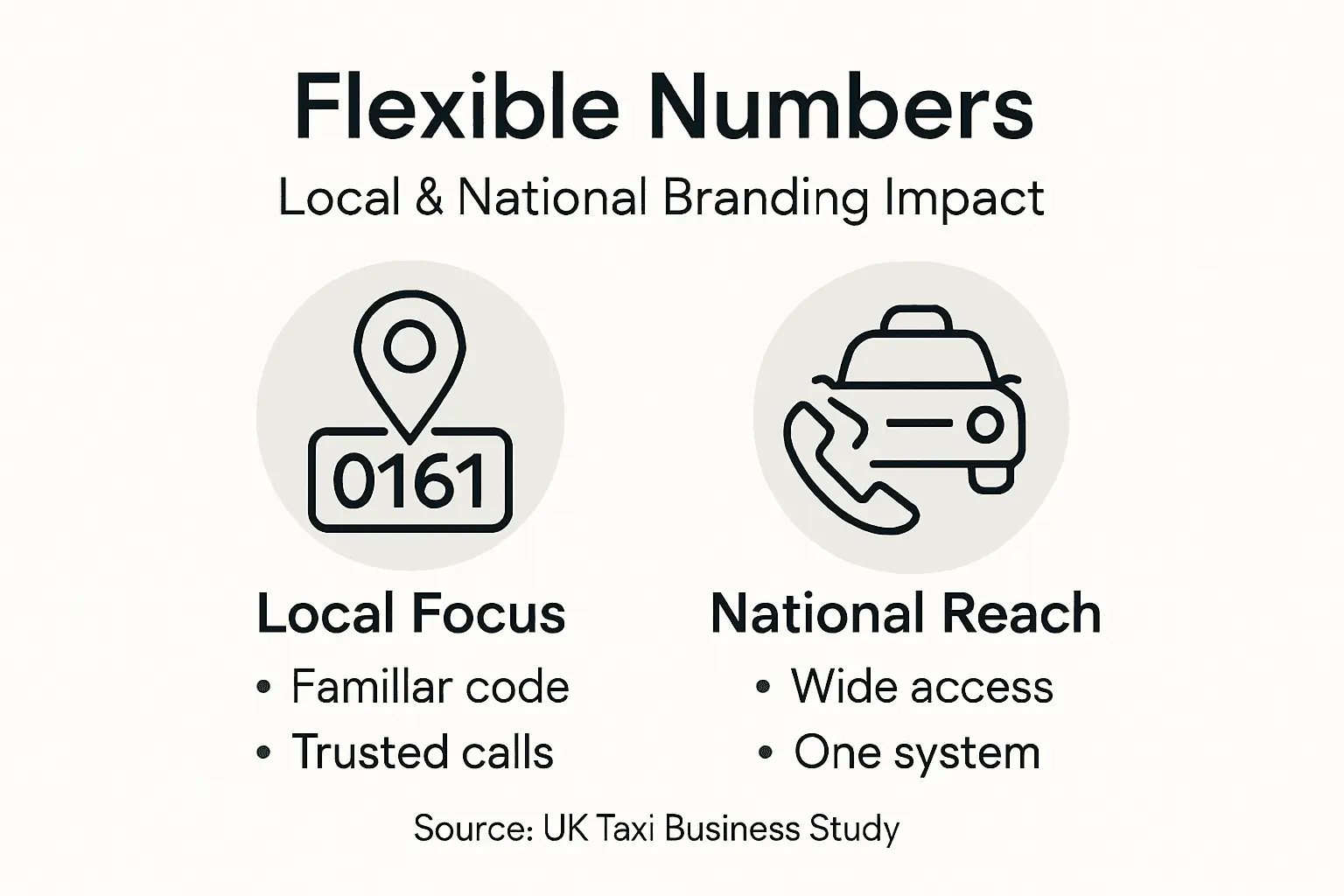
Flexible numbering also simplifies your call routing. All calls go to the same system regardless of which number customers dial. Dispatch teams manage one queue, not multiple lines. Efficiency improves.
Pro tip: Use a memorable non-geographic number for national marketing campaigns and branded materials, whilst keeping local area codes available for customers who specifically search for their city’s numbers—this captures both trust signals simultaneously.
Legal and Regulatory Factors for Number Use
Using business phone numbers in the UK taxi industry isn’t just about choosing a memorable sequence. You operate within a regulated framework that governs how numbers are allocated, managed, and used. Understanding these requirements protects your business from penalties and builds customer trust.
Ofcom, the UK communications regulator, oversees all telephone number allocation and usage. They set strict rules about number portability, call charging transparency, and consumer protection. Your flexible numbering strategy must comply with these frameworks to avoid regulatory issues.
UK taxi firms using business mobile numbers must adhere to communication regulations including data protection laws and Ofcom rules to ensure compliance and avoid legal issues. These aren’t optional considerations—they’re foundational to legitimate operations.
Key regulatory areas affecting your number use:
- Data protection: Customer phone data must follow GDPR and UK Data Protection Act requirements
- Call charges: You must display tariffs clearly and comply with Ofcom transparency rules
- Number portability: Customers and regulators expect numbers to move between providers if needed
- Consumer rights: Fair billing practices and dispute resolution procedures are mandatory
- Licensing compliance: Your business communications must reflect your taxi licensing status
Regulatory compliance isn’t bureaucracy—it’s the foundation that allows customers to trust your business and protects you from costly penalties.
Taxi licensing adds another layer. Your local licensing authority expects your communications to reflect transparency and accountability. Using obscured numbers, premium-rate lines, or hidden call charges damages your credibility and can trigger regulatory scrutiny.
Number portability matters practically too. If you switch providers, your chosen number should move with you. Ofcom rules require this flexibility, which is why selecting numbers from compliant providers matters. Not all number services offer true portability.
Hidden costs create real problems. If your chosen number charges customers premium rates without clear disclosure, you’ll face complaints and potential regulatory action. Always verify call charge structures upfront with your provider.
Transparency builds both compliance and customer loyalty. Display your phone charges clearly on your website and booking platforms. Make it obvious whether customers pay standard rates or premium charges. This single step eliminates misunderstandings and regulatory risk.
Pro tip: Before selecting a business number, confirm with your provider that it complies with Ofcom regulations, supports full portability, and involves no hidden charges—request written confirmation rather than relying on verbal assurances.
Below is a summary of major UK regulatory considerations when choosing a business number for your taxi firm:
| Requirement | Why It Matters | Risk of Non-Compliance |
|---|---|---|
| Ofcom compliance | Prevents legal disputes | Fines, number loss |
| Call charge clarity | Ensures customer confidence | Lost trust, regulatory penalties |
| Data protection | Safeguards customer information | Claims under GDPR/UK DPA |
| Portability | Allows provider switching | Being locked to one supplier |
Common Pitfalls in Choosing Business Numbers
Many taxi firm owners rush the number selection process, only to regret it months later. Avoiding common mistakes saves money, protects your reputation, and keeps operations running smoothly.
The biggest pitfall is choosing numbers nobody remembers. A complex sequence like 0121 447 832 946 looks professional but disappears from customers’ minds immediately. What happens when a business uses a forgettable number directly impacts your marketing effectiveness and customer retention in a competitive market.
Cost blindness creates another major problem. Many taxi firms select numbers without fully understanding tariff structures and hidden expenses. Taxi firms often face pitfalls such as choosing inappropriate landline versus mobile plans and underestimating the total cost of ownership, which escalates operational costs over time.
Common mistakes taxi firms make:
- Forgettable sequences: Numbers customers can’t recall cost you bookings and marketing impact
- Hidden charges: Premium-rate lines or undisclosed tariffs damage customer trust instantly
- Regulatory non-compliance: Choosing numbers that breach GDPR or Ofcom rules creates legal exposure
- Poor brand fit: Numbers that don’t reflect your business image weaken branding efforts
- Ignoring portability: Selecting numbers you can’t move between providers locks you in permanently
- VAT miscalculation: Failing to account for tax changes leaves your budget inadequate
Rushing the number selection process costs far more than taking time to research your options properly.
Another widespread error: selecting numbers without checking whether they’re truly portable. Some providers offer cheap numbers that can’t move if you switch suppliers. You become trapped, paying whatever rates they charge or starting from scratch with new numbers.
Brand misalignment hurts too. Your number should feel right for your business. A 118 line screams “directory service.” A complicated geographic code looks impersonal. A memorable sequence feels professional and memorable.
Transparency failures damage relationships. If customers discover surprise charges after calling, they’ll switch to competitors. Being upfront about costs from the start builds loyalty and eliminates complaints.
Tariff changes catch many firms off guard. Providers adjust pricing regularly, and some firms don’t account for VAT increases or inflation adjustments. Build flexibility into your financial planning.
Pro tip: Request a written cost breakdown from your provider that includes all base charges, per-minute costs, VAT, and any contract terms before committing—compare at least three providers to identify hidden costs others might miss.
Unlock Flexible UK Business Numbers Tailored for Your Taxi Firm
Navigating the complexities of flexible business numbers is key to modernising your taxi firm’s communication strategy. If you are looking to break free from geographic constraints while maintaining a professional brand, you need a number that is memorable, versatile and compliant. Avoid pitfalls like unmemorable sequences, hidden costs and regulatory risks by choosing numbers designed specifically for UK taxi firms.
Discover the difference with PhoneNumbers.store, the leading provider of UK 01 & 02 landline and 07 mobile numbers tailored to your needs. Search our extensive database by number, sequence, or area code and find the perfect flexible number that gives you:
- National reach without losing local trust
- Cost-effective, portable and compliant solutions
- Easy call routing and customer-friendly branding
Take control of your business presence today by exploring our unique selection at PhoneNumbers.store. Don’t settle for numbers that limit your brand growth. Act now to secure a memorable number that works wherever your taxis operate and make every call count.
Frequently Asked Questions
What are flexible business numbers for taxi firms?
Flexible business numbers allow taxi firms to use memorable and versatile contact numbers that are not restricted by geographic locations. This helps in maintaining a consistent brand presence across multiple areas.
How can flexible numbers benefit my taxi business?
Flexible numbers provide geographic freedom, brand consistency, a professional image, cost efficiency, and seamless call routing, enhancing customer perception and operational effectiveness.
How do landline numbers differ from mobile numbers for taxi operations?
Landline numbers suggest stability and a fixed location, while mobile numbers offer geographic freedom and operational flexibility. Choosing the right type depends on your business model and customer expectations.
What should I consider when selecting a business phone number?
When selecting a business phone number, prioritise memorability, verify compliance with regulations, ensure understanding of costs, and check for number portability to avoid hidden fees and issues in the future.