
The two realistic routes are taking a new virtual number, live the same day, or porting your existing number to a new provider, which typically takes 5–10 working days. Most sole traders and SMEs go for a new number when branding matters more than continuity. Setup and porting are often advertised as free, but hosting and call minutes usually carry a monthly cost.
TL;DR:
- Porting a UK business number generally takes five to ten working days, during which most providers allow simultaneous use of both old and new numbers.
- Choosing to buy a new number is faster and more cost-effective for launching or rebranding when brand recognition of the current number is not established.
- Getting a memorable new number involves searching for patterns or area codes, checking for waived setup fees, and testing call routing from multiple networks.
- Free porting and activation generally cover the transfer but do not include ongoing hosting, call minutes beyond bundles, or premium pattern costs.
- Existing contracts often remain binding after porting, so it is essential to review notice periods and potential early termination fees before switching.
Table of Contents
- Should you buy a new number or port your existing one?
- How do you get a memorable business number with minimal cost?
- What’s the porting process and how long does it take?
- How do you set up call routing so nothing gets missed?
- What does “free” actually cover, and where do the charges appear?
- Tools that make the switch painless
- Updating customers and public listings after a number change
- Limitations and restrictions on free number changes
- Contracts and existing agreements when changing numbers for free
- Author’s take: the pragmatic choice for small businesses
- Search or reserve your number today
- Sources
- FAQ
Should you buy a new number or port your existing one?
The choice comes down to one question: does your existing number already carry brand recognition, or are you starting fresh?
If customers already dial a number they associate with you, a taxi firm with years of repeat bookings, say, porting protects that history. You keep the digits, switch the provider underneath, and nobody notices the change. If you’re launching, rebranding, or simply stuck with a forgettable number, buying a new memorable one and going live the same day is faster and usually cheaper upfront.
Number type matters as much as the route you choose. Ofcom guidance and standard industry practice point to a fairly simple split:
- 01/02 geographic numbers signal local presence and trust, useful for tradespeople and shops tied to a town or region.
- 03 national numbers give a consistent presence across the UK at standard call rates, good for businesses that no longer serve one postcode.
- 0800 freephone numbers remove the cost barrier for callers, which can lift enquiry volume, though hosting tends to cost more.
- 07 mobile numbers suit businesses that operate on the move, such as taxi firms or trades without a fixed office.
Speed wins when you need something live before a launch date or ad campaign. Continuity wins when your number is already printed on vans, invoices, and years of Google reviews. Read more on choosing between local, national or freephone numbers before committing either way.
How do you get a memorable business number with minimal cost?
Getting a new number live rarely takes more than an afternoon if you approach it in order, and practical business tools can help streamline the setup process as discussed on WasherAuthority.
- Search a numbers database by pattern or area code. Look for repeated digits, sequential runs, or a code tied to your town, patterns customers actually remember are worth more than a random string (memorable number design tips).
- Check for waived setup fees. Many providers offer free activation on new numbers, though verification (proof of business identity) is usually required before the number goes live (provider activation practice).
- Reserve the number if you’re not ready to activate immediately. A short hold, often around 30 days, stops someone else taking it while you sort routing.
- Configure routing to your existing mobile or a VoIP app, then run test calls from at least two different networks.
- Run the checklist before you publicise it: test inbound calls, confirm voicemail picks up correctly, and update your Google Business Profile and any printed materials.
Pro Tip: Pick a number you can say out loud in one breath. Repeated digits or a rhythm that fits a radio advert or van sign will stick in a customer’s memory far longer than a random sequence.
Skipping the test-call step is the most common mistake. A number that looks right on screen can still misroute if the forwarding rule was set up against the wrong extension.
What’s the porting process and how long does it take?
Porting keeps your existing digits but moves them to a new provider, and it runs on a fairly fixed timeline. Your new provider will ask for a Letter of Authority (LOA), the business equivalent of a PAC code, confirming you’re authorised to move that number. You submit it, and the porting request goes to your current provider for release.
Porting a UK business number to a new virtual provider typically takes 5–10 working days, and most providers let you run the old number alongside the new one during the switch.
That parallel-running option matters more than people expect. Rather than a hard cutover where the old line goes dead the moment the new one activates, you can:
- Keep the old service active until the port confirms.
- Choose a quiet trading window for the actual cutover, not a Monday morning.
- Notify key suppliers, your bank, and regular customers ahead of the switch.
- Forward the old number to the new one for a short overlap period as a safety net.
Full step-by-step detail on LOA submission and typical delays sits in the porting guide for UK businesses.
How do you set up call routing so nothing gets missed?
Once the number is live or ported, routing decides whether calls actually reach someone. You’ve got three broad options, and most small businesses land on one of the first two:
- Forward to a mobile SIM. Simple, works anywhere, but pay-as-you-go forwarding minutes can add up if call volume is high.
- Hosted VoIP softphone. Answer from a laptop or app, usually bundled with a minute allowance, better for teams of two or more.
- Hosted PBX with time-based rules. Routes calls differently depending on time of day, useful if you want out-of-hours calls going to voicemail or an answering service.
SIM pairing with a bundle tends to work out cheaper than pure pay-as-you-go forwarding once you’re past a few dozen calls a month, worth comparing against your expected volume before committing.
Pro Tip: Test from three different networks (your own mobile, a landline, and a friend’s phone on a different carrier), not just your own handset. Routing faults often only show up on networks you haven’t personally tested.
Log the test date, the number called from, and the outcome. If something breaks later, you’ll know whether it’s a new fault or one that was always there.
What does “free” actually cover, and where do the charges appear?
“Free” in provider marketing usually means no setup fee and no porting fee, not zero ongoing cost. It’s worth knowing which is which before you commit to a number.
Commonly free:
- Number porting itself (the transfer process).
- Instant activation promotions on new numbers.
- The initial number search and reservation on most databases.
Commonly charged:
- Monthly hosting for the number to stay active.
- Call-forwarding minutes once you exceed a bundled allowance.
- Premium or highly memorable patterns, easy-to-remember sequences are in demand and priced accordingly.
It’s always worth asking a provider directly whether a first-month hosting discount is available, some will waive it if you ask before signing up rather than after. A genuinely rare pattern, all sevens, a mirrored sequence, can also take longer to secure and cost more than a standard allocation, so build in extra time if you’ve set your heart on one exact combination.
Tools that make the switch painless
Phonenumbers runs a searchable database covering 01, 02, 07, 03 and 08 ranges, so you can filter by area code, sequence, or pattern rather than scrolling through random allocations. Numbers are no longer tied to their original local area, so a Manchester 0161 number works perfectly well for a business trading nationally.
For businesses porting an existing number, the porting basics guide and the carrier-switching walkthrough cover the LOA steps and realistic cutover timing in more depth than a quick summary can. Once a number is secured, whether new or ported, it pairs with hosted voice services or a SIM, so the routing choices covered earlier aren’t theoretical: they map directly onto real setup options.
Updating customers and public listings after a number change
The number change itself is the easy part. Losing calls because customers still see the old number is the actual risk, and it’s avoidable with a bit of sequencing.
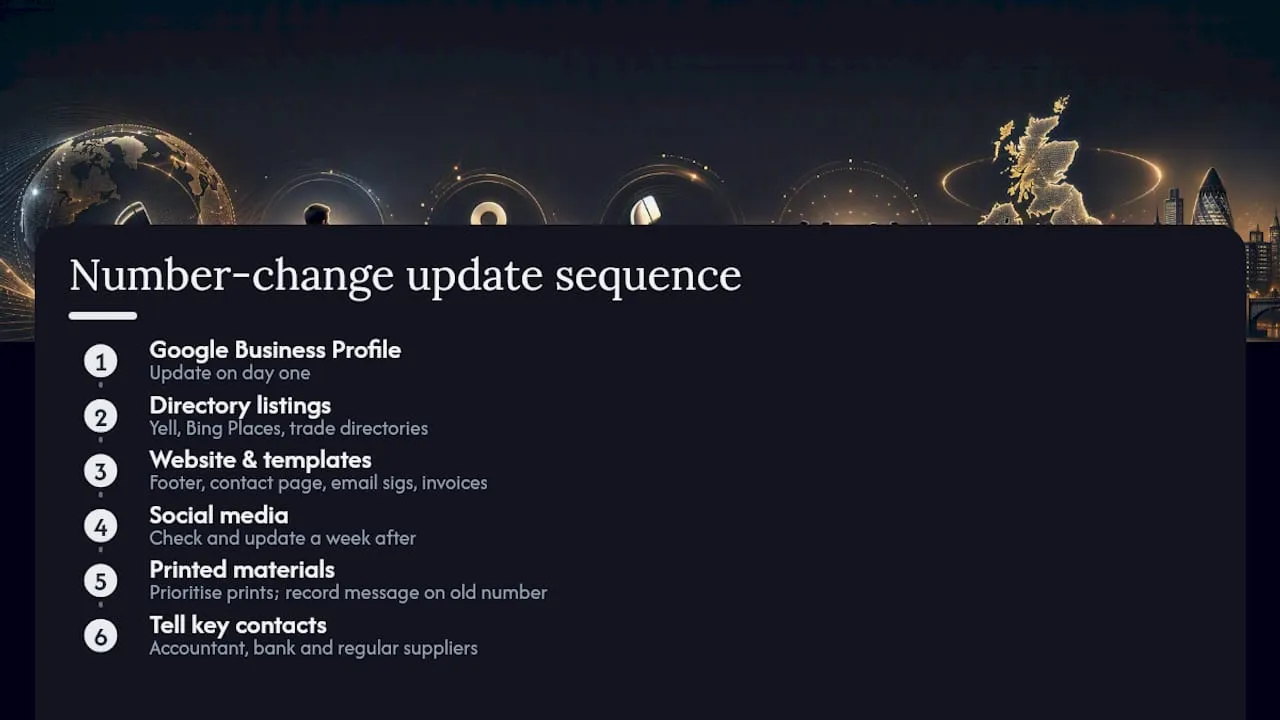
Start with Google Business Profile the moment the new number is live, industry guidance is consistent that this should happen on day one, since delayed updates mean customers searching for you dial a dead or wrong line (listings update guidance). After that, work through directory listings (Yell, Bing Places, any trade-specific directories you’re listed on), your website footer and contact page, email signatures, and invoice templates.
Physical materials take longer to update, so prioritise anything printed in bulk: van signage, business cards, and flyers. If reprinting isn’t immediate, a simple recorded message on the old number (“this number has changed, please call…”) for the overlap period catches anyone still dialling the old digits.
Social media profiles are easy to forget but matter just as much, customers increasingly find a phone number via a business’s Facebook or Instagram bio rather than a Google search. Set a reminder to check these a week after the change, since the first update often misses one or two platforms.
Finally, tell your accountant, bank, and any suppliers who call you regularly. It’s a short list, but missing it means chasing paperwork later when a supplier can’t reach you to confirm an order.
Limitations and restrictions on free number changes
Free porting and free activation are real offers, but they come with conditions most marketing pages don’t spell out clearly.
Verification is the first hurdle. Providers need proof you’re authorised to use a business number, which usually means a company registration check or a signed authority document. This isn’t a formality you can skip to save time, and it can add a day or two if your paperwork isn’t ready.
Some providers cap what counts as “free” by number type. A standard 01/02 or 07 number is more likely to have genuinely free porting than an 0800 freephone number, which carries higher hosting costs the provider has to recoup somewhere. Highly memorable patterns, sequential digits, repeated numbers, can also sit outside standard free offers, priced as premium allocations regardless of whether the base porting fee is waived.
There’s also a limit on how many free promotional activations a single provider will run per account, useful to know if you’re managing numbers for multiple linked businesses rather than one. And free setup rarely extends to hardware: if you want a physical VoIP handset rather than a softphone app, that’s typically a separate one-off charge on top of the number itself.
None of this makes “free” misleading exactly, it just means free covers the transaction, not everything wrapped around it.
Contracts and existing agreements when changing numbers for free
Changing your number doesn’t automatically end whatever contract you signed with your current provider, and this catches out more businesses than porting delays do.
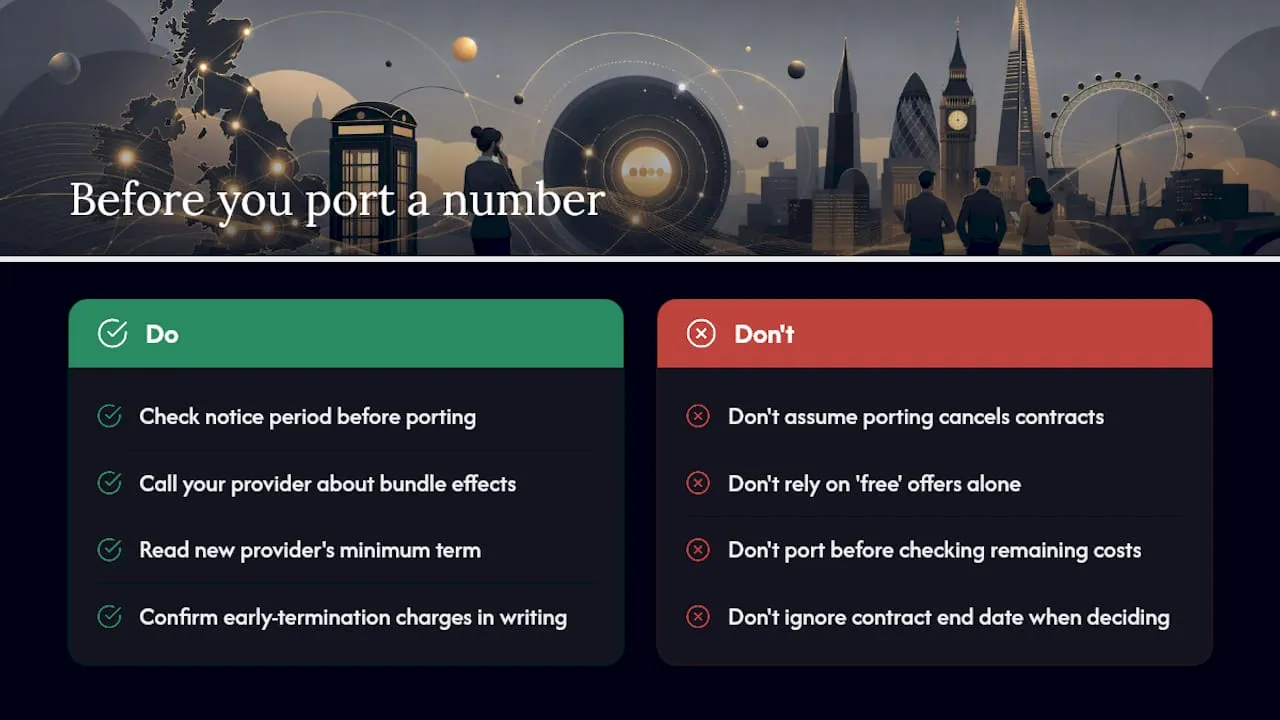
If you’re on a fixed-term line rental or minimum-term contract with your existing telecoms provider, porting the number away doesn’t cancel that agreement. You may still owe the remaining contract value even after the number has moved, so check your notice period before you start the port, not after. Early termination charges are common on business landline and mobile contracts, and providers rarely waive them just because you’re switching for branding reasons.
The same applies in reverse: taking on a new number under a “free” promotional deal often means signing a new minimum term with the new provider, typically 12 months on hosted voice or SIM plans. Read what happens if you cancel early, some providers charge the difference between the promotional rate and the standard rate for months already used.
If your current number is tied into a bundled package (broadband and landline together, for instance), separating it out to port elsewhere can sometimes affect pricing on the rest of that bundle. It’s worth a quick call to your existing provider to ask directly rather than assuming the rest of your service stays unaffected.
None of this should stop you switching. It just means the actual decision point is your existing contract’s end date and notice period, not the promotional “free” offer on the new number.
Author’s take: the pragmatic choice for small businesses
For most sole traders and small teams, a new memorable number beats porting, unless your existing digits are already doing real branding work through years of repeat custom. Speed and a number you can actually say out loud on a radio advert usually matter more than continuity.
The one mistake to avoid: never cancel your old service before a port fully completes. Run both in parallel until you’ve confirmed the new number is taking calls properly.
— Rob
Search or reserve your number today
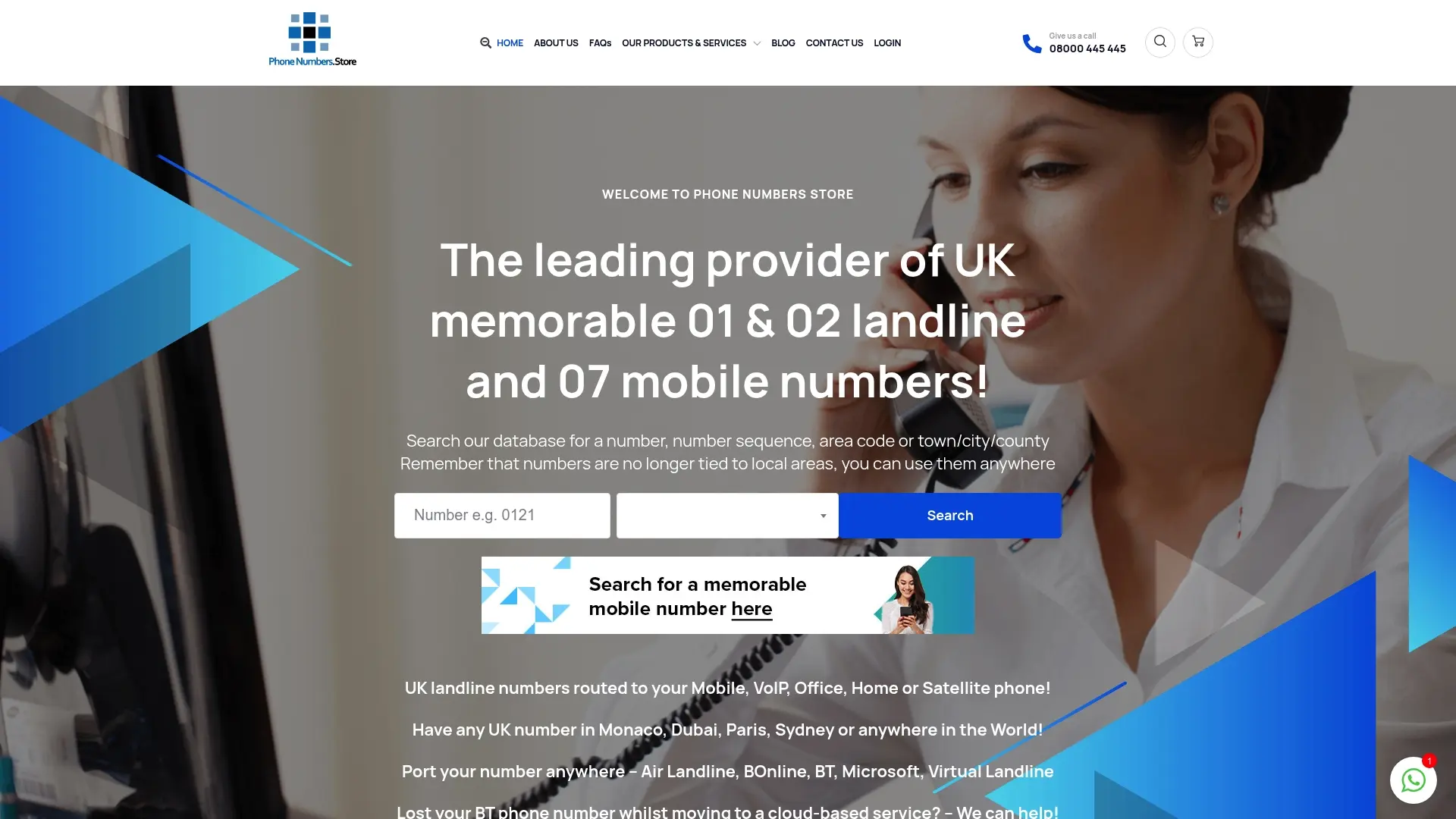
Users can get direct access to numbers similar to those assigned by traditional agencies and search the database themselves instead of waiting on a callback. Listings typically cover 01, 02, 03, 08 and 07 ranges, filterable by area code or pattern, with numbers usable anywhere in the UK regardless of the code they carry.
If you’ve found a pattern you like but aren’t ready to commit, a 30 day reservation holds it while you sort routing and paperwork. For businesses that want the number paired with a working phone system rather than just the digits, the XL Hosted Voice Service bundles a VoIP handset with the number itself, and XL-IP lets you keep an existing BT-style number running through your broadband router. Start by searching available numbers for your area code or preferred pattern, then use the porting guide alongside it if you’re moving an existing number rather than starting fresh.
Sources
- Ofcom
- How To Get a Business Phone Number in the UK: 2026 Guide (ExpertMarket)
- How to set up a virtual phone number in 5 minutes (VoxBot)
FAQ
Can I change my phone number for free as a business?
Setup and porting are frequently offered free by providers, but ongoing hosting, call-forwarding minutes above a bundled allowance, or a highly memorable pattern usually carry a cost. Check exactly what “free” covers before assuming there’s no monthly charge involved.
How long does porting a business number take?
Porting a UK business number typically takes 5–10 working days, during which most providers let you run your old number alongside the new one. A new virtual number, by contrast, can be live the same day.
What documents do I need to port a number?
You’ll need a Letter of Authority (LOA), the business equivalent of a PAC code, confirming you’re authorised to move the number to a new provider. Your current provider may also ask for account verification before releasing it, detailed in Phonenumbers’ porting explainer.
Will I lose calls while switching providers?
Not if you run both numbers in parallel during the porting window, a common option most providers support. Cancelling the old service before the port confirms is the main reason businesses miss calls during a switch.
How much does a memorable number cost through Phonenumbers?
Pricing depends on the plan and number type you choose. Current pricing, including the XL Premier Service at £9.60 per month with a £14.40 one-off setup fee, is listed on the Phonenumbers site.