
TL;DR:
- Selling a phone number in the UK requires strict compliance with Ofcom regulations, data protection laws, and proper data validation. Proper process adherence ensures legal transfer, preserves brand value, and avoids fines or rejection. Businesses must verify account details, obtain necessary codes, and document consent before completing the transfer.
Selling a phone number in the UK is defined as the transfer or assignment of a telephone number from one business or individual to another, governed by Ofcom’s mandatory number portability framework and the Communications Act 2003. For UK businesses and entrepreneurs, the decision to sell or transfer a number carries real commercial weight. A memorable 01, 02, or 07 number can represent years of brand equity, customer recognition, and marketing investment. Getting the process right means understanding three pillars: regulatory compliance, precise data validation, and a clear contractual handover.
What regulations must UK businesses meet before they sell phone numbers?
The legal framework for selling or transferring a phone number in the UK is more demanding than most businesses expect. Ofcom does not permit unrestricted trading of numbers. The Communications Act 2003 governs how numbers are allocated, used, and transferred, and fines reach £2 million or 10% of annual turnover for misuse. That is not a theoretical risk. Ofcom actively enforces these rules, and the 2026 Global Title leasing ban has sharpened that enforcement considerably.
Data protection law adds a second layer of obligation. Under UK GDPR and the Privacy and Electronic Communications Regulations (PECR), buying or selling marketing lists containing phone numbers is legal only when a valid lawful basis exists. That basis is typically legitimate interest or explicit consent. Businesses must also issue an Article 14 privacy notice within one month of processing the data and conduct a Legitimate Interests Assessment before any transfer takes place.
The key prerequisites to address before any sale or transfer are:
- Ofcom number portability compliance. Confirm the number sits within Ofcom’s allocation framework and that the transfer follows the PAC code or One Touch Switch process for landlines.
- Lawful basis for data sharing. Document whether consent or legitimate interest applies, and verify the lawful sourcing of any associated customer data.
- Transparency obligations. Selling personal data without clear disclosure creates unenforceable agreements and serious reputational risk.
- Audit trail and recordkeeping. Ofcom requires operators to retain contracts, board-level sign-off documents, and all number arrangement records.
- 2026 Global Title leasing compliance. From april 2026, leased signalling addresses must be replaced with in-house allocations or formally documented migration contracts.
Pro Tip: Before initiating any transfer, request a written confirmation of the number’s current range holder status. Ofcom only tracks original range holders publicly, not current carriers, so due diligence requires direct verification with the network.
Step-by-step guide to transferring or selling your number
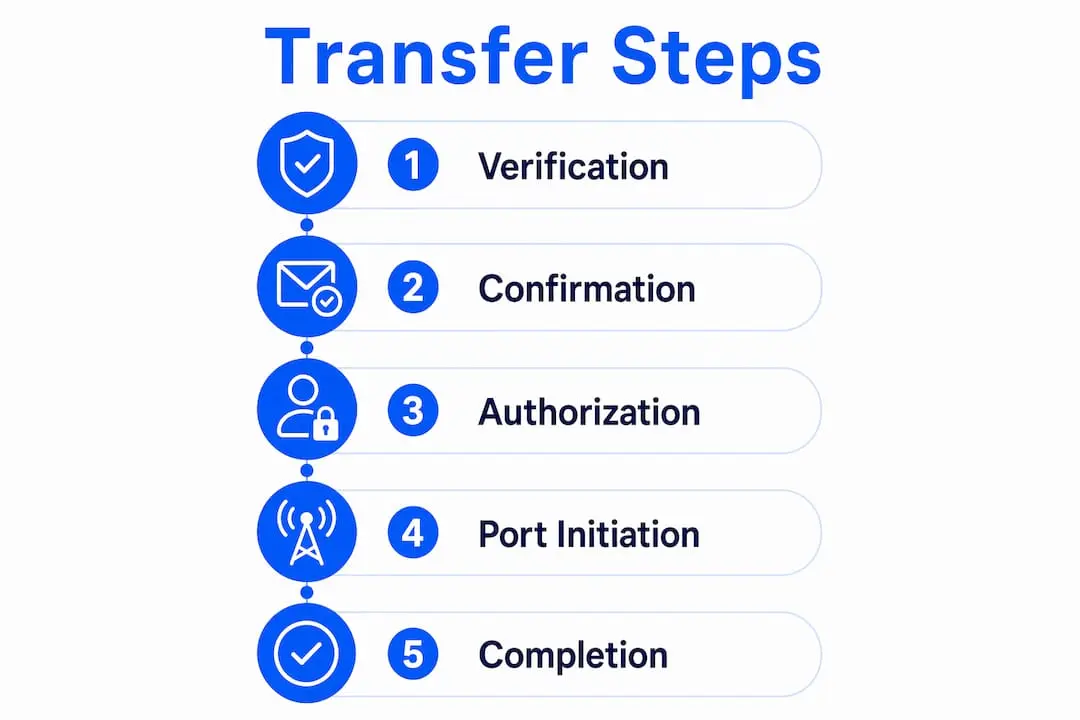
A structured process prevents the most common failures. Follow these steps in order.
-
Verify your account data. Confirm the exact business name, service address, and account reference held by your current provider. Data mismatches are the leading cause of port rejections. Even a minor spelling difference between your records and the losing network’s records will trigger a rejection.
-
Request your PAC code or initiate One Touch Switch. For mobile numbers, your current provider must supply a Porting Authorisation Code (PAC) within one minute of request. PAC codes are valid for 30 days. For landlines, the One Touch Switch process manages the transfer between providers without requiring a separate code.
-
Draft and sign a Letter of Authority. Any business-to-business number transfer requires a signed Letter of Authority confirming the selling party’s consent and the gaining party’s right to take on the number. Include the number, account details, and the agreed transfer date.
-
Initiate the transfer through the gaining provider. Pass the PAC code or migration reference to the new provider. They contact the losing network and manage the technical porting. Transfers typically complete within one working day after initiation.
-
Manage cutover and test thoroughly. On the transfer date, test inbound and outbound calls, check caller ID display, and confirm routing configurations. Have a fallback plan ready, such as a temporary forwarding number, in case of routing delays.
| Stage | Action required | Typical timeframe |
|---|---|---|
| Data verification | Match account records across providers | Before initiating |
| PAC or switch request | Request from current provider | Immediate |
| Letter of Authority | Draft, sign, and exchange | 1–3 working days |
| Transfer initiation | Gaining provider contacts losing network | Same day |
| Cutover and testing | Test calls, routing, and caller ID | Transfer day |
Pro Tip: Run a full pre-transfer inventory of all numbers, routing rules, and IVR configurations before the transfer date. A thorough pre-transfer inventory significantly reduces downtime and prevents post-transfer routing failures.

What are the most common problems when selling or porting a number?
Account data mismatches cause the majority of failed transfers. The losing network checks the transfer request against its own records. If the business name, address, or account number differs by even one character, the port is rejected and the process restarts from scratch. This is why data validation before submission is non-negotiable.
Legal risk is the second major obstacle. Non-compliance with Ofcom’s framework or data protection law does not just delay a transfer. It can invalidate the entire transaction. Poor transparency around how customer data is handled during a number sale leads to unenforceable agreements and potential ICO enforcement action.
Timing coordination between the losing and gaining providers is frequently underestimated. Businesses often assume the transfer happens automatically once the PAC code is submitted. The gaining provider must actively initiate the port, and both networks must align on the cutover window. A missed window means another day’s delay.
“Porting failures frequently stem from ‘mismatch’ errors where the losing network’s records do not align with the transfer request. Meticulous data reconciliation before submission is the single most effective way to prevent rejection and delay.”
Technical issues post-transfer are also common. Caller ID may reflect previous carriers or appear spoofed during the propagation period. Businesses should notify key contacts of the transfer date and monitor inbound call volumes for 48 hours after cutover to catch any routing anomalies early.
How does selling or transferring a number benefit your business?
A phone number is a business asset, not just a communication tool. Transferring or selling a number strategically can deliver measurable commercial advantages.
- Brand continuity. Customers associate a number with a business. Selling or transferring a number as part of a business acquisition preserves that recognition without requiring a costly rebrand or marketing campaign.
- Monetising unused numbers. Businesses holding premium or memorable numbers they no longer use can sell or rent them to generate income, provided the transfer complies with Ofcom’s allocation rules.
- Improved marketing performance. Memorable numbers, particularly 01 and 02 landline numbers with recognisable patterns, generate higher call response rates than generic alternatives. Acquiring the right number through a compliant transfer directly supports campaign performance.
- Operational flexibility. UK numbers are no longer tied to geographic locations. A business can transfer a Leeds 0113 number to a London operation and use it anywhere in the country, maintaining local credibility without a physical presence.
- Smoother provider migrations. When switching telecoms providers, a correctly managed number portability process protects customer contact continuity and avoids the revenue loss that comes from a period of unreachable lines.
The commercial case for treating phone numbers as managed assets is strong. Businesses that actively manage their number portfolios, rather than treating numbers as fixed infrastructure, gain flexibility and competitive advantage.
Key takeaways
Selling or transferring a phone number in the UK requires compliance with Ofcom’s portability framework, UK GDPR, PECR, and precise data validation to prevent rejection and legal risk.
| Point | Details |
|---|---|
| Regulatory compliance is mandatory | Ofcom fines reach £2 million for misuse; follow the Communications Act 2003 and 2026 leasing rules. |
| Data validation prevents rejections | Account name, address, and reference must match exactly across both providers before porting. |
| PAC codes expire in 30 days | Request the PAC only when ready to transfer; the gaining provider must act within the validity window. |
| Transparency protects enforceability | Selling numbers without clear consent or disclosure creates unenforceable agreements under UK GDPR. |
| Numbers are portable and location-free | UK 01, 02, and 07 numbers can be used anywhere in the country after transfer. |
Why I treat phone numbers as serious business assets
Most businesses I speak with treat their phone number as an afterthought. They focus on the provider contract, the monthly bill, and the hardware. The number itself is almost an accident. That attitude costs them money and causes real operational pain when they eventually need to sell, transfer, or upgrade.
The 2026 Ofcom Global Title leasing ban is the clearest signal yet that the regulator views number management as a serious compliance matter, not a technical footnote. Businesses that have been informally leasing signalling addresses or treating number arrangements as undocumented arrangements are now facing a hard deadline. The shift toward stricter accountability is not temporary. It reflects where telecoms regulation is heading.
My strongest advice is to get your legal and operations teams aligned before you start any transfer process. The businesses that run into trouble are almost always the ones where the person managing the port does not know what the data protection team has agreed, or vice versa. A single misaligned consent record can unravel an otherwise clean transaction.
Phone numbers, particularly memorable 01 and 02 landline numbers, hold genuine commercial value. Treat them accordingly. Document your arrangements, validate your data, and approach any sale or transfer with the same rigour you would apply to any other business asset disposal.
— Rob
Phonenumbers: find and acquire memorable UK numbers
UK businesses looking to buy, rent, or list memorable phone numbers have a straightforward option in Phonenumbers, the leading provider of 01, 02, and 07 numbers in the UK.
Phonenumbers gives businesses access to a searchable database of memorable numbers by sequence, area code, or town. Numbers are no longer tied to local areas, so a Leeds number works just as well for a Manchester or London business. Whether you want to acquire a memorable number for a marketing campaign or find a number that fits your brand, the platform covers purchase and rental options. For businesses ready to act, browse available numbers and find a number that works as hard as your business does.
FAQ
Can I legally sell my phone number in the UK?
Selling or transferring a phone number is legal in the UK provided it complies with Ofcom’s number portability framework and the Communications Act 2003. Any associated customer data must also meet UK GDPR and PECR requirements.
How long does a phone number transfer take?
Transfers typically complete within one working day after the gaining provider initiates the port. PAC codes for mobile numbers are valid for 30 days from the date of issue.
What causes a phone number port to be rejected?
Port rejections most commonly occur when account details submitted by the gaining provider do not exactly match the losing network’s records. Validating business name, address, and account reference before submission prevents most rejections.
What is the 2026 Ofcom Global Title leasing ban?
From april 2026, Ofcom prohibits the leasing of Global Title signalling addresses. Businesses must replace leased arrangements with in-house allocations or formally documented migration contracts to avoid penalties under the Communications Act 2003.
Do I need consent to sell a phone number list?
Yes. Selling marketing data containing phone numbers requires a valid lawful basis under UK GDPR, typically consent or legitimate interest, plus an Article 14 privacy notice issued within one month of processing.