TL;DR:
- Choosing simple, repeating, and locally recognizable numbers enhances recall and booking rates.
- Bright, high-contrast, bold formatting ensures phone numbers are easily seen and remembered.
- Tracking with unique numbers, QR codes, and campaign data optimizes response measurement and ROI.
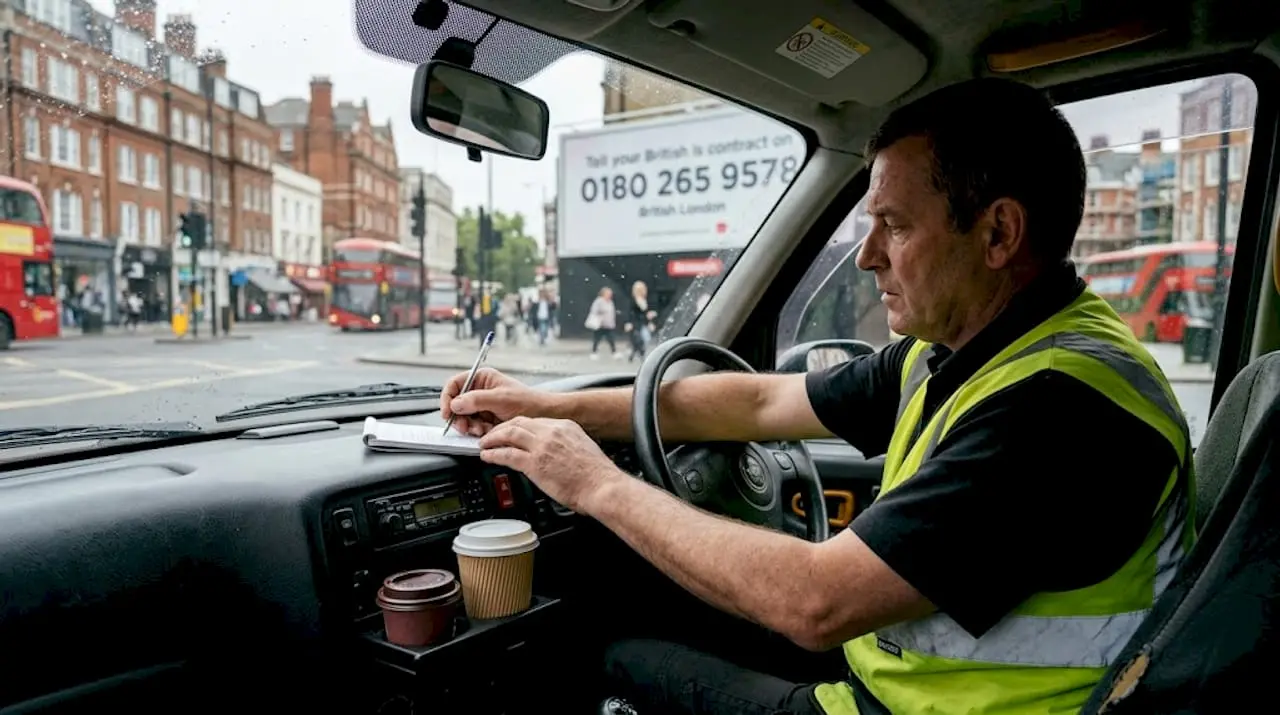
Most passengers who spot your taxi number from a pavement or a passing car will forget it within seconds. That’s not pessimism — it’s human memory at work. Research consistently shows that complex digit strings simply don’t stick, yet the phone number on your taxi remains one of the most powerful direct-booking tools available to any fleet. Unlike social media posts that vanish into feeds, a well-placed number on a cab door travels thousands of miles every month. This guide walks you through how to choose, format, track, and refine phone numbers on your taxi ads so that more passengers remember you and call you first.
Table of Contents
- Choosing memorable phone numbers for taxi ads
- Formatting and placing phone numbers for maximum visibility
- Tracking response and customer acquisition from taxi ads
- Common mistakes and expert tips for phone numbers on taxi ads
- What most taxi ad strategies miss: True memorability lies in context
- Boosting bookings: Find your ideal memorable phone number
- Frequently asked questions
Key Takeaways
| Point | Details |
|---|---|
| Memorable numbers boost recall | Choosing gold or repeating phone numbers makes your taxi ads easier to remember and drives more bookings. |
| Format and placement matter | Proper number formatting and strategic placement ensure maximum visibility and legibility for passengers on the move. |
| Track every campaign | Using unique phone lines, QR codes, and GPS enables you to measure response and optimise your advertising investment. |
| Avoid common pitfalls | Steer clear of complex digits, short durations, and unclear formats to maximise ad impact. |
| Context multiplies impact | Targeted creative and repetition in relevant settings amplifies memorability and conversion. |
Choosing memorable phone numbers for taxi ads
Having established why recall is a challenge, let’s look at how choosing the right phone number sets the stage for successful taxi ad campaigns.
The golden rule is simplicity. A number like 07700 123456 is forgettable. A number like 0161 333 3333 practically says itself. The moment a passenger reads your number while standing at a kerb or sitting in the back of a rival cab, their brain is already deciding whether to bother memorising it. Make that decision easy.
Numbers with repeating digits, ascending patterns, or strong local codes outperform generic lines every time. Gold/VIP numbers with repeating patterns boost recall and bookings significantly compared to standard lines. A number like 0113 273 2222 anchors itself in the mind because the final block of repeating twos creates a rhythm the brain can hold onto. That rhythm is the difference between a passenger who calls you tomorrow and one who Googles a competitor instead.
For choosing a memorable taxi number, consider these core criteria:
- Repeating digits: Numbers ending in three or four identical digits are recalled far more reliably.
- Recognisable local codes: A 0161 prefix in Manchester or a 0121 prefix in Birmingham tells passengers immediately that you’re local and trustworthy.
- Short memorable blocks: Break the number into chunks that mirror speech patterns, such as 0115 928 8888.
- Avoid mixed patterns: Random sequences like 0793 461 2038 create no mental hook whatsoever.
One important point that many taxi operators overlook: numbers are no longer tied to their original geographical area. You can acquire a Leeds 0113 number and operate it anywhere in the UK. This means you can choose a number purely for how it sounds and looks on your livery, regardless of where your fleet is based.
Here’s a quick comparison to illustrate the difference in commercial impact:
| Number type | Example | Recall strength | Trust factor |
|---|---|---|---|
| Generic random | 07834 512 947 | Low | Low |
| Standard local | 0161 456 7890 | Medium | Medium |
| Gold/VIP repeating | 0161 333 3333 | Very high | Very high |
| Premium pattern | 0113 273 2222 | High | High |
According to UK taxi advertising benchmarks, ABC1 professionals, a core taxi-booking demographic, show over 80% recall for well-structured numbers seen on taxi livery. That figure drops sharply the moment a number introduces unnecessary complexity.
For more detail on phone number strategies for taxis, the principle is always the same: your number is part of your brand. Treat it that way from day one.
Pro Tip: Say your candidate number out loud three times, then wait five minutes and try to recall it without looking. If you struggle, your passengers will too.
Formatting and placing phone numbers for maximum visibility
Once you’ve settled on a memorable phone number, the next step is making sure it’s seen and remembered. Here’s how to get the format and placement right.
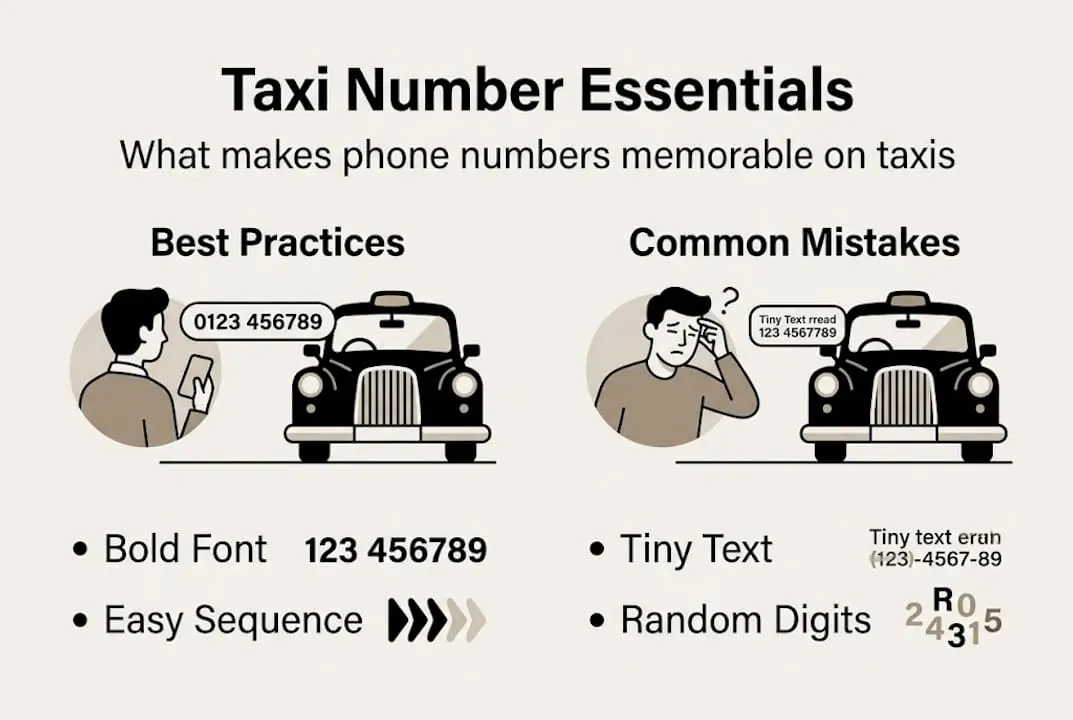
A great number rendered in a tiny font on a muddy door panel is money wasted. Legibility under real-world conditions, meaning rain, motion, low light, and glance-length viewing, requires deliberate design decisions. Contrast is everything. Dark digits on a light background, or bright digits on a dark livery, both work well. What fails is low-contrast pairing such as yellow on white or navy on black.
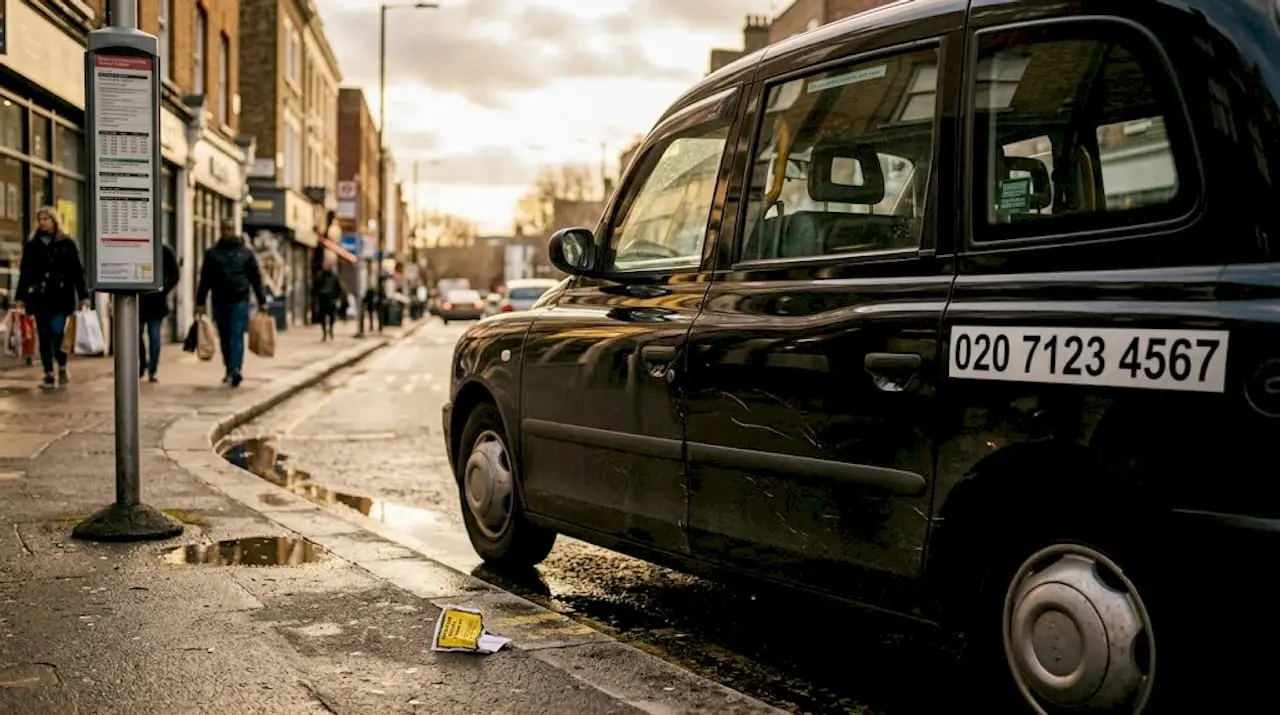
Font choice matters enormously. Sans-serif typefaces such as Arial or Helvetica Bold are proven to be far more legible at speed than decorative or italic alternatives. Keep the number in a single horizontal line where possible. Splitting it across two lines introduces a reading pause that costs you recall.
Taxi ads yield 400,000+ impressions per taxi per month when phone numbers are placed prominently, making placement one of the highest-leverage decisions you’ll make for your campaign budget.
Here’s how the main placement options compare:
| Placement location | Visibility duration | Typical recall uplift | Notes |
|---|---|---|---|
| Rear panel | 3 to 8 seconds (traffic) | High | Best for stationary traffic |
| Side doors | 1 to 3 seconds (passing) | Medium to high | Needs large, bold type |
| Roof sign | Continuous when lit | Very high | Excellent for pedestrian zones |
| Bonnet/boot | Occasional | Low | Not recommended as primary |
For phone number branding tips, the recommended approach is to lead with your local dialling code on the left and let the memorable digit sequence follow naturally on the right. This mirrors how people naturally read and recall numbers.
The practical steps for formatting your number on any taxi ad are:
- Choose a minimum font size of 80mm height for rear panels and 60mm for side doors.
- Use bold weight only, no light or regular weights.
- Apply a contrasting outline or drop-shadow if the livery colour is mid-tone.
- Group digits into blocks of three or four to match natural speech rhythm.
- Test readability at 20 metres in daylight and at dusk before committing to a full wrap.
“A phone number that can’t be read from a moving car is simply decoration. Treat legibility as a non-negotiable design requirement, not an afterthought.”
Always check that your number placement does not obstruct regulation signage, licence plates, or mandatory taxi identification markings. For further phone number visibility tips, visibility benchmarks for taxi ads confirm that rear panel placement with bold contrasting type consistently outperforms all other positions for direct enquiry conversion.
Pro Tip: Photograph your taxi under streetlighting at night and check that the number reads clearly in the photo. If it doesn’t, neither will it for your potential passengers.
Tracking response and customer acquisition from taxi ads
Visibility is just the start: to improve your ad investment, you need solid evidence, and that’s where campaign tracking comes in.
The single most effective tracking tool for taxi advertising is a unique phone number assigned exclusively to one campaign or ad format. When that number rings, you know exactly which creative or vehicle type generated the enquiry. No guesswork, no blended data, no ambiguity. Unique phone lines track campaign enquiries with precision; QR codes provide real-time attribution; and GPS data validates route exposure, giving you a complete picture of campaign performance.
For flexible numbering for taxis, consider assigning different numbers to:
- Rear panel ads: Track responses from drivers sitting behind your cab in traffic.
- Side door ads: Measure passerby and pedestrian enquiries.
- Roof signs: Isolate night-time or rank-based enquiries.
- Social media repurposing: Use a distinct number if the same creative appears online.
Pairing a phone number with a QR code creates a hybrid attribution model that captures both the caller who prefers to ring directly and the smartphone user who wants to tap through immediately. This matters because campaign attribution techniques show that different audience segments respond to different channels, and the most accurate ROI data comes from tracking both simultaneously.
Promo codes offer a third layer. Printing a short code such as TAXI10 alongside your number lets you measure how many callers mention it, giving you a rough but useful conversion signal without any technical infrastructure.
GPS fleet data rounds out the picture. By overlaying your vehicles’ route histories with enquiry timestamps, you can identify which streets, districts, and times of day generate the most calls. That insight directly informs where to concentrate your fleet during peak booking windows.
Key statistic: Taxi advertising consistently delivers a lower cost per acquisition than paid digital search for local transport bookings, particularly when a memorable number is used to anchor direct-response behaviour.
Pro Tip: Set up a simple spreadsheet logging the date, time, and number dialled for every inbound call during a campaign. Even basic data like this reveals patterns that would otherwise cost hundreds in analytics software to uncover.
Common mistakes and expert tips for phone numbers on taxi ads
Even with meticulous preparation and monitoring, certain missteps can undermine your campaign. Here’s what experts say you should avoid, and how to get it right.
The most common error is choosing a number based purely on cost rather than memorability. A cheap, randomly assigned number might save you a few pounds upfront but will cost you far more in missed bookings over a campaign’s lifetime.
The second most frequent mistake is running campaigns for too short a period. Avoid complex digits; prioritise local numbers, test A/B creatives, and run campaigns for a minimum of 4 to 6 weeks for best recall and conversion. Memory is built through repetition. A passenger who sees your number twice in a fortnight is unlikely to retain it. The same passenger who sees it daily for six weeks almost certainly will.
Here is a structured list of mistakes to avoid and their alternatives:
- Using a long random number: Replace with a gold or VIP number featuring repeating digits or a clear pattern.
- Small or low-contrast typography: Use bold, high-contrast lettering at the correct minimum size.
- Running ads for under four weeks: Commit to at least 4 to 6 weeks for meaningful repetition.
- Identical creative across all placements: Test two versions with different background colours or layouts to identify what converts best.
- Ignoring eco-friendly materials: Newer recyclable vinyl wraps improve your brand reputation while maintaining full visibility.
For personal numbering service tips, A/B testing is simpler than most operators assume. Run two vehicles with the same number but different creative layouts, track which one generates more calls, and roll the winner across the fleet. It costs almost nothing extra and can lift response rates meaningfully.
For further campaign benchmarks for taxis and memorable taxi numbers, the consensus is clear: simplicity, repetition, and strong local identity are the three pillars of a high-performing taxi ad phone strategy.
Pro Tip: Before launching, call your own number from a mobile while sitting in the back of your taxi at a red light. If you struggle to note it down in five seconds, redesign the placement.
What most taxi ad strategies miss: True memorability lies in context
Beyond benchmarks and best practices, there’s one factor rarely discussed but proven to matter most: the context in which your phone number is seen.
Most operators focus entirely on the number itself and the size of the lettering. That’s necessary, but it misses half the picture. A taxi carrying airport passengers is seen by a captive audience with five to fifteen minutes of dwell time and an immediate, tangible need for future transport. That is the ideal moment for your number to embed itself. The same number on the same cab crawling through a busy retail high street on a Saturday reaches a completely different audience with completely different intent.
Street-level advertising carries a kind of prestige that static billboard ads never quite replicate. Your cab is moving through the audience’s world, not sitting passively in their peripheral vision. That movement, combined with a recognisable local code and a clean repeating number, creates a memorability effect that even well-funded digital campaigns struggle to match.
For a deeper look at how memorable taxi numbers case study data plays out in practice, the pattern is consistent: operators who match their creative to route context, airport runs, nightlife zones, business districts, consistently outperform those running identical livery across an undifferentiated fleet. Context multiplies the impact of every other element in your campaign.
Boosting bookings: Find your ideal memorable phone number
With practical strategies in hand, your next step is putting them into practice. Here’s how you can secure the right phone numbers for your campaign.
At phonenumbers.store, we specialise in sourcing premium 01, 02, and 07 numbers that are built for recall. Whether you’re after a gold number loaded with repeating digits or a strong local code that signals authority in your area, our searchable database lets you find the perfect match by number pattern, area code, town, or county.
Numbers like 0115 928 8888 or 0113 273 2222 are exactly the kind of high-recall assets that transform a standard taxi wrap into a direct-booking engine. Remember, these numbers are no longer tied to their original regions, so you can use any number, anywhere. Explore our full range and give your fleet the number it deserves.
Frequently asked questions
How do memorable phone numbers impact UK taxi ad results?
Taxi ads achieve 80%+ recall with memorable numbers and can deliver up to 40% lower customer acquisition costs compared to digital campaigns, making them one of the most cost-efficient tools available to UK taxi operators.
Should I use a unique phone number for every taxi ad campaign?
Yes. Unique tracked phone numbers per campaign or ad format allow you to attribute enquiries accurately, measure ROI, and refine your creative based on real response data.
What is the ideal formatting for phone numbers on a taxi?
Avoid complex digits; choose local UK numbers with repeating patterns, use bold high-contrast typography, and format the number in natural speech blocks for the easiest possible recall from a moving vehicle.
Can QR codes and promo codes be used alongside phone numbers?
Absolutely. Pairing QR codes and promo codes with your phone number creates a hybrid tracking system that captures both callers and digital responders, giving you a fuller picture of campaign performance.
How long should a taxi ad campaign run for optimal results?
A minimum of 4 to 6 weeks is essential to achieve the repetition needed for strong recall and meaningful conversion from taxi advertising campaigns.