
Business phone numbers are prime targets for fraud, costing UK companies over £1.3 billion annually through toll fraud, phishing, and spoofing attacks. Small and medium businesses face particularly high risks because attackers exploit VoIP and PBX systems to rack up premium rate charges or steal sensitive data. Without proper safeguards, a single breach can drain thousands of pounds overnight and damage customer trust. This guide delivers practical, layered protection strategies to help you secure your business phone numbers, reduce vulnerabilities, and maintain operational integrity against evolving threats.
Table of Contents
- Key takeaways
- Understanding the risks to business phone numbers
- Preparing your business phone system for protection
- Executing protection measures: monitoring and restrictions
- Verifying protection effectiveness and ongoing maintenance
- Protect your business phone numbers with PhoneNumbers.store
- Frequently asked questions
Key Takeaways
| Point | Details |
|---|---|
| Toll fraud risks | UK businesses face toll fraud, phishing and spoofing that together cost over £1.3 billion annually. |
| Off hours risk | Losses escalate during weekends and overnight hours when monitoring is reduced, with a single unmonitored period potentially reaching five figures. |
| Layered protection | Effective protection starts with thorough preparation and system hardening before monitoring, including fraud risk assessments and documenting the infrastructure. |
| Documentation and mapping | Document every line, extension, VoIP account and access point and map administrative privileges to reveal gaps and help reduce provider liability. |
| Strong SIP security | Implement security controls including strong SIP passwords and encryption to protect access to your VoIP system. |
Understanding the risks to business phone numbers
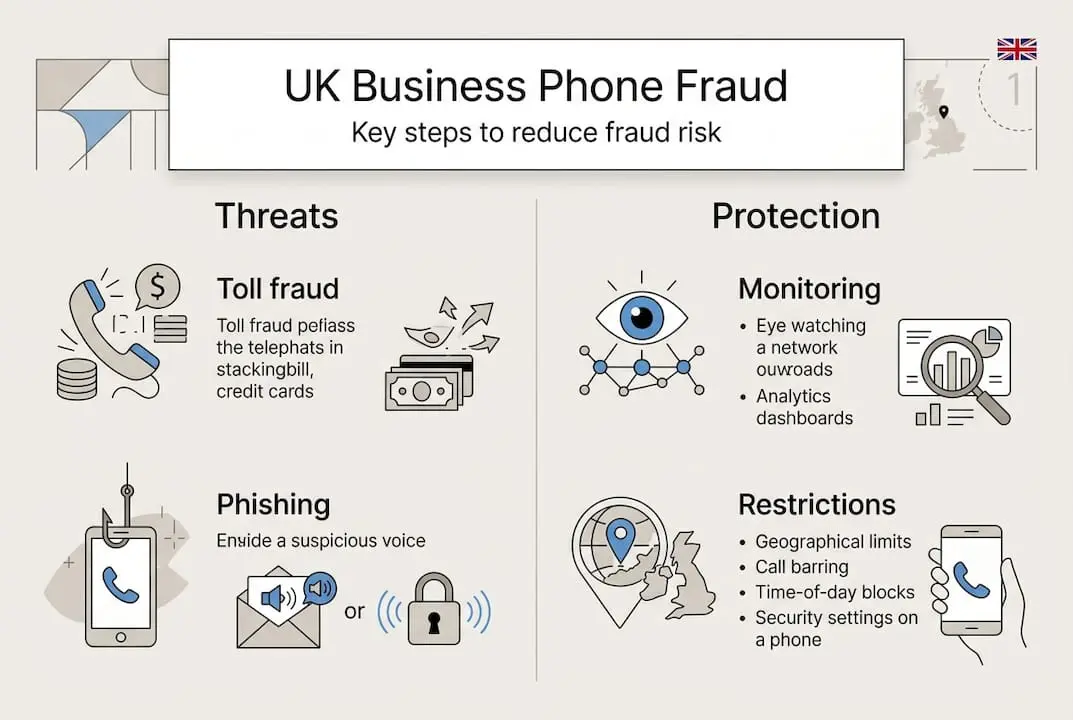
Business phone numbers face multiple threats that can devastate finances and reputation. Toll fraud occurs when attackers gain unauthorised access to your phone system and make expensive calls to premium rate or international numbers, often racking up thousands of pounds in charges within hours. Phishing involves fraudsters using your business number to deceive customers or employees into revealing sensitive information or transferring funds. Spoofing allows criminals to display your legitimate business number on caller ID whilst making scam calls, damaging your brand reputation when victims associate your number with fraud. Account takeover attacks happen when hackers compromise your VoIP or PBX credentials to control your entire phone system.
The financial impact is staggering. UK businesses lose over £1.3 billion annually to toll fraud exploiting VoIP and PBX systems. Small and medium enterprises are disproportionately affected because they often lack dedicated security teams and sophisticated monitoring tools. Research shows that 43% of UK businesses experienced cyber breaches with phishing and toll fraud as key phone threats. Attackers specifically target VoIP systems because they offer internet based access points that are easier to breach than traditional phone lines.
Common fraud tactics include making unauthorised calls to premium rate numbers that fraudsters control, generating revenue for criminals whilst draining your account. Caller ID spoofing makes it appear that calls originate from your business number, tricking recipients into answering and potentially sharing confidential information. International revenue share fraud involves routing calls through specific countries where attackers receive kickbacks from inflated call charges. Brute force attacks systematically guess SIP passwords to gain system access.
Pro Tip: Losses escalate rapidly during weekends, bank holidays, and overnight hours when monitoring is reduced. Attackers deliberately strike during these periods to maximise damage before detection. A single unmonitored weekend can result in five figure losses for vulnerable businesses.
The urgency to protect your business number cannot be overstated. Every day without proper safeguards increases your exposure to these sophisticated, evolving threats that specifically target UK small and medium businesses.
Preparing your business phone system for protection
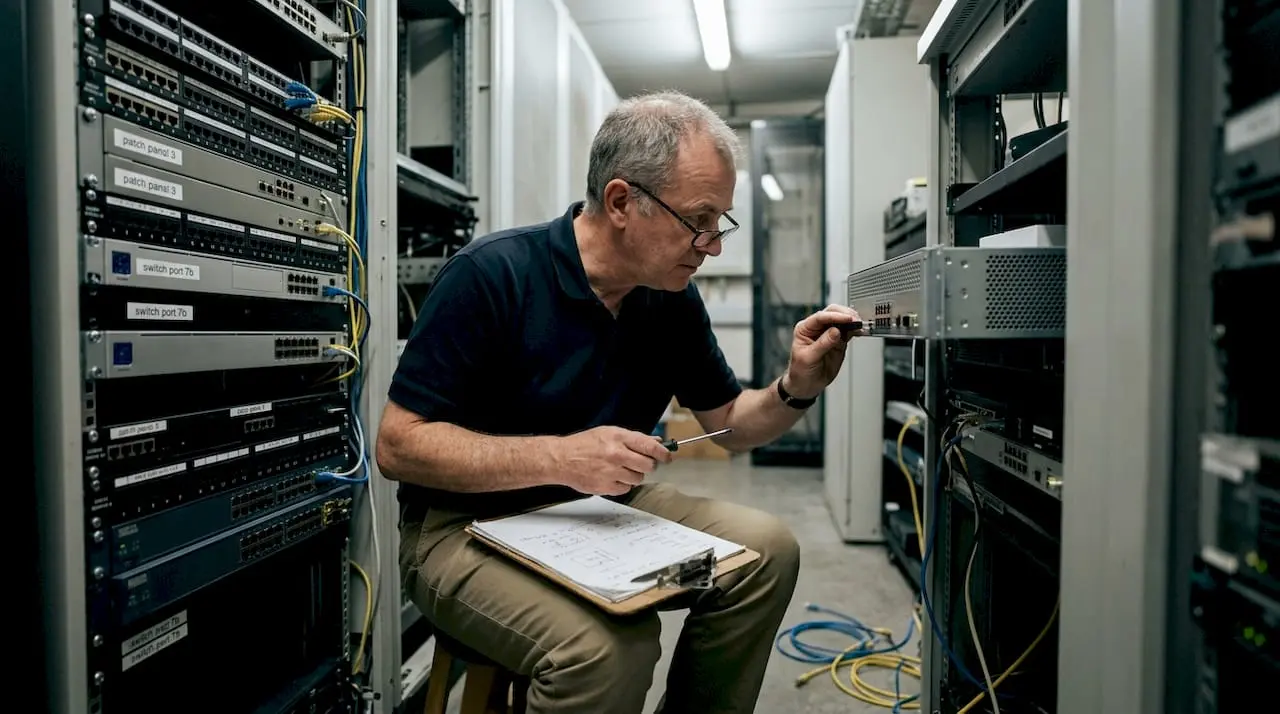
Effective protection begins with thorough preparation and system hardening before implementing active monitoring measures. Your first step is conducting a comprehensive fraud risk assessment to identify vulnerabilities in your current phone infrastructure. Document every phone line, extension, VoIP account, and access point. Map out who has administrative privileges and what security controls currently exist. This baseline assessment reveals gaps that attackers could exploit.
Documentation serves a dual purpose: it guides your security improvements and reduces provider liability if fraud occurs. Conduct fraud risk assessments and document security controls such as strong SIP passwords and encryption. Telecoms providers increasingly shift liability to businesses that fail to implement reasonable security measures. Proper documentation proves you took appropriate precautions.
Essential configuration changes form your security foundation. Replace default or weak SIP passwords with strong, unique credentials containing at least 16 characters mixing letters, numbers, and symbols. Enable SIP authentication to verify every connection attempt before granting access. Implement Transport Layer Security (TLS) for signalling and Secure Real Time Transport Protocol (SRTP) for voice data to encrypt communications end to end. These encryption protocols prevent eavesdropping and man in the middle attacks.
Keep all firmware and software updated because manufacturers regularly patch security vulnerabilities that attackers exploit. Set up automatic updates where possible or establish a monthly review schedule. Segment your network by placing VoIP traffic on separate VLANs from general business data. This isolation limits the damage if one system is compromised.
Session Border Controllers (SBCs) provide powerful protection by sitting between your internal phone system and the public internet. They block unauthorised call attempts, filter malicious traffic, and enforce security policies before threats reach your PBX. For businesses with more than 20 phone lines, an SBC represents essential infrastructure.
| Preparation measure | Purpose | Benefit |
|---|---|---|
| Fraud risk assessment | Identify system vulnerabilities | Reveals attack surfaces before exploitation |
| Strong SIP passwords (16+ characters) | Prevent brute force access | Blocks most automated attacks |
| Enable TLS and SRTP encryption | Protect call data in transit | Prevents eavesdropping and interception |
| Regular firmware updates | Patch known security holes | Closes vulnerabilities attackers target |
| VLAN segmentation | Isolate VoIP from general network | Limits breach impact |
| Session Border Controller | Filter and block malicious traffic | Stops threats before they reach PBX |
Pro Tip: Rotate SIP passwords quarterly and immediately after any staff departure. Brute force attacks continuously probe for weak credentials, so regular rotation combined with complexity requirements creates a moving target that frustrates automated attack tools.
These preparation steps create a hardened foundation that makes your business phone system significantly more difficult to compromise. The investment in proper configuration pays dividends by preventing the majority of opportunistic attacks that target poorly secured systems. Once your foundation is solid, you can secure business numbers through active monitoring and restrictions.
For businesses considering cloud based solutions, understanding cloud business phone system steps helps evaluate provider security features during selection.
Executing protection measures: monitoring and restrictions
Active protection requires continuous monitoring and intelligent restrictions that detect and block fraudulent activity in real time. Follow these sequential steps to build a robust defence.
Step 1: Enable real time monitoring tools on your VoIP or PBX system to track call patterns continuously. Configure dashboards that display current call volumes, destinations, durations, and costs. Use real time monitoring and alerts for anomalous outbound patterns. Set baseline metrics for normal activity so deviations trigger immediate investigation. Modern systems can flag unusual spikes in international calls, premium rate numbers, or off hours activity that typically indicate fraud.
Step 2: Configure instant alerts for suspicious activity patterns. Set thresholds that reflect your normal business operations, such as more than five international calls per hour or any calls to specific high risk country codes. Alerts should reach multiple contacts via SMS, email, and push notifications to ensure rapid response even outside business hours. The faster you detect fraud, the lower your losses.
Step 3: Implement call restrictions to prevent toll fraud before it occurs. Block all calls to premium rate numbers unless your business specifically requires them. Create whitelists of approved international destinations rather than allowing unrestricted global calling. Most UK businesses only need to call a handful of countries regularly. Restricting others eliminates the primary vector for international revenue share fraud.
Step 4: Leverage telecom industry measures designed to combat spoofing. The Telecoms Charter and Ofcom rules block spoofed numbers and scam SMS to protect businesses. Contact your provider to enable these protections, which filter inbound calls displaying obviously fraudulent caller IDs. Many providers now offer enhanced verification services that authenticate caller identity before connecting calls.
Step 5: Comply with Ofcom regulations regarding SMS security by using verified sender IDs. Register your business number and brand name to prevent criminals from spoofing your identity in text messages. This protects both your reputation and your customers from phishing attempts that appear to come from your business.
Step 6: Regularly test and update restrictions to adapt to evolving fraud tactics. Quarterly reviews ensure your controls remain effective as your business needs change and attackers develop new methods. Test alert systems monthly to confirm notifications reach the right people promptly.
Pro Tip: Schedule monitoring coverage for weekends and bank holidays when most toll fraud occurs. Attackers deliberately target these periods because many businesses lack 24/7 monitoring. Even basic automated alerts can prevent thousands of pounds in losses by enabling rapid system shutdown when suspicious activity begins.
These active measures work together to create multiple defensive layers. Monitoring detects threats, alerts enable rapid response, and restrictions prevent the most common attack vectors. The combination dramatically reduces your exposure compared to relying solely on strong passwords. Understanding business phone number basics helps you implement these protections effectively across all your lines.
For additional context on regulatory protections, review the government’s spoofed numbers crackdown initiative that supports business security efforts.
Verifying protection effectiveness and ongoing maintenance
Implementing security measures is only the beginning. Continuous verification and maintenance ensure your protections remain effective against evolving threats. Regular audits and penetration tests confirm that your security controls function as intended. Schedule professional security assessments annually to identify vulnerabilities before attackers exploit them. These tests simulate real attacks against your phone system, revealing weaknesses in configurations, access controls, or monitoring gaps.
Review call logs weekly to spot patterns that automated alerts might miss. Look for gradual increases in international calls, unusual calling times, or repeated attempts to reach blocked numbers. These subtle indicators often precede major fraud attempts as criminals probe your defences. Compare current activity against historical baselines to identify drift that suggests compromised credentials or unauthorised system changes.
| Monitoring approach | Advantages | Disadvantages |
|---|---|---|
| Manual log review | Catches subtle patterns, no software costs | Time intensive, requires expertise |
| Automated monitoring | 24/7 coverage, instant alerts, scalable | Initial setup costs, potential false positives |
| Hybrid approach | Combines automation with human insight | Requires both technology investment and staff time |
Ongoing maintenance tasks form the backbone of sustained security. Update firmware and software monthly or whenever manufacturers release security patches. Change SIP passwords quarterly and immediately after any staff member with system access leaves the company. Review and update blocked number lists based on emerging fraud trends and threat intelligence from your telecom provider. Audit user permissions annually to ensure only current staff retain access and that privileges match job requirements.
Staff training reduces human vulnerabilities that technical controls cannot address. Educate employees to recognise phishing calls and vishing attempts that target business phone numbers. Teach them never to share system credentials or transfer calls to external numbers without proper verification. Regular training sessions keep security awareness high and reduce the risk of social engineering attacks that bypass technical protections.
Common mistakes that lead to breaches include ignoring or dismissing alerts as false positives without investigation. Every alert deserves review because attackers often test defences with small probes before launching major attacks. Failing to update systems leaves known vulnerabilities exposed. Using the same password across multiple systems means one breach compromises everything. Neglecting to revoke access for departed staff creates backdoors that former employees or attackers could exploit.
Document every security control, configuration change, and incident in a centralised security log. This documentation serves multiple purposes: it helps you track what protections exist, provides evidence of due diligence if fraud occurs, supports compliance with data protection regulations, and creates an institutional knowledge base that survives staff turnover. When incidents occur, detailed logs enable faster diagnosis and recovery.
Research indicates that SMBs spend up to 15 days a year mitigating fraud incidents. Verifying controls and maintaining robust security reduces this burden significantly by preventing incidents rather than merely responding to them. The time invested in proactive verification pays dividends through reduced fraud losses and faster incident resolution when problems do occur.
Consider whether it is time to upgrade business phone numbers to systems with enhanced built in security features. Modern providers offer advanced protections that older systems cannot match. For broader security context, explore fundamental network security principles that apply across your entire business infrastructure.
Protect your business phone numbers with PhoneNumbers.store
Securing your existing phone numbers is essential, but sometimes starting fresh with protected numbers offers additional advantages. PhoneNumbers.store provides UK businesses with memorable, professional phone numbers that come with modern security features and reliable support. Whether you need 01, 02 landline numbers or 07 mobile numbers, you can buy a phone number that enhances both your brand image and security posture.
Our service helps reduce fraud risk through verified numbers and enhanced security options that complement the protection measures outlined in this guide. Numbers are no longer tied to local areas, so you can use them anywhere whilst maintaining a professional presence. Explore memorable phone numbers that customers remember easily, reducing the risk of them falling victim to spoofed alternatives. Visit the PhoneNumbers.store homepage to search our database by number sequence, area code, or location to find the perfect match for your business needs.
Frequently asked questions
What is toll fraud and how can I detect it early?
Toll fraud occurs when attackers access your phone system to make unauthorised calls to premium rate or international numbers, generating charges you must pay. Detect it early by monitoring for sudden spikes in call volume, unexpected international calls, or activity during off hours when your business is closed. Real time alerts configured to flag these patterns enable rapid response before losses escalate.
How often should I update my SIP passwords?
Change SIP passwords quarterly at minimum, and immediately whenever staff with system access leave your company. Use unique passwords of at least 16 characters combining uppercase, lowercase, numbers, and symbols. Regular rotation frustrates brute force attacks that continuously probe for weak credentials, significantly reducing your vulnerability to unauthorised access.
Can my telecom provider help block spoofed calls?
Yes, UK telecom providers now offer spoofing protection measures mandated by Ofcom and the Telecoms Charter. Contact your provider to enable inbound call filtering that blocks obviously fraudulent caller IDs. Many providers also offer enhanced verification services that authenticate caller identity before connecting calls, protecting both your business and your customers from spoofing attacks.
What are the best practices to reduce phishing attempts via business numbers?
Train staff to verify caller identity before sharing any sensitive information or processing requests. Implement callback procedures for financial transactions where employees call known legitimate numbers rather than trusting inbound callers. Use call recording and monitoring to identify suspicious patterns. Register your business number with verified sender ID services to prevent criminals from spoofing your identity in outbound communications.
Are there legal compliance issues regarding phone number security in the UK?
Yes, businesses must comply with Ofcom regulations on preventing scam calls and SMS, including using verified sender IDs. Data protection laws require reasonable security measures to protect customer information transmitted via phone systems. Failure to implement adequate security may shift liability to your business if fraud occurs, potentially making you responsible for losses that proper controls would have prevented. Document all security measures to demonstrate compliance and due diligence.