
In this guide, “UK free phone” means memorable UK phone numbers you can buy or rent for your business: 01/02 landlines, 07 mobiles, 03/08 non-geographic numbers, or a pattern sequence that sticks in a customer’s head. If you’re a sole trader or small firm with a van, a flyer, or a Google ad driving calls. The fix is usually simple: rent a number to test it, buy it once it earns its keep. Search live availability on Phonenumbers, or cross-check raw allocation data on Ofcom’s numbering pages if you want to see what is officially in play.
- Buy when the number becomes core to your brand and you plan to keep it for years.
- Rent when you’re testing a new area, campaign, or advertising channel.
- Reserve when a great sequence is available now but you need a few days to decide.
Pro Tip: Say the number out loud to five people, once, and ask them to repeat it back. If two or more stumble, keep looking.
Key Takeaways
Choosing the right memorable number matters less for vanity than for how reliably customers can recall it after seeing it once on a van, flyer, or search ad.
| Point | Details |
|---|---|
| Match the range to the goal | Use 01/02 for local trust, 07 for personal contact, 03/08/080 for national reach. |
| Test memorability before buying | Say the number aloud to five people once; if two fumble it, choose another. |
| Rent first, buy once proven | Run a campaign number for a few months before committing to a permanent purchase. |
| Check Ofcom status before printing | Confirm allocation and adoption evidence via the National Telephone Numbering Plan and NMS. |
| Search live availability directly | Phonenumbers lets you browse purchase and rental options by area code or pattern instantly. |
Where to check availability and official numbering data
Cross-check any candidate number against Ofcom’s weekly numbering downloads and the National Telephone Numbering Plan before committing budget. For practical buying help, browse Phonenumbers, which covers comparisons and setup advice alongside the live database.
- Ofcom numbering data downloads for weekly CSV/XLSX files by range.
- National Telephone Numbering Plan for designations and tariff rules.
Table of Contents
- Who this guide on UK free phone numbers is for
- Which UK number range fits your business?
- How do you choose a memorable business number?
- How do you actually buy or rent a UK number?
- What does a memorable number actually cost?
- Real setups: how businesses actually use these numbers
- What Ofcom rules do you need to check first?
- Get your memorable number sorted with Phonenumbers
- Sources
- FAQ
Who this guide on UK free phone numbers is for
This is written for people who answer their own phones: taxi firms, plumbers, electricians, and small SMEs that treat inbound calls as the main lead source. It covers numbers you purchase or rent and then configure for call forwarding, SIM use, or a PBX system. That’s a different animal from free trial or temporary virtual numbers designed for short-term app verification. If your business needs a permanent line customers can find on a van, a flyer, or a search ad, that’s exactly what’s covered here.
The rest of this guide walks through:
- Which UK number ranges exist and what each signals to a caller
- A practical checklist for choosing a memorable one
- The step-by-step buying and renting process
- Pricing models, setup options, and the Ofcom rules that keep everything above board
Which UK number range fits your business?
Not every number type says the same thing to a caller. A local landline whispers “we’re just down the road.” A freephone number says “we can afford to answer your calls for free.” Choosing the wrong signal for your business model is a quiet, avoidable mistake.
Geographic numbers (01/02) carry an area code and imply a physical presence, even though Ofcom confirms numbers are no longer tied to a fixed location once you route them anywhere. They suit local trades: plumbers, taxi firms, and electricians who want to look embedded in the town they serve.
Mobile numbers (07) read as personal and direct. A sole trader who wants customers to feel they’re calling a real person, not a call centre, often does better with a recognisable 07 pattern than a landline.

03 non-geographic numbers are charged at the same rate as a standard geographic call and count towards inclusive minutes, according to the National Telephone Numbering Plan. That makes 03 a strong pick for a business trading nationally without looking like it’s dodging call costs.
08 and 080 non-geographic numbers work differently: 080 is free to the caller, which signals scale and confidence, while other 08 ranges carry varying tariff perceptions worth checking with your provider, as explored in this guide to 0800 numbers for UK SMEs.
| Range | Signals to caller | Typical use case | Tariff perception |
|---|---|---|---|
| 01/02 geographic | Local, established | Trades and shops with a local base | Standard local/national call rate |
| 07 mobile | Direct, personal | Sole traders, on-the-go contact | Mobile call rate, often inclusive |
| 03 non-geographic | National, no premium | Multi-region SMEs | Same as geographic calls |
| 08/080 non-geographic | Larger operation, freephone confidence | National brands, customer service lines | 080 free to caller; other 08 varies |
| Pattern/sequence | Memorable, marketing-led | Any business advertising offline | Depends on underlying range |
Pro Tip: A repeating-digit sequence (like ending in 111 or 222) on any range adds recall value regardless of whether the prefix is geographic or non-geographic.
How do you choose a memorable business number?
Picking a number isn’t about grabbing the first one that’s free. It’s about matching the number to how customers will actually encounter it, often while driving past a van or glancing at a billboard for two seconds.
- Define the use case first. Local trust points to 01/02, national reach points to 03/08/080, and direct personal contact points to 07.
- Test for memorability. Short numbers, repeated digits, and sequences that avoid ambiguous pairs (like 15/50 confusion) perform far better than random strings. A marketing review of memorable numbers links these sequences directly to higher call recall, particularly on vehicle liveries.
- Check the marketing fit. Will it read cleanly on van signage, a printed flyer, or over a noisy phone line at a busy call centre? Some specialists note that memorable business numbers also work well paired with a virtual landline presence for firms without a physical office.
- Confirm the technical fit. Does the number support call forwarding, SIM assignment, or integration with your existing PBX? Can you track calls per campaign using separate numbers or CLI routing?
- Sort must-haves from dealbreakers. A must-have might be portability; a dealbreaker is a number Ofcom lists as unavailable for allocation.
Pro Tip: Read the number aloud to five people who’ve only glanced at it once. Practitioners in telecom marketing treat this single-glance test as the real benchmark, because that’s exactly how most customers encounter a number on a van or billboard.
How do you actually buy or rent a UK number?
The process has five stages, and most delays happen because a business skips the availability check and falls in love with a number that’s already gone.
- Reserve or purchase. You’ll typically supply basic business details and intended use, whether that’s an outright purchase or a rental agreement.
- Adopt or port. If you’re moving a number from another provider, adoption and porting follow rules set out in Ofcom’s General Conditions of Entitlement, which can involve a short waiting window.
- Configure. Set up forwarding, assign a SIM, connect a PBX or SIP trunk, and record your voicemail greeting.
- Test and go live. Ring the number from an outside line before printing it on a single flyer or van sticker.
Most straightforward purchases go from search to a live, working number relatively quickly; porting an existing number between providers can add extra time while the adoption paperwork clears.
What does a memorable number actually cost?
Pricing splits into three rough models: a one-off purchase, a fixed monthly rental, or a blended deal combining a lower upfront cost with an ongoing hosting fee. None of these is inherently better. It depends on whether you want the number as a permanent asset or you’re still testing which channel it belongs on.
- One-off purchase suits a number you intend to keep for years and print everywhere.
- Monthly rental suits testing a new region or campaign before committing.
- Ongoing costs typically include call forwarding or hosting, SIM or minute charges if paired with a mobile, and any SIP trunk fees if it feeds into a PBX.
- Price drivers include short length, repeating digit patterns, local codes in high-demand towns, and general exclusivity.
- Negotiation angle: longer rental terms often bring the monthly fee down, and bundling SIM and hosting together can undercut buying them separately.
Before signing anything, ask your provider directly what happens at termination, whether porting out is free, and what penalties apply if an SLA is missed.
Real setups: how businesses actually use these numbers
- Taxi firm: keeps a local 01/02 number for bookings, forwarded across drivers’ mobiles depending on shift, so the printed number on the car door never changes even as staff do.
- National trade service: uses a 03 number to look established across regions without charging callers a premium, addressed further in this piece on why freephone numbers matter for customer response.
- Sole trader plumber: runs a memorable 07 pattern number with SMS appointment reminders switched on, so missed calls convert to text follow-ups automatically.
Time-based forwarding routes calls to voicemail outside working hours, and voicemail-to-email means nothing gets missed on a job site. Running a separate number per advertising campaign, meanwhile, tells you exactly which flyer or ad actually generated the call.
Pro Tip: If you’re running two campaigns at once, use two numbers. It’s the cheapest call-tracking system you’ll ever set up.
What Ofcom rules do you need to check first?
Ofcom is the UK’s numbering authority. Allocation runs under the National Telephone Numbering Plan and is managed through the Number Management System (NMS), which communications providers use to apply for and manage number resources.
- Only use numbers your provider has been properly allocated, or has documented authority to adopt, under Ofcom’s Condition B1 rules.
- Transfers between providers must follow the same conditions, not an informal handover.
- 03 numbers are charged at geographic rates for the caller; 080 numbers are free to the caller under specific access conditions, both defined in the National Telephone Numbering Plan.
- Always ask your provider for adoption or transfer evidence before you rely on a number for marketing.
Ofcom updates its numbering data files weekly, covering every range from 01 through to 09, so a number that looks free today is worth reconfirming before you commit budget to print.
Pro Tip: Keep a copy of your provider’s adoption reference. If a dispute over the number ever comes up, that’s the document that settles it.
Why buying beats guessing, most of the time
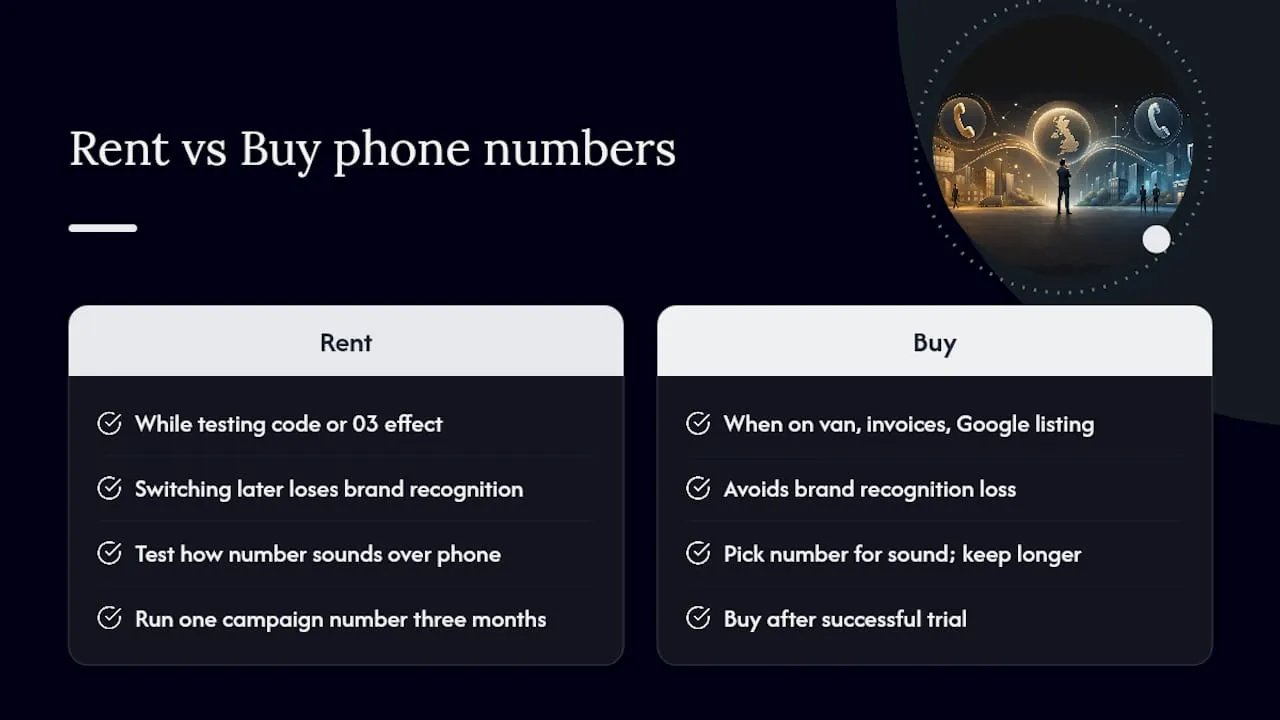
Renting makes sense while you’re still working out whether a new area code or a national 03 number actually shifts your call volume. Buying makes sense the moment a number starts appearing on your van, your invoices, and your Google listing, because switching it later costs you brand recognition, not just money.
Handling hundreds of enquiries through PhoneNumbers.Store’s own searchable database has shown one pattern consistently: businesses that pick a number based on how it sounds over the phone, not just how it looks on a screen, keep it far longer. My practical bias, if you’re still undecided, is to run one campaign number for three months before you commit to buying it outright.
Get your memorable number sorted with Phonenumbers
You’ve seen how much a well-chosen number can shape brand recall, offline advertising, and inbound call volume. Phonenumbers turns that into something you can act on today, without a lengthy tender process or a call centre negotiation.
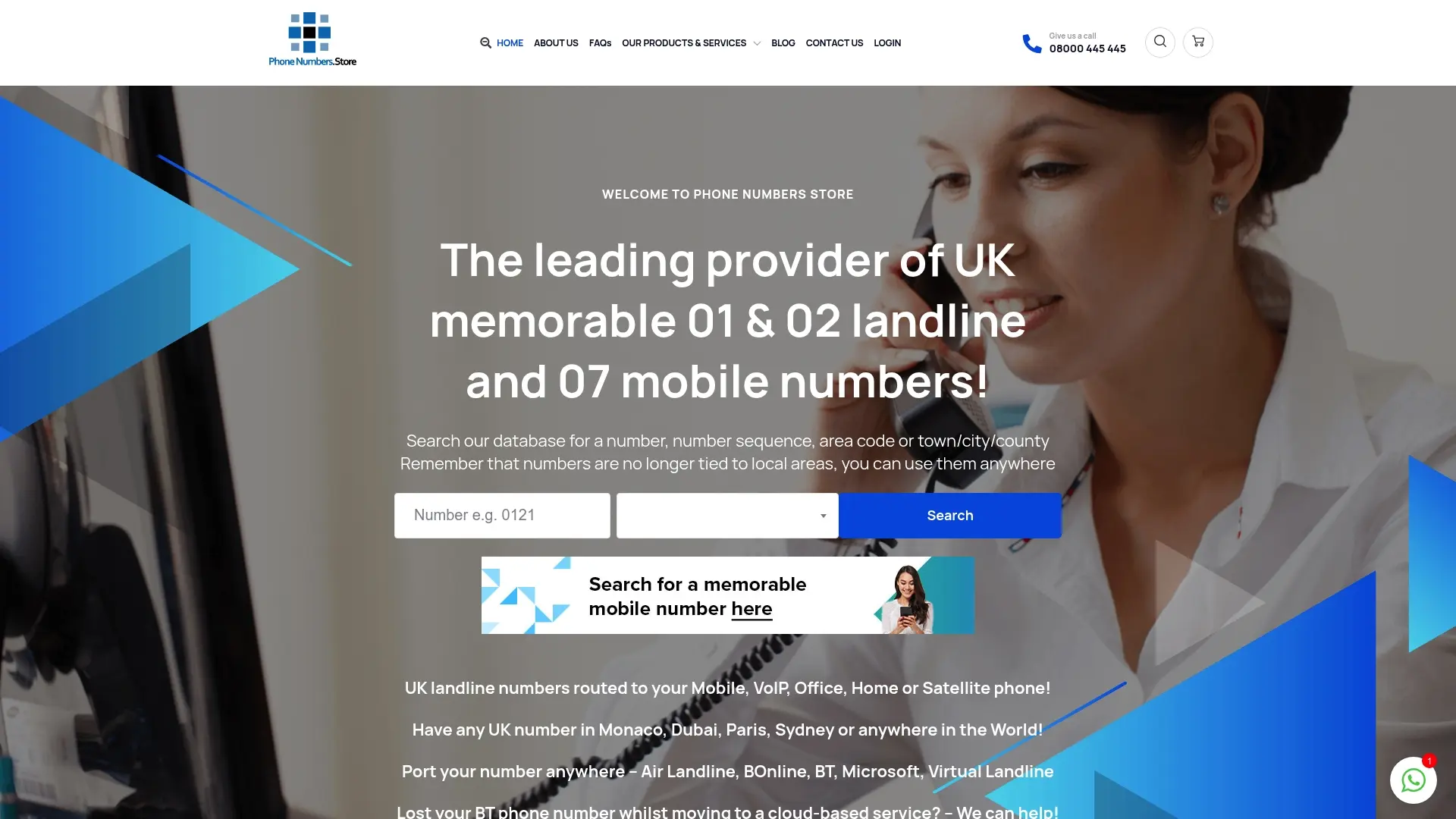
Search the Phonenumbers by area code, town, or digit pattern, and you’ll see live pricing for both purchase and rental in the same view. The team handles configuration too: call forwarding, SIM assignment, PBX integration, and porting support if you’re moving a number away from another provider. That combination of specialism in 01/02 and pattern numbers, paired with a database you can search yourself rather than waiting on a quote request, is what sets a straightforward number purchase apart from a drawn-out telecoms sales process. Head to Phonenumbers to check what’s available in your area code or reserve a pattern number before someone else does.
Sources
- Download numbering data
- National Telephone Numbering Plan (Ofcom)
- General Conditions of Entitlement (consolidated)
- Phone numbers | Ofcom
FAQ
What does “UK free phone” mean on this site?
Here, it refers to memorable UK phone numbers you buy or rent for your business, covering 01/02 landlines, 07 mobiles, and 03/08 non-geographic ranges, not free trial or temporary virtual numbers.
Should a small business buy or rent a number?
Rent while testing a new campaign or area, and buy once the number becomes tied to your brand on vans, invoices, or search listings.
Are 080 numbers really free for the caller?
Yes, 080 numbers are free to the caller under Ofcom’s tariff principles, while other 08 ranges carry different charging structures worth confirming with your provider.
How long does it take to get a number live?
A straightforward purchase from Phonenumbers.Store can go live within a few working days; porting an existing number in from another provider typically takes longer while adoption paperwork clears.
Can I check if a number is genuinely available?
Yes. Search directly on Phonenumbers, or cross-check against Ofcom’s weekly numbering data downloads for the range you’re interested in.