Searching for what business is this phone number usually means one thing for UK business owners: you want a memorable 01, 02, 07, 03 or 08 number for your own company, and you need to know if it’s available. The fastest route is to search a provider’s number database directly by sequence, area code or town. From there, numbers can be bought outright, rented monthly, or ported in from your current supplier without breaking continuity.
TL;DR:
- Most memorable UK business numbers can be checked for availability by searching providers’ databases using patterns, area codes, or location filters before purchase.
- Reserve your preferred number immediately after finding it, as attractive sequences are often claimed quickly, especially premium repeating or “gold” patterns.
- The cost for numbers ranges from about £4 to £15 per month, with premium patterns costing significantly more, and the number can typically go live within one to two days after setup.
- Porting an existing number to a new provider usually takes one to two working days, requiring early request of transfer codes and timely testing of forwarding.
- Buying a number best suits long-term branding, while renting provides flexibility for newer or uncertain ventures without an upfront purchase, though some sequences remain restricted by Ofcom rules.
Table of Contents
- How do I search for an available business number?
- What makes a phone number actually memorable?
- How do you buy or rent a memorable number?
- Can I keep my existing number when I switch provider?
- What does it cost and how long does the whole process take?
- Why trust this guidance on choosing a business number
- What the research actually tells you to do first
- Search, reserve, and go live with Phonenumbers
- Sources
- FAQ
How do I search for an available business number?
Start with a searchable database rather than guessing at random digits. Most memorable-number providers let you filter by sequence (repeating digits like 888888 or 000000), by area code (0115 for Nottingham, 0113 for Leeds), or by town and county name. Typing “0161 555” into a search tool, for example, will surface every Manchester-coded number still on the shelf that matches that pattern.
If you need a formal answer on whether a specific range is even allocated for public use, Ofcom’s Number Management System is the authority to check. Ofcom publishes allocation data and updates its files regularly, so providers can usually confirm live availability quickly, though some reserved or restricted ranges need direct provider intervention to clear.
A few practical steps make this process smoother:
- Search by pattern first (repeating digits, ascending sequences, or a number spelling a word on the keypad).
- Narrow by area code if local presence matters, or skip it entirely since numbers are no longer tied to where you’re based.
- Ask the provider to reserve your shortlisted number while you finalise the paperwork, rather than leaving it open to another buyer.
- Confirm eligibility on any number type that looks unusually cheap or restricted. Some ranges carry designation rules under the National Telephone Numbering Plan that limit who can adopt them.
Pro Tip: Reserve before you commit to marketing. Nothing wastes a print run faster than printing a number that someone else buys while you’re still deciding.
What makes a phone number actually memorable?
A number only works as a marketing asset if a customer can recall it without looking it up twice. That usually comes down to rhythm and repetition, not randomness. Numbers with repeating pairs (0113 255 5555) or clean ascending runs (0113 234 5678) stick in memory far better than a string of unrelated digits, and that recall translates into real business value: memorable numbers are recognised as a cost-effective marketing tool that lifts call volumes when it’s printed on vans, signage and adverts.
Beyond the pattern itself, the prefix you choose sends a signal. Here’s how to think it through:
- Local credibility — an 01 or 02 geographic number tells a caller you’re rooted in their area, which still matters for trades and taxi firms working a defined patch.
- National reach — 03 numbers read as a nationwide business and are usually included in mobile and landline call bundles, unlike 0800 or 0845.
- Free-to-caller positioning — 0800 numbers cost the caller nothing, which can lift enquiry rates, but they tend to cost the business more to run.
- Mobile-first identity — a memorable 07 number suits sole traders and field-based businesses who work from a phone rather than a desk.
- Budget versus vanity — the more repetitive or “gold” a pattern is, the higher the price tag; decide how much recall is worth to your marketing before you fall for the flashiest option.
Match the choice to where the number will actually appear. A plumber relying on van signage and word-of-mouth needs something a customer can memorise glancing sideways in traffic; a call centre running paid ads cares more about call volume capacity than the prefix’s local flavour.
How do you buy or rent a memorable number?
Once you’ve found the right number, the process follows a fairly fixed sequence: search, reserve, agree purchase or rental terms, configure the technical side, then test before you go live.
The purchase-versus-rental decision matters more than it first appears. Buying gives you ownership of the number outright, which suits a business planning to keep the same identity for years. Renting instead hands you use of the number for a recurring monthly fee, with the provider handling the hosting. That’s often the better fit for a new venture that isn’t yet certain the number, or even the business, will still be running in three years.
Configuration typically covers:
- Call forwarding to an existing mobile or landline, so the new number rings straight through to a phone you already carry.
- SIM provision, where the memorable number is issued on its own SIM for a dedicated business handset.
- SIP trunking, connecting the number into a VoIP or existing PBX system for larger call volumes.
- CRM integration, so incoming calls log automatically against customer records.
Providers must operate within Ofcom’s General Conditions on allocation and transfer, which is why you’ll be asked for identity verification, business registration details, and a forwarding destination before the number goes live.
Pro Tip: Test the forwarded line yourself before you print a single business card. A misconfigured route that silently fails is far more damaging than a slightly less memorable number.
Can I keep my existing number when I switch provider?
Yes. Porting lets you move a number you already use over to a new provider without losing the identity your customers already recognise. For mobiles, this runs through a Porting Authorisation Code (PAC); landline transfers use an equivalent Notification of Transfer process. Either way, the current provider has to supply the code, and the new one submits it to trigger the switch.
Porting typically completes within a few working days once the code is submitted, though delays can creep in around bank holidays or if account details don’t match exactly.
To avoid a dead line mid-transfer:
- Request your PAC or transfer code early, ideally a few working days before you need the new setup active.
- Test the new routing before cancelling the old line entirely.
- Stagger the switch outside your busiest call hours if possible.
- Tell regular customers and update your website and signage the moment the port confirms.
What does it cost and how long does the whole process take?
Budget for two separate cost buckets: getting the number, and keeping it running. There’s usually a one-off fee to secure a purchased number, or a modest reservation charge if you’re renting instead. On top of that sits a recurring monthly hosting or rental charge, plus call origination or termination costs depending on volume and destination.
Market pricing for basic virtual numbers tends to start around £4 to £15 a month, climbing considerably for premium repeating-digit or 0800 patterns. Geographic 01/02 numbers generally sit at the cheaper end; heavily repeated “gold” sequences command a real premium because so few of them exist.
Timeline-wise:
- A brand new number can usually go live within a day or two of purchase, once forwarding is set.
- A ported number typically takes a couple of working days, occasionally longer around holidays.
- Leave a small buffer in your budget for updating signage, van livery and ad creative once the number’s confirmed, since that’s the spend that actually turns a new number into recognised recall for callers, as covered in more detail in guidance on choosing a memorable number.
Why trust this guidance on choosing a business number
A UK provider specialising in memorable 01, 02 landline and 07 mobile numbers, built around a searchable database rather than a generic listings page.
- Search by number sequence, area code, or town and county directly through the store.
- Numbers are no longer tied to a fixed local area, so a business can hold a Leeds-coded number while trading nationwide.
- Guidance on selection and ROI is written by Rob, covering how memorable numbers boost brand recognition and how they increase call ups.
A number a customer can recall without checking their phone is doing marketing work every single day it’s on a van door or a business card.
What the research actually tells you to do first
Most guidance on this topic buries the useful part under branding theory. The truth is simpler: check availability before you fall in love with a pattern, because Ofcom’s designation rules mean plenty of the most obvious sequences are already reserved or restricted, and no amount of enthusiasm changes that.
The conventional advice tends to obsess over prefix psychology, local trust versus national reach, and so on, while glossing over the mechanics that actually stall businesses: reservation timing, porting paperwork, and the gap between “purchase” and “rental” in the contract. Get those wrong and the prettiest number in the world sits unused for three weeks while forwarding gets sorted out.
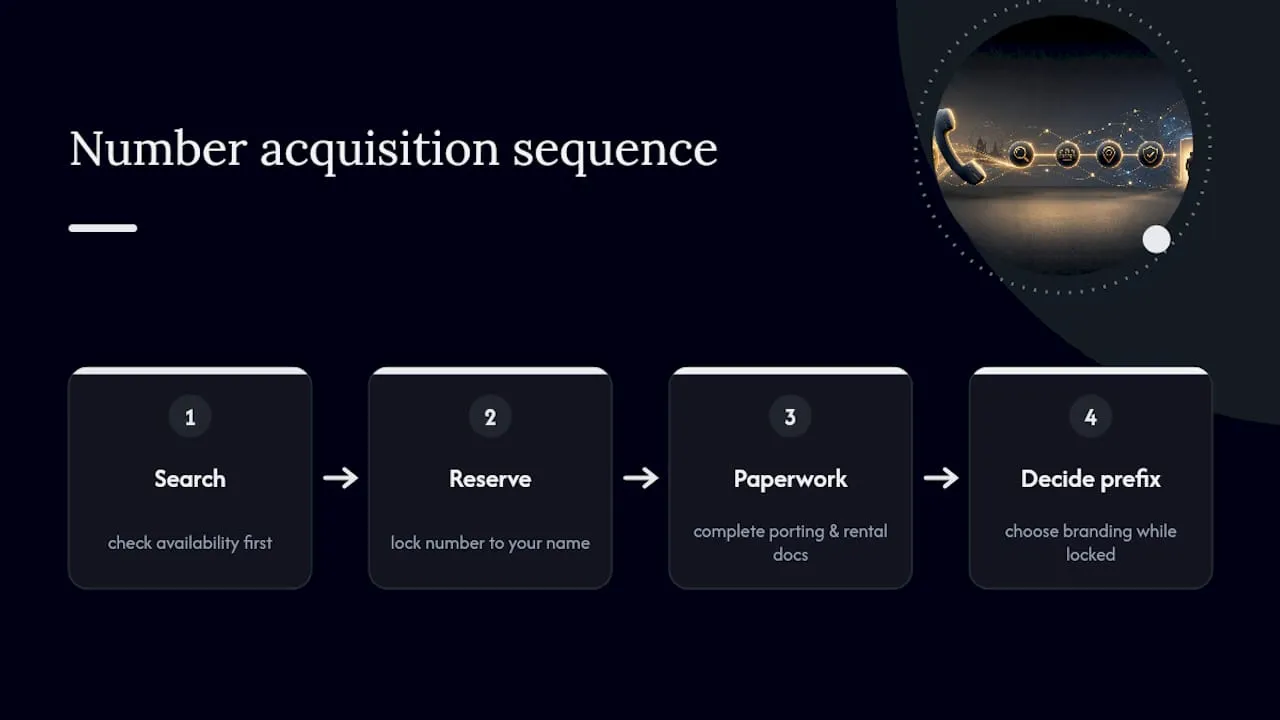
If there’s one priority to take from this, it’s sequencing. Search first, reserve immediately, then work out the prefix philosophy while the number is locked to your name. Businesses that do it the other way round, debating brand fit for a month, routinely lose the number to someone faster.
— Rob
Search, reserve, and go live with Phonenumbers
This provider gives you direct access to the same database this guide describes, searchable by sequence, area code or town, with no need to negotiate through a call centre first. Available numbers can be bought outright or rented monthly, with hosting and call forwarding set up as part of the same order.
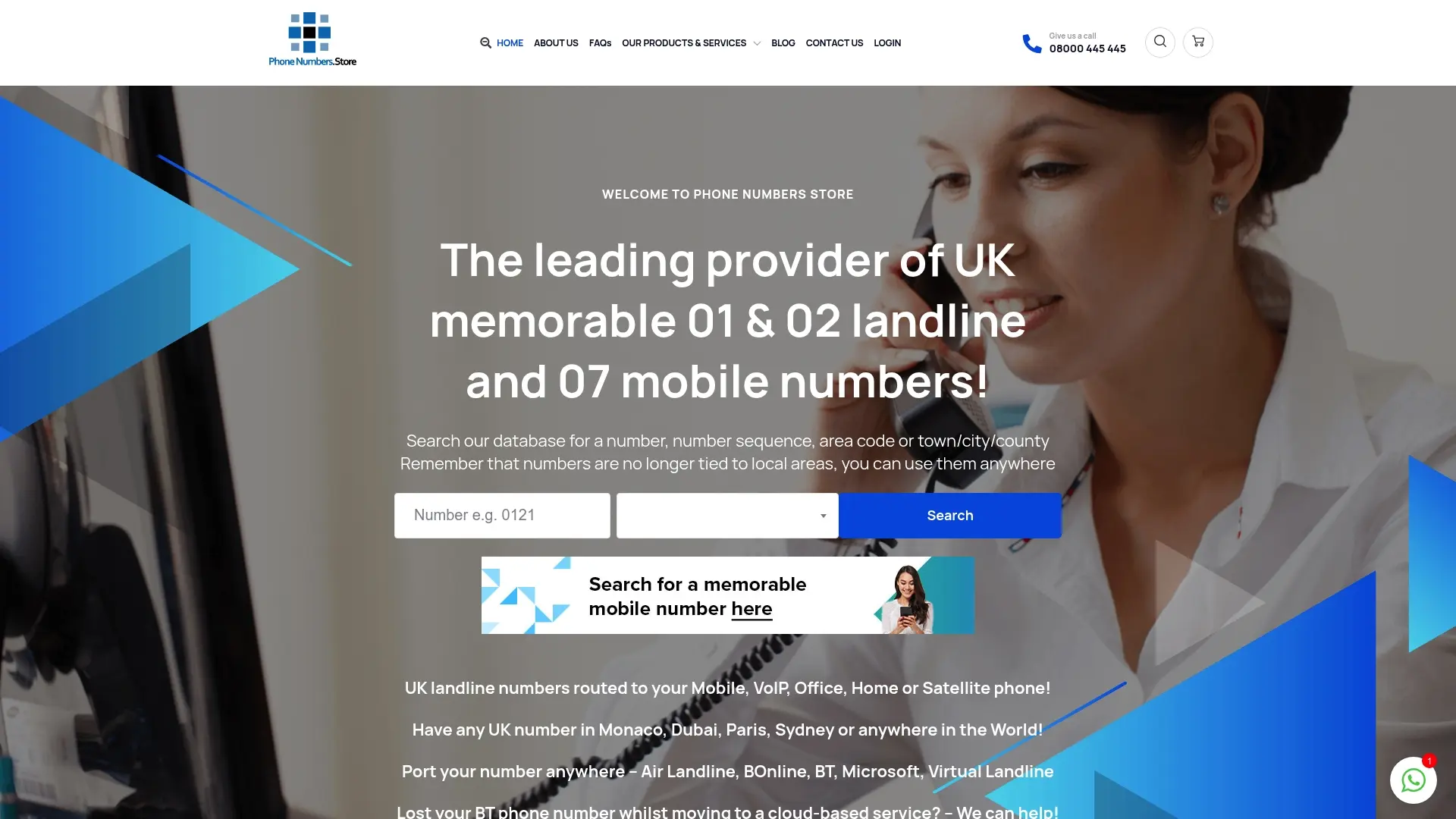
If you want a concrete sense of what’s on offer, the 0115 928 8888 listing shows a repeating-digit Nottingham pattern available for purchase or rental, and the 0113 273 2222 listing shows the same structure for a Leeds code. Both run through the identical checkout and configuration flow covered above. Head to the Phonenumbers Store to search by your own preferred sequence, area code or town, reserve the number you want, and get it forwarding to your existing phone within days.
FAQ
What does “what business is this phone number” mean in this context?
Here, it refers to checking the availability and ownership status of a memorable UK business number, such as an 01, 02, 07, 03 or 08 range, before purchase or rental.
How do I check if a specific business number is available?
Search a provider’s database by sequence, area code or town, and reserve any match through the provider while you finalise purchase or rental terms.
Can I move my current business number to a new provider?
Yes, porting lets you transfer an existing number using a PAC or Notification of Transfer, usually completing within one to two working days.
Is it better to buy or rent a memorable number?
Buying suits a business committed to a long-term identity, while renting suits a newer venture that wants flexibility without an upfront purchase cost.
Are all memorable number patterns available to buy?
No. Ofcom’s National Telephone Numbering Plan restricts or reserves certain ranges, so some desirable sequences simply aren’t allocatable.