TL;DR:
- A direct enquiry number, or DDI, connects callers directly to specific staff or departments, improving connection rates and customer trust. UK businesses benefit from DDIs by enhancing professionalism, reducing missed calls, and lowering costs through cloud telephony. Regular auditing ensures the number remains functional, accurate, and supports effective customer communication.
A direct enquiry number is a dedicated telephone line that connects callers straight to a specific person, team, or department, bypassing switchboards and automated menus entirely. In the UK, the standard industry term for this is DDI, which stands for Direct Dial-In. The concept is straightforward: one number maps to one destination, and callers reach the right person on the first attempt. For UK business owners, understanding the direct enquiry meaning is the first step towards building a phone system that actually works for customers.
What is a direct enquiry number, technically speaking?
A DDI number connects an incoming call directly to an internal extension within a phone system, without routing through a receptionist or IVR menu. This is the core technical distinction between a direct enquiry number and a general business line. A main switchboard number funnels all callers into a queue or menu. A DDI skips that entirely.
Outside the UK, the same technology goes by a different name. North American telecoms use the term DID, which stands for Direct Inward Dialling. UK telecom experts are clear that DDI is the correct term for British business contexts, and using DID terminology can cause confusion when configuring systems or raising support tickets with UK providers. The technology is identical; the label matters for clarity.
The performance difference between direct and switchboard numbers is significant. Desk DDIs achieve connect rates of 25–40%, while mobile direct dials reach 35–55%. Main switchboard numbers, by contrast, connect at just 5–15%. That gap represents a large volume of missed calls and lost business for any organisation relying solely on a central number.
Pro Tip: Always specify “DDI” rather than “DID” when speaking to UK telecoms providers or IT support teams. Using the North American term can lead to miscommunication during setup and billing.
Key technical features of a DDI number include:
- Direct routing: Calls bypass the main switchboard and reach the assigned extension immediately.
- PBX integration: DDIs work within Private Branch Exchange systems, mapping external numbers to internal lines.
- Flexible assignment: A single DDI can be assigned to an individual, a team ring group, or a department queue.
- Portability: Modern cloud-based DDIs are not tied to a physical location or device.
Why do UK businesses benefit from a direct enquiry number?
The most immediate benefit is customer trust. 76% of UK consumers trust businesses with a dedicated landline more than those using only mobile numbers, and customers are three times more likely to call a professional landline. That statistic alone makes the case for any business owner still relying on a personal mobile for customer contact.

A direct enquiry contact also separates personal and professional communications cleanly. Business owners who use a single mobile for everything risk missing calls, appearing unprofessional, and losing the ability to track business call volumes accurately. A dedicated DDI solves all three problems without requiring expensive hardware.
Cost is another practical advantage. Cloud-based virtual numbers reduce infrastructure costs by approximately 75% compared to traditional copper lines. A business can acquire a professional DDI number without installing physical phone lines or purchasing on-site equipment.
Pro Tip: A DDI assigned to a ring group rather than a single person means the number stays active even when individual staff members leave. This protects the number’s value and avoids the disruption of updating published contact details.
The benefits extend to brand image as well. A business with a published direct enquiry number signals organisation and accessibility. Customers know exactly who they are calling, and that clarity builds confidence before the conversation even begins.
How does a direct enquiry number compare with other UK number types?
UK business numbers fall into several distinct categories, each with different cost implications and caller perceptions. Confusing them is a common and costly mistake.

Geographic numbers, which carry 01 or 02 prefixes, are associated with specific UK regions. A Leeds business might use an 0113 number, and a London business an 020 number. Crucially, numbers are no longer tied to physical locations. A business based anywhere in the UK can use a Leeds or London number, which carries the trust and familiarity of a local presence.
National numbers use the 03 prefix. Under Ofcom regulations, calls to 03 numbers cost the same as calls to 01 and 02 numbers, and they are included in mobile inclusive minutes. This makes 03 numbers caller-friendly and cost-neutral for customers.
Non-geographic numbers, which use 08 prefixes such as 0800 or 0845, carry different cost structures. Some 08 numbers are free to call; others carry charges that vary by network. Customers are often uncertain about the cost of calling 08 numbers, which can reduce call volumes.
| Number type | Prefix | Included in mobile minutes | Caller cost perception |
|---|---|---|---|
| Geographic | 01/02 | Yes | Low, familiar, trusted |
| National | 03 | Yes | Low, same as geographic |
| Freephone | 0800 | Yes (from mobiles since 2015) | Free, high trust |
| Non-geographic | 0845/0870 | No | Variable, often avoided |
| Mobile | 07 | Depends on plan | Personal, less formal |
A DDI can be assigned across any of these number types. The prefix shapes how customers perceive the call before they dial. The DDI routing determines where the call lands once they do.
Business owners often underestimate how much the prefix affects whether customers actually pick up the phone to call. Choosing the right number type for your audience is as important as the routing behind it.
How can UK businesses obtain and implement a direct enquiry number?
Acquiring a DDI number is straightforward and affordable through modern cloud telephony providers. The process no longer requires a telecoms engineer or a long-term infrastructure contract.
- Choose your number type and prefix. Decide whether a geographic 01/02 number, a national 03 number, or a mobile 07 number best fits your brand and audience. Phonenumbers specialises in memorable UK 01, 02, and 07 numbers that businesses can use from any location.
- Select a provider. Cloud-based providers offer DDI numbers with instant setup and costs typically under £10 per month per user. No physical hardware is required.
- Configure your routing. Assign the DDI to an individual extension, a ring group, or a department queue within your phone system. Cloud platforms handle this through a web interface.
- Integrate with existing devices. Modern DDIs work via VoIP apps on smartphones, laptops, and desk phones. Staff can receive direct calls on any device without changing their personal number.
- Publish and audit regularly. Once the number is live, publish it consistently across your website, email signatures, and business directories. Direct dial accuracy typically ranges from 70% to 92% due to staff changes and internal restructuring. Regular auditing keeps published numbers accurate and functional.
Pro Tip: When setting up a business phone line, assign DDIs to roles or departments rather than named individuals wherever possible. This reduces the maintenance burden when staff move on.
One legal consideration worth noting: calling landlines under PECR is generally permitted for outbound business contact, but calling mobile numbers requires a TPS check to remain compliant. If your business uses DDIs for outbound calling as well as inbound, the number type you call matters as much as the number you call from.
Key takeaways
A direct enquiry number (DDI) is the single most effective way for UK businesses to connect callers directly to the right person, with connect rates up to four times higher than main switchboard numbers.
| Point | Details |
|---|---|
| DDI is the UK term | Always use “DDI” not “DID” when working with UK telecoms providers or support teams. |
| Connect rates are significantly higher | DDIs achieve 25–55% connect rates versus 5–15% for main switchboard numbers. |
| Customer trust depends on number type | 76% of UK consumers trust businesses with a dedicated landline more than mobile-only businesses. |
| Cloud numbers are affordable | DDI numbers via cloud providers typically cost under £10 per month with no hardware required. |
| Regular auditing is necessary | Direct dial accuracy falls over time; auditing published numbers keeps contact data reliable. |
Why I think most UK SMEs are still getting this wrong
The terminology confusion around direct enquiry numbers is more widespread than most business owners realise. I have spoken with dozens of UK business owners who use the terms DDI, DID, direct line, and direct enquiry number interchangeably, without understanding that the label they use with their provider can directly affect how their system gets configured.
The bigger issue, though, is not terminology. It is the persistent habit of using a personal mobile as a primary business contact number. The trust gap between a dedicated landline and a mobile is not marginal. It is substantial, and it costs businesses calls they never know they missed.
The shift to cloud telephony has removed every practical barrier to getting this right. A business can acquire a memorable geographic number, route it to a ring group, and have the whole system live within an hour. The cost is negligible. The impact on customer perception is not.
What I find most underappreciated is the auditing point. Businesses invest in getting a good number, publish it everywhere, and then never check whether the routing still works after a staff restructure. A number that rings out or routes to the wrong person is worse than no number at all. It signals disorganisation at the exact moment a customer is trying to make contact.
My advice: treat your DDI like any other business asset. Acquire it deliberately, configure it for resilience, and review it quarterly.
— Rob
Direct enquiry numbers available from Phonenumbers
Phonenumbers offers a wide selection of UK business phone numbers, including memorable 01, 02, and 07 numbers that work as direct enquiry lines from any location in the country.
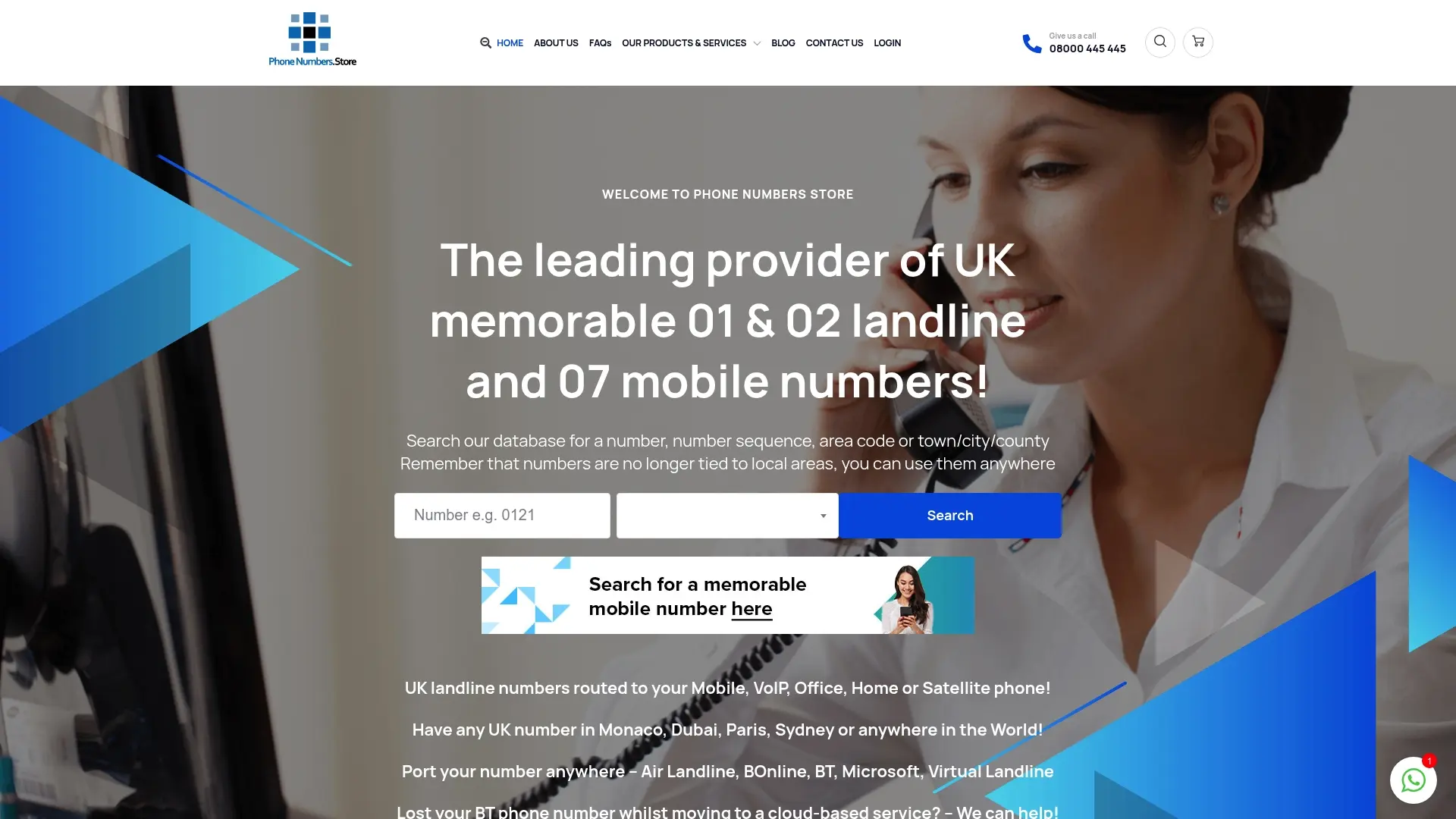
Whether you need a geographic number that carries local credibility or a mobile number for a field-based team, the Phonenumbers database lets you search by area code, town, city, or number sequence. Numbers are no longer tied to physical locations, so a Leeds 0113 number works just as well for a business based in Bristol. Acquisition is fast, pricing is transparent, and setup requires no specialist equipment. Browse the full range at Phonenumbers and find a number that works as hard as your business does.
FAQ
What does DDI stand for in UK telecoms?
DDI stands for Direct Dial-In. It is the standard UK term for a phone number that routes calls directly to a specific person or department, bypassing a switchboard.
Is a direct enquiry number the same as a DDI?
Yes. A direct enquiry number and a DDI refer to the same concept: a dedicated number that connects callers straight to the intended recipient without going through a central operator.
Are 03 numbers included in mobile minutes?
Yes. Under Ofcom rules, calls to 03 numbers cost the same as calls to 01 and 02 numbers and are included in standard mobile inclusive minutes.
How much does a DDI number cost for a UK business?
Cloud-based DDI numbers typically cost under £10 per month per user, with no hardware required and near-instant setup through digital providers.
How often should businesses audit their direct enquiry numbers?
Direct dial accuracy ranges from 70% to 92% due to staff changes. Businesses should audit published DDI numbers at least quarterly to keep contact information accurate and calls routing correctly.