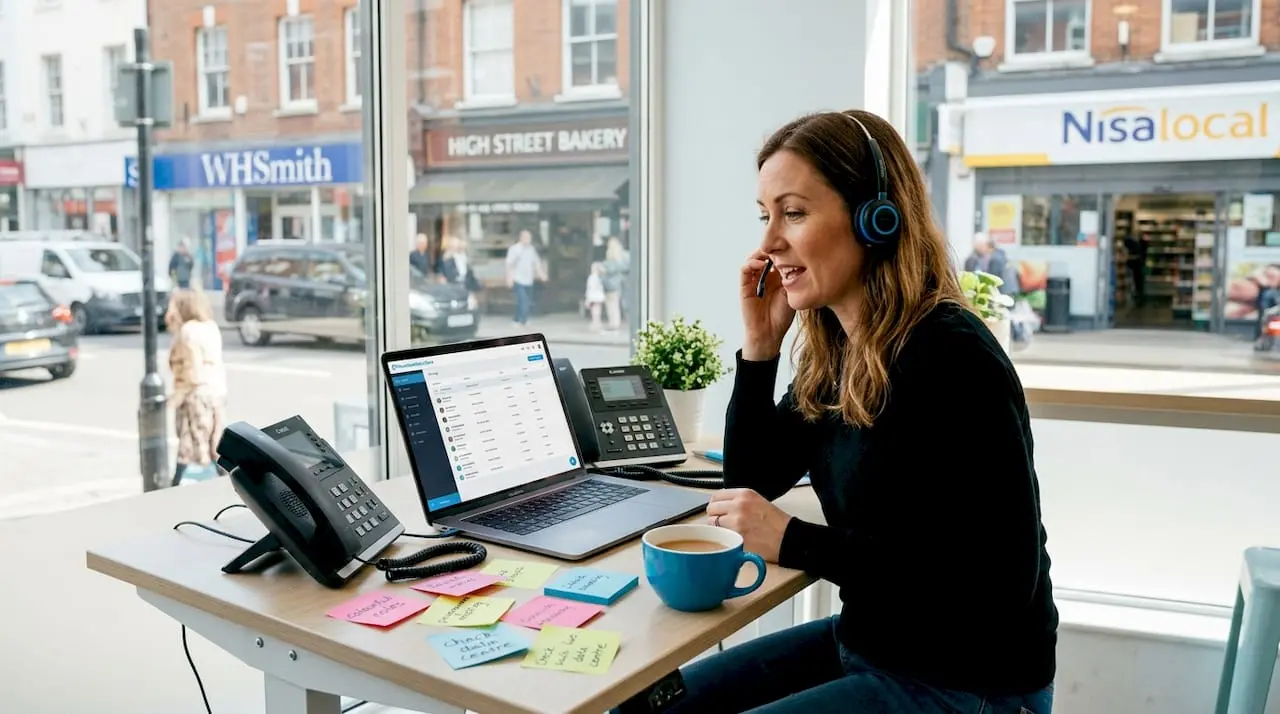
TL;DR:
- A flexible phone line is a digital service that runs over broadband, enabling remote access and scalability for UK businesses. With the 2027 PSTN switch-off, switching to digital lines reduces costs and enhances operational features like call management and CRM integration. Proper planning, including broadband testing and number porting, is essential for a smooth transition to future-proof, scalable communication systems.
Most UK business owners picture copper cables and wall sockets when they hear “flexible phone line.” That mental image is costing them money. A flexible phone line is a digital telephone service that runs entirely over your broadband connection, giving you the ability to add lines, route calls, and access your business number from virtually anywhere. With the PSTN and ISDN switch-off scheduled for January 2027, understanding this shift from analogue to digital telephony is no longer optional for UK businesses. This article covers how these systems work, what they cost, and how to choose one that fits your operation.
Table of Contents
- Key takeaways
- What is a flexible phone line and how does it work?
- Benefits of flexible phone lines for UK businesses
- Flexible lines vs. traditional landlines
- Choosing and implementing a flexible phone system
- Future-proofing your communications
- My honest take on flexible phone lines
- Get your business number right from the start
- FAQ
Key takeaways
| Point | Details |
|---|---|
| Digital, not physical | A flexible phone line runs over broadband, not copper wire, giving you location-independent access to your business number. |
| Significant cost savings | Businesses switching from traditional landlines can save up to 70-80% on call costs compared to legacy fixed lines. |
| 2027 deadline approaching | The UK PSTN/ISDN network closes in January 2027, making digital lines the only viable path forward for business telephony. |
| Licensing models matter | Choosing between per-user and concurrent-call licences can reduce your monthly bill by 30-50% as your business grows. |
| Number porting is critical | Never cancel your existing line before your new provider completes the transfer, or you risk permanent number loss. |
What is a flexible phone line and how does it work?
The clearest definition: a flexible phone line is a VoIP-based digital service that converts your voice into data packets and transmits them over a broadband connection rather than a traditional copper telephone network. There are no physical lines tied to a single location. Your business number exists in software, not in a wall socket.
Traditional telephony in the UK ran on the Public Switched Telephone Network (PSTN) and its business-grade counterpart, ISDN. Both are analogue or circuit-switched systems that require a dedicated physical connection for each active call. That infrastructure is being retired. The UK’s PSTN and ISDN network switch-off completes in January 2027, after which every business telephone line will need to run over broadband.
How calls actually travel
When you make a call on a flexible phone line, your voice is broken into small data packets by a device or application, transmitted across the internet or a private data network, and reassembled at the other end in milliseconds. The process is nearly identical to how a video call works, except the experience sounds and feels like a standard telephone call to both parties.
You can access a flexible line through several types of devices:
- Softphones: Applications installed on a laptop, desktop, or smartphone that behave exactly like a telephone
- IP desk phones: Physical handsets that plug into your network router rather than a phone socket
- Mobile apps: Your existing smartphone becomes an extension of your business phone system
- Analogue adapters: For businesses that want to keep existing handsets, an adapter converts analogue signals to digital
Pro Tip: Before switching, test your broadband’s upload speed and latency using a tool like Speedtest. VoIP calls require a stable upload speed of at least 100 kbps per concurrent call. Poor broadband is the number one cause of call quality complaints after switching.
Broadband stability is not optional here. Digital phone lines depend heavily on connection quality and power availability. If your broadband drops, so do your calls, unless you have a mobile failover configured. That is an important distinction from traditional lines, which continued working during internet outages.
Benefits of flexible phone lines for UK businesses
The financial case for switching is straightforward. Businesses can reduce costs by approximately 40% versus previous VoIP suppliers and up to 70-80% compared to traditional fixed landlines. Those savings come from lower line rental, cheaper call rates, and the elimination of expensive on-site PBX hardware.
But cost is only part of the story. Here are the operational advantages that genuinely change how a business communicates:
- Scalability without infrastructure: Adding a new employee used to mean calling an engineer and waiting weeks for a new line. With a flexible system, you add a user in minutes through an online portal, often for as little as £6 to £12 per user per month.
- Remote and hybrid working: Your team can take calls on their business number from home, a client site, or abroad. Callers see the same number regardless of where the person actually is.
- Advanced call management: Features like auto-attendants, call queuing, voicemail-to-email transcription, and real-time call analytics come standard with most hosted systems. These tools are simply unavailable on traditional copper lines.
- CRM and app integration: Flexible phone systems connect directly with platforms like Salesforce, HubSpot, and Microsoft Teams. Calls log automatically, click-to-dial works from within your CRM, and customer records appear on screen before you answer.
- Business continuity: If your office loses power or internet, calls can automatically reroute to mobiles or another site. This kind of dynamic call routing is what experts mean when they describe the true flexibility in flexible phone systems.
- Number portability: Your number is no longer tied to a physical address. You can move offices, expand to new cities, or work entirely remotely without changing your contact details.
The reliability point deserves emphasis. Ofcom requires providers to offer free resilience options to vulnerable customers so they can make emergency calls during power cuts. For businesses, this regulatory context signals that failover planning is considered standard practice, not an optional extra.
Flexible lines vs. traditional landlines
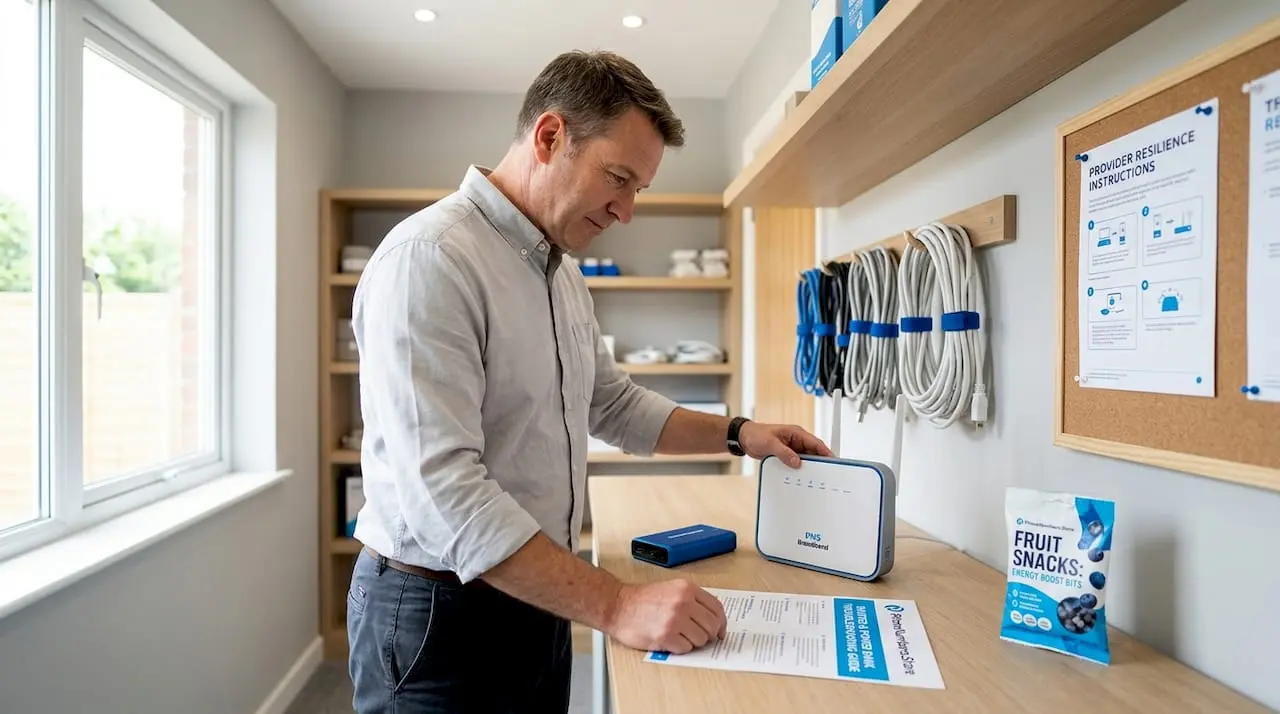
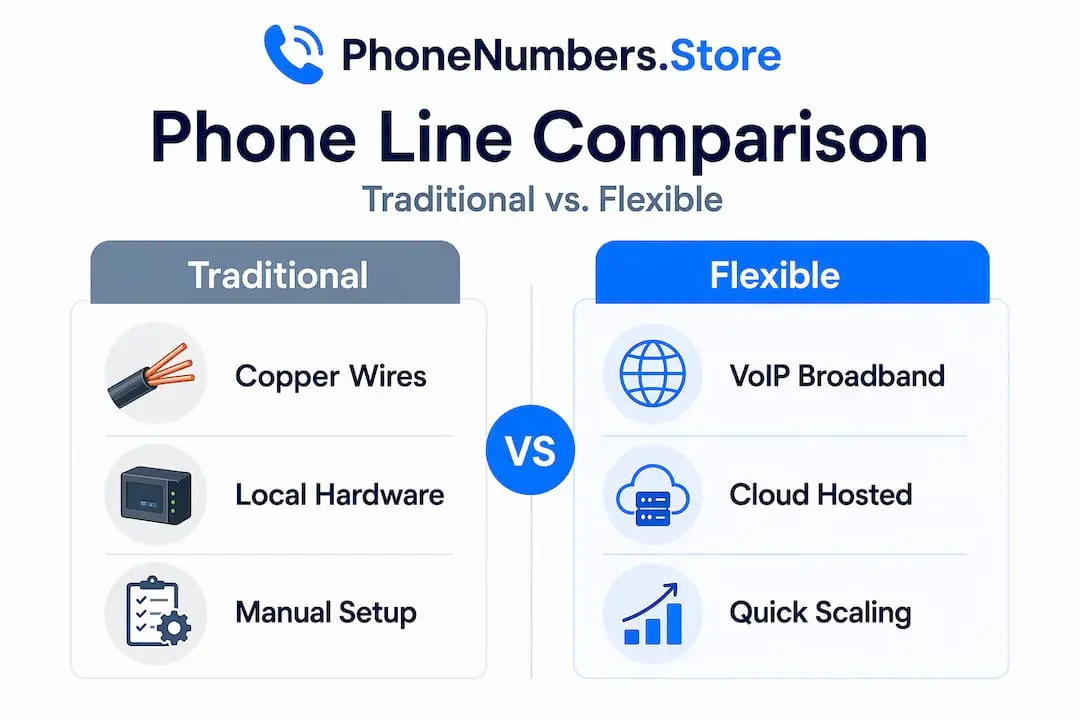
Understanding the differences in plain terms helps you make a faster, more confident decision. The table below contrasts the two approaches across the dimensions that matter most to UK business owners.
| Factor | Traditional landline | Flexible phone line |
|---|---|---|
| Infrastructure | Physical copper wire to premises | Broadband connection and software |
| Adding lines | Engineer visit required, days or weeks | Done online, minutes |
| Remote working | Not possible without call forwarding | Native feature, full functionality |
| Advanced features | Very limited | Auto-attendant, IVR, analytics, CRM links |
| Monthly cost | Higher line rental, limited features | £6-£12 per user, feature-rich |
| Maintenance | Provider and on-site hardware | Mostly managed by provider |
| Post-2027 viability | None. Network closes January 2027 | Fully viable, future-ready |
Beyond the table, there is an important hosting distinction that most comparisons skip. Flexible phone systems can be hosted in three ways: in the cloud (managed entirely by your provider), on your own premises (you own and manage the hardware), or via a partner host (a third party manages the infrastructure on your behalf). Hosting flexibility supports data sovereignty and compliance requirements, which matters considerably if you operate in a regulated sector like financial services, healthcare, or legal.
Pro Tip: Ask your provider directly: “Where is my data hosted, and can I choose the data centre region?” Cloud systems hosted outside the UK may create GDPR complications. A reputable provider will answer this clearly.
Licencing models also separate flexible systems from their traditional counterparts in financially significant ways. Traditional lines charge per physical line. Flexible systems offer two models. Per-user licencing charges a fixed monthly fee for every person on the system, whether or not they are all calling simultaneously. Concurrent-call licencing charges only for the number of active calls at any one time. For businesses where staff are rarely all on calls at once, concurrent licencing can save 30-50% compared to per-user pricing.
Choosing and implementing a flexible phone system
Getting the choice right from the start saves considerable headache later. Work through these considerations before signing any contract.
- Audit your broadband first. A flexible phone line is only as reliable as the connection underneath it. If your current broadband has frequent dropouts, resolve that before switching telephony.
- Map your current usage. How many simultaneous calls does your business typically handle? This determines whether per-user or concurrent licencing makes more financial sense.
- Clarify what is included. Some providers advertise low per-user prices but charge separately for call recording, number porting, and setup. Get a full cost breakdown in writing before committing.
- Choose a provider who manages porting. When moving your existing business number to a digital service, your new provider should handle the entire transfer process. Cancelling your old landline contract before porting completes risks permanent number loss. This cannot be undone.
- Plan staff training. Softphones and new call management portals require brief but genuine training. Businesses that skip this stage often end up with staff reverting to mobile calls and bypassing the system entirely, which wastes the investment.
- Test before you go live. Ask for a trial period or a phased rollout. Run the new system alongside your existing lines for a short period to catch any call quality or routing issues before customers experience them.
Pro Tip: Check whether your provider offers virtual numbers with local area codes, even if your team works remotely. A local number builds trust with regional customers and costs very little to add.
Timelines vary by provider and the complexity of your existing setup. A simple single-user migration can be completed within a day. A business with 50 users, complex call routing, and multiple ported numbers should expect two to four weeks for a well-managed deployment.
Future-proofing your communications
A flexible phone line is not just a replacement for an old copper line. It is an entry point into a much wider set of communications tools that can grow with your business. Consider what becomes possible once telephony is software-based:
- Unified communications: Voice, video conferencing, instant messaging, and file sharing can run within a single platform, removing the need for separate tools and subscriptions
- CRM-connected telephony: Every call can automatically log to a customer record, trigger follow-up tasks, and populate sales pipelines without manual input
- Hybrid and remote work infrastructure: Staff working from different locations present a single, consistent telephone experience to customers
- Compliance and security: Choosing a provider with UK-hosted infrastructure and call recording gives regulated businesses the audit trail they need
- Readiness for further change: The PSTN/ISDN switch-off is a strategic opportunity to integrate communications with business systems rather than simply swapping like-for-like
Businesses that treat this transition as purely a technical exercise tend to end up with the same limitations they had before, just running on newer infrastructure. The ones that use it to rethink how their teams communicate and how customers reach them come out ahead.
My honest take on flexible phone lines
I’ve spent years watching UK business owners approach this topic with unnecessary anxiety. The term “flexible phone line” does cause genuine confusion, and I understand why. It sounds like it might mean a phone cable with more give in it.
What it actually means is that your telephone system is software. That shift changes everything about how you manage, scale, and protect your business communications. In my experience, the businesses that struggle most with this transition are the ones who focus entirely on replicating what they had before rather than asking what they could do differently.
The 2027 switch-off is not a threat. It is the clearest deadline the UK telecom industry has ever set, and it creates a genuine forcing function to upgrade. The businesses I’ve seen get the most value from this are the ones who pair the move to VoIP with a proper review of their call routing, their number strategy, and their hosting choices.
The licensing model question is one that most business owners completely overlook until they receive their first invoice. Concurrent-call licencing is almost always more cost-effective for businesses where not everyone is on the phone simultaneously. Ask about it explicitly. Most providers will not volunteer that information unless you do.
And please, do not cancel your existing line prematurely. The number of businesses that have lost phone numbers they had for decades because they cancelled before porting completed is genuinely painful to think about. Your new provider should own that process entirely.
— Rob
Get your business number right from the start
If you’re moving to a flexible phone system, the number you choose matters more than most business owners realise. A memorable, professional number builds instant credibility with customers and sticks in the mind long after a first call.
Phonenumbers is the UK’s leading provider of memorable 01, 02, and 07 numbers, including local area code numbers that work anywhere in the country. You can search for a business number by town, area code, number sequence, or pattern to find something that genuinely represents your brand. Whether you want a distinctive Nottingham number or an easy-to-remember sequence your customers will actually recall, Phonenumbers has a searchable database built for exactly this kind of decision. Pairing a strong number with your new flexible phone line gives you a communication setup that works as hard as you do.
FAQ
What is a flexible phone line in simple terms?
A flexible phone line is a digital telephone service that runs over broadband rather than copper wire, allowing you to make and receive calls from any device or location using your business number.
How do flexible phone lines work?
They convert your voice into data packets transmitted over your broadband connection, using software applications or IP handsets rather than traditional telephone hardware.
How much do flexible phone lines cost for UK businesses?
Most providers charge between £6 and £12 per user per month, with businesses typically saving up to 70-80% compared to traditional fixed landlines when switching to a hosted VoIP system.
Can I keep my existing phone number when switching?
Yes, number porting allows you to transfer your current number to a digital system. Your new provider should manage the entire process, and you must not cancel your old line before porting completes.
Do I need to switch before the 2027 PSTN switch-off?
The UK PSTN and ISDN networks close in January 2027, after which traditional landlines will stop working. Switching before that deadline gives your business time to migrate carefully rather than under pressure.