
A VoIP caller is someone placing a phone call over the internet using Voice over Internet Protocol instead of a traditional phone line. Your handset sometimes shows the words “VoIP caller” instead of a name simply because the number isn’t listed in the caller ID databases that match numbers to names.
There’s nothing inherently suspicious about that. Most VoIP callers are ordinary people or businesses using internet-based telephony because it’s cheaper and more flexible than a copper phone line.
A few things worth knowing straight away:
- The label appears because of missing CNAM (Caller Name) data, not because the call is dodgy.
- The vast majority of VoIP calls are legitimate: businesses, remote workers, and apps like WhatsApp or Teams all route calls this way.
- A small minority get abused for spoofing and scam calls, which is why it pays to know the basics of how VoIP works and how to check a number.
Key Takeaways
A VoIP caller places calls by converting voice into internet data packets rather than using a traditional phone line, and the “VoIP caller” label usually just reflects a missing CNAM registry entry, not a threat.
| Point | Details |
|---|---|
| Definition | A VoIP caller uses Voice over Internet Protocol to send calls as digital packets over the internet. |
| Missing caller name | Caller ID shows “VoIP caller” mainly when the number isn’t in a CNAM registry linking numbers to names. |
| Check before you worry | Use line-type lookups, prefix checks (like the UK’s 056), or a search engine before assuming a call is spam. |
| Defend against spoofing | Hang up on unsolicited money or data requests, block the number, and never call back using the digits shown. |
| Business number continuity | Phonenumbers lets businesses port or buy memorable UK numbers configured for VoIP, keeping recognition through the PSTN switch-off. |
Table of Contents
- How does VoIP work?
- Who uses VoIP calls, and why?
- How can you tell if a number is VoIP?
- Are VoIP calls safe, or a spam risk?
- How do you stop or block unwanted VoIP calls?
- What does the PSTN switch-off mean for your business number?
- So, should you answer that VoIP call?
- Why this matters more than most people realise
- Keep your number when you make the move to VoIP
- Sources
- FAQ
How does VoIP work?
VoIP takes your voice, chops it into digital packets, and fires them across the internet instead of sending an analogue signal down a copper wire. That’s the entire trick. Your phone (or app) converts sound into data, compresses it using a codec, and sends it out in small bursts that reassemble on the other end almost instantly.
Two protocols do most of the heavy lifting, and it’s worth knowing their names even if you never touch the technical side. SIP (Session Initiation Protocol) sets up, manages, and ends the call. Think of it as the switchboard operator, agreeing where the call goes and when it starts and stops. RTP (Real-Time Transport Protocol) actually carries the voice data once the call is connected. SIP negotiates; RTP delivers.
Because voice travels as data, call quality depends on your internet connection rather than copper wire quality. Bandwidth and latency matter more than distance. A VoIP call from London to Sydney can sound clearer than a landline call across town, provided both ends have a stable connection.
Here’s roughly what happens each time you make a VoIP call:
- Your device or app converts your voice into digital audio.
- A codec compresses that audio into packets.
- SIP establishes the connection with the recipient’s device or number.
- RTP streams the packet data across the internet in real time.
- If the other person is on a traditional landline or mobile network, a gateway converts the VoIP packets back into a format the PSTN (public switched telephone network) understands.
That last step explains why you can ring a VoIP number from an ordinary mobile and never notice the difference. The conversion happens invisibly at a gateway somewhere in the call path.
You’re almost certainly using VoIP more than you realise. WhatsApp calls, Microsoft Teams, Google Meet, and Zoom all place calls this way, and from the recipient’s end the experience is identical to any other call, even though the delivery method is completely different.
Pro Tip: If a VoIP call sounds choppy or delayed, the problem is almost always bandwidth on one end, not a fault with the number itself. Ask the caller to switch from Wi-Fi to a wired connection or a stronger signal before assuming anything sinister.
Who uses VoIP calls, and why?
VoIP has become the default for anyone who wants flexibility without the cost of traditional phone infrastructure. If you’re getting calls tagged “VoIP caller”, the person or organisation behind it is more likely to be mundane than malicious.
Typical users include:
- Remote and hybrid workers who need a business number that follows them, not a desk phone.
- Small and medium businesses replacing expensive PBX systems with cloud-based alternatives.
- Contact centres and customer service teams running high call volumes with recording and routing built in.
- App-based services (delivery drivers, ride-hailing, telehealth) that need to mask personal numbers while calling customers.
The pull for businesses is straightforward: lower running costs than a landline contract, the ability to scale lines up or down without an engineer visit, and easy integration with CRM systems and call recording tools. A five-person company can add ten more lines in an afternoon rather than waiting weeks for a physical installation.
For individuals, the draw is similarly practical. One number can ring on your phone, laptop, and tablet at once, and international calls typically cost a fraction of what a mobile network charges. If you’ve ever used a VoIP app to call a relative abroad and paid almost nothing for it, you’ve felt this benefit directly.

Businesses adopting VoIP still need to handle data protection and call recording disclosure properly, since moving to internet telephony doesn’t remove those obligations. It just changes the plumbing behind them.
How can you tell if a number is VoIP?
Look at the caller ID first, though it’s not conclusive on its own. A blank name field or a generic “VoIP caller” label often means the number isn’t listed in a CNAM registry, which maps numbers to names for standard caller ID lookups. Landline and mobile numbers usually sit in these registries; many VoIP numbers don’t, especially newer ones or those from smaller providers.
A handful of practical checks help confirm what you’re dealing with:
- Run the number through a line-type or carrier lookup tool, which checks call routing data rather than relying on the name field.
- Check the prefix. In the UK, 056 is a dedicated VoIP prefix, so a number starting that way is unambiguously VoIP.
- Search the number in a search engine. Business VoIP numbers often turn up on company websites or review sites even if caller ID shows nothing.
- Note whether the area code matches where the caller claims to be. VoIP numbers can carry any UK area code regardless of the caller’s actual location, because the number is no longer tied to a physical exchange.
Here’s the twist that trips people up: since the UK’s PSTN migration is well underway, plenty of ordinary-looking 01, 02, and 03 numbers are now delivered over IP even though they display and dial exactly like traditional landline numbers. Line-type lookups remain the most reliable way to confirm this, because visual cues like area code or missing names are hints, not proof.
Are VoIP calls safe, or a spam risk?
VoIP’s flexibility is exactly what makes it attractive to scammers. Because VoIP numbers are cheap, disposable, and can display almost any area code, fraudsters use spoofing to make a call look local or official when it isn’t. That’s the trade-off: the same technology letting a small business run a slick customer line also lets a scammer mimic a bank’s number.
Watch for these warning signs regardless of what the caller ID shows:
- Unsolicited requests for banking details, passwords, or one-time codes.
- Pressure to act immediately, especially around unpaid tax, fines, or “suspicious account activity”.
- A caller who won’t confirm which organisation they represent when asked directly.
- Numbers that change slightly on repeat calls, a classic spoofing pattern.
If any of that happens, hang up. Don’t share personal or financial information, block the number, and report it through your carrier’s spam reporting feature if one exists.
Pro Tip: Never call back a suspicious number using the digits it displayed. Look up the organisation’s official contact details separately and call that instead. This one habit blocks most spoofing scams outright.
Keep this in proportion, though. Most VoIP calls you receive are legitimate business contact, customer service follow-ups, or personal calls, not fraud attempts.
How do you stop or block unwanted VoIP calls?
Start with what’s already on your device, then escalate if the calls keep coming.
- Turn on your phone’s built-in call blocking and spam-reporting features. Most smartphones now flag likely spam automatically using shared reporting data.
- Check with your carrier or VoIP provider for a call-blocking or “do not disturb” list. Many now filter known spoofed number patterns before they reach you.
- If you run a business VoIP system, ask about router or firewall-level filtering, which can block traffic from known spam sources before it ever rings a handset.
- Use a dedicated call-screening app that cross-references numbers against spam databases in real time.
- If nuisance calls persist despite all of the above, consider changing your number or moving to a managed business VoIP plan with built-in call screening and reporting controls.
That last step matters more for businesses than individuals. A managed plan gives you visibility over call patterns that a personal mobile simply can’t offer.
What does the PSTN switch-off mean for your business number?
The UK government has confirmed that traditional analogue phone lines are being phased out, with services increasingly delivered over IP infrastructure rather than copper. Providers are required to support customers through this migration, and most 01, 02, and 03 numbers will keep working exactly as before, just delivered differently underneath.
This matters if you’ve built a business around a memorable number. The good news: number portability means you don’t have to give it up.
- Landline numbers can typically be ported onto a VoIP platform, keeping the same digits customers already recognise.
- Porting preserves brand recall while unlocking VoIP features like call forwarding, multi-device ringing, and recording, none of which a copper line ever offered.
- The switch-off also affects related infrastructure such as ISDN and older PSTN-based systems, so it’s worth checking your current setup now rather than waiting for a forced migration.
If you’re planning the move, Phonenumbers has a practical porting guide that walks through transferring an existing number onto VoIP without losing continuity with customers.
So, should you answer that VoIP call?
Yes, generally. Most VoIP callers are businesses, remote workers, or apps doing exactly what they say. Answer normally, stay alert for the classic scam signs, and block or report anything that pushes for money or personal details.
For a business managing its own number, the real decision isn’t whether to fear VoIP. It’s whether your current number is ready to move onto it without losing the recognition you’ve built.
Why this matters more than most people realise
Most guidance on VoIP callers stops at “it’s probably fine, but watch out for scams.” That’s true, but it misses the more interesting shift happening underneath: the distinction between “landline” and “VoIP” is dissolving, not just for scammers exploiting spoofing, but for every business number in the country.
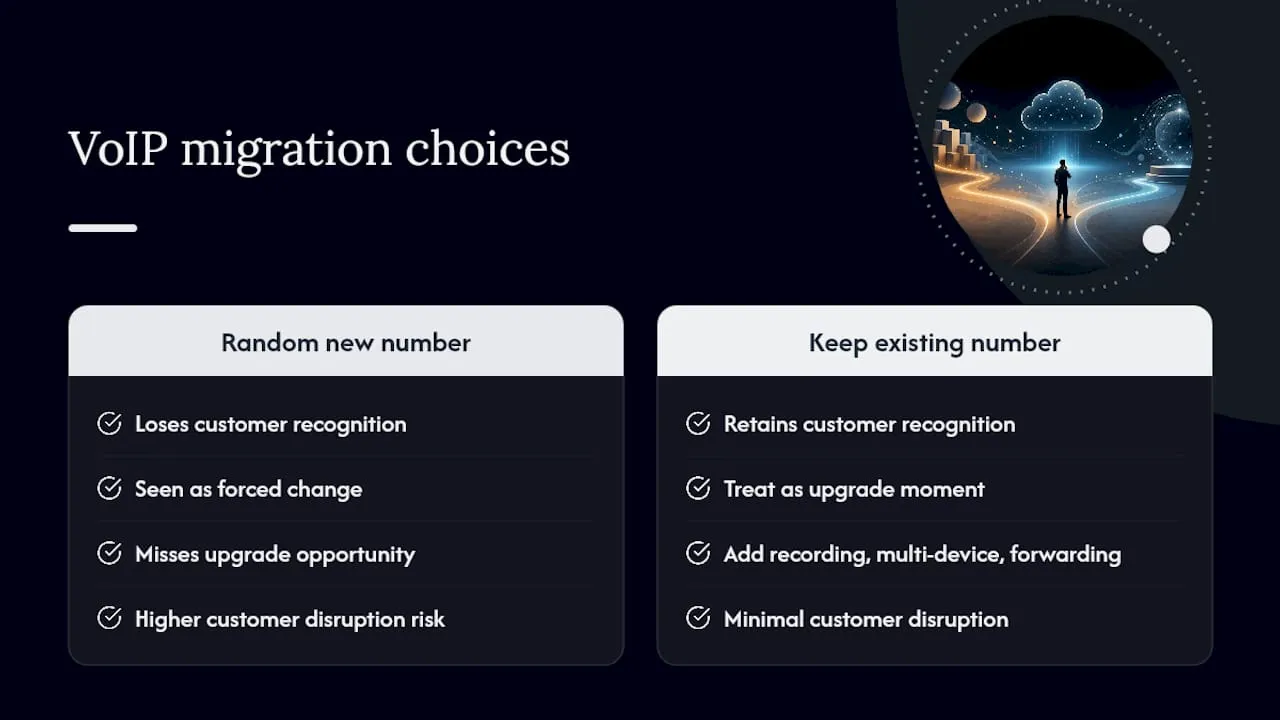
Within a few years, asking “is this a VoIP number?” will be a bit like asking whether your electricity comes from a specific power station. The delivery method stops mattering once the switch-off completes; what matters is whether the number still works and still means something to your customers. Businesses that treat VoIP migration as a technical inconvenience are missing the actual opportunity: it’s a rare moment where you can upgrade your entire telephony setup, add call recording, multi-device ringing, forwarding, without touching the one thing customers actually remember, which is the number itself.
The businesses getting this wrong aren’t the ones ignoring VoIP. They’re the ones assuming a forced migration means picking a random new number from whatever their new provider hands them. That’s the costly mistake, not the technology change itself.
Keep your number when you make the move to VoIP
Migrating to VoIP doesn’t have to mean losing the number your customers already dial from memory. Phonenumbers sells and rents memorable UK landline and mobile numbers built for exactly this transition, ready for call forwarding, SIM integration, or hosting directly on a VoIP system, so you get modern telephony features without a single dropped call to existing customers.
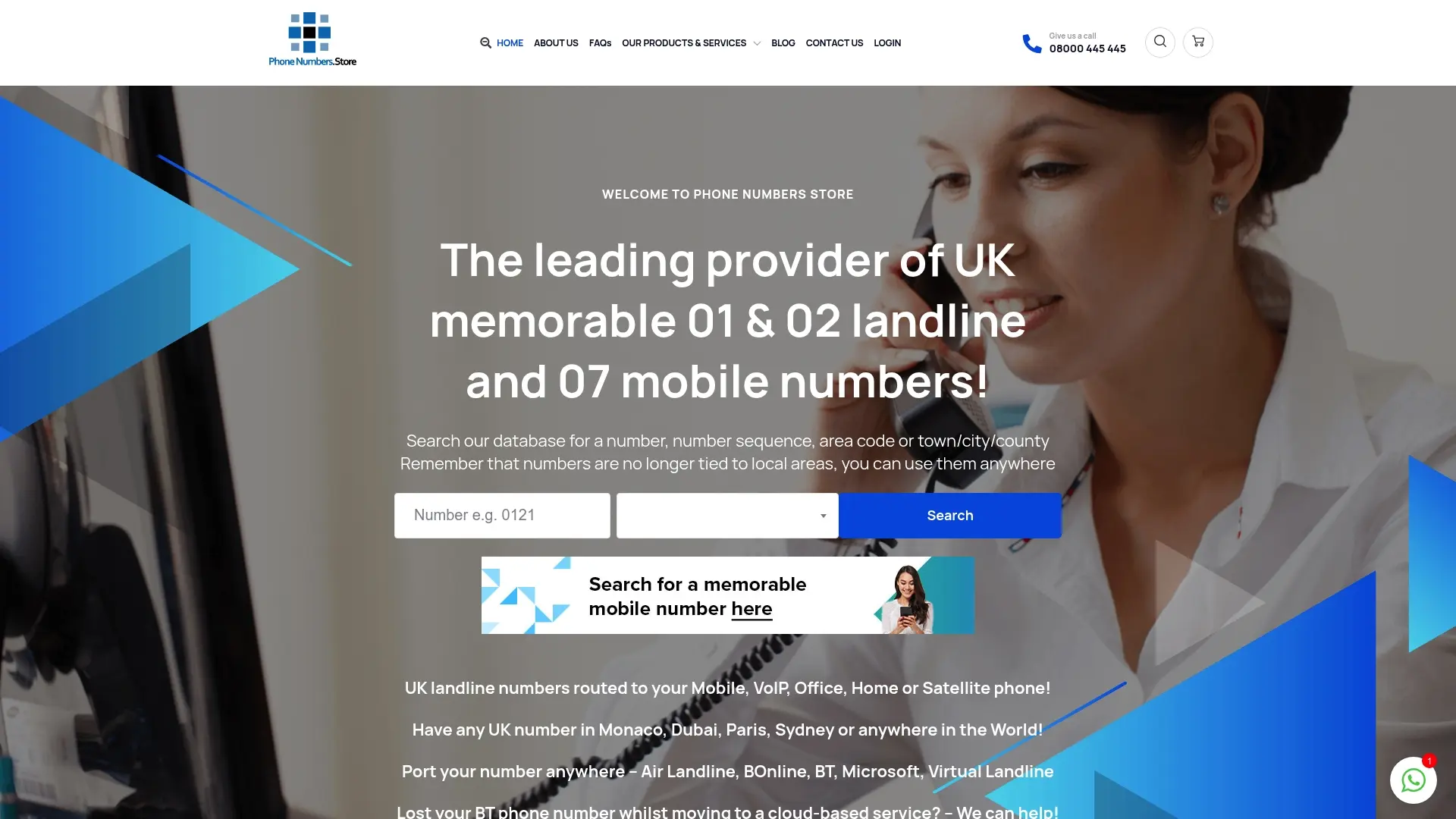
A memorable number does more than sit on a business card. It’s a recall tool: a taxi firm on 0113 255 0000 or a trades business on 0115 928 8888 sticks in a customer’s head in a way a random mobile number never will. Every number in the Phonenumbers store is portable and configurable for VoIP from day one, so migration becomes an upgrade rather than a disruption.
If you’re weighing up a switch, browse the available memorable numbers and check which area codes or patterns suit your business before your current provider forces the decision for you.
Sources
- Gov
- VoIP callers: What are they and how do they work? | Ooma
- What Is a VoIP Caller? Everything You Need to Know - IDT Express
- VoIP numbers UK — what they are, 056 vs 020 | WhoCalledLookup
FAQ
Why is a VoIP caller calling me?
Most VoIP calls come from businesses, remote workers, or apps using internet telephony because it’s cheaper and more flexible than a traditional line. The label appears simply because the number isn’t listed in a caller name registry, not because anything is wrong.
Should I answer VoIP calls?
Yes, in most cases. The majority are legitimate personal or business calls, though you should stay alert for pressure tactics or requests for money and personal details, which signal a scam regardless of how the call was delivered.
How do I find out who owns a VoIP number?
Run the number through a line-type or carrier lookup tool, check the prefix (056 numbers in the UK are explicitly VoIP), or search the digits online, since business VoIP numbers often appear on company websites even when caller ID shows nothing.
Who uses VoIP calls?
Remote workers, small and medium businesses, contact centres, and everyday apps like WhatsApp and Teams all use VoIP, making it one of the most common ways calls are placed today rather than a niche technology.