A memorable UK phone number is a number chosen for its pattern (repeats, sequences, or an easy-to-say run of digits) that’s hosted so calls can forward to a landline, a mobile, or a hosted phone system. You can buy it outright or rent it, and the hosting layer handles where calls actually land. The rest of this guide covers how that routing works, what Ofcom’s portability rules mean for you, and how to pick a pattern that actually earns its keep in marketing.
TL;DR:
- Number patterns that are easy to say aloud, such as repeats, sequences, or chunking, perform best for marketing and quick recall.
- Portability rules guarantee existing numbers can be retained when switching providers, with no direct charges for porting, but wholesale costs may influence provider pricing.
- Setting up a hosted number involves choosing a routing style, testing call forwarding, and verifying call quality within the first week to prevent costly errors.
- Buying a permanent number suits long-term branding, while renting offers flexibility for testing new campaigns or regions without upfront investments.
- Virtual numbers can be operational within hours, and thorough testing of forwarding and porting beforehand ensures smooth integration into existing business systems.
Table of Contents
- What is a VoIP telephone system, in the sense that matters to your business?
- How does number hosting actually route your calls?
- Number portability and the Ofcom protections you should know
- How do you choose the right memorable number for your business?
- Getting your number live: a step-by-step checklist
- What experience actually teaches you about setting these numbers up
- Ready to find your number? Here’s where to start
- Sources
- FAQ
What is a VoIP telephone system, in the sense that matters to your business?
Forget the technical definition for a moment. When business owners search “what is a VoIP telephone system,” most aren’t after a networking lesson. They want a number that’s easy to remember, easy to say on the radio or on the side of a van, and flexible enough to follow them if they change premises, providers, or even business models.
That’s what number hosting delivers. You can either buy a number outright or rent it on an ongoing basis, and in either case the number is hosted on a platform that decides where incoming calls actually go. This is sometimes called a virtual number, because there’s no physical line tied to a desk. It’s a routing address that points wherever you tell it to.
UK numbers fall into a few recognisable families:
- 01/02 geographic numbers — tied historically to a town or city, but no longer restricted to that area. A Leeds 0113 number can ring a mobile in Bristol.
- 07 mobile numbers — useful for a mobile-first trade business or sole trader who wants a dedicated business line separate from a personal handset.
- 03/08 non-geographic numbers — often chosen by firms operating nationally, where a local area code might actually undersell their reach.
The marketing case is straightforward. A number that’s easy to recall, say aloud, or read off a van door gets dialled more often than a random 11-digit string. Memorable business numbers strengthen recall and brand perception, and because they’re hosted rather than hardwired, a sole trader can get the same professional presence as a larger competitor without installing anything.
How does number hosting actually route your calls?
A hosted number works like a switchboard that never sleeps. It receives the call first, then decides where to send it based on rules you set. The three most common routing styles are:
- Single destination forwarding. Every call goes straight to one line, typically a mobile or existing landline. Simplest option, and the one most sole traders start with.
- Simultaneous ring. The call rings several destinations at once (say, your mobile and a colleague’s), and whoever answers first takes it.
- Sequential routing. If the first destination doesn’t pick up within a set number of rings, the call cascades to a second, then a third.
Destinations can be a standard landline, a mobile SIM, or a SIP trunk feeding into a hosted PBX or VoIP handset. This matters if you’re already running a hosted phone system: rather than replacing anything, the memorable number simply becomes another inbound route into whatever setup you already have.
Integration with an existing PBX is usually a matter of pointing the number at your SIP credentials, something most hosted VoIP setups support without custom engineering. For simpler forwarding to a SIM or landline, there’s no hardware at all involved. Virtual numbers can be live within hours of ordering, not days.
What a provider will typically ask for during setup: your destination number, your preferred routing style, and basic verification details to confirm you’re authorised to use the number for business purposes. Budget half an hour for the whole process if you already know where calls should land.
Number portability and the Ofcom protections you should know
You can normally keep your existing number when you switch provider. That’s not a courtesy, it’s a regulatory requirement. Ofcom’s number portability rules exist specifically so customers aren’t held hostage by a number they’ve spent years building brand recognition around.
A few practical protections worth knowing before you port a number:
- Providers must issue a PAC or STAC code within specific timescales defined by Ofcom once you request one, rather than dragging the process out.
- You cannot be charged directly for the act of porting your own number, under Ofcom’s General Conditions.
- If a porting attempt fails partway through, the losing provider has an obligation to reactivate your service rather than leave you disconnected, as required by Ofcom’s General Conditions.
There’s a wrinkle worth flagging. Providers do incur wholesale porting charges between each other, and Ofcom’s GC18 guidance sets out how those costs should be recovered on a cost-oriented basis. You won’t see this charge directly, but it’s part of why commercial terms between providers occasionally differ, and why some hosting agreements bundle porting support rather than treating it as a bolt-on.
How do you choose the right memorable number for your business?
Pattern matters more than most people assume before they start looking. A number destined for a radio ad or a van livery needs to be said aloud clearly and read at speed from a moving vehicle. A number that only ever appears on a website or in an email footer has more room for complexity, since the reader has time to process it visually.
Some patterns that consistently test well:
- Repeats — 0113 273 2222, where the same digit clusters make the number stick after one hearing.
- Sequences — ascending or descending runs like …234 or …987.
- Chunking — numbers that break naturally into memorable pairs or triples when spoken.
Buying outright suits a business planning to keep the number indefinitely and wants it as a permanent asset. Renting suits a business testing a new campaign, region, or product line without committing capital upfront. Either way, check the hosting package for forwarding options, voicemail, and whether SIM routing is included, since these vary between providers and affect what you can actually do with the number day to day.
Pro Tip: Before you commit, say the number aloud to someone else and time how long it takes them to write it down correctly. If it takes more than a few seconds or needs repeating, it’s not radio-ready or van-livery-ready, no matter how good it looks on screen.
Always confirm portability terms and test forwarding to your actual destination line before finalising a purchase. A number that forwards correctly in testing but fails once live is a far more common problem than most buyers expect.
Getting your number live: a step-by-step checklist
Getting from “I like that number” to “calls are landing where I want them” is a shorter process than most first-time buyers expect.
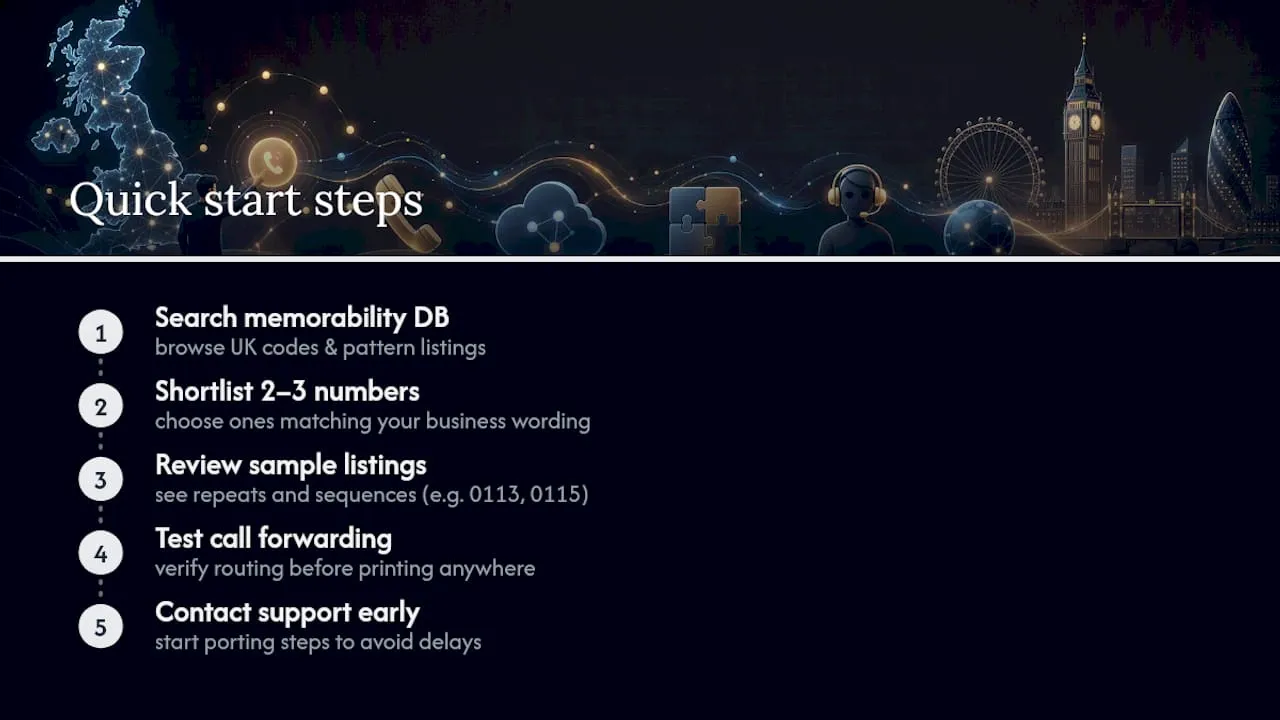
- Search the database by pattern, area code, town, or sequence to shortlist numbers that fit your brand and budget.
- Decide buy or rent, and check what the hosting package includes: forwarding style, simultaneous ring, voicemail, SIM routing.
- Place the order and complete any verification the provider requires.
- Arrange porting if you’re bringing an existing number across rather than starting fresh, and confirm timescales upfront.
- Test incoming calls to your live destination before you publish the number anywhere.
- Set business hours or an IVR menu if callers need directing, and monitor call quality closely during the first week.
That final step matters more than it sounds. Early call quality issues are usually a routing configuration problem, not a fault with the number itself, and they’re far easier to fix in week one than after the number’s already printed on 5,000 leaflets.
What experience actually teaches you about setting these numbers up
Most of the advice above didn’t come from a manual. It came from watching where things actually go wrong: numbers ordered without checking forwarding first, porting requests submitted with the wrong destination details, radio-ready numbers that turned out to be a mouthful in practice.
Rob writes the technical and practical guidance behind Phonenumbers Store’s blog, covering everything from hosted VoIP mechanics to the finer points of transferring an existing landline number across providers. That’s the same practical lens behind the steps above: test before you commit, understand the portability rules before you assume they don’t apply to you, and treat the pattern of a number as a marketing decision, not an afterthought.
Phonenumbers Store’s own database reflects that thinking. It’s searchable by pattern, area code, or sequence, supports both buying and renting, and the hosting side covers call forwarding and portability support rather than leaving customers to work it out with a third party.
— Rob
Ready to find your number? Here’s where to start
Reading about number patterns is one thing. Finding one that actually fits your business, at a price that makes sense, is another. That’s where the provider earns its place: rather than hunting through a generic provider’s leftover stock, you search a database built specifically around memorability, patterns, and UK area codes, then buy or rent on your own terms with no lengthy contract forcing your hand either way.
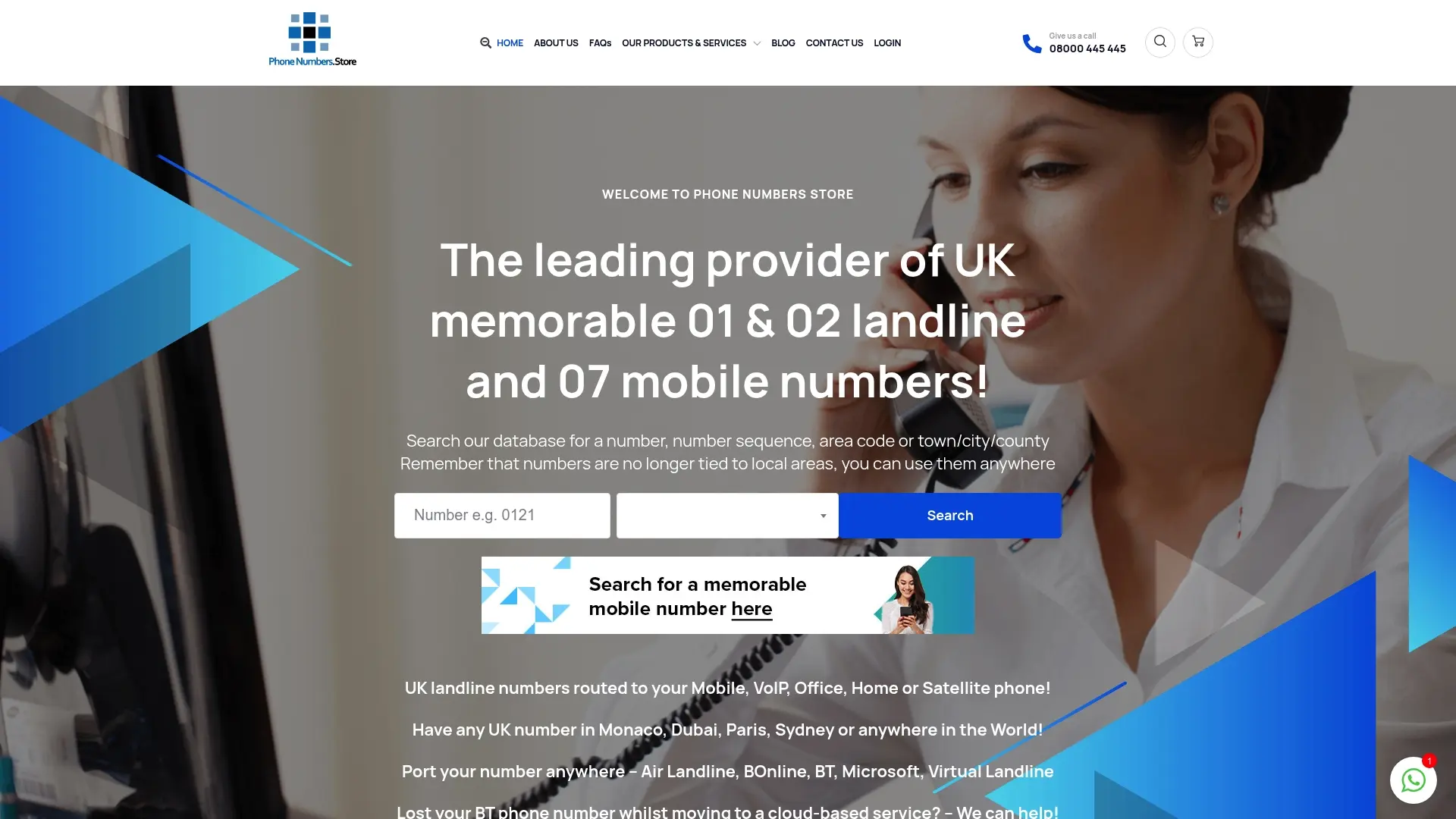
The hosting side covers practical features such as forwarding, portability support, and SIM routing, so a number you find today can be live and taking calls within hours, not weeks. If you’re weighing patterns, browse example listings like this 0113 273 2222 number to see how repeats and sequences look in practice, or check this 0115 928 8888 listing for a different pattern style.
Search the database now, shortlist two or three numbers that fit how you actually talk about your business, and test the forwarding before you print it anywhere. If you’re porting an existing number, get in touch with support early so the timescales don’t catch your launch date off guard.
Sources
FAQ
What is a VoIP telephone system in this context?
It’s a memorable UK phone number, geographic, mobile, or non-geographic, paired with a hosting service that routes incoming calls to a landline, mobile, or hosted phone system.
Can I keep my existing number if I switch provider?
Yes. Ofcom requires providers to support portability, and you cannot be charged directly for the porting process itself.
Is buying or renting a number better for my business?
Buying suits a permanent brand asset you’ll keep long-term; renting suits testing a campaign or region without upfront commitment. Check hosting features either way before deciding.
How quickly can a number be live and taking calls?
Basic forwarding setups can be live within hours of ordering, since no physical hardware installation is required for standard call forwarding.
Does Phonenumbers Store support porting an existing number?
Yes, Phonenumbers Store offers portability support alongside its searchable database of buy or rent numbers and standard hosting features like call forwarding.