
A non-fixed VoIP number is a virtual telephone number that runs over the internet rather than a physical phone line, so it isn’t tied to any street address. You can answer it from a laptop in Leeds or a mobile in Lisbon, which is the whole appeal. The trade-off is that emergency services can’t automatically pinpoint where you’re calling from, and some caller-ID systems trust these numbers a little less than a traditional landline.
TL;DR:
- Non-fixed VoIP numbers lack automatic emergency location data, so callers must manually state their location during emergency calls.
- These numbers are provisioned quickly via software without physical installation, making them ideal for remote teams and temporary setups.
- They can be used across multiple devices and countries without geographic restrictions, but trust and spam filtering can be issues due to lacking tied location data.
- Fixed VoIP numbers are bound to verified physical addresses and support automatic emergency detection, unlike non-fixed numbers which are location-independent.
- Pricing involves a setup fee, monthly rental, and optional inclusive minutes, with numbers often portable and available within days from providers.
Table of Contents
- What is a non-fixed VoIP number, technically speaking?
- Fixed VoIP vs non-fixed VoIP: what actually changes
- Benefits and drawbacks of non-fixed VoIP numbers for businesses
- Numbering rules and emergency calling: what UK businesses should know
- How to get a non-fixed VoIP number set up
- Should your business choose a non-fixed number?
- Why the “flexibility vs trust” trade-off gets oversold
- Get a memorable number without the wait
- Sources
- FAQ
What is a non-fixed VoIP number, technically speaking?
A non-fixed VoIP number is assigned to a person or a device rather than to a wall socket in a specific building. That single distinction explains almost everything else about how it behaves. There’s no network termination point for the operator to register an address against, so the number effectively travels with whoever holds the login credentials.
In practice, this means the number lives in the cloud. It gets delivered over an internet connection and can ring on a desk phone running SIP, a softphone app on a laptop, or a standard mobile through a provider’s own app. Someone could take a call meant for a Manchester business number while sitting in a hotel room in Madrid, and the caller would never know the difference.
A few terms get used almost interchangeably here, and it’s worth untangling them:
- Virtual number: the broad term for any number not fixed to a physical line, which includes non-fixed VoIP.
- Non-fixed VoIP: a virtual number specifically delivered through Voice over Internet Protocol technology.
- Location-independent number: a functional description of the same thing, emphasising that it works anywhere with internet access rather than one fixed site.
Provisioning is usually quick because there’s no engineer visit and no physical line to install. You buy or reserve the number, configure it with SIP credentials or a provider app, and it’s live. That speed is a major reason non-fixed VoIP numbers suit growing teams that can’t wait weeks for a line to be connected.
Fixed VoIP vs non-fixed VoIP: what actually changes
The clearest way to separate the two is by asking one question: is the number bound to a verified physical address? Fixed VoIP numbers are. They’re registered to a specific location, much like a traditional landline, and that registration is what allows emergency services to find you automatically if you dial for help. Non-fixed numbers skip that step entirely, which is where the flexibility comes from, and where the risk sits too.
Administration differs as well. Fixed VoIP numbers often require address verification and a bit more paperwork before they go live, while non-fixed numbers are typically provisioned entirely through software, with no proof-of-address step to slow things down.
Here’s how the two compare on the points that actually affect a buying decision:
- Address binding: fixed numbers are tied to a registered location; non-fixed numbers carry no automatic address data.
- Emergency calling: fixed numbers support automatic location detection; non-fixed numbers usually need the caller to state their location manually.
- Setup effort: fixed often means identity and address checks; non-fixed is generally instant, self-service provisioning.
- Mobility: non-fixed numbers move freely between countries and devices; fixed numbers stay associated with one site.
- Best fit: fixed suits a single-office setup with a stable location; non-fixed suits remote teams, seasonal projects, or businesses wanting a local presence in a city they’ve never set foot in.
Neither option is objectively better. A dental practice with one premises and a legal duty to be locatable has very different needs from a consultancy running a distributed team across three time zones. The Techopedia definition of non-fixed VoIP makes a similar point: user experience is nearly identical on both sides, but provisioning and suitability diverge sharply depending on the use case.
Benefits and drawbacks of non-fixed VoIP numbers for businesses
The upside is straightforward. Non-fixed numbers can be live within minutes, cost less to set up than a traditional line, and let multiple people or devices answer the same number without any physical hardware. A business can hold a recognisable London 020 number without ever renting office space in the city, or run call centre agents from four countries under a single line. Scaling up means buying another number, not booking an installation.
The drawbacks are just as real, and worth taking seriously rather than glossing over:
- Emergency-location gaps: because non-fixed numbers typically lack an automatic address association, callers to emergency services may need to state their location out loud rather than relying on the system to detect it.
- Trust and spam flagging: automated caller-ID and spam-filtering systems can rate non-fixed numbers lower simply because they lack tied location data and are easy to provision in bulk.
- Regulatory variation: rules on numbering and disclosure differ from country to country, so a number that’s compliant in one market may need extra steps in another.
Pro Tip: Register your number with CNAM data as soon as it’s active, and route your first few weeks of calls through it consistently rather than switching numbers repeatedly. Providers and carriers use calling patterns to build trust scores, and a number that behaves consistently from day one is far less likely to get flagged as spam.
Security-wise, the fix isn’t complicated: use a reputable provider, keep CNAM registration current, and avoid the temptation to buy and discard numbers quickly, which is exactly the pattern spam filters are trained to catch.
Numbering rules and emergency calling: what UK businesses should know
Ofcom’s numbering plan splits UK numbers into clear categories, and understanding them helps explain why non-fixed VoIP sits slightly outside the traditional framework. Geographic numbers (01 and 02) are historically tied to a region. Non-geographic numbers (03 and 08) carry no location implication by design. Ofcom also maintains a dedicated 056 range for location-independent electronic communications services, created specifically for numbers like these that don’t sit at a fixed address.
The emergency-calling gap is the detail most businesses underestimate. Because non-fixed numbers generally don’t carry registered address data, a 999 call from one won’t automatically show the caller’s location the way a landline call typically does. That’s manageable for an office line backed up by mobiles, but worth flagging to staff who might rely on a non-fixed number as their only phone.
- Check which numbering category a service falls under before advertising it to customers.
- Confirm with your provider how emergency calls are handled on non-fixed lines.
- If serving customers abroad, verify local rules on non-fixed numbering rather than assuming UK practice applies elsewhere.
It’s also worth knowing that after the UK’s PSTN switch-off, most landline calls will run over VoIP infrastructure regardless of whether the number itself looks geographic, so the line between “fixed” and “VoIP-delivered” is already blurring for ordinary 020 numbers.
How to get a non-fixed VoIP number set up
Getting one running is far quicker than arranging a traditional line, but a few steps matter more than people expect.
- Search for available numbers by area code, sequence, or pattern, and check what’s actually in stock before committing to a plan.
- Decide whether to buy or rent, since renting suits short-term projects and buying suits a number you plan to keep for years.
- Reserve the number if you’re not ready to activate immediately, which typically holds it for a short window while you finalise setup.
- Configure routing, entering SIP credentials into a desk phone or softphone, or setting call forwarding to an existing mobile.
- Port an existing number in, if you’re keeping a number you already use. Most geographic and non-geographic UK numbers can be ported, though it’s worth checking with your current provider what notice period applies.
- Verify the delivery type using a CNAM or range-holder lookup if you need to confirm whether a number is VoIP-delivered, bearing in mind that these lookups are indicative rather than definitive and provider confirmation may still be needed.
Costs generally break down into a one-off setup charge, an ongoing monthly rental or hosting fee, and sometimes a bundle of inclusive minutes on top; you can find detailed information on pricing and packages for such hosted services at HarbourSide Digital.
Should your business choose a non-fixed number?
Three questions settle most of the debate. Do you need a local-sounding presence without a physical office in that area? Does your service depend on emergency responders finding you automatically? And are you operating under rules that require a verified physical address? Answer those honestly and the right number type usually becomes obvious.
Non-fixed numbers make the most sense for remote-first businesses, event-based phone lines that only need to exist for a few weeks, and companies running customer support across several countries from one team. A taxi firm testing a new city, or a consultancy building a temporary presence for a conference, doesn’t need the overhead of a registered fixed line.
Fixed numbers still win out where location genuinely matters: healthcare providers, care services, and anything where a caller’s physical whereabouts could be safety-critical. If your line is someone’s main route to emergency help, that’s the case for keeping a fixed, address-verified number rather than a flexible one.
- Choose non-fixed if: you need mobility, multiple users, or a fast rollout across regions.
- Choose fixed if: you’re bound by regulation, or emergency-location accuracy is non-negotiable.
- Consider a hybrid: many businesses keep a fixed main line and add non-fixed numbers for specific campaigns or teams.
Why the “flexibility vs trust” trade-off gets oversold
Most explainers treat non-fixed VoIP as an unambiguous upgrade over fixed lines, and that framing does readers a disservice. The flexibility is genuine, but so is the trust deficit. A number that spam filters quietly downgrade because it lacks tied location data isn’t a minor footnote. It can mean a real percentage of your outbound calls get marked as “spam likely” before the person on the other end even picks up.
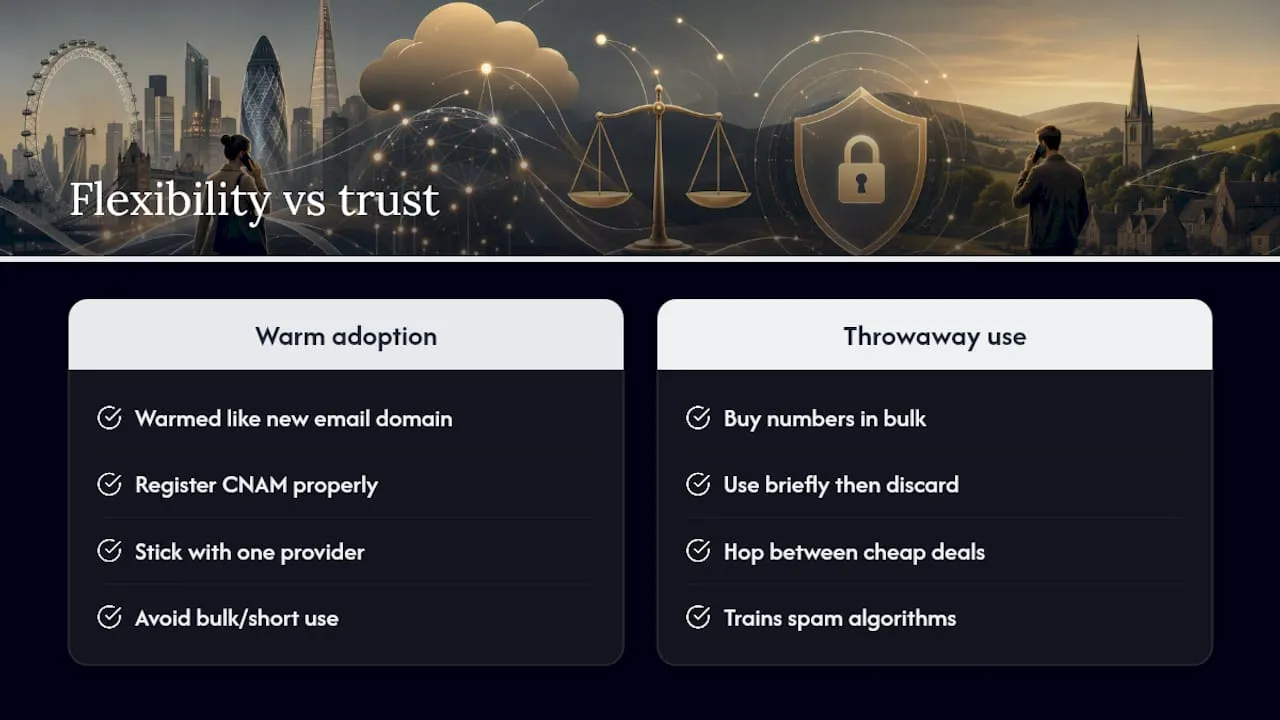
What gets underestimated even more is how much of this risk is manageable rather than fixed in stone. Businesses that treat a new non-fixed number the way they’d treat a new email domain, warming it up gradually, registering CNAM data properly, and sticking with one provider rather than hopping between cheap deals, tend to avoid the worst of the reputation problems. The businesses that get burned are usually the ones who buy in bulk, use numbers briefly, and discard them, which is precisely the pattern that trains spam algorithms to distrust the entire category.
The other overlooked point: numbering categories aren’t going away, but the underlying delivery technology increasingly is VoIP regardless of what the digits look like. A traditional-looking 0161 number and a non-fixed number might both be running over identical infrastructure behind the scenes. The real decision isn’t “VoIP or not VoIP” anymore. It’s whether you need address binding and automatic emergency location, or whether mobility matters more to how your business actually operates.
— Rob
Get a memorable number without the wait
A service like Phonenumbers provides a direct route to a recognisable UK number without the administrative delay a traditional provider often adds. You search, you choose, you’re routing calls, typically within a day rather than the weeks a fixed-line install can take.
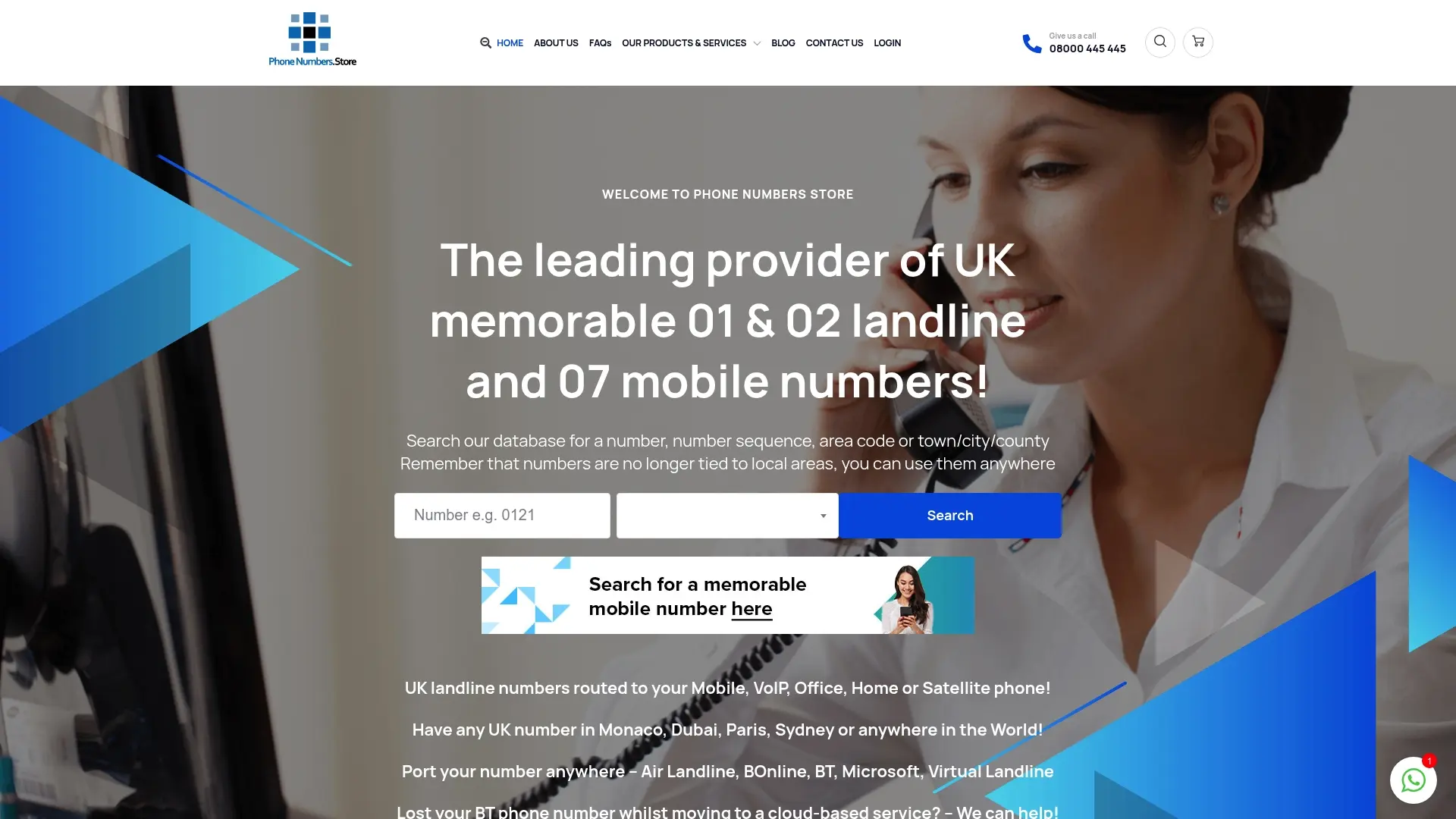
The store carries memorable landline numbers in the 01 and 02 ranges, non-geographic 03 and 08 options, and mobile 07 numbers, all searchable by area code, sequence, or pattern before you commit. If you want the number hosted and ready to answer straight away, the XL Hosted Voice Service with a VoIP phone bundles a handset with the setup for a one-off £30 charge and £7.86 a month. Businesses that want to keep an existing BT-style number but run it through broadband instead can look at XL-IP, from £8 a month plus a £99 router and setup fee. Numbers sold by providers in this space are typically portable, so switching providers later doesn’t usually mean losing the number customers already know.
Start by searching for available numbers in the town, city, or sequence you want, then reserve or buy the one that fits before someone else does.
Sources
- Non-fixed VoIP guide
- Ofcom: Non-geographic call services and numbering information
- WhoCalledLookup — VOIP numbers UK analysis
- Techopedia definition: Non-fixed VoIP
FAQ
Can a non-fixed VoIP number be traced?
Partially. A CNAM or range-holder lookup can suggest whether a number is VoIP-delivered, but these checks aren’t definitive and often need the provider to confirm the details. Full traceability, including the account holder’s identity, usually requires a formal request to the carrier rather than a public lookup tool.
Why would I need a non-fixed VoIP number instead of a landline?
You’d choose one for mobility. It lets a remote team answer calls from anywhere, gives a business a local-sounding presence in a city without renting office space there, and gets set up almost instantly compared with a traditional line install.
What does non-fixed VoIP mean?
It means a telephone number delivered over the internet and assigned to a person or device rather than a fixed physical address. That’s the core distinction from a fixed VoIP number, which stays registered to one verified location.
How can I get a free fixed VoIP number?
Genuinely free fixed VoIP numbers with proper address verification and emergency-location support are rare, since providers generally charge for registration and hosting. Current pricing for hosted UK numbers, including setup and monthly costs, is listed on the Phonenumbers store, where numbers start from a low monthly rental rather than being offered free.