
Phone porting is the process of moving an existing telephone number from one provider to another while keeping the same number. Ofcom requires providers to support this, treating portability as a cornerstone of consumer choice and competition. In practice, the mechanism differs by number type:
- Mobile numbers use a Porting Authorisation Code (PAC), requested by texting ‘PAC’ to 65075 or via phone/online.
- Landline, VoIP, and business lines typically use a Letter of Authority (LOA) plus a recent bill.
- Porting permanently transfers control of the number to the new provider, call forwarding does not.
Pro Tip: Before you do anything else, confirm whether your number is mobile or landline. The documentation, timelines, and process differ significantly between the two.
Key takeaways
Phone porting in the UK is a regulated, recipient-led process governed by Ofcom that lets individuals and businesses keep their number when switching provider, with mobile ports typically completing within one working day of a valid PAC being submitted.
| Point | Details |
|---|---|
| What porting is | Moving a number permanently to a new provider, not forwarding; Ofcom mandates this right. |
| Mobile PAC process | Text ‘PAC’ to 65075; port completes within one working day after submission. |
| Business and landline porting | Requires a Letter of Authority (LOA) and recent bill; bulk moves need agreed schedules. |
| Security risk | Unauthorised porting (SIM-swap) is a real threat; move 2FA off SMS and set a provider account PIN now. |
| Phonenumbers alternative | When porting is not possible or practical, buy or rent a memorable UK 01, 02, or 07 number from Phonenumbers. |
Table of Contents
- What is phone porting and why does it matter for UK users?
- How does the UK phone porting process work?
- How to request a PAC and switch your mobile number
- How long does porting take and what does it cost?
- How porting fraud works and how to protect yourself
- What to do if your number is ported without your permission
- Common causes of failed ports and how to avoid them
- How business porting differs from a standard mobile switch
- Can your number be ported, and what are the alternatives?
- The part of porting most guides skip over
- Looking for a memorable UK number instead of porting?
- Sources
- FAQ
What is phone porting and why does it matter for UK users?
Number portability is the facility that lets subscribers retain their telephone numbers when they change provider. Ofcom positions it as central to a competitive telecoms market: without it, switching costs would be artificially high because customers would face losing a number embedded in their contacts, marketing materials, and online accounts.
The distinction between porting and call forwarding matters more than most people realise. Forwarding reroutes incoming calls to a different number, but the original provider still owns and controls the number. If you stop paying, the forwarding stops and the number may be reassigned. Porting transfers legal control of the number to the new provider permanently. You are no longer a customer of the old provider for that number.
For individuals, the practical benefits are straightforward. Keeping a mobile number means contacts, banks, GP surgeries, and two-factor authentication (2FA) services tied to that number keep working without any action on your part. Changing a number, by contrast, can lock you out of accounts that use SMS verification.
For small and medium businesses, the stakes are higher. A phone number printed on vans, websites, directories, and business cards represents real marketing spend. Losing it during a provider switch means reprinting materials, updating listings, and potentially losing inbound calls during the transition. Porting eliminates that cost entirely.
| Feature | Phone porting | Call forwarding |
|---|---|---|
| Number ownership | Transfers to new provider | Stays with original provider |
| Permanence | Permanent | Temporary / conditional |
| Dependency on old provider | None after port completes | Ongoing |
| Risk if old account lapses | None | Number may be lost |
| Typical use case | Switching provider | Short-term rerouting |
How does the UK phone porting process work?
The UK uses a recipient-led porting model, meaning the new provider (the recipient) drives the process rather than the customer having to negotiate with their current provider (the donor). This design reduces friction and limits the ability of incumbent providers to obstruct switching.
Here is how a standard port unfolds:
- You request a PAC or LOA from your current provider, depending on number type. For mobile, text ‘PAC’ to 65075. For landline or VoIP, contact your provider and request a LOA pack.
- You give the PAC or LOA to your new provider. For mobile, this is usually done during sign-up or via the new provider’s app or website.
- The recipient provider submits the port request to the donor provider through industry systems. The customer does not need to contact the donor again.
- The donor provider validates the request against account details. If details match, the port proceeds. Mismatches cause rejections.
- Routing updates propagate across the network. Calls to the ported number are directed to the new provider’s infrastructure.
- The port completes and the number is live on the new network.
The routing step is worth understanding. Historically, calls to ported numbers were routed via the donor provider’s network (onward routing), which created a dependency on the old provider. Ofcom’s GC18 review pushed the industry towards direct routing via a central database, which improves resilience and removes that dependency. For most consumers this is invisible, but it matters for business continuity.
Pro Tip: Keep a copy of your most recent bill before initiating a port. Account name, billing address, and account number must match exactly what the donor provider holds on record, or the port will be rejected.

How to request a PAC and switch your mobile number
For mobile users, the PAC process is straightforward. Ofcom rules require your current provider to give you a PAC immediately if you request it by phone, and within one working day if you request it by text or online.
- Text ‘PAC’ to 65075 — you receive the code by text, usually within seconds, along with information about any early termination charges.
- Call your provider — they must supply the PAC during that call.
- Request online — most major providers now offer this through their account portals.
A PAC remains valid for a period sufficient to allow you to give it to your new provider; if it lapses, you can request a new one. Once the new provider has your PAC, the number usually ports quickly, commonly within a day.
If you want to cancel your mobile service without keeping the number, you request a STAC (Service Termination Authorisation Code) instead, using the same 65075 text route. The STAC tells the new provider to terminate the old contract cleanly without porting the number across.
One working day is the typical completion time after your new provider receives a valid PAC. Plan your switch so the port completes on a day when a brief period of no service is manageable, usually overnight or at a weekend.
How long does porting take and what does it cost?
For most mobile users, the practical timeline from requesting a PAC to having a working number on the new network is typically a few days, including time to receive the PAC and for the port to complete after handing it over. Ofcom has aimed to set reasonable maximum lead-time targets, with the industry moving towards faster completion.
Landline and VoIP ports typically take longer, often five to ten working days, because they involve more manual verification and, for business lines, LOA processing.
| Number type | Typical completion time | Key document |
|---|---|---|
| Mobile (PAC route) | 1 working day after PAC given | PAC (text 65075) |
| Residential landline | 5 working days | LOA + recent bill |
| Business VoIP / hosted | 5 working days | LOA + recent bill |
| Bulk business port | Agreed schedule (varies) | LOA + inventory list |
Cost is rarely a concern for individuals. Porting a mobile number is free for end users under Ofcom rules. Landline porting is also generally free, though some providers charge an admin fee for business lines. Bulk moves for businesses can attract commercial charges; always confirm in writing before committing.
Common causes of delay include:
- Account name or billing address does not match the donor’s records exactly.
- The account has been cancelled or is in arrears.
- Incorrect account number supplied on the LOA.
- The number is tied to a legacy service that requires bespoke handling.
- The donor provider raises a dispute, which must be resolved before the port proceeds.
How porting fraud works and how to protect yourself
SIM-swap and unauthorised porting fraud follow a predictable pattern. An attacker gathers enough personal information to impersonate you, contacts your mobile provider, and requests a PAC or a SIM replacement. Once they control your number, they use it to intercept SMS-based 2FA codes and reset passwords on banking, email, and other high-value accounts.
Which? warns that attackers frequently compromise email accounts first, then use password reset flows to take over other services. Securing your email is therefore the first line of defence, not an afterthought.
Warning signs to watch for:
- You receive an unexpected PAC or STAC text that you did not request.
- Your phone suddenly loses all signal (not a coverage issue).
- You receive login alerts or bank notifications you did not trigger.
- Calls and texts stop arriving without explanation.
Practical defences:
- Switch 2FA away from SMS to an authentication app (Google Authenticator, Microsoft Authenticator) or a passkey where services support it.
- Use a strong, unique password for your email account and enable app-based 2FA on it.
- Set a PIN or passcode on your mobile account and ask your provider about account lock options that require in-store ID to make changes.
- For businesses: maintain an inventory of critical numbers, require written authorisation for any port request, and keep billing details current.
Pro Tip: If you receive a PAC text you did not request, call your provider immediately. Do not wait. The window to stop an unauthorised port is short.
Attackers often compromise email accounts before attempting a SIM swap, using password resets to gain access. Moving 2FA away from SMS materially reduces the attack surface.
What to do if your number is ported without your permission
Act immediately. Every minute counts because the attacker may be using the number to reset passwords on financial accounts right now.
- Call your current (donor) provider and report the unauthorised port. Ask them to suspend the account and flag it as compromised.
- Call the recipient provider (if you can identify them from any notification you received) and ask them to reverse the port.
- Contact your bank and any financial services linked to the number. Ask them to freeze SMS-based authentication and flag your accounts for suspicious activity.
- Report to Action Fraud (0300 123 2040 or actionfraud.police.uk). This creates a crime reference number you will need for follow-up.
- Change passwords on email and any account where the compromised number was used for 2FA. Start with email.
- Contact idcare, which provides step-by-step recovery guidance for victims of unauthorised porting and documents the remediation steps needed to regain control.
Information to have ready: your account number, recent bill, a form of photo ID, and a note of when you first noticed the loss of service or received unexpected messages.
Once the immediate crisis is contained, move your 2FA to an authentication app across all accounts and consider using a temporary number for critical services while the investigation is ongoing. Ofcom does not handle individual complaints directly, but if your provider fails to act, you can escalate to an approved Alternative Dispute Resolution (ADR) scheme.
Common causes of failed ports and how to avoid them
Most port failures are preventable. The single most common cause is a mismatch between the details on the port request and what the donor provider holds on record. Even a middle name, a slightly different address format, or an old billing address can cause a rejection.
Before requesting a PAC or LOA:
- Log into your account and confirm the exact name and address the provider holds.
- Locate a recent bill (within the last three months) and keep it to hand.
- Check your account is active and not in arrears or under a cancellation notice.
- Confirm you are past any minimum contract term, or understand the early termination charge.
- For business lines, confirm who is the authorised signatory on the account.
If a port is delayed or rejected, ask the provider for the specific rejection reason in writing. Common codes relate to name mismatch, address mismatch, or account status. Fix the discrepancy and resubmit rather than escalating immediately.
Pro Tip: For businesses, schedule the cutover outside peak trading hours, typically overnight or at a weekend. Notify customers in advance that the number is moving provider, even though it will not change. This manages expectations if there is a brief gap in service.
If a provider is obstructing a port without valid reason, escalate to Ofcom or your ADR scheme. Providers are obligated under General Condition 18 to facilitate porting and cannot use the process as a retention tactic.
How business porting differs from a standard mobile switch
Business porting, particularly for multi-line or PBX environments, involves considerably more planning than a single mobile port. ExpertMarket’s guidance on number porting confirms that landline and VoIP business moves commonly use a LOA plus a recent bill, and that bulk moves trigger specialist processes with agreed schedules rather than standard lead times.
A practical planning sequence for businesses:
- Inventory all numbers in use, including DDIs (Direct Dial Inbound), hunt groups, and any numbers used for fax or alarm lines.
- Map inbound routing for each number: which department, extension, or IVR menu does it reach?
- Confirm LOA signatories and gather recent bills for each number or range.
- Agree a cutover schedule with the recipient provider, including a fallback plan if the port fails on the day.
- Run test calls to each ported number before announcing the migration complete.
- Prepare customer communications in advance so clients know to expect no change to the number but are aware of a brief maintenance window.
Additional considerations for business moves:
- PBX and hosted VoIP platforms handle DID (Direct Inward Dialling) numbers differently; confirm with your new provider how numbers will be presented and routed before signing.
- Some legacy services (alarm monitoring, ISDN-based systems) may not support standard porting and need bespoke arrangements.
- Bulk ports above certain thresholds are handled through industry coordination processes with longer lead times; ask your provider for the applicable threshold.
- Service continuity clauses in contracts can affect when you are permitted to port; review these before committing to a migration date.
For a detailed number portability workflow covering recipient and donor provider interactions, Phonenumbers has a technical guide aimed at IT and telecom leads.
Can your number be ported, and what are the alternatives?
Not every number can be ported. The quickest check is to contact both your current provider and the intended new provider before starting the process. Most providers offer a porting eligibility check, and your bill will show the number type, which determines compatibility.
Reasons a port may not be possible:
- The number is tied to a legacy service (some older ISDN or analogue lines) that the recipient network cannot support.
- The number belongs to a range that is not portable under current industry rules.
- The donor provider has a legitimate contractual hold (minimum term not yet expired).
- The account is in dispute or has been cancelled.
When porting is not an option, the practical alternatives are:
| Alternative | Best for | Trade-off |
|---|---|---|
| Call forwarding | Short-term coverage during transition | Ongoing dependency on old provider |
| Virtual number | Businesses wanting a new presence quickly | Customers must learn a new number |
| Buy or rent a memorable number | Rebranding or marketing refresh | Requires updating all materials |
Buying or renting a memorable number is worth considering even when porting is possible. If your current number is unremarkable and you are already planning a rebrand or marketing push, a new number chosen for memorability can deliver more long-term value than preserving an existing one. The UK number portability tips for business transfer guide from Phonenumbers covers this decision in detail.
A quick decision checklist:
- How embedded is the current number in marketing materials and customer memory?
- What is the realistic cost of updating all materials if you take a new number?
- Is the port likely to succeed, or are there known obstacles?
- How long do you expect to use this number?
The part of porting most guides skip over
The security angle of phone porting gets treated as a footnote in most explainers. It should not be. Your mobile number is effectively a master key to your digital life: banks, email providers, and most online services use it as a recovery route. That makes it a high-value target.
The uncomfortable truth is that the PAC system, designed to make switching easy for consumers, also makes it easier for attackers who have gathered enough personal data. The friction that used to exist when switching providers was annoying for legitimate customers but also slowed down fraudsters. Faster porting is unambiguously better for competition, but it requires individuals and businesses to compensate by hardening their account security.
The practical implication: do not wait until you are porting to think about this. Move your 2FA off SMS now, before anything goes wrong. Set an account PIN with your mobile provider. Treat your email password as the most important password you have, because it is. A compromised email account is the prerequisite for most successful SIM-swap attacks, which is exactly what Which? found when it examined how these attacks unfold.
For businesses, the risk is compounded. A single compromised number on a business account can expose customer data, payment systems, and internal communications. The answer is not to avoid porting; it is to treat number security as part of your broader information security posture, not a telecoms admin task.
Looking for a memorable UK number instead of porting?
Sometimes the right move is not to port at all. If you are rebranding, launching a new service, or simply want a number that customers will actually remember, buying or renting a memorable UK number can be faster and more effective than preserving an existing one.
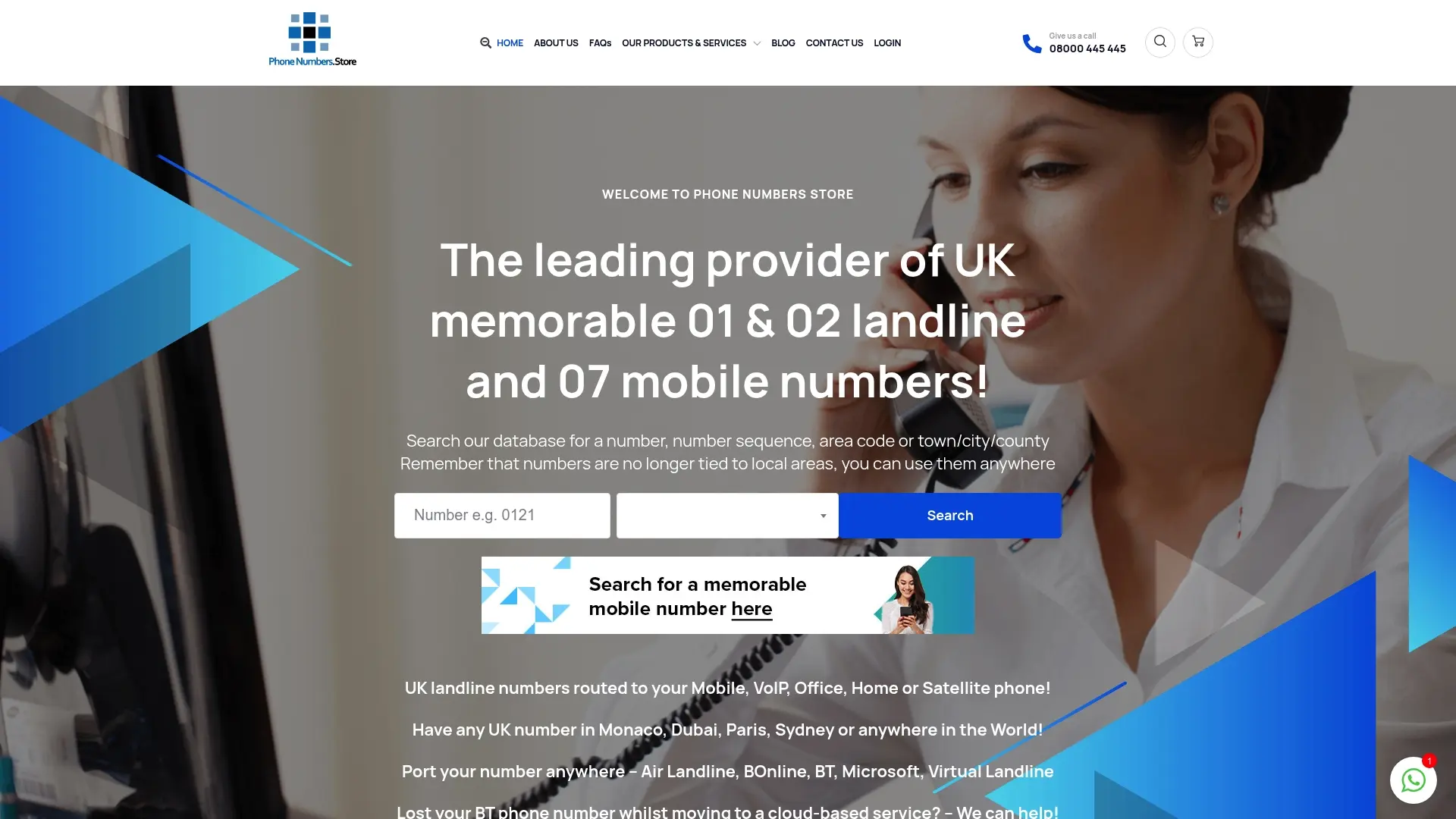
Phonenumbers is the UK’s leading provider of memorable 01, 02, and 07 numbers. You can search the database by number sequence, area code, or town, and because UK numbers are no longer tied to local areas, a Leeds area code works just as well for a London business. There is no lengthy porting process, no risk of rejection, and no dependency on a donor provider. You choose the number, and it is yours.
Browse memorable UK phone numbers or view specific examples such as 0113 255 0000 and 0115 928 8888 to see what is available.
Sources
- Number portability
- Weak email security opens the door to Sim‑swap scammers, warns Which?
- Unauthorised mobile porting / SIM swap (idcare fact sheet)
- Number porting — ExpertMarket
FAQ
What happens when your phone number is ported?
Your number is transferred permanently to the new provider’s network. Calls and texts route to the new network, and your old provider no longer has any control over the number.
My number was ported without my permission. What should I do?
Contact your current provider immediately to report the unauthorised port, then call your bank and any services using that number for 2FA. Report to Action Fraud (0300 123 2040) and follow the recovery steps published by idcare.
What are the disadvantages of porting a number?
Porting can take up to ten working days for landlines, details must match exactly or the port is rejected, and there may be a brief period of no service during cutover. Early termination charges from the old provider may also apply.
How can you tell if your phone has been ported without consent?
The clearest sign is a sudden, complete loss of mobile signal that persists across locations. You may also receive unexpected PAC or STAC texts, or notice login alerts and bank notifications triggered by password resets you did not initiate.
Is porting a phone number free in the UK?
For individuals, porting a mobile number is free under Ofcom rules. Landline porting is generally free too, though some providers charge a small admin fee for business lines or bulk moves.