TL;DR:
- Using a mobile number offers flexibility and multi-channel communication benefits for small businesses.
- However, relying solely on a mobile number can impact customer trust, especially among older or professional clients.
- A hybrid approach with virtual or city-based landlines enhances credibility while maintaining operational agility.
A phone number is rarely just a contact detail. For UK small businesses, the type of number you display can quietly shape whether a potential customer picks up the phone, sends a message, or quietly moves on to a competitor. 35% of UK consumers are less likely to trust a business that relies solely on a mobile number, yet mobile numbers offer genuine commercial advantages that a fixed landline simply cannot match. Understanding both sides of this debate is what separates businesses that communicate effectively from those that lose customers before a conversation even begins.
Table of Contents
- The key benefits of using a mobile number for your business
- Trust, credibility, and perception: What do customers really think?
- Choosing the right number type: Mobile, landline, or virtual?
- Advanced features: How mobile business numbers go further
- Our perspective: Finding the perfect balance for your business
- Enhance your business communications today
- Frequently asked questions
Key Takeaways
| Point | Details |
|---|---|
| Mobile signals flexibility | A mobile number makes your business reachable on-the-go and supports modern messaging tools. |
| Number type impacts trust | UK research shows using only a mobile can reduce customer trust by up to 35%. |
| Best of both worlds | Combining mobile and virtual/landline numbers delivers both credibility and convenience. |
| Virtual numbers offer extras | Advanced features like call tracking and IVR are easy to add to virtual mobile numbers. |
The key benefits of using a mobile number for your business
Mobile numbers have become a serious commercial tool, and the rise of business mobiles across the UK reflects a fundamental shift in how customers and companies communicate. For small businesses especially, the flexibility that comes with an 07 number is difficult to replicate with a traditional landline setup.
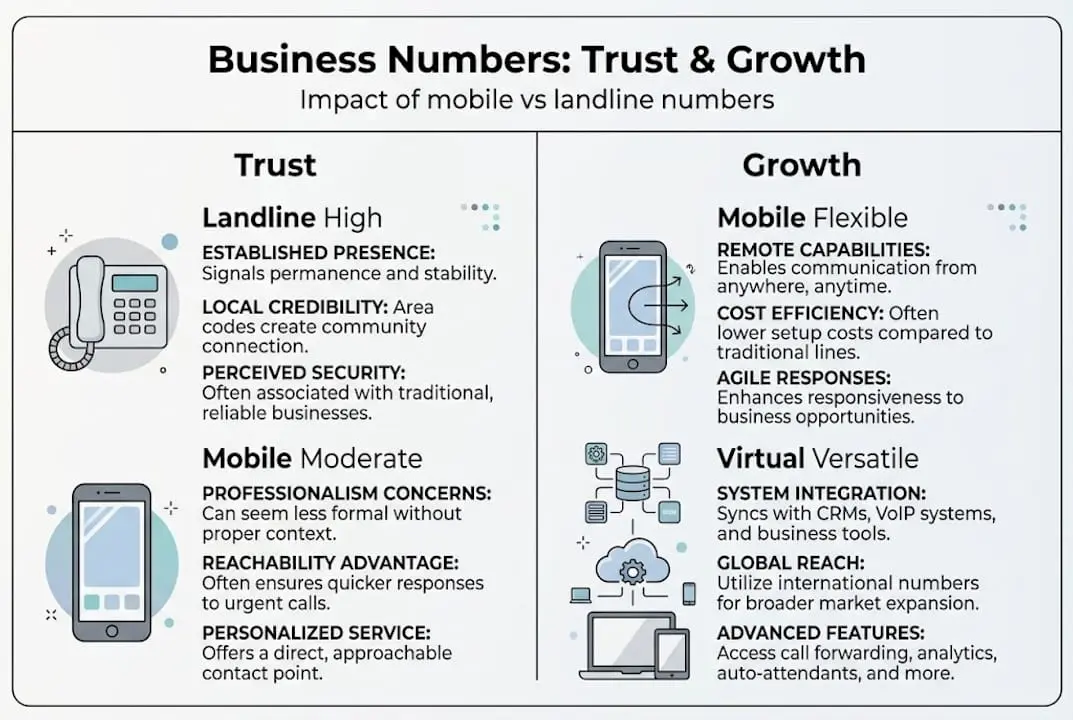
The most obvious benefit is accessibility. With a mobile number, you are reachable wherever you are working. A sole trader managing a landscaping round, a plumber responding to an emergency call-out, or a personal trainer fitting client queries between sessions all benefit from a number that moves with them. Customers expect quick responses, and a mobile number signals that you are available and ready to help rather than tied to a desk.
Mobile numbers also unlock communication channels that landlines simply cannot support. SMS messaging, WhatsApp Business, and instant messaging platforms all work natively with a mobile number. For businesses where follow-up reminders, appointment confirmations, or quick quotes are a daily requirement, this functionality is invaluable. Research consistently shows that mobile-first website engagement drives customer behaviour, and the same principle applies to your phone contact. Customers who find you on their smartphone expect to reach you through their smartphone, in the format that suits them.
Key advantages of a business mobile number include:
- Portability: Your number works anywhere in the UK without being tied to a physical address or broadband line.
- Multi-channel communication: Supports SMS, WhatsApp, and messaging apps for richer customer interaction.
- Speed: Calls and messages reach you in real time, allowing faster responses to enquiries.
- Low setup cost: No hardware, no line rental, and no installation required.
- Scalability: Virtual mobile numbers can forward to multiple devices, so your whole team can share a single customer-facing number.
Mobile numbers reassure customers in sectors where on-the-move responsiveness genuinely matters, such as emergency trades, field services, and mobile healthcare providers. The association between a mobile number and an agile, responsive operator is a real psychological trigger for customers in those industries.
Pro Tip: If you want the flexibility of a mobile without the risk of missing calls, consider a virtual mobile number that rings across multiple devices simultaneously. You can manage calls and SMS from a laptop, tablet, or smartphone without giving out personal contact details.
The success stories from tradespeople and service businesses confirm this: a well-managed mobile number, presented professionally and backed by prompt responses, can be a genuine competitive advantage.
Trust, credibility, and perception: What do customers really think?
Here is where things get more complicated. Mobile numbers offer clear operational benefits, but customer perception does not always align with operational reality.
“35% of UK consumers are less likely to trust a small business that operates with only a mobile number, and 48% say they trust larger businesses more when they display a landline. Among Millennials, that figure rises to 54%.” Zen, 2025
That is a significant proportion of your potential customer base making a trust judgement before you have spoken a single word. The reason is largely rooted in perception and historical association. Landlines have long been connected with permanence, accountability, and establishment. A business with a fixed address and a local phone number feels like it has roots. A business with only an 07 number can feel transient, even if it has been trading successfully for a decade.
The trust differences between city and mobile numbers are particularly pronounced in professional services. Accountants, solicitors, financial advisers, and healthcare providers deal with clients who prioritise security and reliability above everything else. In those sectors, a mobile-only presence can genuinely cost you clients.
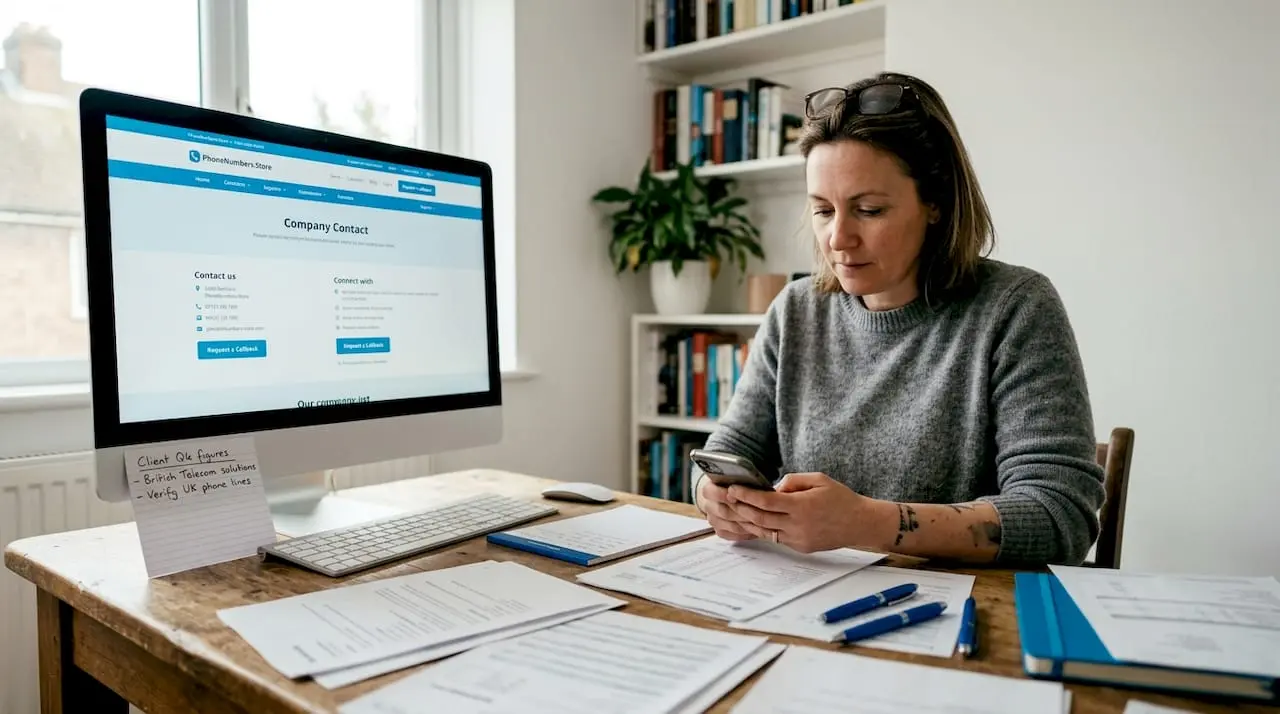
A clear comparison across number types helps illustrate the differences:
| Number type | Trust perception | Flexibility | Cost | Best for |
|---|---|---|---|---|
| Traditional landline | High | Low | Medium | Established businesses, professional services |
| Mobile (07) | Medium to low | Very high | Low | Trades, field services, start-ups |
| Virtual mobile | Medium to high | Very high | Low to medium | Growing SMEs, sole traders |
| Hybrid (mobile + virtual landline) | High | High | Medium | Most small businesses |
Demographics genuinely matter when making this decision. Older customers and those seeking professional or financial services tend to associate landlines with trustworthiness. Younger audiences, particularly those in urban areas, are more comfortable with mobile-first businesses and may even prefer the directness of an SMS or WhatsApp conversation.
Understanding the differences between mobile and landline business numbers means you can tailor your approach to the specific audience you are trying to reach, rather than defaulting to one format because it feels familiar.
If a mobile number is your only viable option right now, there are practical steps you can take to strengthen perception:
- Always answer promptly and professionally, using a clear business greeting.
- Include your number consistently across your website, Google Business Profile, and social media.
- Use a dedicated business number rather than your personal mobile to keep communications separate.
- Add a voicemail with a professional message that includes your business name and operating hours.
Choosing the right number type: Mobile, landline, or virtual?
The honest answer to “which number type is best?” is that it depends entirely on your business model, your audience, and how you want to be perceived. There is no single correct answer, but there is a logical process for arriving at the right one for your specific situation.
Pure mobile numbers carry a trust risk with roughly one in three UK consumers, as the data clearly shows. That risk is manageable for some businesses and prohibitive for others. A window cleaner or dog walker may find that their regular customers have no hesitation calling a mobile. A recruitment consultancy or an estate agent will likely find that their clients expect something more established.
Virtual numbers are increasingly the pragmatic solution for UK small businesses navigating this tension. A virtual mobile number looks and behaves like a standard 07 number but is hosted in the cloud rather than tied to a SIM card. It can ring through to your mobile, your desktop app, or a team member’s device, making it genuinely flexible while still presenting a single, consistent number to customers.
The boost that a virtual number can give your business image goes beyond aesthetics. Virtual systems typically include features like Interactive Voice Response (IVR), call queuing, call recording, and detailed analytics. These are tools that once required expensive hardware and a dedicated IT setup, but can now be activated in minutes through a cloud-based platform.
The detailed comparison between mobile and landline options is worth studying if you are unsure, but the following table summarises the key use cases:
| Business type | Recommended number setup | Key reason |
|---|---|---|
| Sole trader, trades | Virtual mobile (07) | Flexibility, low cost, mobile channels |
| Start-up, e-commerce | Hybrid (virtual 01/02 + mobile) | Credibility and accessibility combined |
| Professional services | Virtual or traditional landline | Trust, permanence, client expectations |
| Multi-location SME | Virtual number with IVR | Scalability, call routing, analytics |
Steps to assess what your business actually needs:
- Define your primary customer base and their expectations around communication.
- Assess how often you need to be reachable on the move versus at a fixed location.
- Research how your direct competitors present their contact details.
- Decide whether two-way SMS or WhatsApp integration is a feature your customers would actively use.
- Set a realistic monthly budget for call management and number rental.
- Test the chosen setup for 60 days and measure customer feedback on your responsiveness.
Pro Tip: Even a basic virtual number setup that includes an IVR greeting (“Press 1 for sales, 2 for support”) creates an impression of scale and organisation. Customers who reach a structured system feel more confident in your business, regardless of whether you have one employee or twenty.
Advanced features: How mobile business numbers go further
The functional gap between a basic mobile number and a modern virtual business number is enormous, and many small business owners do not realise what they are missing until they make the switch.
31% of UK customers still prefer phone contact as their primary method of reaching a business, making it critical that your phone setup performs well. A virtual mobile number transforms a simple contact point into a full communication platform. Features available through modern providers include:
- Call tracking and analytics: See which marketing channels are driving calls, how long conversations last, and when your peak call times occur.
- SMS broadcasting: Send appointment reminders, promotions, or updates to customer lists directly from your business number.
- WhatsApp Business integration: Handle customer queries through WhatsApp using your dedicated business number rather than a personal account.
- IVR call routing: Automatically direct callers to the right department or team member without the need for a receptionist.
- Call recording: Maintain records for training, compliance, or dispute resolution.
- No hardware required: Everything runs through an app or web portal, so setup takes minutes rather than days.
The top benefits of virtual phone numbers extend well beyond simple call handling. For growing SMEs, the ability to add new numbers, reroute calls, and track performance without touching physical infrastructure is a significant operational advantage.
For businesses running customer support functions, virtual numbers are particularly powerful. Understanding how call centres use virtual numbers to improve customer experience offers a useful model, even for very small operations. The principles of routing, tracking, and response time measurement apply at any scale.
Mobile app integrations have made managing a virtual number genuinely straightforward. A business owner can switch call forwarding on from their smartphone in seconds, check call logs over breakfast, or review SMS threads between client meetings. The operational agility is real, and the professional appearance that comes with a properly configured virtual number is equally tangible.
Pro Tip: Use the analytics from your virtual number system to identify when most customers are calling. Adjusting your availability or setting up call routing for peak times can significantly improve your answer rate and customer satisfaction scores.
Our perspective: Finding the perfect balance for your business
The conventional wisdom that landlines equal trust and mobiles equal flexibility is a useful starting point, but it oversimplifies a more nuanced reality. In our experience working with UK businesses across many sectors, the businesses that communicate most effectively are not those that chose the “right” number type. They are the ones that built consistency.
What most businesses miss is not the number itself but how that number appears across every customer touchpoint. A mobile number presented professionally on a well-designed website, a Google Business Profile, and printed on quality stationery will outperform a landline that is listed inconsistently, answered poorly, or goes to voicemail for hours at a time.
The sector genuinely matters. A one-person electrical contractor using a virtual mobile number, answering promptly, and following up with an SMS quote confirmation is operating at a professional level that many larger firms cannot match. A solicitor relying solely on an 07 number with no voicemail greeting is undermining a brand that cost years to build.
The sweet spot for most UK SMEs is a hybrid approach: a memorable mobile number for direct accessibility paired with a virtual city-based landline for credibility on formal communications. Neither number needs to be tied to a physical location, which means you can present a London 020 number or a Manchester 0161 number regardless of where you actually operate. Reviewing professional contact number strategies used by successful UK businesses will confirm what the data consistently shows: consistency, promptness, and professionalism matter far more than the number format alone.
Enhance your business communications today
Choosing the right business number does not need to be complicated, and the right decision for your business is closer than you think. Whether you need a flexible mobile number for day-to-day responsiveness, a credible city-based landline for professional communications, or a hybrid setup that delivers both, the right number is waiting.
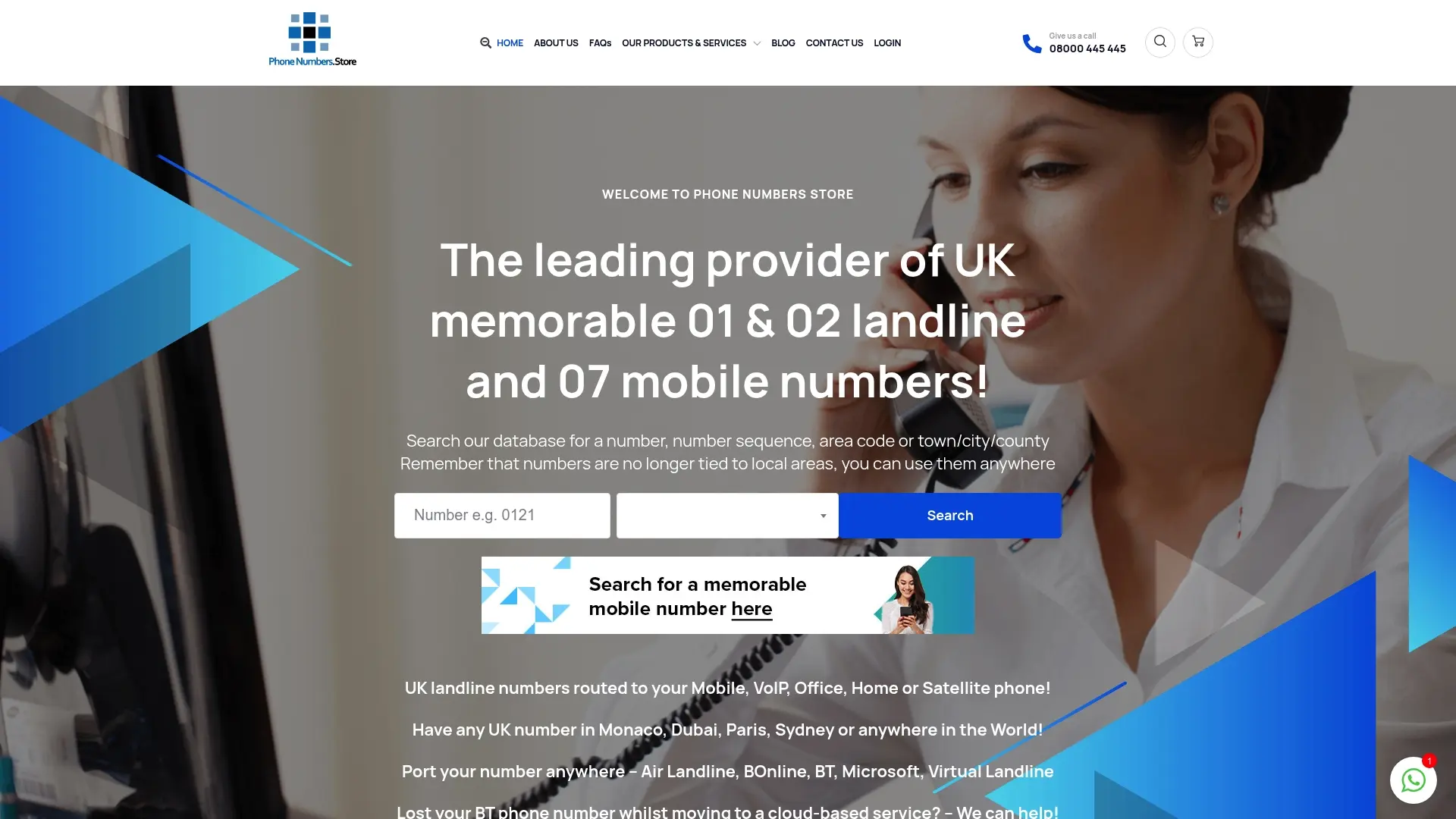
At phonenumbers.store, you can search our extensive database of memorable UK 01, 02, and 07 numbers by sequence, area code, town, or county. Numbers are no longer tied to local areas, so you can project a London, Manchester, or Birmingham presence from anywhere in the UK. Setup is fast, pricing is straightforward, and your chosen number can be live within minutes. Take the next step towards a more professional, trusted customer experience today.
Frequently asked questions
Do customers trust businesses that only use a mobile number?
35% of UK consumers are less likely to trust a business operating solely with a mobile number, making it worth considering a hybrid or virtual landline option.
What are the biggest advantages of using a mobile number for business?
Mobile numbers offer portability, enable SMS and WhatsApp communication, and are ideal for businesses where on-the-move responsiveness is a key part of the service they provide.
How can I make my business look more credible if I use a mobile number?
Pairing a mobile with a virtual or city-based landline addresses the trust concerns that a mobile-only presence can create, while preserving the flexibility you rely on.
Can I use one business mobile number for calls, SMS, and WhatsApp?
Yes, modern virtual mobile numbers support calls, SMS, WhatsApp integration, call tracking, and IVR routing, all without requiring additional hardware.
Is a landline still necessary for my start-up or small business?
A dedicated landline is not always essential, but a hybrid approach combining a virtual landline with a mobile number gives most start-ups the best mix of credibility and operational flexibility.