
Your phone number isn’t just digits on a business card. It’s a brand asset that customers remember, trust, and dial repeatedly. Yet many UK service businesses underestimate its power when upgrading systems or switching providers. Retaining your existing memorable number can significantly boost customer recall and trust, avoiding costly marketing updates and confusion. This guide explains why keeping your number matters in 2026 and how it benefits your business long term.
Table of Contents
- Why Your Existing Phone Number Matters More Than You Think
- How Local And Existing Numbers Build Trust In UK Service Industries
- Number Porting: Keep Your Existing Number When Switching To Digital Voice
- Overcoming Challenges And Maximising Benefits Of Retaining Your Number
- Explore Memorable UK Phone Numbers And Seamless Porting Solutions
Key takeaways
| Point | Details |
|---|---|
| Memorable numbers boost recall | Vanity numbers improve ad recall by 84% compared to standard numeric sequences. |
| Local numbers build trust | 35% of Brits won’t trust businesses using only mobile numbers, preferring local landlines. |
| Number porting preserves continuity | Porting transfers your existing number to new VoIP systems, avoiding customer confusion during the 2027 digital transition. |
| Porting requires careful planning | The process takes around three weeks and demands accurate documentation to prevent delays or number loss. |
| Retaining numbers saves marketing costs | Keeping familiar contact details eliminates reprinting materials and updating online listings. |
Why your existing phone number matters more than you think
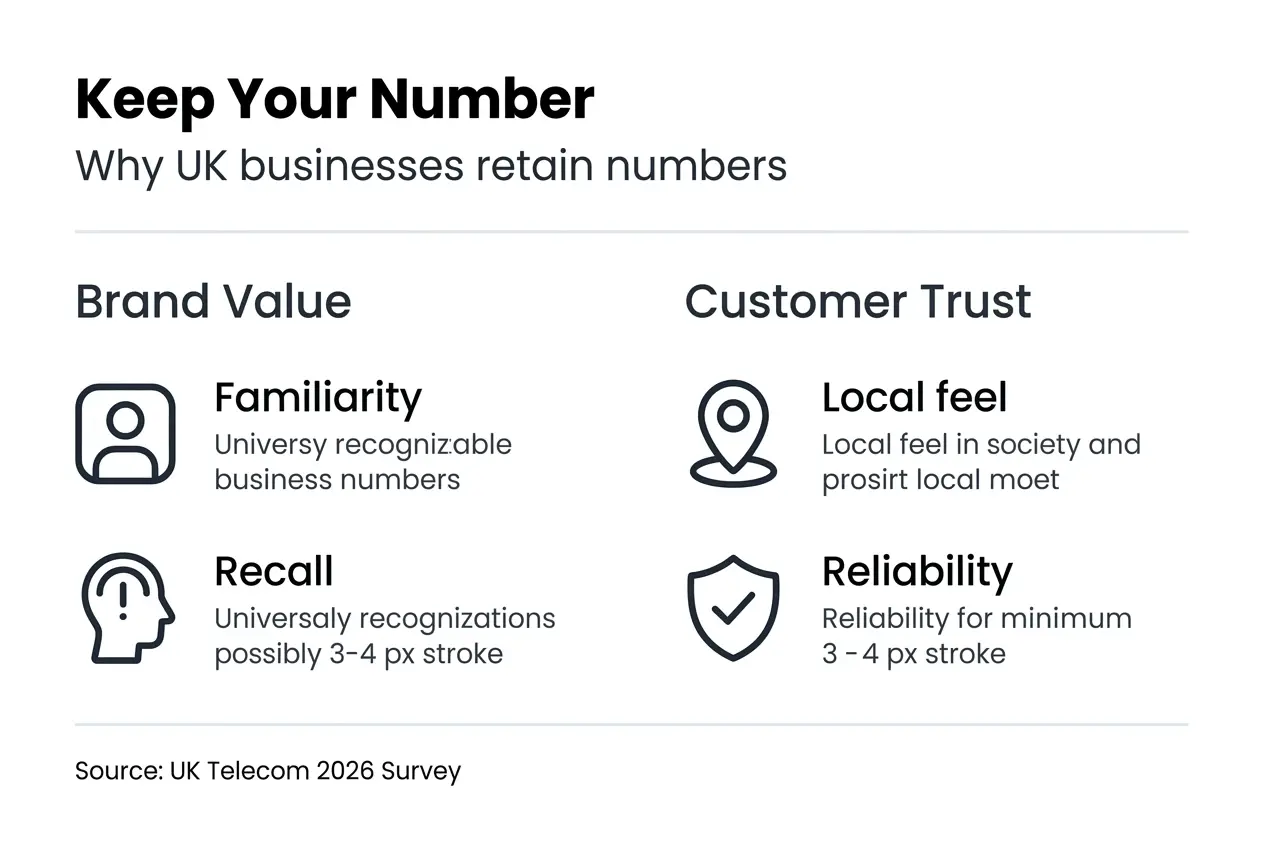
Your phone number functions as a mental shortcut for customers. When they need a plumber or taxi at short notice, they recall the number they’ve seen repeatedly on vans, flyers, or online ads. Vanity numbers improve ad recall by up to 84% compared to standard numeric sequences. Even more striking, 72% of consumers recall vanity numbers after one 30 second ad versus just 5% for numeric ones.
Small businesses in service industries benefit enormously from this recognition advantage. Customers often identify your business by its phone number as much as by your company name, especially when they’ve stored it in their contacts or recommended it to neighbours. A familiar number drives higher call volumes and repeat bookings because there’s no friction or doubt about whether they’ve reached the right business.
Key benefits of retaining memorable numbers:
- Instant brand recognition when customers see your number on marketing materials
- Reduced advertising costs as memorable numbers require fewer repetitions to stick
- Stronger word of mouth referrals when people can easily recall and share your number
- Competitive advantage over rivals with generic, forgettable contact details
Pro Tip: If your existing number contains repeated digits, sequential patterns, or spells a relevant word, you already have a valuable asset worth protecting during any system upgrade.
Exploring branding with phone numbers reveals how strategic number selection amplifies marketing effectiveness across all channels.
How local and existing numbers build trust in UK service industries
Local area codes signal proximity and professionalism instantly. When a Blackburn resident sees 01254 or a Manchester customer spots 0161, they feel reassured you’re nearby and established. This psychological shortcut matters enormously for service businesses where customers want quick, local responses to urgent problems like blocked drains or broken boilers.

Local numbers build trust quickly as customers recognise area codes and feel confident you understand their location. Conversely, mobile only numbers can appear temporary or personal, undermining professional credibility. Research confirms 35% of Brits wouldn’t trust businesses that only use a mobile number, with almost half trusting big businesses more if they have a landline.
Why local numbers outperform mobile only options:
- Professional appearance on websites, vans, and printed materials
- Perceived stability and permanence compared to personal mobile numbers
- Higher answer rates as customers feel confident they’re calling a legitimate business
- Better integration with VoIP systems for call routing and professional features
A memorable local number supports repeat business naturally. When customers store “Joe’s Taxis 01254 123456” in their phone, they’re more likely to call you next time rather than searching online and potentially finding a competitor. This retention effect compounds over years, building a loyal customer base that costs nothing to maintain.
Pro Tip: Even if you operate across multiple regions, a recognisable local number for your primary area creates an anchor of trust and professionalism that extends to all your service locations.
Understanding landline numbers in plumbing and the advantages of local numbers demonstrates how geography based trust translates into business growth.
Number porting: keep your existing number when switching to digital voice
Number porting transfers your current phone number to a new service provider without changing what customers dial. This technical process preserves your brand identity and customer relationships during system upgrades. As the BT landline switch off by January 2027 approaches, porting becomes essential for every business moving from traditional copper lines to VoIP digital systems.
Switching providers without porting means losing your established number entirely. Customers dialling your old number hear disconnected tones or reach someone else. You face reprinting every business card, updating every online directory, and explaining the change to confused clients. Number porting allows businesses to keep existing memorable numbers, avoiding these costly marketing changes and service disruptions.
The porting process follows these key steps:
- Contact your new VoIP provider and request number porting
- Provide exact account details matching your current provider’s records
- Submit a Letter of Authority authorising the transfer
- Wait for validation and processing between both providers
- Confirm successful transfer and test incoming calls
The entire process typically takes around three weeks from submission to completion. During this window, your existing service continues normally until the switch completes. Planning ahead prevents last minute rushes that increase error risks.
| Porting Stage | Duration | Key Action |
|---|---|---|
| Validation | 3-5 days | Ensure account details match exactly |
| Processing | 10-15 days | Coordinate between old and new providers |
| Transfer | 1 day | Port completes, test new service |
| Contingency | 3-5 days | Buffer for unexpected delays |
Pro Tip: Start porting at least six weeks before any critical deadline or contract expiry to allow time for resolving unexpected documentation issues without service gaps.
Exploring upgrading business phone numbers and comparing virtual landline services helps identify providers with smooth porting track records.
Overcoming challenges and maximising benefits of retaining your number
Porting isn’t always straightforward. Porting landline numbers can take weeks and risks losing numbers due to errors in the process. Delays often stem from mismatched information between what you provide and what your current provider has on file. A single character difference in an account name or address can trigger validation failures, restarting the entire process.
Errors during porting can cause temporary disconnection or permanent loss of your number. If validation fails repeatedly and your old contract expires, you may lose access to the number entirely. Incoming calls drop, customers can’t reach you, and emergency situations create business chaos. This risk makes careful preparation and provider selection crucial.
Common porting pitfalls to avoid:
- Mismatched account holder names between old and new providers
- Incorrect billing addresses causing validation rejections
- Starting porting too close to contract end dates
- Choosing inexperienced providers without proven porting capabilities
- Incomplete or outdated documentation triggering delays
| Risk Factor | Impact | Mitigation Strategy |
|---|---|---|
| Data mismatch | Validation failure, restart | Verify all details with current provider first |
| Timing delays | Service gap | Start 6+ weeks before deadline |
| Provider inexperience | Lost numbers | Choose specialists with porting guarantees |
| Documentation gaps | Processing stops | Prepare full account info upfront |
Working with experienced providers who specialise in smooth porting dramatically reduces these risks. They understand validation requirements, communicate clearly between carriers, and have contingency procedures when issues arise. Their expertise transforms a potentially stressful technical process into a managed transition.
Pro Tip: Request a porting timeline guarantee in writing from your new provider, including contingency plans if delays occur, to protect your business continuity.
Reviewing tips for memorable phone numbers helps identify which existing numbers are worth the extra effort to retain through porting.
Explore memorable UK phone numbers and seamless porting solutions
Maintaining your established phone number during system upgrades protects years of brand building and customer relationships. Our platform offers a wide selection of memorable local UK phone numbers perfect for service businesses seeking stronger brand recall. We provide expert guidance on porting your existing number to modern VoIP systems before the 2027 landline switch off, ensuring seamless continuity.
Whether you’re buying a new memorable number or preserving your current one, our specialists simplify the technical complexity. Explore branding with phone numbers to understand how strategic number choices amplify marketing effectiveness. Our XL IP number porting service keeps your BT phone number working via your broadband router, combining modern flexibility with established customer contact points.
FAQ
How long does it typically take to port an existing UK business number?
Porting landline numbers to VoIP providers can take about three weeks from submission to completion. Administrative processing and validation between carriers drive this timeline. Preparing all documentation accurately with matching account details speeds the process and prevents validation failures that restart everything.
Can switching to a mobile only number harm my small business image?
Yes, significantly. 35% of British consumers wouldn’t trust businesses without a landline, viewing mobile only contacts as unprofessional or temporary. Service industries like plumbing and taxi firms particularly need local landline numbers to project stability and legitimacy on marketing materials.
What are the main benefits of number porting for my business?
Number porting maintains business brand recognition by keeping familiar numbers customers rely on to contact you. It avoids reprinting marketing materials, updating online listings, and explaining changes to confused clients. Porting ensures smoother transitions during phone system upgrades, preserving customer relationships built over years.
How can I reduce risks of losing my number during porting?
Delays and errors often occur due to mismatched info, so careful preparation is essential. Ensure all account details match exactly with your current provider’s records before submitting requests. Choose experienced porting services with proven track records and start the process at least six weeks before critical deadlines to allow resolution time for unexpected issues.
Recommended
- 7 Insights into UK Phone Number Trends 2025 | PhoneNumbers Store
- Why Upgrade Business Phone Numbers for UK SMEs | PhoneNumbers Store
- Role of Personalised Numbers: Boosting Your UK Business Presence|BM
- Benefits of UK Wide Numbers for Small Businesses | PhoneNumbers Store
- Google Business Profile Optimization | Troov Marketing
- Digital Marketing Ideas To Grow Your Business | Jarrod Harman