
The fastest way to get a business number on your mobile is to sign up for a virtual or VoIP number and forward it straight to your handset, or port your existing number into a business setup. Either route usually takes less than a day, needs no second handset, and lets you present a proper business caller ID whenever you call out. Your customers keep dialling the same digits throughout.
TL;DR:
- Virtual or VoIP numbers that forward to your mobile can be set up within hours and allow seamless switching between devices without physical SIM changes.
- Choosing the correct number prefix impacts customer trust; local 01/02 signals proximity, 03 numbers offer national coverage at local rates, while avoiding premium prefixes like 084 or 087.
- Porting an existing number requires a PAC code, cannot be done without prior planning, and should not be interrupted by prematurely canceling your current service.
- Basic call forwarding is the cheapest, simplest setup, but upgrading to hosted VoIP solutions adds features like call queuing and CRM integration for higher call volumes.
- Maintaining separation between personal and business calls involves setting routing rules, recording professional greetings, and avoiding public exposure of personal numbers.
Table of Contents
- How do you get a business number on your cell phone?
- Which type of business number suits UK customers best?
- Setting up your business number on your phone: a step-by-step checklist
- How does number porting work if you want to keep your existing number?
- What does a business number actually cost, and how do you keep it cheap?
- How do you keep business and personal calls separate on one phone?
- Phonenumbers.store: what a searchable number database means for setup
- What are the legal requirements for showing a business number on your mobile?
- Can you link your business number to a CRM or other business tools?
- Ready to get your business number set up?
- When does a business number actually pay off for mobile-first businesses?
- Sources
- FAQ
How do you get a business number on your cell phone?
There isn’t one single method here, and the right choice depends on how much control you want over calls and how much you’re willing to spend. Five approaches cover almost every small business scenario.
Virtual/VoIP numbers that forward to your mobile are the default option for most people starting out. You buy or rent a number, point it at your existing mobile, and calls arrive exactly as they would on any normal line. The number itself lives in the cloud rather than on a SIM card, so it can follow you between phones, offices, or even countries without any physical swap. This is genuinely the standard route for new business numbers in the UK now, largely because it needs no copper installation and can go live within hours.
Business-number apps solve a narrower problem: presenting a business caller ID when you dial out. These apps sit on top of your existing SIM and let you choose which number shows up on the recipient’s screen, so a call to a client shows your business line, while a call to your partner still shows your personal one. They’re quick to install and usually cheap, but most rely on an internet connection or a calling credit system, and call quality can dip on poor signal.
Dual SIM or eSIM setups suit anyone who genuinely wants two separate phone identities on one device. Modern smartphones increasingly support an eSIM alongside a physical SIM, so you can run a business number and a personal number side by side without carrying two handsets. The catch is that you’re still managing two live subscriptions, two sets of minutes, and, depending on your carrier, two bills.
Simple call forwarding or redirect services are the low-tech fallback. You rent a number, set up forwarding to your existing mobile, and that’s the entire setup. No app, no dashboard, nothing to configure beyond the initial diversion. It works, but you lose features like custom voicemail greetings, call analytics, and multiple-device routing that a proper virtual number platform includes.
- Virtual/VoIP number: best all-rounder for mobile-first businesses wanting flexibility and a proper feature set.
- Business caller ID app: fastest fix if you only need outgoing calls to show your business identity.
- Dual SIM/eSIM: ideal if you want hard separation between business and personal without two phones.
- Call forwarding only: cheapest and simplest, but limited on features.
- Hosted desk system or dedicated handset: still worth it once call volume or team size grows beyond what a single mobile can comfortably handle.
That last option matters more than people expect. Once you’re fielding dozens of calls a day, or you’ve hired a second person to answer them, a hosted VoIP desk phone with proper call queuing starts to outperform a mobile juggling everything. For a sole trader or a two-person outfit, though, a virtual number forwarded to your existing handset covers nearly everything you need.
Which type of business number suits UK customers best?
Choose based on what the prefix signals to the person calling, not just what’s cheapest to buy. Callers read meaning into a number format before they even pick up, and getting this wrong costs you trust before the conversation starts.
01 and 02 numbers carry local credibility. A plumber, electrician, or taxi firm using a number tied to a recognisable area code tells callers “we’re local, we’re established”, which matters for trades and local services specifically because customers are choosing based on proximity and trust as much as price.
03 numbers give you a national footprint without the premium-rate stigma some other prefixes carry. Crucially, 03 numbers cost callers no more than dialling an 01 or 02 number, and they count towards inclusive minutes on most mobile contracts. If you serve customers across the country rather than one town, 03 is usually the better fit than a geographic code that implies you’re local when you’re not.
0800 numbers are free for the caller, which makes them strong for customer service or sales lines where you want to remove any friction to getting in touch, though the cost typically shifts onto your business instead.
07 mobile-style numbers work fine as a business line, but they carry none of the local or national signalling above and can occasionally reduce answer rates from callers wary of unknown mobile numbers.
Steer well clear of 084, 087, 09, and 070 prefixes. These typically carry premium charges or unfamiliar formats that make callers hesitate before dialling, which is the opposite of what you want on a number meant to generate enquiries.
Statistic to weigh up: industry guidance consistently flags that 03 numbers must be billed no higher than geographic 01/02 calls and must be included in mobile minute bundles, which is why 03 has become the go-to choice for businesses that operate beyond one local area.
A quick checklist for picking your prefix:
- Serving one town or region? Go 01/02 for local trust.
- Serving customers UK-wide? Go 03 for national reach at local-call pricing.
- Running a support or sales line where cost objections lose you enquiries? Go 0800.
- Already have a mobile number customers know you by? Keep it, but consider porting it into a proper business setup rather than leaving it as a bare 07 line.
Setting up your business number on your phone: a step-by-step checklist
Getting from zero to a working business line on your mobile is faster than most people expect. Here’s the order that avoids the usual snags.
- Create your account and choose or port a number. Search available numbers by prefix or area, or start the process to port your existing digits if you already have a number customers recognise.
- Install the provider’s app or business-number app on your phone and grant it the permissions it asks for, typically contacts access, microphone, and notifications, so incoming and outgoing calls behave correctly.
- Configure routing and business hours. Set which device rings when, decide what happens outside office hours, and record a voicemail greeting that states your business name and expected callback time.
- Set your caller ID for outgoing calls so anything you dial from the app shows your business number rather than your personal mobile number.
- Test both directions. Call your business number from another phone to check routing and greeting, then call out from the app to confirm the correct caller ID displays on the receiving end.
- Set fallback rules. Decide what happens if you miss a call, voicemail, a second device ringing simultaneously, or a colleague picking up, so nothing goes unanswered.
Pro Tip: Test your setup from a phone that isn’t in your contacts list. Numbers you’ve saved often display differently, and you want to see exactly what a stranger sees when they call you.
If something doesn’t work first time, the usual culprits are: microphone or notification permissions not granted to the app, a weak mobile signal disrupting VoIP call quality, or a caller ID setting that reverted after an app update. Check all three before assuming the number itself is faulty.
How does number porting work if you want to keep your existing number?
Porting lets you carry your existing number into a new setup without losing it, and in the UK the process runs on a Porting Authorisation Code, or PAC. Your current provider must issue this code, and under Ofcom rules, they’re required to give it to you immediately over the phone or within two hours by text, with no argument about why you’re leaving.
Once you have the PAC, you give it to your new provider, who submits the port. Completion typically takes a short time for many mobile ports, though timelines can stretch depending on the type of number and how cooperative your current provider is being.
A few rules worth following closely:
- Request the PAC before cancelling anything. Cancelling your old service first can break the port entirely and leave you without a working number for days.
- Don’t switch off your old SIM until you’ve confirmed the new number is live and receiving calls.
- Keep the PAC confirmation text or email in case there’s a dispute about timing later.
- If your port is wrongly delayed or blocked, you have grounds to raise it with Ofcom, since providers face clear obligations to complete ports without unreasonable holdups.
After the port finishes, verify everything properly: call the number from another phone, send a test text if relevant, and check that voicemail and caller ID are both working under the new setup. Our guide to keeping your landline number during a UK business move and our UK number portability tips both walk through this process in more detail if your situation involves a landline rather than a mobile port.
What does a business number actually cost, and how do you keep it cheap?
Costs split into three rough tiers. Free or near-free app-based caller ID tools sit at the bottom, useful if all you need is outgoing calls to look professional. Rented memorable numbers with forwarding sit in the middle, typically involving a small monthly fee plus sometimes a one-off setup charge. Hosted VoIP plans with full features, call queuing, multiple lines, and CRM integration sit at the top, aimed at businesses past the solo-operator stage.
New VoIP numbers can often go live within hours of signing up, while porting an existing number typically takes longer and needs planning around the PAC process described above. That timing gap matters if you’re launching on a deadline, start the port early and let the new number sit ready in parallel.
To keep spending down:
- Start with basic call forwarding rather than a fully featured hosted system if you’re testing whether a business line is worth it at all.
- Port your existing number instead of buying a new one if customers already know it, that avoids paying for something you don’t strictly need.
- Compare inclusive minutes carefully. A plan bundling 250 minutes to 01/02/03 numbers and top mobile networks might suit a low-volume trade business, while a 1,000 or 5,000-minute plan makes more sense once call volume climbs.
- Watch for one-off setup fees separately from the monthly rental, both affect the real first-year cost, not just the advertised monthly figure.
Statistic to weigh up: 03 numbers are required to cost callers no more than an 01 or 02 call and must count towards mobile inclusive minutes, which is why many small businesses now default to 03 over historically pricier alternatives.
How do you keep business and personal calls separate on one phone?
The core discipline is routing, not willpower. Set your business number to follow business hours, ring through during the day, drop to voicemail evenings and weekends, and record a greeting that states when you’ll call back. That single habit prevents work bleeding into your evening far more effectively than trying to ignore your phone.
Keep your personal number off every public-facing touchpoint. Your website, invoices, van signage, and business cards should carry only the business number, ever. Businesses that separate the two tend to see higher answer and callback rates, partly because customers trust a dedicated line more than a number that looks personal.
If you run marketing campaigns, consider a second tracking number purely for that channel, a leaflet drop, a local ad, or a directory listing. It costs little extra and tells you exactly which channel is generating calls, something a single shared number can never show you.
- Set business-hours routing so personal time stays personal.
- Record a proper voicemail greeting stating your business name and expected response time.
- Keep your personal number entirely off public materials.
- Use a separate tracking number for marketing if you want to measure what’s actually working.
Pro Tip: If you’re regularly missing calls because you’re mid-job, a short voicemail script mentioning your typical callback window (“I’ll call you back within the hour”) cuts down on frustrated repeat callers far more than silence does.
Move to a dedicated handset or a shared answering service once call volume outgrows what feels manageable on your own phone, usually the point where you’re missing calls because you’re already on another one.
Phonenumbers.store: what a searchable number database means for setup
Every step above, choosing a prefix, reserving it, routing it to your mobile, gets simpler when you can search a live database rather than guessing what’s available. Some providers let you search by number, sequence, area code, or town and county, then reserve or buy the number directly, before pointing it at your mobile through hosting or call forwarding.
Because numbers are no longer tied to their original local area, a Manchester-coded 0161 number can ring a mobile in Cornwall without issue, useful if you want the local trust signal of a specific area code without actually operating there. That flexibility matters more than most small business owners realise when they start searching.
Buying outright suits businesses planning to keep a number long-term as part of their brand, printed on vans, signage, and years of marketing material. Renting suits businesses that want to test a number, a new area code for expansion, a campaign-specific line, without committing permanently. Either route can be paired with SIM card options or plugged into an existing telephony setup if you later want more than mobile-only routing.
Rob, who writes many of the setup guides on the site, has covered why retaining an existing number can boost a UK business in more depth, worth a read if you’re weighing whether to port an old number rather than start fresh with something new.
What are the legal requirements for showing a business number on your mobile?
UK consumer protection rules require that customers can identify and contact a business easily, and a working, correctly displayed phone number forms part of that obligation for most trading entities. If you’re a limited company, your business number should appear alongside your other statutory details, registered name, company number, registered address, on invoices, contracts, and your website, not just floating on a business card.
There’s no rule against using a virtual or forwarded number for this purpose. What matters legally is that the number is genuinely reachable, answered or handled through voicemail within a reasonable time, and not misleading about your location or identity. Advertising a local 01/02 number while operating entirely elsewhere isn’t illegal outright, but it edges towards misleading advertising if customers make decisions based on an assumed local presence that doesn’t exist.
If you use premium-rate numbers (084, 087, 09 ranges) anywhere in customer-facing material, additional disclosure rules apply around stating the cost of calling clearly before the customer dials, a further reason most small businesses avoid these prefixes entirely.
Data protection also comes into play once you’re logging call records, voicemails, or customer numbers through an app or CRM. Basic UK GDPR principles apply, store what you need, delete what you don’t, and be clear with customers about how their contact details are used if you’re recording calls for training or quality purposes.
Can you link your business number to a CRM or other business tools?
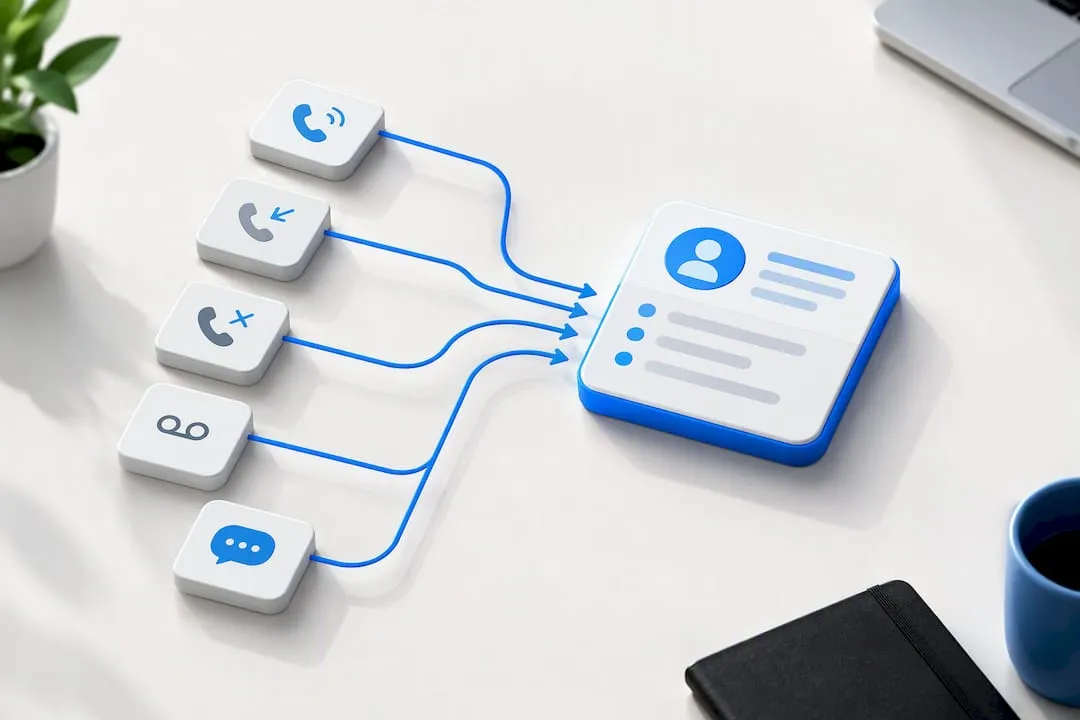
Most virtual and VoIP numbers connect to a CRM or communication platform through the provider’s app or an API integration, and this is where a mobile-based setup starts to feel like a proper business phone system rather than a workaround.
Practically, this means every call, missed, answered, or voicemail, can log automatically against a customer record, so you’re not relying on memory or scribbled notes to track who called and why. Some setups also support call recording tied to specific CRM entries, useful for quotes, bookings, or service history in trades businesses. Text or WhatsApp integration is increasingly common too, letting a missed call trigger an automatic follow-up message rather than losing the enquiry entirely.
Solo operators often skip this step initially and add it later once call volume justifies the extra setup time. That’s a reasonable approach, a basic forwarded number with good voicemail covers most needs in the first few months. The moment you’re fielding enough calls to lose track of who said what, though, CRM integration stops being a nice extra and starts saving real time. Check what your chosen provider supports before committing long-term, since not every virtual number platform offers the same depth of integration, and switching later means reconfiguring routing rules you’ve already set up once.
Ready to get your business number set up?
If you’ve read this far, you already know the theory. What Phonenumbers actually gives you is the practical shortcut: a searchable database of UK 01, 02, 07, and non-geo numbers you can find, reserve, and route to your mobile in one sitting, without hunting across multiple providers or waiting on a sales call.
Search by town, county, area code, or a specific sequence you want on our number search tool, then decide whether to buy the number outright or rent it while you test how it performs. If you want the number fully hosted with call routing and voicemail handled for you, the XL Premier Service covers setup and ongoing hosting from £9.60 a month, with a £14.40 one-off setup charge. For businesses wanting a proper VoIP handset alongside mobile routing, the XL Hosted Voice Service runs from £7.86 a month after a £30 one-off setup fee. You may be able to reserve a number for a limited time for a fee while you finalise your decision, with no pressure to commit before you’re ready.
When does a business number actually pay off for mobile-first businesses?
A business number earns its keep the moment you’re advertising to strangers rather than just repeat customers, as expert consultant SEO services show how professional setups boost your credibility online. Credibility, privacy, and the ability to track which marketing channel actually generates calls all outweigh the small monthly cost once you’re past the very earliest stage of trading.
The mistake I see most often isn’t skipping a business number, it’s picking the wrong prefix for the wrong reason, or porting too late and losing continuity with customers who already have the old number saved. Decide your geographic scope before you buy: local trades should lean 01/02, national services should lean 03, and anyone tempted by a cheap 084 or 070 number should walk away from it entirely.
If you’re still using your bare personal mobile number for business, that’s the real gap worth closing first, not the app you choose to do it with.
— Rob
Sources
- Switching mobile provider and keeping your phone number - Ofcom
- Landline vs mobile for UK small businesses in 2026 - Virens
- How to get a business phone number in the UK: 2026 guide - ExpertMarket
FAQ
Can I add a business number to my mobile phone?
Yes. A virtual or VoIP number can be forwarded to your existing mobile within hours, so you receive business calls on the same handset you already carry. No second phone or SIM swap is required for most setups.
How do I get a business number on my iPhone?
Install your provider’s business-number app from the App Store, sign in, and configure call forwarding and caller ID settings within the app. The process works the same way on Android, since the number itself lives with the provider rather than on the device.
What is the cheapest way to have a business phone?
Basic call forwarding from a rented number to your existing mobile is usually the lowest-cost route, avoiding the extra features of a full hosted system. For UK numbers, Phonenumbers’s search tool lets you compare available options and current prices, which are listed on the site rather than fixed here.
Can I get a free virtual mobile number for the UK?
Some basic caller ID apps offer limited free tiers, but a genuinely reliable business number with voicemail, routing, and a memorable prefix typically carries a small monthly cost. Free options tend to restrict features or call volume, so they suit testing rather than long-term use.
Do I need to port my existing number, or can I start fresh?
Porting keeps your existing number so customers don’t need to relearn it, and it’s the better choice if you’ve already built recognition around that number. Starting fresh is simpler and faster if the number isn’t established yet, since a new VoIP number can go live within hours compared with a multi-day porting process.