TL;DR:
- Choosing a UK city code number depends on your target location to build credibility and ensure proper call routing. Although codes like 01 and 02 indicate geographic presence, they can be used virtually from anywhere with VoIP or online providers. Proper selection, formatting, and regular verification of the number prevent operational issues and reinforce trust with your customers.
Choosing the right city code phone number is one of those decisions that looks simple until you’re staring at a list of area codes and genuinely unsure which one applies to your situation. Whether you’re a sole trader wanting a Bristol presence or a business expanding into Edinburgh, knowing how to select a city code phone number correctly affects everything from customer trust to whether your calls route properly. This guide walks you through the UK numbering system, how to identify the right code for your target area, and how to avoid the formatting mistakes that catch people out every time.
Table of Contents
- Key takeaways
- Understanding UK city codes and area prefixes
- Preparing to choose the right city code
- Step-by-step: selecting and acquiring your number
- Common mistakes when using city code numbers
- Verifying and maintaining your city code number
- My honest take on choosing UK city codes
- Find your ideal city code number with Phonenumbers
- FAQ
Key takeaways
| Point | Details |
|---|---|
| Geographic codes start with 01 or 02 | Only 01 and 02 prefixes signal a genuine local landline presence in the UK. |
| Area code length varies by city size | London uses a short two-digit code (020), whilst rural areas use longer codes up to five digits. |
| Numbers are no longer tied to location | You can use any UK city code number from anywhere in the country with a VoIP or virtual provider. |
| Store numbers in E.164 format | For CRM systems and call routing, always store UK numbers as +44 without the leading zero. |
| Match the code to your target audience | Choosing a city code that reflects where your customers are builds credibility and increases answer rates. |
Understanding UK city codes and area prefixes
Before you can make a sound decision, you need to understand how the UK numbering system is actually structured. UK geographic numbers start with 01 or 02, mobile numbers start with 07, and other services use 03, 08, or 09. If you want a number that signals a physical local presence to callers, you need to be looking specifically at 01 and 02 prefixes. That distinction matters more than most people realise.
Area codes in the UK are not uniform in length. UK area codes vary from two to five digits after the leading zero, depending on the population density of the area. This is by design. Shorter area codes are used in densely populated areas so that more unique local numbers can be issued. London, for example, uses the short 020 code, which leaves eight digits for the local number. A smaller town might use a five-digit area code, leaving only five or six digits for the subscriber number.
Here are some of the most commonly used UK geographic city codes:
- 020 — London
- 0121 — Birmingham
- 0161 — Manchester
- 0113 — Leeds
- 0114 — Sheffield
- 0115 — Nottingham
- 0141 — Glasgow
- 0131 — Edinburgh
- 029 — Cardiff
- 0117 — Bristol
Understanding international dialling is equally important for this city code selection guide. Domestic UK dialling uses a leading zero before the area code, but when dialling from abroad, you drop that zero and add +44. London’s 020 becomes +44 20. Birmingham’s 0121 becomes +44 121. Knowing this before you select your number prevents problems when international clients or automated systems try to reach you.
Pro Tip: When checking city code lookup tips online, always cross-reference with Ofcom’s official numbering data or a reputable provider. Unofficial sources can be out of date, particularly for newer area code assignments.
Preparing to choose the right city code
The biggest mistake people make at this stage is skipping straight to the purchase. Preparation here saves real headaches later. Your first job is to map where your intended customers are and match that location to the correct 01 or 02 prefix. If your customers are predominantly in Manchester, a 0161 number makes sense. If you are a national business wanting a credible London-facing presence, 020 is your code.
Follow these steps before you commit to any number:
-
Define your target city or region. Write down where you want your business to appear locally. Be specific. “North England” is not a useful answer. “Leeds” or “York” is.
-
Identify the correct area code. Use a provider’s city code lookup tool or the UK dialling plan guide to confirm the correct prefix for that city.
-
Check the prefix is geographic. Confirm it starts with 01 or 02. If it starts with 03, 08, or 09, it is not a city code and will not signal local presence.
-
Understand the number length. Once you know your area code, check how many local digits follow it. The total number length including the leading zero should always be eleven digits for UK geographic numbers.
-
Confirm compatibility with your setup. Whether you are using a VoIP system, a physical handset, or a call forwarding service, verify that your provider can assign a number with that specific area code.
Remember that phone number city codes are no longer tied to physical locations. A business in Bristol can legitimately hold a 0161 Manchester number if their customers are based there. Virtual and VoIP providers make this routine. What matters is that you select a code that matches your geographic region for the purpose of establishing trust with your audience.
Pro Tip: If you are targeting multiple cities, consider acquiring separate geographic numbers for each location rather than relying on a single non-geographic number. Multi-location businesses benefit significantly from using localised numbers to signal presence clearly.
Step-by-step: selecting and acquiring your number
Once you have done your preparation, the actual selection process is straightforward if you know what to look for. Here is how selecting area codes for calls works in practice when using a number provider or marketplace.
What to look for in a provider:
- The ability to filter or search by area code, not just by city name
- A clear display of the full number format so you can verify the digit count
- Options to buy outright or rent monthly, depending on your commitment level
- Support for number porting if you want to move the number later
- Confirmation that the number is Ofcom-compliant and correctly assigned to the stated geographic range
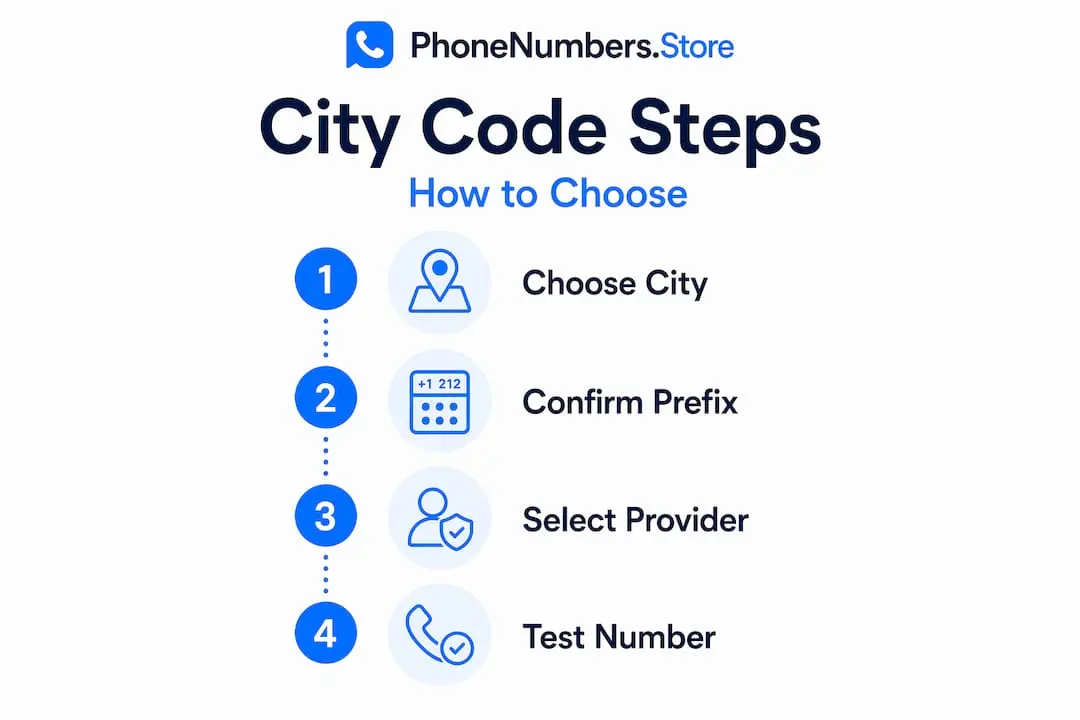
The selection process, step by step:
- Go to your chosen provider and use their search or filter function to browse by area code or city.
- Enter the area code for your target city. For Leeds, that is 0113. For Glasgow, 0141.
- Review the available numbers. Pay attention to the full number, not just the prefix. Memorable sequences or easy-to-recall patterns are worth prioritising if you plan to use the number on marketing materials.
- Verify the number format. The complete number should be eleven digits including the leading zero. If it is not, query it with the provider before purchasing.
- When storing the number in any system, use E.164 format. Drop the leading zero and add +44. A Leeds number 0113 255 0000 becomes +44 113 255 0000. This prevents routing errors in CRMs and telephony platforms.
Number assignment interfaces often require you to select a city mapped to a specific geographic code range rather than allowing you to choose any prefix freely. This is intentional and ensures the number is genuinely allocated to the correct geographic block. Do not attempt to bypass this by selecting a nearby city if the codes differ. The geographic integrity of the number matters.
Common mistakes when using city code numbers
Even once people understand how to choose an area code, they make avoidable errors. These are the ones that come up most often.
-
Confusing geographic and non-geographic prefixes. Mixing geographic and non-geographic codes causes trust problems and potential routing failures. A caller who sees an 0800 number does not perceive a local business. A caller who sees 0121 does.
-
Keeping the leading zero when dialling internationally. Dialling 00 44 0121 456 7890 is wrong. The correct form is 00 44 121 456 7890. This is one of the most common errors in CRM data and causes calls to fail silently.
-
Getting the number length wrong. An 0121 Birmingham number has four digits in the area code and seven in the local part, totalling eleven with the leading zero. If validation in your system expects a different length, it will reject valid numbers. Valid area codes and number lengths must be respected to avoid call routing failures.
-
Choosing a city code that does not match your audience. Selecting a 0131 Edinburgh number when all your customers are in Southampton simply to get a “better” area code is a mistake. It creates a credibility gap that sharp customers notice.
A number is only as good as the trust it builds. If your city code does not match where your customers expect you to be, it raises questions rather than answering them.
Reviewing your intended use case before purchase and running a quick test call after setup catches most of these problems early.
Verifying and maintaining your city code number

Getting the number is the start, not the finish. Once you have selected and acquired a city code phone number, a short verification process protects you from ongoing problems.
Test the number in both domestic and international format. Call it from a UK mobile, then from a service that allows international format dialling. Check that both routes connect correctly. If anything fails, report it to your provider immediately before giving out the number to customers.
Update every system that stores or uses the number. CRMs, invoicing tools, email signatures, and website listings should all hold the number in a consistent format. Store UK numbers in E.164 format across all technical systems. Use the display format (with spaces and leading zero) only for customer-facing materials like business cards and websites.
For businesses using call routing or auto-attendant systems, confirm that inbound calls to your city code number reach the correct destination. A number that looks right but routes to the wrong department or voicemail box creates a poor first impression.
Pro Tip: Schedule a quarterly check of all your stored phone numbers. Formatting errors creep in whenever data is imported or transferred between systems. Catching them early prevents silent call failures that you would never otherwise know about.
My honest take on choosing UK city codes
I’ve seen a lot of businesses overcomplicate this decision, and I’ve also seen them underthink it. Both cause problems. The overcomplicators spend weeks debating which city code to use when the answer is straightforward. Pick the code for where your customers are. That is genuinely most of the decision.
What I find more interesting is how many people do not realise that city code choice is less about preference and more about matching the correct geographic prefix for locality. It is not a branding exercise. A 020 London number does not make you a London business. It tells callers that they are reaching a number allocated to London. That distinction matters when customers are checking whether you are genuinely local to them.
The formatting issues are where I have seen real operational damage. A business with an otherwise excellent telephony setup, undone because their CRM was storing numbers with the leading zero intact in an international field. Calls failed. Callbacks never happened. The fix took ten minutes once someone spotted it, but the damage to customer relationships had already been done.
My strong view is that understanding local vs non-local numbers is not optional knowledge for any UK business that takes its communications seriously. Get the code right, store it correctly, and test it before it goes live. Those three steps cover the vast majority of what goes wrong.
— Rob
Find your ideal city code number with Phonenumbers
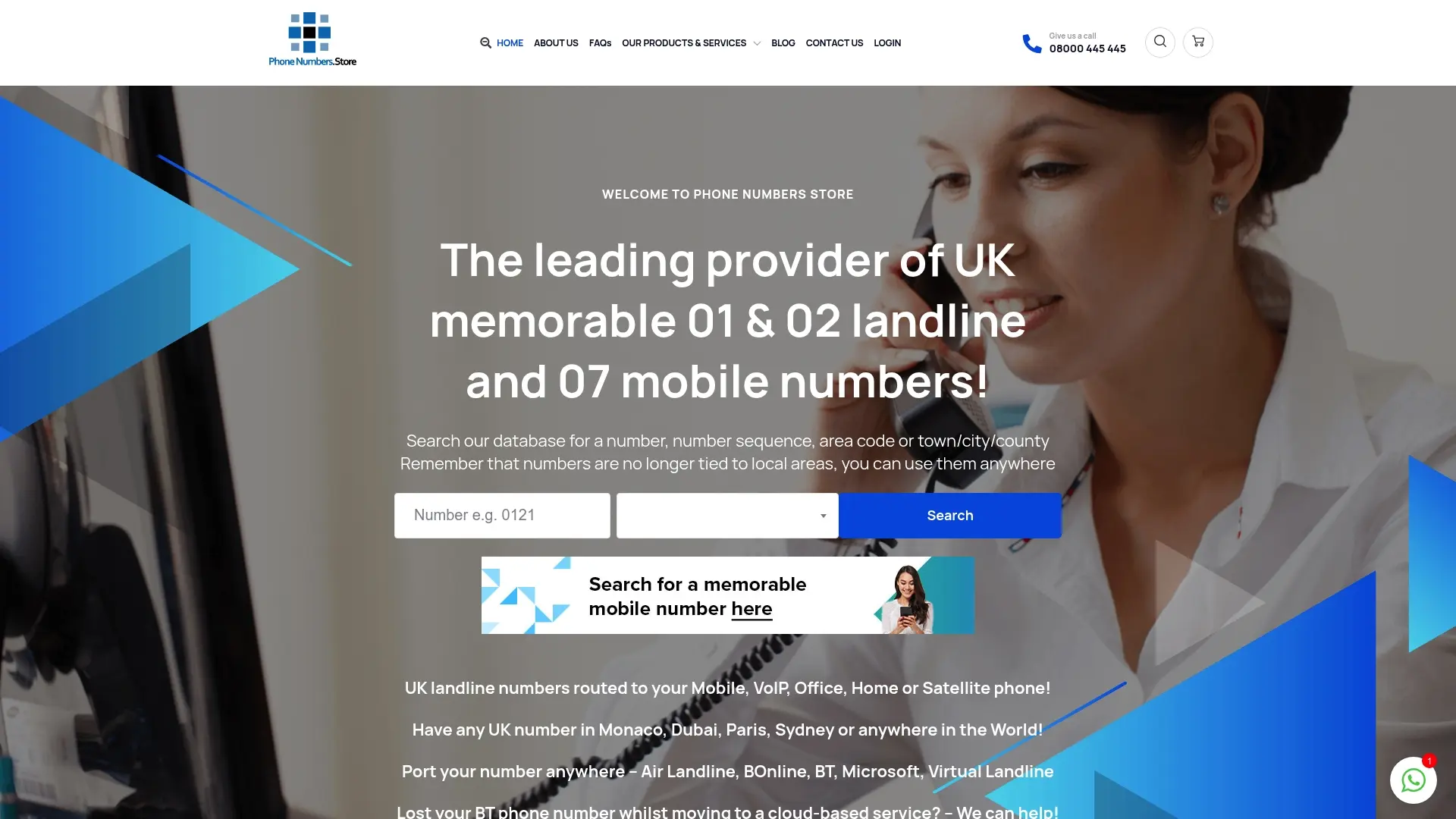
Phonenumbers is the UK’s leading provider of memorable 01, 02, and 07 numbers, with a searchable database covering every UK area code, town, city, and county. Whether you want a memorable Leeds city number or a striking Nottingham number, you can find it quickly by browsing by area code or location. The best part is that numbers are no longer tied to physical locations, so you can use any city code number from anywhere in the UK. Browse the full range and buy a UK number that fits your location and your brand today.
FAQ
What prefix do UK city code numbers use?
UK city (geographic) numbers use the 01 or 02 prefix. Numbers starting with 07 are mobile, and 03, 08, or 09 prefixes are non-geographic services.
Which city code should I choose for my business?
Choose the area code that matches the city where your customers are based. For London use 020, Birmingham 0121, Manchester 0161, and Leeds 0113.
Can I use a city code number if I am not based in that city?
Yes. UK phone numbers are no longer tied to physical locations. A virtual or VoIP provider can assign you any geographic city code number regardless of where you operate.
How do I format a UK city code number for international calls?
Drop the leading zero and add +44. For example, a Birmingham number 0121 456 7890 becomes +44 121 456 7890 for international dialling.
Why does area code length vary across UK cities?
Shorter area codes are used in densely populated areas to allow more unique local numbers. London’s two-digit code 020 supports eight-digit local numbers, whilst smaller towns use longer area codes with fewer subscriber digits.