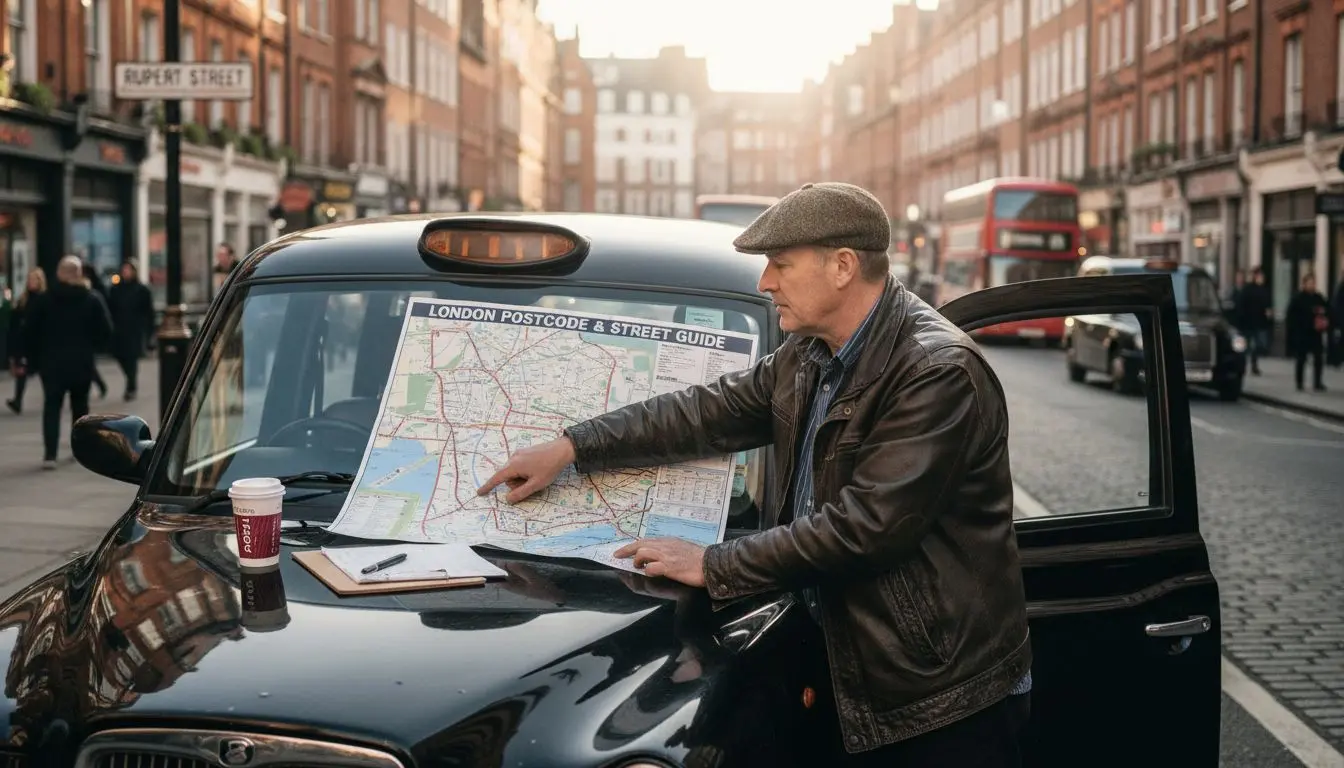
Choosing where to focus your taxi advertising in London can feel like a guessing game. If you target every postcode, your budget quickly vanishes with little to show for it. Miss out on the most influential areas, and you risk losing bookings to better-prepared competitors. There is a smarter way to cut through the uncertainty. By applying postcode data and mapping customer behaviour, you can direct your efforts towards the places that matter most to your business. This approach makes your campaigns more local, relevant, and profitable. Get ready to discover how to select the best postcodes, segment your audience, and use memorable numbers to turn local demand into loyal customers.
Table of Contents
- Understand London Postcode Areas And Their Significance
- How To Choose Key Postcodes For Maximum Coverage
- Segmenting Customer Bases By Postcode For Better Results
- Incorporate Postcodes In Local Advertising Campaigns
- Track And Measure Response By London Postcode
- Using Memorable Numbers To Enhance Postcode Targeting
Quick Summary
| Takeaway | Explanation |
|---|---|
| 1. Understand Postcode Structure | Familiarise yourself with London’s postcode system to pinpoint customer locations more effectively. |
| 2. Focus on High-Performing Postcodes | Concentrate your advertising budget on the top postcode areas generating the most bookings. |
| 3. Segment Customer Demographics | Tailor your marketing messages based on demographic differences within postcode segments for better engagement. |
| 4. Incorporate Postcodes in Campaigns | Use specific postcodes in your adverts to increase relevance and local engagement among customers. |
| 5. Measure and Adjust Advertising Strategies | Track campaign performance by postcode to refine and optimise your advertising spend for higher returns. |
1. Understand London Postcode Areas and Their Significance
London’s postcode system is far more complex than most taxi operators realise. These postcodes aren’t random, they’re carefully structured to divide the capital into specific geographic zones that directly impact your advertising reach.
The system works like this: London postcodes begin with letters that represent geographic districts. The first letter or letters (such as E, W, N, or SW) identify the broad region, whilst numbers and additional letters pinpoint exact locations. When you understand these divisions, you can target customers in specific neighbourhoods rather than broadcasting to the entire city.
Why postcodes matter for your taxi business:
- Enable hyper-local targeting of potential customers in specific areas
- Help you identify high-demand zones where you should focus advertising spend
- Allow you to tailor messaging to neighbourhood characteristics
- Reduce wasted advertising budget by avoiding low-revenue postcodes
- Connect local phone numbers to specific postcode areas, building trust with customers
Consider this practical example: if your base operates primarily in East London (E postcodes), advertising heavily in distant West London (W postcodes) wastes your budget. By understanding UK area codes and their geographic coverage, you’ll allocate resources far more strategically.
London has 123 postcode districts spread across four quadrants: North (N), South (S), East (E), and West (W). The central areas use EC (East Central) and WC (West Central). Outer London postcodes extend into less densely populated zones where demand patterns differ significantly.
Understanding your local postcode geography transforms your advertising from guesswork into strategic targeting based on actual customer locations.
The real power emerges when you cross-reference postcodes with passenger demand data. Some postcodes generate 10 times more bookings than others during specific hours. Rush hour in the City (EC postcodes) looks completely different from evening demand in Shoreditch (N postcodes).
Pro tip: Map your top 20 customer postcodes and calculate their percentage of total revenue, then concentrate 60% of your advertising budget on these high-performing areas whilst maintaining smaller campaigns in emerging zones.
2. How to Choose Key Postcodes for Maximum Coverage
Choosing the right postcodes isn’t about covering every single district in London. It’s about identifying which postcodes will deliver the highest return on your advertising investment. This strategic approach saves money whilst maximising your reach among customers who actually book taxis.
Start by looking at your existing customer base. Which postcodes generate the most bookings? Which areas have the highest frequency of repeat customers? This data tells you where your business already thrives and where you should concentrate your efforts. You’re not guessing anymore, you’re responding to real demand patterns.
Population density and commercial activity are critical factors. High-density residential areas like SW11 (Battersea) and N1 (Islington) generate consistent demand, whilst business districts like EC1 (Clerkenwell) spike during weekday hours. Using postcode data linked with demographics and economic activity, you can identify which postcodes match your target customer profile.
Key factors when selecting postcodes:
- Resident population size and density in each postcode sector
- Volume of local businesses and their trading hours
- Accessibility to transport hubs and major attractions
- Existing competitor presence (avoid oversaturated areas initially)
- Seasonal variations in demand across different neighbourhoods
When choosing postcodes for maximum coverage, evaluate accessibility patterns. Postcodes near mainline railway stations, Underground interchanges, and airports generate higher taxi demand. A postcode near Liverpool Street station (EC2) behaves completely differently from one in a quiet residential pocket three miles away.
Start with your top 10 revenue-generating postcodes, then strategically expand into adjacent areas with similar characteristics.
Consider clustering your chosen postcodes geographically. Advertising in E1, E2, and E3 together creates stronger local presence than spreading the same budget across E1, W5, and SE2. Customers recognise your number in their neighbourhood more readily when you maintain consistent local visibility.
London’s postcode directory provides comprehensive data linking postcodes with geographical boundaries and locality information. This allows you to evaluate postcode sectors based on visibility potential and relevance to your operations. Some postcode sectors contain multiple residential buildings and high foot traffic, whilst others are industrial zones with minimal taxi demand.
Start lean with 15 to 20 carefully selected postcodes rather than attempting to cover 50 indiscriminately. This concentrated approach builds brand recognition within your chosen areas and keeps advertising costs manageable whilst you measure what actually converts to bookings.
Pro tip: Track which postcodes convert advertising clicks into actual bookings using unique phone numbers assigned to different postcode campaigns, allowing you to calculate precise return on investment per postcode area.
3. Segmenting Customer Bases by Postcode for Better Results
Not all customers are identical, and neither are the postcodes they inhabit. Segmenting your customer base by postcode reveals distinct groups with different behaviours, needs, and spending patterns. This insight transforms your advertising from one-size-fits-all broadcasting into precision targeting that actually resonates.
When you segment by postcode, you’re essentially grouping customers who share similar characteristics. A postcode in Chelsea (SW3) contains affluent residents with different taxi needs than a postcode in Stratford (E15). Understanding these differences allows you to craft completely different advertising messages for each segment.
Demographic and socioeconomic data reveals what each postcode segment truly values. Some segments prioritise speed and efficiency. Others value luxury and premium service. Young professionals in tech hubs might book taxis for business meetings, whilst families in residential areas book school runs and leisure trips. Your message should match what matters to each group.
How postcode segmentation benefits your taxi business:
- Target premium service messages to affluent postcodes with higher spending capacity
- Promote family-friendly features in residential family-oriented areas
- Emphasise business reliability in commercial and corporate postcode clusters
- Adjust pricing strategy based on what each segment can support
- Increase conversion rates by speaking to actual customer motivations
Using postcode-level demographic data to understand consumer groups, you can identify which segments respond to which messaging. High-density city centre postcodes with young professionals require completely different copy than suburban family postcodes with school drop-offs.
Consider this practical example: advertising “24-hour airport transfers” performs brilliantly in postcodes near major transport hubs. The same message wastes money in quiet residential areas where customers rarely need airport services. Segment your campaigns accordingly.
Postcode segmentation lets you stop shouting one message at everyone and start having relevant conversations with specific customer groups.
Start by analysing your existing customer data. Which postcode clusters generate the highest lifetime customer value? Which segments book most frequently? Which are price-sensitive versus service-focused? This real data from your own business trumps any generic segmentation model.
Local phone numbers assigned to specific postcode segments strengthen this approach. When customers in SW1 see a local number matched to their area, trust increases. They perceive your service as genuinely local rather than distant corporate coverage.
Pro tip: Create three distinct messaging versions for premium, standard, and value-conscious postcode segments, then test which resonates highest with each group before scaling your advertising spend.
4. Incorporate Postcodes in Local Advertising Campaigns
Postcodes aren’t just administrative codes. They’re powerful targeting tools that make your advertising campaigns sharper, more relevant, and measurable. When you incorporate postcodes directly into your advertising messaging, you transform generic appeals into locally-focused conversations that resonate with specific neighbourhoods.
The power lies in specificity. Instead of “Book a taxi in London”, you could run campaigns that say “Fast pickups in E1 and E2” or “Premium service for SW1 professionals”. Customers instantly recognise their postcode and perceive your service as genuinely local rather than distant corporate coverage.
Incorporating postcodes into campaigns helps you align your messaging with actual audience locations. This increases relevance and engagement because you’re speaking directly to where people live and work. Customers trust services that understand their specific area.
Ways to incorporate postcodes into your advertising:
- Display specific postcodes you serve prominently in online adverts and social media
- Create postcode-specific landing pages that address local needs and characteristics
- Use postcodes in geotargeted search adverts to capture location-conscious searches
- Highlight coverage areas by postcode district in local directory listings
- Mention postcode zones in radio or podcast adverts reaching local listeners
Using postcode-targeted local number mapping, you reinforce the perception of local presence. When customers see a phone number matched to their postcode alongside postcode-specific messaging, the combination creates powerful local credibility.
Measurement becomes far simpler with postcode integration. You can track which postcode-specific campaigns generate the most bookings, calculate return on investment per postcode zone, and adjust spending accordingly. This data-driven approach eliminates guesswork from your advertising budget.
Postcode-specific campaigns feel personal to customers because you’re acknowledging their exact location, not treating them as generic London audience members.
Consider timing variations across postcodes. Weekend evening campaigns perform differently in clubbing districts like Shoreditch (N1) versus family neighbourhoods like Wimbledon (SW19). Postcode integration allows you to adjust campaign timing and messaging by zone.
Compliance matters too. Accurate postcode information in advertising ensures you’re operating within UK advertising standards and meeting customer expectations honestly. You’re promising coverage in specific areas and delivering precisely that.
Start by testing postcode-specific campaigns in three to five of your strongest revenue-generating postcodes. Measure results carefully, then expand the approach based on what actually works for your business.
Pro tip: Create unique phone numbers for each major postcode campaign zone, then track which postcode-specific calls convert to bookings—this reveals your true postcode ROI and guides future budget allocation.
5. Track and Measure Response by London Postcode
You can’t improve what you don’t measure. Tracking advertising response by postcode transforms vague assumptions into concrete data that guides your spending decisions. This is where your postcode strategy becomes genuinely profitable.
Tracking works by assigning unique phone numbers or tracking codes to different postcode campaigns. When customers from postcode E1 call one number and customers from postcode SW1 call a different number, you instantly know which postcode is generating actual business. No guessing, no generalised metrics.
Geographically segmented data reveals patterns that blanket advertising completely misses. You might discover that your E postcodes convert at 8% whilst your W postcodes convert at only 3%. That insight changes everything about how you allocate budget.
Key metrics to track by postcode:
- Number of inbound calls or online enquiries from each postcode
- Conversion rate from initial contact to actual booking
- Average booking value and lifetime customer value per postcode
- Cost per acquisition broken down by postcode zone
- Customer retention rates across different postcode segments
Analysing advertising response metrics across postcode-defined geographic markets helps you understand where your advertising spend delivers genuine return. Some postcodes generate £10 of revenue per £1 spent. Others barely break even. Data reveals this truth.
Digital advertising platforms make this tracking straightforward. Google Ads, Facebook Ads, and other platforms allow geotargeting by postcode and provide detailed response reports. You can see exactly which postcodes clicked your advert, called your number, and completed bookings.
Set up a simple tracking system using spreadsheets or basic CRM software. Record the date, postcode source, and booking outcome for every enquiry. After 30 days of data collection, patterns emerge that transform your entire approach.
Postcode-level tracking converts advertising from a cost centre into a measurable investment where you know precisely which areas generate profit.
Seasonal variations become visible through postcode tracking. You might notice that SW postcodes spike during December with Christmas party bookings whilst E postcodes remain steady year-round. This allows you to adjust campaigns seasonally by postcode.
Competitor activity also becomes apparent when you track by postcode. If a new competitor emerges in N postcodes, your tracking data shows the immediate impact on your bookings. You can respond strategically rather than reactively.
Start with your top five postcodes. Track their performance meticulously for one full quarter. The insights will guide your next quarter’s strategy with confidence based on real data rather than assumptions.
Pro tip: Use unique phone numbers for each major postcode campaign and record every booking source in a spreadsheet, calculating postcode ROI monthly to identify which zones deserve increased budget and which need strategy adjustment.
6. Using Memorable Numbers to Enhance Postcode Targeting
A memorable phone number isn’t just vanity. It’s a psychological tool that dramatically increases how often customers remember and call your taxi service. When combined with postcode targeting, memorable numbers become your secret weapon for dominating local markets.
Memory works through patterns and repetition. A number like 020 7946 0958 disappears from a customer’s mind instantly. But a number like 020 7777 7777 sticks immediately. This matters because customers who remember your number call directly rather than searching competitors first.
When you assign different memorable numbers to different postcodes, you create powerful local brand presence. Customers in E1 see “Call 020 3333 3333 for East London taxis”. Customers in SW1 see “Call 020 5555 5555 for West London taxis”. Each postcode gets a distinct, easy-to-remember identity.
How memorable numbers enhance postcode targeting:
- Customers recall the number instantly, increasing direct calls without search behaviour
- Postcodes associated with memorable numbers create stronger local brand perception
- Easy-to-remember digits make postcodes feel more personal and local
- Memorable numbers assigned to specific postcodes enable accurate attribution tracking
- Customers repeat the number to friends, creating organic word-of-mouth amplification
The structure of postcode alphanumeric codes supports memorable number integration that makes both postcodes and phone numbers easier for customers to retain. When your advertising pairs a postcode like E1 with a memorable number, both elements reinforce each other in memory.
Consider practical impact: a customer in Clerkenwell remembers “020 2020 2020” far more readily than “020 7946 0123”. When they need a taxi at 11pm on a Friday night, they’ll call the number they remember, which is yours.
Memorable numbers transform postcodes from administrative labels into powerful marketing tools that stick in customer minds and drive immediate action.
Testing shows memorable numbers increase call volume significantly. Some taxi operators report 30 to 40 percent higher response rates when switching from standard to memorable numbers within the same postcode campaign. The effect is especially dramatic in competitive postcodes.
Assignment strategy matters too. Rather than one generic memorable number across all London, assign unique memorable numbers to your top five to ten postcode zones. This creates distinct local identities whilst maintaining tracking capability.
Easy-to-remember sequences work best. Look for patterns: repeating digits, ascending sequences, or numbers that relate to your brand. 020 3939 3939 works better than 020 3924 1847 because the pattern is instantly graspable.
Pro tip: Secure memorable numbers for your three highest-revenue postcodes immediately, then rotate them across campaigns to measure which memorable number patterns drive the strongest booking response from each postcode zone.
Below is a comprehensive table summarising the strategies and insights from the article regarding London’s postcode system for targeted advertising in taxi businesses.
| Topic | Details | Benefits |
|---|---|---|
| London Postcodes | Structured by geographic districts using alphanumeric codes. Prioritise regions starting with E, W, N, S, SW, EC, WC for focused coverage. | Precision targeting and strategic advertising placement. |
| Importance for Taxi Businesses | Enable hyper-local targeting, identify high-demand areas, tailor messaging, and optimise advertising strategies. | Improved customer connection, reduced costs, and increased bookings. |
| Selecting Key Postcodes | Align campaigns to customer demand patterns and population density. Focus on top revenue-generating postcodes initially. | Enhanced resource allocation and maximised ROI. |
| Segmentation Strategies | Group customers by postcode behaviours for tailored adverts (e.g., premium service for affluent areas). | Higher conversion rates and customer satisfaction. |
| Campaign Localisation | Integrate postcode-specific messaging and memorable phone numbers into adverts. | Increases trust and engagement, making campaigns relatable. |
| Measuring Performance | Use tracking methods like unique phone numbers for each postcode to gather response data. | Data-driven insights leading to smarter marketing spends. |
Boost Your Taxi Advertising with Memorable Local Numbers Today
The article highlights the challenge many taxi operators face when trying to target specific London postcode areas effectively while avoiding wasted advertising spend. You need to connect with your customers in the exact postcodes where demand is high, create trust through local presence, and measure ROI accurately. Using memorable phone numbers matched to postcode areas solves these issues by enhancing recall and allowing precise tracking of campaigns.
At phonenumbers.store, you can find the perfect 01 and 02 landline memorable numbers tailored to your key London postcodes to make your taxi ads stand out. Our database enables you to search by area code, number sequence or location, helping you secure numbers that local customers will instantly recognise and remember. Combined with postcode-targeted campaigns, these numbers drive more direct calls, increase conversion rates and strengthen your local brand identity.
Ready to convert postcode data into profitable taxi bookings? Visit https://phonenumbers.store now to explore our unique memorable phone numbers. Leverage postcode-targeted local number mapping to precisely measure your advertising impact and optimise your budget. Don’t miss out on transforming your London taxi business with numbers customers trust and recall every time.
Frequently Asked Questions
How can I use London postcodes to target specific customer groups?
Understanding London’s postcode structure allows you to focus on specific neighbourhoods where your potential customers live or work. Map your top 20 postcodes, then direct 60% of your advertising budget towards the areas with the highest demand and returns.
What factors should I consider when selecting key postcodes for my taxi ads?
Focus on aspects such as population density, local businesses, and accessibility to transport hubs in each postcode area. Start by analysing which postcodes generate the most bookings and concentrate efforts there for better returns.
How can I incorporate postcodes into my advertising campaigns effectively?
Use specific postcodes in your advertising messages to make them resonate locally, such as “Fast pickups in E1 and E2.” Create postcode-specific landing pages to ensure the content matches what local customers are looking for.
Why is tracking response by postcode important for my taxi business?
Tracking response rates by postcode allows you to see which areas are delivering the most bookings and revenue. Use unique phone numbers for each postcode zone to monitor performance and adapt your advertising strategy accordingly, ensuring that you see measurable returns.
What role do memorable phone numbers play in postcode targeting?
Memorable phone numbers can significantly increase customer recall, leading to more direct calls to your taxi service. Assign unique, easy-to-remember numbers for each postcode area to enhance your local brand presence and improve booking rates by up to 40%.
Recommended
- Personal Numbering Services: Boost Brand Recall for Taxi Firms|BM
- 7 Key Advantages of 07 Mobile Numbers for UK Taxi Firms|BM
- 7-Step Phone Number Listing Checklist for UK Taxi Firms and Plumbers|BM
- Virtual Landlines: Boosting UK Taxi Firm Visibility|BM
- 8 Essential Luxury Automotive Marketing Tips - Corrado Manenti