Searching “example Korean phone number” almost always means one thing for a UK business owner: you want a sample of what a memorable, professional UK contact number looks like, not South Korean dialling codes. In that sense, the answer is a geographic 01/02 number, a national 03 number, or a freephone 0800 line, formatted clearly and easy to recall. For most sole traders, an 01/02 number builds local trust fastest; a 03 number suits anyone trading nationally. Start by searching the Phonenumbers database, or read the format breakdown below first.
TL;DR:
- A local 01/02 number builds trust with nearby customers, while a 03 number better suits businesses with nationwide reach at standard rates.
- Memorable numbers typically feature repeated digits, symmetry, or easy pronunciation, significantly increasing the likelihood of customer recall.
- Purchasing a virtual number is quick and straightforward, with many options available for immediate activation or rental, and porting takes about 5 to 10 days.
- Proper formatting, including consistent spacing and international dialing prefixes, enhances recall and professionalism across signage, websites, and printed materials.
- Choosing the right prefix depends on your business story, with local codes for trust, 03 for national image, and 0800 for inbound call emphasis, aligning your number with your growth stage.
Table of Contents
- Which UK number types work best for memorable business numbers
- How to choose a memorable number: practical criteria for UK sole traders and SMEs
- Practical examples and display formats (how to show your new number where it counts)
- How to buy or rent a memorable number (step by step, with timings and costs)
- Correct formatting and example structures of Korean phone numbers
- Differences between landline and mobile Korean phone numbers
- Common uses and meanings of Korean number prefixes
- How to dial Korean phone numbers from abroad and within Korea
- Examples of Korean phone numbers in various contexts
- What actually matters when picking a business number
- Search, buy, or rent your memorable UK number today
- Sources
- FAQ
Which UK number types work best for memorable business numbers
A phone number tells a caller something before you’ve even answered. Get the prefix wrong for your business and you’re fighting an uphill battle before the first ring.
Geographic 01/02 numbers signal “we’re local, we’re established.” These follow either a 2+8 format (like 020 for London) or a 3+7 format (like 0113 for Leeds), and the UK National Telephone Numbering Plan confirms most UK numbers run to a 10-digit National Significant Number regardless of which split applies. A plumber in Leeds with an 0113 number reads as a Leeds business, even if they now work from a van across three counties.
03 numbers are non-geographic but billed at standard geographic rates, which makes them the natural choice for a business trading across the UK without tying itself to one postcode. 07 mobile-style numbers offer flexibility and portability, but some customers associate them with sole operators or, worse, scam calls, so weigh reachability against perception. 0800 freephone numbers cost the caller nothing, which noticeably lifts response rates for inbound-heavy services like helplines or booking desks, though the business absorbs the call cost.
One quick warning: steer clear of 084, 087, and 09 premium ranges. They’re legacy territory now, and modern customers read them as expensive or, worse, suspicious.
Choosing between these options comes down to matching the range to the goal:
- 01/02 for local credibility and area-based trust
- 03 for national reach at standard rates
- 07 for mobile flexibility, with a spam caveat
- 0800 for maximising inbound call volume
Guidance on UK business numbers backs this same split: 01/02 for local trust, 03 for national presence, 0800 when free-to-call genuinely matters to your customer base.
How to choose a memorable number: practical criteria for UK sole traders and SMEs
Memorability isn’t accidental. Numbers with repeated digits, symmetrical patterns, or short pronounceable clusters stick in a customer’s head far more easily than a random string, and that recall directly affects whether someone rings you back after seeing your van once.
Work through these checks before you commit:
- Pattern first. Look for repetition (8888), symmetry (1221), or clusters that are easy to say aloud, not just easy to read.
- Match the audience. A local tradesperson wants an area-coded 01/02 number; a national retailer wants 03; a booking-heavy service might want 0800.
- Check portability. Confirm the number supports call forwarding, works with VoIP or SIP, and can be assigned to a SIM or PBX system without friction.
- Weigh the cost structure. A distinctive vanity number is often a one-off premium purchase, while ongoing hosting or forwarding may carry a monthly rental fee.
- Plan the timeline. Build in a few days if you’re porting an existing number rather than starting fresh.
Ofcom’s own numbering review found that many customers rely on stored mobile contacts rather than remembering digits, and that businesses which change numbers can face real disruption reconnecting with existing customers. That’s a strong argument for picking a number you intend to keep for years, not months.
Pro Tip: Say the number aloud to three people who’ve never seen it written down. If they can repeat it back without hesitating, it’s a strong candidate.
Before buying, have your business details, preferred forwarding destination (mobile, VoIP app, or landline), and any existing number you plan to port ready to go. It shortens the whole process considerably.
Practical examples and display formats (how to show your new number where it counts)
Formatting consistency matters more than most business owners assume. A number that looks clean on a website header can look cluttered on van signage, and the wrong punctuation genuinely hurts recall.
Here’s how the main types should typically appear, both for UK dialling and international formatting:
| Number type | Local format | International format |
|---|---|---|
| Geographic (Leeds) | 0113 255 0000 | +44 113 255 0000 |
| Geographic (London) | 020 7946 0958 | +44 20 7946 0958 |
| National (03) | 03330 501234 | +44 333 050 1234 |
| Freephone (0800) | 0800 123 4567 | +44 800 123 4567 |
| Mobile-style (07) | 07700 900123 | +44 7700 900123 |
Notice the leading 0 disappears and gets replaced by +44 for international formatting. Keep a single space between logical groups rather than scattering hyphens or brackets everywhere.
For van livery and signage, go large and simple: “0113 255 0000” beats “(0113) 255-0000” every time, since decorative punctuation slows down a glance from a moving car. On a business card, pair the number with the word “FREEPHONE” in capitals if you’re using 0800, since customers often assume any 0800-style prefix costs money unless told otherwise. On a website header, the international format reassures overseas customers you’re reachable, while an invoice footer should always use the local format customers actually dial.
One structural point worth remembering: numbers are no longer tied to a physical office. A checklist for local and national number options explains how a Leeds-coded number can serve a business trading nationwide, though the area-code perception with customers persists regardless of where you actually operate.
How to buy or rent a memorable number (step by step, with timings and costs)
Buying a memorable UK number is a shorter process than most business owners expect, provided you know the steps.
- Search a provider’s database by pattern, area code, or town to shortlist candidates.
- Reserve or buy the number outright, or arrange a rental agreement if you’d rather avoid the upfront cost.
- Activate it. Virtual numbers on most platforms go live in minutes; there’s no waiting around for a physical line to be installed.
- Port an existing number, if you’re keeping one, which typically takes 5 to 10 business days through your new provider.
- Configure forwarding, routing calls to a VoIP app, SIP trunk, existing SIM, or office PBX.
- Test call handling, checking business hours, voicemail, and any spam filtering before you publish the number anywhere.
Cost structures vary by pattern and range. Distinctive vanity numbers with strong repetition often carry a one-off premium price, while ongoing hosting or call forwarding is usually billed monthly. Freephone 0800 numbers add a wrinkle: the business, not the caller, covers the inbound call cost, so factor that into your monthly budget if you expect high call volume.
Before you start, have your forwarding destination, business registration details, and (if porting) your current provider’s account information ready. It removes almost all of the delay from the process.
Correct formatting and example structures of Korean phone numbers
For context, and because the phrase “Korean phone number” surfaces in general searches, it’s worth being precise about what that format actually looks like, distinct from the UK numbers this guide focuses on.
A South Korean phone number typically follows the country code +82, followed by an area code or mobile prefix, then the subscriber number. Seoul lines use area code 02, while other regions use two or three-digit codes. Mobile numbers use a 010 prefix domestically, which becomes +82 10 when dialled internationally, since the leading zero is dropped. A typical structure reads as 010 1234 5678 domestically, or +82 10 1234 5678 from abroad.
The core formatting principle mirrors the UK system closely: a country code, followed by a regional or service prefix, followed by a subscriber number, with the leading 0 dropped whenever the country code replaces it. That’s the same logic behind the UK’s own +44 formatting shown earlier in this guide, which is a useful mental shortcut if you’re already comfortable with UK number structures.
Beyond that structural note, this guide’s focus stays firmly on UK memorable numbers, since that’s what actually moves the needle for a UK sole trader trying to generate more calls.
Differences between landline and mobile Korean phone numbers
South Korean landline numbers are geographically tied, using area codes such as 02 for Seoul or 051 for Busan, and they’re billed and dialled differently depending on region. Mobile numbers, by contrast, all share the 010 prefix nationwide regardless of where the subscriber lives or the network they’re on, which removes any regional signal a caller might otherwise read into the number.
That’s a meaningful contrast with the UK system this guide is built around. UK geographic 01/02 numbers still carry a local identity that customers recognise instinctively, while UK mobile numbers (07) carry no location information at all. South Korea’s landline system works the same way UK geographic numbers do: the area code tells you something real about where the line is based. The mobile prefix, in both countries, tells you nothing about location, only that you’re reaching a personal or portable device rather than a fixed line.
Common uses and meanings of Korean number prefixes
Korean number prefixes function similarly to UK prefixes in that each one signals something specific about the type of line and its likely use. The 010 prefix denotes a standard mobile number, used almost universally for personal and business mobile contact. Landline prefixes like 02 (Seoul) or 031 (Gyeonggi) tell a caller exactly which region the number is registered to, much like a UK 0113 code identifies Leeds.
There are also dedicated service prefixes for specific purposes, such as toll-free style ranges used by larger companies for customer service lines, functioning much like the UK’s 0800 freephone system in intent, if not in exact numbering structure. The parallel worth remembering is conceptual rather than technical: both systems reserve specific prefix ranges to signal purpose, whether that’s a geographic tie, mobile reachability, or a business’s decision to make itself free to call.
How to dial Korean phone numbers from abroad and within Korea
Dialling within South Korea uses the local format directly: the area code or mobile prefix, followed by the subscriber number, with no country code needed. From abroad, the process mirrors what UK callers do when dialling into the UK: drop the leading 0 and add the country code, +82, in its place.
So a Seoul landline written locally as 02 1234 5678 becomes +82 2 1234 5678 when dialled internationally. A mobile number written locally as 010 1234 5678 becomes +82 10 1234 5678 from outside the country. This is precisely the same convention the UK uses with +44, which makes the underlying logic easy to apply once you’ve grasped it in either direction: local format keeps the leading zero, international format swaps that zero for the country code.
Examples of Korean phone numbers in various contexts
To round out the picture: a personal mobile contact in South Korea typically appears as 010 1234 5678 on a business card or in a contacts list, becoming +82 10 1234 5678 if shared internationally. A business landline in Seoul might display as 02 1234 5678 locally, switching to +82 2 1234 5678 on an international invoice or website footer aimed at overseas clients.
Larger Korean companies often use dedicated customer service lines with distinct prefixes, functioning as the Korean equivalent of a UK freephone or national rate number, signalling a centralised contact point rather than a specific office or individual. The underlying pattern, a country code, a purpose-specific prefix, and a subscriber number, holds across contexts, whether personal, small business, or large corporate.
What actually matters when picking a business number
Most advice on memorable numbers focuses too heavily on the pattern itself, the 8888s and the 1221s, and not nearly enough on what happens after you buy one. A striking number that never gets ported properly, or sits unconfigured for a week because nobody set up call forwarding, does nothing for your business.
The bigger opportunity most sole traders miss is the mismatch between number type and business stage. A tradesperson expanding beyond their home town often keeps an old 01 number out of habit, when a 03 number would better reflect where their customers actually are now. Conversely, businesses chase national-sounding numbers before they’ve built the local reputation that makes a geographic code worth having.
If there’s one priority worth acting on first, it’s this: decide what story you want your number to tell a stranger before they’ve spoken to you, then pick the prefix that tells it. Everything else, the pattern, the formatting, the display, follows from that decision far more naturally than most guides suggest.
— Rob
Search, buy, or rent your memorable UK number today
You can shop for a memorable business number online without waiting on a call centre or committing to a contract you haven’t seen the terms of. The Phonenumbers database lets you search by pattern, area code, or town, and see straight away what’s available and whether it’s for sale or rental.
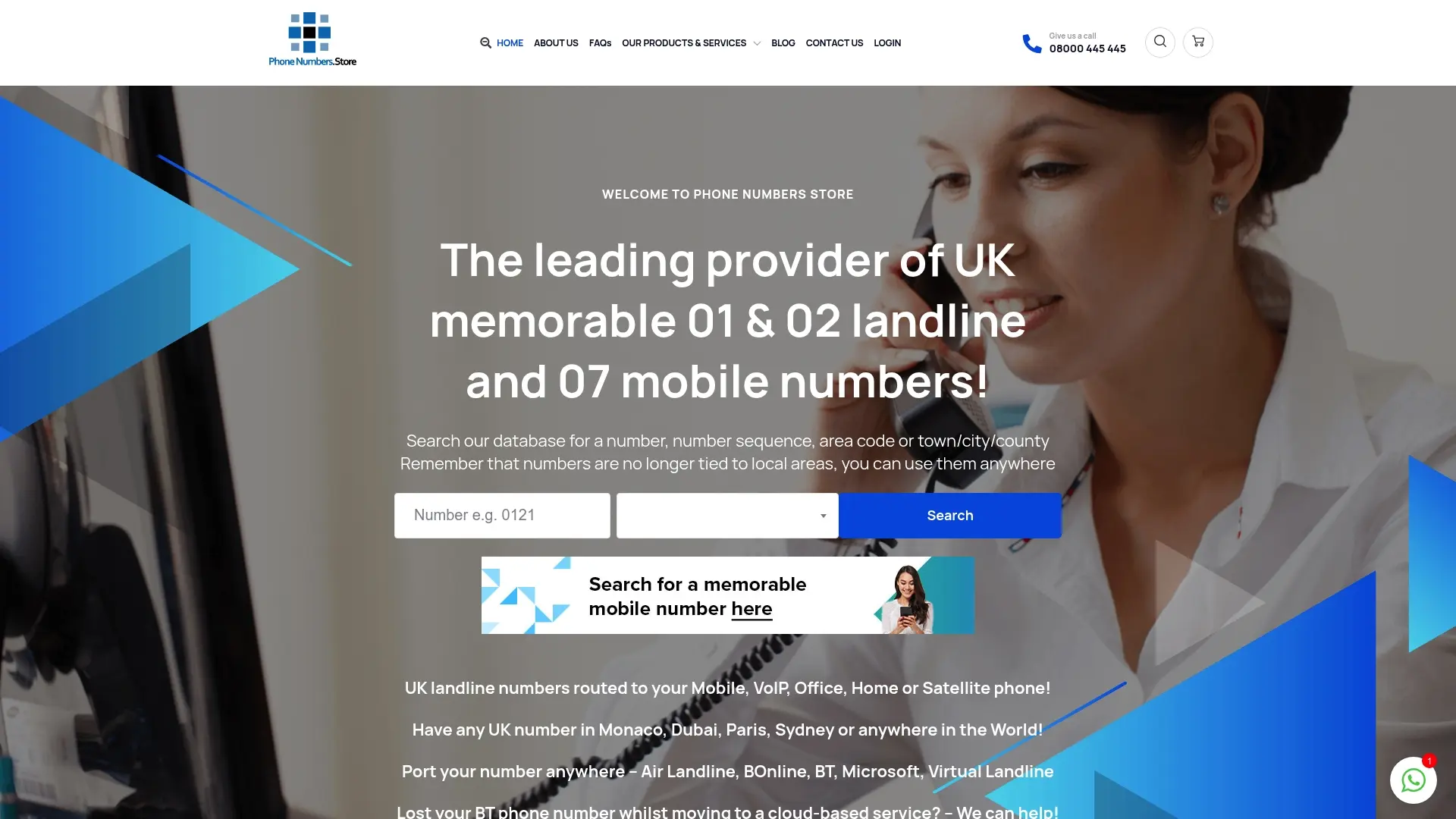
The workflow is simple: search the database, choose a number to buy or rent, configure it to forward to your mobile, VoIP app, or PBX, then start publishing it on your van, invoices, and website. Numbers are portable and not tied to a physical office, so an 0113 number can serve a business trading well beyond Leeds. If a repeating-digit number appeals to your business, this Leeds geographic number or this alternative pattern are both live examples worth a look, alongside this heavily repeated Nottingham number if symmetry is your priority. Search the database now and shortlist a number before someone else does.
Sources
- UK National Telephone Numbering Plan — Wikipedia
- Virtual business phone number in the UK: setup guide for 2026 — GlobCall
- How to get a business phone number in the UK — ExpertMarket
FAQ
What does “example Korean phone number” mean on this site?
On Phonenumbers, it refers to an example of a memorable UK business number, such as an 01/02 geographic, 03 national, 07 mobile, or 0800 freephone format, not a South Korean dialling example.
What’s the best UK number type for a local sole trader?
A geographic 01/02 number tends to work best for local trust, since customers recognise the area code and associate it with an established, local business.
How long does porting an existing number take?
Porting typically takes 5 to 10 business days once you’ve arranged it with your new provider, while a brand new virtual number can activate within minutes.
Should I buy or rent a memorable number?
Buying suits businesses planning to keep the number long-term, while renting reduces upfront cost and works well if you want flexibility to change numbers as your business grows. Phonenumbers offers both options on its searchable database.
Is a 0800 number worth the extra cost?
If your business relies on inbound calls, such as bookings or customer support, a 0800 number’s free-to-call perception often lifts response rates enough to justify the business absorbing the call cost.