
TL;DR:
- UK phone number allocation is a regulated process governed by Ofcom’s National Telephone Numbering Plan, which controls prefixes, costs, and use rules. Choosing the correct number type, such as 03 or 01/02, impacts customer perception, call costs, and operational flexibility, making strategic planning essential. Proper formatting and validation of numbers in international E.164 format ensure operational efficiency and effective customer outreach.
Most business owners assume phone numbers are handed out like postcodes. You apply, you get one, done. The reality is considerably more structured. Explaining phone number allocation properly means understanding a regulated national framework that governs which prefixes exist, who controls them, and what rules apply to their use. Get it wrong and you face the wrong number type for your audience, unexpected call costs, or a weeks-long delay when you needed a number yesterday. Get it right and your number becomes a genuine commercial asset.
Table of Contents
- Key takeaways
- Understanding UK phone number types
- How phone numbers are assigned in the UK
- Choosing the right number for your business
- Technical best practices for number management
- Putting it all together
- My honest take on number allocation
- Find your ideal UK business number
- FAQ
Key takeaways
| Point | Details |
|---|---|
| Allocation is regulated, not random | Ofcom’s National Telephone Numbering Plan governs every UK number type and prefix. |
| Number prefix shapes customer cost | Geographic, mobile, and non-geographic numbers carry different call costs for callers and businesses alike. |
| Plan well ahead of launch | The Ofcom application process typically takes 3 to 8 weeks, so late planning creates real delays. |
| 03 numbers suit most businesses | These match geographic call rates and are included in mobile bundles, making them a low-friction choice. |
| Formatting matters for data quality | Storing numbers in E.164 format prevents validation errors in CRM systems and outreach databases. |
Understanding UK phone number types
Before explaining phone number allocation in practical terms, you need a clear picture of what types of numbers exist in the UK and what each one signals to your callers.
Ofcom governs the National Telephone Numbering Plan, which defines the structure and permitted uses of every UK phone number. Your chosen prefix does not just look a certain way. It determines call routing, pricing, and the regulatory conditions that apply to your line.
Here is a breakdown of the main categories relevant to UK businesses:
- Geographic numbers (01 and 02). These are 11 digits including the leading zero and are associated with specific areas of the UK. A 0161 number signals Manchester; a 020 number signals London. Critically, numbers are no longer tied to a physical location. You can use a Birmingham 0121 number from Edinburgh. The association is perceptual, not technical.
- Mobile numbers (07). Allocated by operators and MVNOs, these begin with 07 and follow E.164 international formatting, represented as +44 7xxx internationally. They are widely used for staff lines and mobile-first businesses.
- Non-geographic numbers (03, 08, 09). These carry no location association. 03 numbers are particularly business-friendly. 08 numbers include freephone (0800) and revenue-sharing lines. 09 numbers are premium rate and tightly regulated.
| Number type | Prefix | Caller cost | Common business use |
|---|---|---|---|
| Geographic | 01, 02 | Standard rate | Local presence, regional offices |
| Mobile | 07 | Standard mobile rate | Staff lines, mobile-first services |
| National non-geographic | 03 | Same as geographic | Customer service, national lines |
| Freephone | 0800, 0808 | Free from mobiles | Sales lines, helplines |
| Premium rate | 09 | Higher than standard | Information services |
Understanding phone allocations at this level means you can make an informed choice rather than defaulting to whatever your telecoms provider happens to offer first.
How phone numbers are assigned in the UK
The telephone number allocation process in the UK follows a legal framework set out under the Communications Act 2003. Ofcom administers the numbering plan and controls which operators receive which number ranges.
Here is how the process works for businesses and telecom providers:
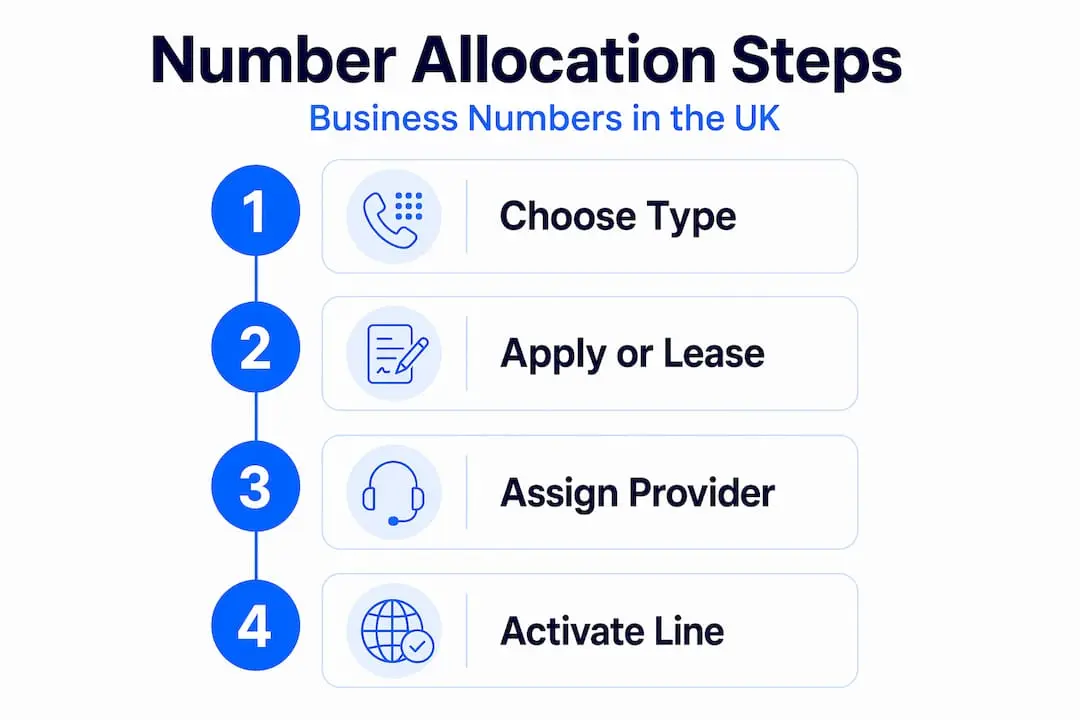
- Identify the number range you need. Geographic, mobile, and non-geographic ranges each have separate application routes. Knowing your number type before you apply saves significant time.
- Submit an application to Ofcom. Direct applicants must demonstrate they are authorised communications providers. The Ofcom application timeline typically runs from 3 to 8 weeks depending on the range requested and the complexity of the application.
- Consider whether you need ownership or access. This distinction matters. MVNOs (Mobile Virtual Network Operators) do not apply to Ofcom directly for mobile number ranges. They lease number ranges from host operators, which means actual allocation control stays with the host. This is a common source of confusion when businesses plan a telecoms launch.
- Account for number portability. If you are moving an existing number to a new provider, the porting process runs separately from allocation and has its own procedural requirements.
- Comply from day one. Regulatory compliance under Ofcom’s General Conditions applies from the moment you begin providing a service. There is no grace period.
Pro Tip: If you are planning a telecoms product launch or setting up a business line, factor the allocation timeline into your project plan from the start. Most delays stem from businesses treating number acquisition as an afterthought rather than a pre-launch milestone.
For businesses that do not need to go through the full Ofcom process, purchasing or renting numbers through a licensed provider is a much faster route. You can read a detailed walkthrough of the local number acquisition steps to understand both paths clearly.
Choosing the right number for your business
The importance of number allocation is not just regulatory. It shapes how customers perceive your business, what it costs them to call you, and how your number performs within their phone plan.
There are a few specific decisions worth thinking through carefully:
- Geographic versus non-geographic. If your business operates in one city or region and you want callers to recognise that, a 01 or 02 number creates immediate local credibility. If you serve the whole country and do not want to look like you belong to one area, a non-geographic number gives you national positioning without the premium rate baggage of older 08 lines.
- The case for 03 numbers. 03 numbers cost no more than a geographic call and are included in mobile inclusive minutes. Over 95% of UK mobile plans include bundled minutes that cover 03 numbers. For a customer service line, this removes the hesitation that premium-looking numbers create. Revenue sharing is also banned on 03, which keeps the arrangement straightforward and trustworthy.
- Balancing local presence with national reach. This is where the modern reality of number allocation becomes genuinely useful. Because geographic numbers are no longer tied to physical locations, you can project a local presence in multiple cities simultaneously. A Leeds business can hold a London 020 number alongside a local 0113 number and route both to the same team.
Pro Tip: Before selecting a number type, think about it from your caller’s perspective. Will they hesitate before dialling because they think it will cost them extra? A 03 or 01/02 number removes that friction entirely.
The strategic selection process for mobile numbers follows similar logic, particularly for businesses that want a 07 number to present a more accessible, human-feeling contact point.
Technical best practices for number management
Getting the right number is only part of the job. How you store, format, and validate phone numbers in your systems is where operational problems typically emerge.

The international standard for storing phone numbers is E.164 format, which limits numbers to 15 digits and represents UK numbers as +44 followed by the national number minus the leading zero. A number stored as 07911 123456 in your CRM should be held as +447911123456 in any system that processes international or mixed-format data.
| Format type | Example | Suitable for |
|---|---|---|
| E.164 international | +447911123456 | APIs, databases, international systems |
| UK national format | 07911 123456 | Display, printed materials |
| Stripped national | 07911123456 | Basic local system storage |
Proper E.164 normalisation before validation is the single step most businesses skip. Without it, a validly formatted number gets rejected because of a stray space or a missing country code. The result is wasted outreach, failed SMS campaigns, and corrupted CRM records.
Beyond formatting, live number validation confirms whether a number is currently active and connected to a network. TPS (Telephone Preference Service) screening checks whether a number is registered as an objection to unsolicited calls. Both processes depend on having correctly formatted numbers as their input. You cannot reliably screen a number you have stored inconsistently.
Putting it all together
Phone number allocation is not just a telecoms technicality. Every choice you make, from number type to format to provider, affects your customer’s experience and your cost base.
The practical steps are clear. Know which number category fits your business model. Understand whether you are going through the direct Ofcom route or procuring through a licensed provider. Align number selection with your commercial goals, not just availability. Format and validate your number data consistently from the outset. And plan your acquisition timeline before it becomes a blocker.
Businesses that treat number allocation as a strategic decision rather than an admin task give themselves a measurable advantage in customer trust, operational clarity, and call cost management.
My honest take on number allocation
I have spoken with a lot of business owners who did not realise that allocating a phone number is a structured process until they were already late. They assumed it was like registering a domain. You search, you buy, it is active in minutes. Sometimes that is true, when you buy through a licensed provider. When it is not, and you have gone the direct application route without accounting for the Ofcom timeline, a product launch stalls.
What I find is that the number type decision causes even more problems than the timeline. I have seen businesses set up 0844 lines back when they thought it made them look established, then spend years dealing with customers who refuse to call because they assume it will cost them. Switching numbers later, while managing all the associated re-branding and porting, is far more expensive than choosing correctly at the start.
My experience tells me the businesses that get this right are the ones who ask the question before they are under pressure. If you are reading this while planning a launch or a communications overhaul, you are already ahead of most.
The other thing worth saying plainly: understanding phone allocations is not just for telecoms companies. Any business with a phone number has made a number allocation decision, whether consciously or not. Making it consciously is simply better for everyone involved.
— Rob
Find your ideal UK business number
If you want to sidestep the Ofcom application timeline entirely and get a number that works for your business today, Phonenumbers makes it straightforward.
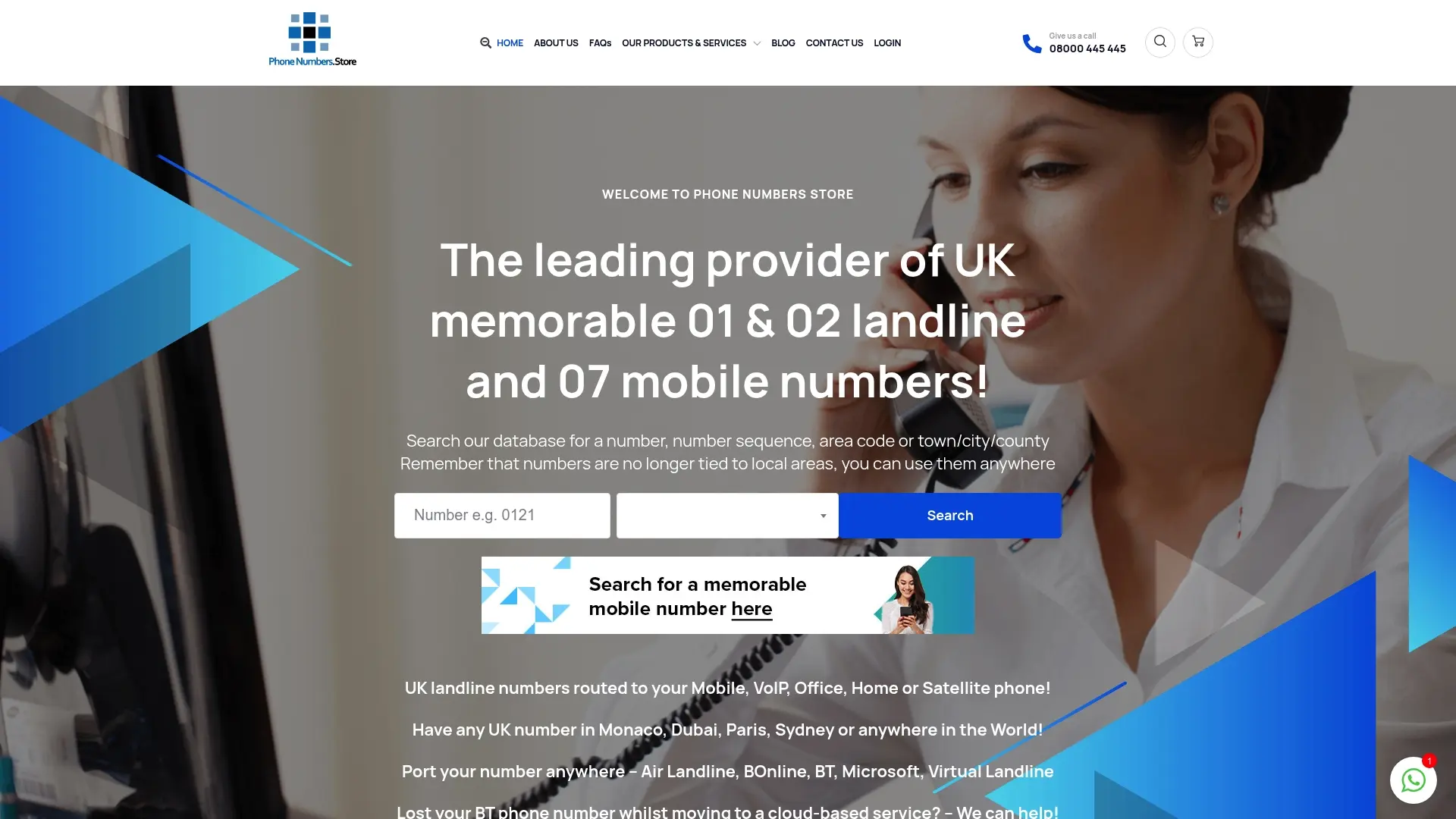
Phonenumbers is the UK’s leading provider of memorable 01, 02, and 07 numbers. You can search their database by number sequence, area code, or town to find a number that fits your brand and your geographic positioning. Whether you want a memorable local number for a specific city or a nationally recognisable format, the options are ready to go without regulatory wait times.
Critically, numbers from Phonenumbers are not tied to any physical location. You get the geographic association your customers recognise, and you use it wherever you operate. Browse the full range and buy your business number at Phonenumbers.store today.
FAQ
What is phone number allocation in the UK?
Phone number allocation is the process by which Ofcom assigns ranges of telephone numbers to licensed communications providers, who then distribute individual numbers to businesses and consumers. The rules are set out in the National Telephone Numbering Plan.
How long does the Ofcom number allocation process take?
The Ofcom application process for numbering allocation typically takes 3 to 8 weeks depending on the number range requested. Businesses that need numbers quickly are better served by purchasing through a licensed provider.
Can I use a geographic 01 or 02 number outside its area?
Yes. UK geographic numbers are no longer tied to physical locations, so you can use a Manchester 0161 number from anywhere in the UK and route it to any phone or system you choose.
What is the difference between an MVNO and a full operator for number allocation?
A full operator applies directly to Ofcom and owns its allocated number ranges. An MVNO leases number ranges from a host operator, meaning actual allocation control sits with the host rather than the MVNO itself.
Why are 03 numbers recommended for UK business customer service lines?
03 numbers cost callers the same as a geographic call and are included in standard mobile bundles, removing the hesitation that premium-looking numbers create. Revenue sharing is also prohibited, which keeps the arrangement transparent for both business and customer.