TL;DR:
- UK phone numbers are fixed to physical exchanges, making direct area code changes impossible on existing lines. The only practical way to obtain a different area code is by acquiring a new virtual number through a VoIP provider, which can be done in minutes. Number porting does not change the area code; it only transfers your current number to a new provider while keeping the prefix the same.
Switching area codes on a UK phone number means obtaining a new number with the desired geographic prefix, because UK area codes are fixed to physical telephone exchanges and cannot be reassigned on existing lines. This is the single most important fact to understand before you start the process. Whether you are a sole trader wanting a London 020 number or a business expanding into Manchester with a 0161 prefix, the route is the same: a new number, a virtual provider, or a porting arrangement. This guide covers why direct switching is not possible, how to get a number with any UK area code you want, and what to watch out for along the way.
Why you cannot simply switch area codes on an existing UK number
The UK telephone system is built on Ofcom’s National Telephone Numbering Plan, which ties every geographic number to a specific physical exchange. UK landline numbers starting with 01 or 02 are 11 digits long, with area codes ranging from 2 to 5 digits depending on the region. London uses a 2-digit area code (020), while smaller towns may use 4 or 5 digits. That structure is not cosmetic. It reflects real infrastructure.
Area codes are rooted in physical infrastructure, which means changing one is not a software update. It requires a completely different number assigned to a different exchange. This is unlike the United States, where number portability rules allow more flexibility across regions. In the UK, Ofcom’s plan is stricter, and the physical exchange connection is the binding constraint.
A common misconception is that you can contact your provider and request a different area code on your existing line. You cannot. The area code is part of the number itself, not a label attached to it. Providers have no mechanism to re-prefix an existing geographic number.
- Geographic numbers (01/02): Tied to specific exchanges. Cannot be re-coded.
- Mobile numbers (07): Not tied to geographic area codes at all. No area code switching applies.
- Non-geographic numbers (03/08): No location code. Used for national lines, not local presence.
Pro Tip: If you want a number that projects a local presence in a specific UK city, the only legitimate route is acquiring a new virtual number with that city’s area code. There is no shortcut through your existing provider.
How to get a new number with a different area code
The practical solution for changing area codes is a virtual phone number, delivered through a VoIP (Voice over Internet Protocol) provider. Virtual numbers allow businesses to maintain a local presence anywhere in the UK regardless of physical location. A Leeds firm can hold a Bristol 0117 number. A remote worker in Edinburgh can answer calls on a Birmingham 0121 line. The number rings wherever you route it.
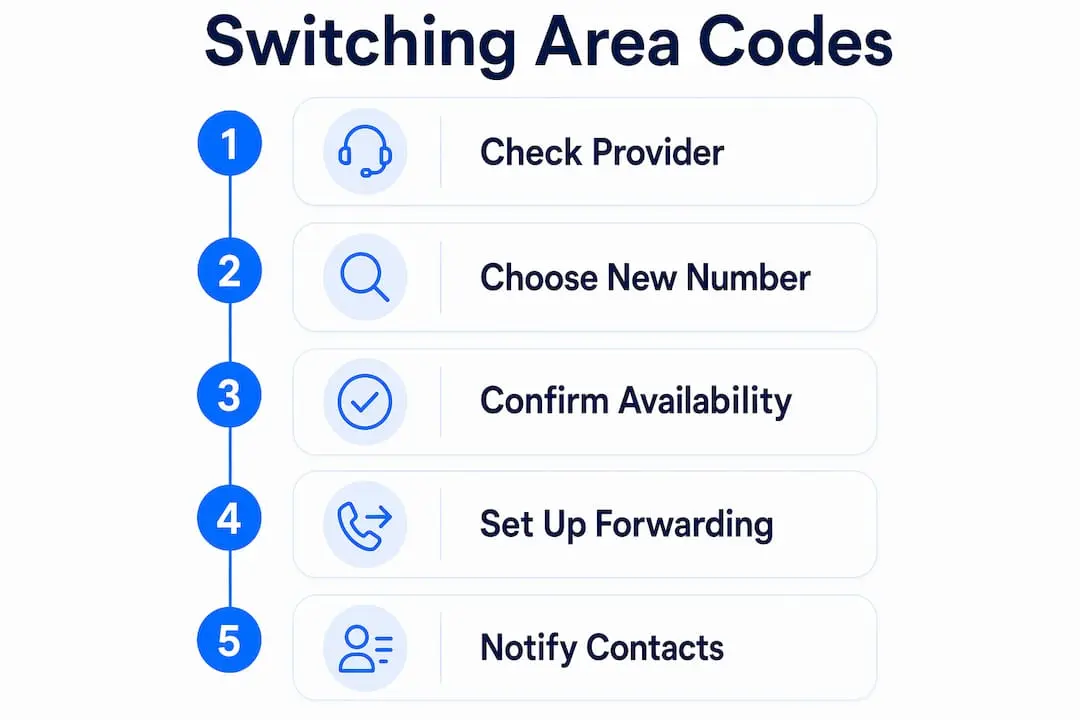
Obtaining a new virtual landline number typically takes minutes through a digital provider. The process is straightforward:
- Choose your desired area code. Decide which UK city or region you want to represent. Use a resource like UK area codes explained to confirm the correct prefix for your target location.
- Select a virtual number provider. Phonenumbers offers a searchable database of 01 and 02 landline numbers across the UK. Other providers include VoIP platforms that bundle numbers with call management features.
- Search for available numbers. Most providers let you search by area code, town, or number sequence. Phonenumbers specifically lets you search by town, city, county, or number pattern.
- Purchase or rent the number. Phonenumbers offers both buying and renting options. Renting suits businesses testing a new market. Buying suits those committing to a long-term local presence.
- Set up call routing. Point the new number at your existing mobile, landline, or VoIP system. Calls to the new area code number forward to wherever you choose.
- Update your contact details. Add the new number to your website, Google Business Profile, and any printed materials.
Pro Tip: Numbers are no longer tied to local areas. A 0113 Leeds number can ring your phone in Cornwall. Use this to your advantage when targeting specific regional markets.
The table below compares the main approaches for acquiring a number with a new area code:
| Approach | Best for | Speed | Cost |
|---|---|---|---|
| Virtual number (VoIP) | Businesses and individuals wanting any UK area code | Minutes | Low monthly fee or one-off purchase |
| New traditional landline | Residents moving to a new area | Days to weeks | Installation and line rental |
| Number porting | Keeping an existing number on a new provider | 1–5 working days | Usually free or low cost |

Virtual telephone numbers are the fastest and most flexible option for the vast majority of people looking to change their area code presence.
How does number porting work for area code changes?
Number porting is the process of transferring an existing phone number from one provider to another. Porting is limited to transferring the number, not changing its area code portion. If you have a 0161 Manchester number and want a 0121 Birmingham number, porting will not help. Porting keeps your existing number intact and moves it to a new carrier.
Where porting does help is when you want to keep your current number but switch to a VoIP provider. This gives you the benefits of virtual call management without losing an established number your contacts already know. The porting process in the UK follows a defined sequence:
- Check portability. Confirm your current provider supports outbound porting. Most do, but some legacy providers have restrictions.
- Obtain your PAC or STAC code. For mobile numbers, request a Porting Authorisation Code (PAC) from your current provider. For landlines, the process uses a different transfer system managed between providers.
- Apply to your new provider. Submit the porting request with your new VoIP or virtual number provider. They manage the transfer on your behalf.
- Agree a transfer date. Porting typically completes within 1–5 working days for landlines.
- Test the new setup. Make and receive calls on the ported number before cancelling your old service.
Common pitfalls to avoid:
- Cancelling your old service before porting completes. This can result in losing the number permanently.
- Assuming porting changes your area code. It does not. The number moves; the prefix stays the same.
- Failing to verify that your new provider covers the number type you are porting (geographic, mobile, or non-geographic).
- Overlooking contract exit fees with your current provider.
Experts advise verifying provider support for porting and understanding its limitations before starting the process. The distinction between porting and acquiring a new number is one most people miss until they are already mid-process.
What challenges should you expect when changing area codes?
The phone area code change process is straightforward in principle but has several practical friction points. Knowing them in advance saves time and avoids disruption.
Coverage and availability. Not every area code has numbers available at every provider. Phonenumbers maintains a live database of available 01 and 02 numbers, searchable by area code or location. Check availability before committing to a provider.
Updating contacts and materials. A new number means updating every place your old number appears. This includes your website, email signature, Google Business Profile, Companies House records, printed stationery, and any directory listings. Missing even one can cost you inbound calls.
VoIP call quality. Virtual numbers depend on your internet connection. A poor broadband connection produces dropped calls and poor audio. Test call quality thoroughly before going live, particularly if you handle high call volumes. Local presence numbers work best when paired with a reliable broadband or fibre connection.
Minimising downtime. Run your old and new numbers in parallel for at least two to four weeks. This gives contacts time to update their records and reduces missed calls during the transition.
“The biggest mistake businesses make is treating a number change as a one-day job. It takes two to four weeks to update every touchpoint properly.”
International formatting. When sharing your new number with international contacts, drop the leading zero and replace it with +44. A new 020 London number becomes +44 20 followed by the subscriber digits. Getting this wrong causes failed international calls.
Pro Tip: Set up call forwarding from your old number to your new one during the transition period. Most providers offer this at no extra cost and it prevents any calls falling through the gap.
Key takeaways
Switching area codes in the UK always requires a new number or a virtual provider, because geographic area codes are permanently fixed to physical exchanges under Ofcom’s rules.
| Point | Details |
|---|---|
| Area codes are fixed | UK 01/02 numbers are tied to physical exchanges and cannot be re-prefixed on existing lines. |
| Virtual numbers are the solution | VoIP providers let you acquire any available UK area code number in minutes, with no physical move required. |
| Porting keeps your number | Number porting transfers your existing number to a new provider but does not change the area code. |
| Plan for a transition period | Run old and new numbers in parallel for two to four weeks to avoid missed calls. |
| International formatting matters | Drop the leading zero and use +44 when sharing new numbers with international contacts. |
Why most people get this wrong from the start
The assumption that you can ring your provider and swap area codes is understandable. In some countries, number portability rules are broad enough to allow it. In the UK, they are not. I have spoken with dozens of business owners who spent weeks chasing their provider for a code change that was never going to happen. The frustration is real, and it is entirely avoidable.
What I have found is that virtual numbers have quietly solved this problem for most people, but awareness is still low. A small business in Cardiff can hold a 020 London number and a 0161 Manchester number simultaneously, routing both to the same team. That kind of flexibility was unthinkable on traditional landlines a decade ago. Now it takes about ten minutes to set up.
The one thing I would caution against is treating a number change as purely administrative. Your phone number is part of your brand identity. Changing it without a proper transition plan, updating every directory, every listing, every piece of printed material, will cost you calls and credibility. The technical side is easy. The operational side is where most people underestimate the work.
Virtual numbers will only become more central to UK telecoms as the PSTN switch-off progresses. BT’s planned retirement of the traditional public switched telephone network means VoIP is not just a workaround. It is the future. Getting comfortable with virtual numbers now puts you ahead of that curve.
— Rob
Find your ideal UK area code number with Phonenumbers
Phonenumbers is the UK’s leading provider of memorable 01 and 02 landline numbers, as well as 07 mobile numbers. If you need a number with a specific area code, whether for a new business location, a regional marketing campaign, or simply a fresh start, the Phonenumbers database lets you search by area code, town, city, or number sequence.
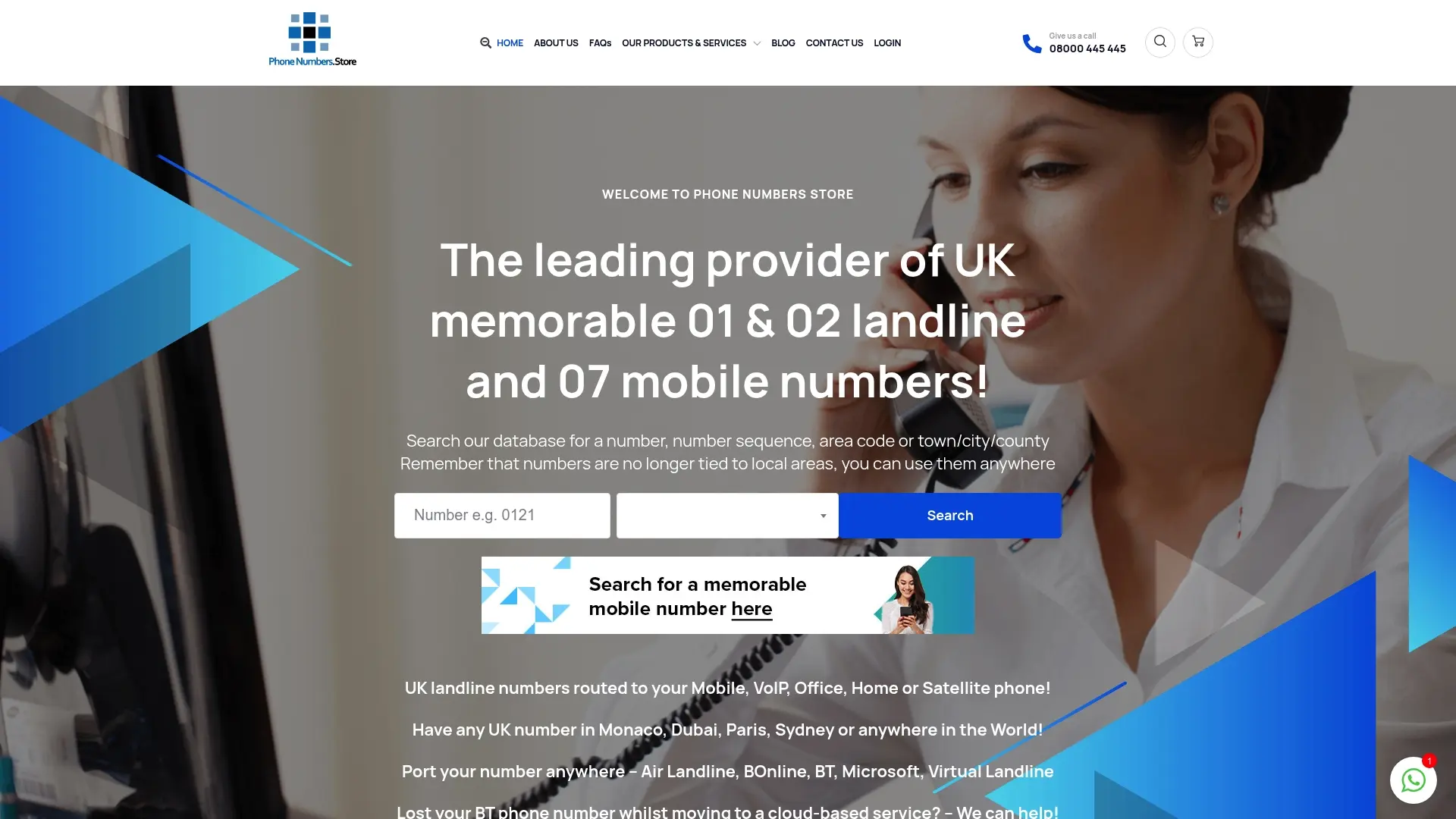
Numbers on Phonenumbers are no longer tied to physical locations. You can use a Leeds 0113 number from anywhere in the UK. Browse available numbers, buy or rent the one that fits, and have it active within minutes. Memorable options like 0113 307 0707 are available now. Search the full database to find the area code and number that works for you.
FAQ
Can I change the area code on my existing phone number?
No. UK geographic area codes are fixed to physical exchanges under Ofcom’s National Telephone Numbering Plan. Changing your area code requires obtaining a new number.
How long does it take to get a new number with a different area code?
Through a virtual number provider, the process takes minutes. Traditional landline installation can take days to weeks.
Does number porting change my area code?
No. Number porting transfers your existing number to a new provider but keeps the original area code intact.
Can a business use a London number from outside London?
Yes. Virtual numbers are not tied to physical locations. A business anywhere in the UK can hold and use a 020 London number, with calls routed to any device.
What happens to the leading zero when I share my new number internationally?
Drop the leading zero and replace it with +44. For example, 020 7946 0958 becomes +44 20 7946 0958 for international callers.